| Weight | 1 lbs |
|---|---|
| Dimensions | 9 × 5 × 2 in |
| host | rabbit |
| isotype | IgG |
| clonality | polyclonal |
| concentration | 1 mg/mL |
| applications | ELISA |
| reactivity | tagged fusion proteins |
| available sizes | 1 mg, 100 µg, 25 µg |


rabbit anti-GST polyclonal antibody 3104
Price range: $100.00 through $2,600.00
Antibody summary
- Rabbit polyclonal to GST
- Suitable for: ELISA
- Reacts with: tagged fusion proteins
- Isotype: IgG
- 100 µg, 25 µg, 1 mg
rabbit anti-GST polyclonal antibody 3104
| antibody |
|---|
| Database link: GST tag P08515 Sequence- MSPILGYWKIKGLVQPTRLLLEYLEEKYEE HLYERDEGDKWRNKKFELGLEFPNLPYYID GDVKLTQSMAIIRYIADKHNMLGGCPKERA EISMLEGAVLDIRYGVSRIAYSKDFETLKV DFLSKLPEMLKMFEDRLCHKTYLNGDHVTH PDFMLYDALDVVLYMDPMCLDAFPKLVCFK KRIEAIPQIDKYLKSSKYIAWPLQGWQATF GGGDHPPKSD |
| Tested applications ELISA |
| Recommended dilutions user optimized |
| Application Notes This antibody reacts with GST as determined by IEP and ELISA techniques. It is suitable for blotting, ELISA and IHC applications. Optimal working dilutions should be determined experimentally by the investigator. |
| Immunogen Highly purified Glutathione-S-transferase (GST) from Schistosoma japonicum |
| Size and concentration 25, 100, 1000µg and 1 mg/mL |
| Form liquid |
| Storage Instructions 2-8°C |
| Storage buffer PBS, pH 7.2, 0.09% NaN3 |
| Purity affinity purified |
| Clonality polyclonal |
| Isotype IgG |
| Compatible secondaries goat anti-rabbit IgG, H&L chain specific, peroxidase conjugated, conjugated polyclonal antibody 9512 goat anti-rabbit IgG, H&L chain specific, biotin conjugated polyclonal antibody 2079 goat anti-rabbit IgG, H&L chain specific, FITC conjugated polyclonal antibody 7863 goat anti-rabbit IgG, H&L chain specific, Cross Absorbed polyclonal antibody 2371 goat anti-rabbit IgG, H&L chain specific, biotin conjugated polyclonal antibody, crossabsorbed 1715 goat anti-rabbit IgG, H&L chain specific, FITC conjugated polyclonal antibody, crossabsorbed 1720 |
| Isotype control Rabbit polyclonal - Isotype Control |
| target relevance |
|---|
| GST |
| Protein names Glutathione S-transferase tag |
| Alternative names GST tag, GST fusion tag, Schistosoma japonicum GST |
| Function The GST tag is fused to recombinant proteins to facilitate purification, detection, immobilization, and analysis of protein-protein interactions through high-affinity binding to glutathione. |
| Structure GST is a soluble enzyme of approximately 26 kDa that forms a stable folded protein domain when fused to target proteins. |
| Description The GST tag is a recombinant protein fusion tag derived from Schistosoma japonicum glutathione S-transferase. It is widely used for affinity purification, protein detection, pull-down assays, and studies of protein-protein interactions. |
| Related entities relationship: binds_to; entity: Glutathione |
| Keywords Fusion tag, Affinity purification, Pull-down assay, Protein-protein interaction, Recombinant protein |
| Structure The GST tag is a 26 kDa protein derived from Schistosoma japonicum glutathione S-transferase. Unlike small epitope tags such as FLAG or HA, GST is a folded protein domain. |
| Function GST functions as an affinity tag that enables purification, detection, and immobilization of recombinant fusion proteins through binding to glutathione. |
| Purification GST-tagged proteins are typically purified using glutathione agarose or glutathione magnetic beads under native conditions. |
| Applications GST fusion proteins are widely used in western blotting, ELISA, affinity purification, pull-down assays, protein interaction studies, and recombinant protein production. |
| Research relevance GST is one of the most widely used recombinant fusion tags and is particularly valuable for protein purification and protein-protein interaction experiments. |
Data
 |
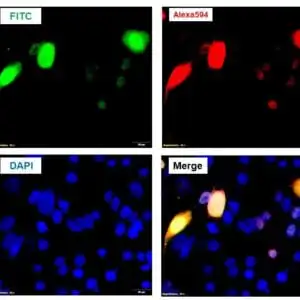
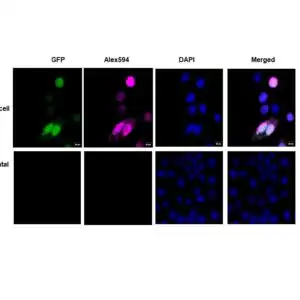
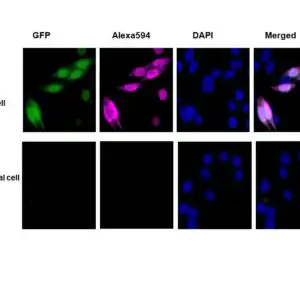
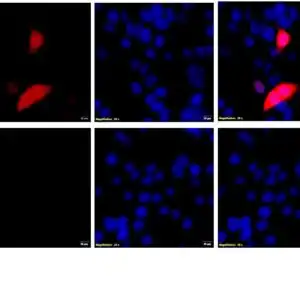
| Left rabbit anti-GST polyclonal antibody 3104 labeled with anti-rabbit FITC conjugate (green). Center DAPI (blue). Right merged. |
 |
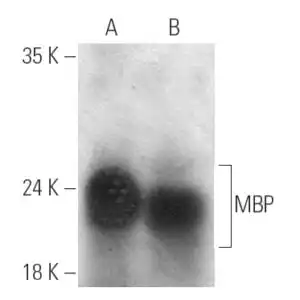
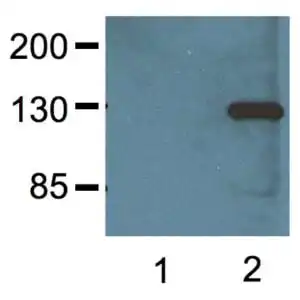
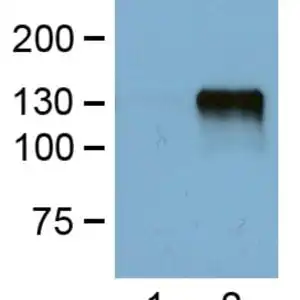
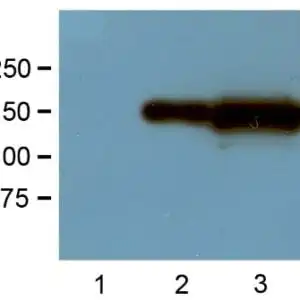
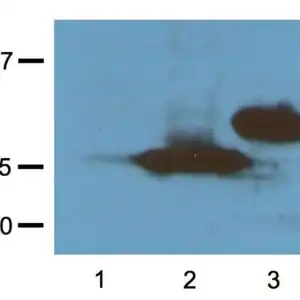
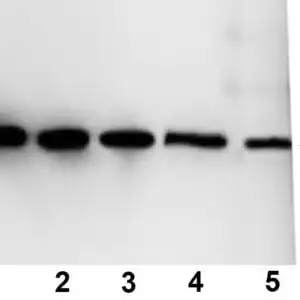
| The expression of GST was determined by Western blot. CHO cells were transfected with pcDNA3-12 Tags (CHO-12 Tag). The 10µg whole cell lysates of CHO-12 Tag, and CHO were loaded then incubated with rabbit anti-GST polyclonal antibody 3104 at 1:2000 (dilution 0.5 µg/mL) for 1h at room temperature and followed with goat anti-rabbit IgG HRP at 1:5000 dilution (0.2µg/mL) incubation for 1h at room temperature. |
FAQ & Publications
Frequently Asked Questions
What applications is the rabbit anti-GST polyclonal antibody 3104 suitable for?
This antibody is suitable for ELISA, blotting, and immunohistochemistry (IHC) applications.
What is the recommended storage condition for the rabbit anti-GST polyclonal antibody 3104?
The antibody should be stored at 2-8°C in PBS buffer, pH 7.2, containing 0.09% sodium azide.
Which species does the rabbit anti-GST polyclonal antibody 3104 host come from, and what is its clonality?
The host species is rabbit, and the antibody is polyclonal with an IgG isotype.
What is the immunogen used to generate the rabbit anti-GST polyclonal antibody 3104?
The immunogen is highly purified Glutathione-S-transferase (GST) derived from Schistosoma japonicum.
Can the rabbit anti-GST polyclonal antibody 3104 be used with secondary antibodies, and if so, which ones are compatible?
Yes, it is compatible with goat anti-rabbit IgG secondary antibodies conjugated to peroxidase, biotin, or FITC, including chain-specific and cross-absorbed variants.
Publications
| pmid | title | authors | citation |
|---|---|---|---|
| 26742850 | Rhizobiales-like Phosphatase 2 from Arabidopsis thaliana Is a Novel Phospho-tyrosine-specific Phospho-protein Phosphatase (PPP) Family Protein Phosphatase. | R Glen Uhrig, Anne-Marie Labandera, Jamshed Muhammad, Marcus Samuel, Greg B Moorhead | J Biol Chem 291:5926-5934 |
| 19889946 | Molecular complex of three testis-specific isozymes associated with the mouse sperm fibrous sheath: hexokinase 1, phosphofructokinase M, and glutathione S-transferase mu class 5. | Noriko Nakamura, Chisato Mori, Edward M Eddy | Biol Reprod 82:504-15 |
Published literature highly relevant to the biological target of this product and referencing this antibody or clone are retrieved from the PubMed database provided by the United States National Library of Medicine at the National Institutes of Health.
Protocols
| relevant to this product |
|---|
| ELISA |
Documents
| Batch Number | QC File | SDS |
|---|---|---|
| To view batch-specific Safety Datasheets and Quality Certificates associated with your account, please Log In. | ||
Only logged in customers who have purchased this product may leave a review.



Reviews
There are no reviews yet.