| Weight | 1 lbs |
|---|---|
| Dimensions | 9 × 5 × 2 in |
| accession | P80098 |
| express system | E.coli |
| product tag | biotin at C-terminal |
| purity | > 97% by SDS PAGE |
| molecular weight | Predicted Molecular Mass: 11.374 kDa Extinction Coefficient: 14,180 M-1 cm-1 Actual Molecular Mass: 11.374 kDa by ESI Mass Spec |
| available size | 10 µg, 100 µg, 1mg, 2 µg, 50 µg |
| endotoxin | <0.01 EU per 1μg of the protein by the LAL method |

Biotinylated Human CCL7 (MCP-3) 9020
Price range: $134.00 through $3,368.00
Summary
- Expression: E.coli
- Amino Acid Range: 24-99
Biotinylated Human CCL7 (MCP-3) 9020
| antibody |
|---|
| Database link: human P80098 |
| Size and concentration 5, 20, 50, 100µg and lyophilized |
| Form Lyophilized |
| Storage Instructions Avoid repeated freeze-thaw cycles: • 12 months from date of receipt, -20 to -70 °C as supplied. • 1 month, 2 to 8 °C under sterile conditions after reconstitution. • 3 months, -20 to -70 °C under sterile conditions after reconstitution |
| Storage buffer Reconstitution: Spin sample prior to reconstitution. Recommended concentration of 100µg/mL in sterile water. Shipping: Room Temp |
| Purity > 97% by SDS PAGE and HPLC |
| target relevance |
|---|
| Homo sapiens CCL7 C-C motif chemokine 7 |
| Protein names C-C motif chemokine 7 |
| Alternative names Monocyte chemoattractant protein 3, Monocyte chemotactic protein 3, NC28, Small-inducible cytokine A7 |
| Gene names CCL7 |
| Protein family Belongs to the intercrine beta (chemokine CC) family |
| Function Chemotactic factor that plays an important role in immune regulation. Attracts monocytes, eosinophils, basophils, and T-cells to sites of inflammation or infection. Upon binding to various chemokine receptors including CCR1, CCR2, CCR3, and CCR5, facilitates immune cell migration by guiding them to infected tissues (PubMed:9364936, PubMed:10477718). Interacts with CCR2 to facilitate the release of monocytes from the bone marrow into the bloodstream, maintaining monocyte homeostasis. In turn, monocytes recruited to inflamed or injured tissues can differentiate into macrophages or dendritic cells, which are essential for immune defense and tissue repair. Through CCR1, contributes to macrophage polarization via NF-kappa-B activation which leads to the release of inflammatory factors (PubMed:38417634). In the trigeminal ganglion neurons, activates ERK via CCR2 and CCR3 to enhance neuronal excitability, which contributes to the maintenance of trigeminal neuropathic pain. Additionally, modulates the early immune response in the skin, preventing pathogen dissemination while maintaining cutaneous immune control |
| Subcellular location Secreted |
| Structure Monomer. Interacts with TNFAIP6 (via Link domain) |
| Post-translational modification O-glycosylated |
| Keywords 3D-structure, Chemotaxis, Cytokine, Direct protein sequencing, Disulfide bond, Glycoprotein, Heparin-binding, Inflammatory response, Proteomics identification, Pyrrolidone carboxylic acid, Reference proteome, Secreted, Signal |
| Sequence MKASAALLCLLLTAAAFSPQGLAQPVGINTSTTCCYRFINKKIPKQRLESYRRTTSSHCP REAVIFKTKLDKEICADPTQKWVQDFMKHLDKKTQTPKL |
| UniProt accession: P80098 |
Data
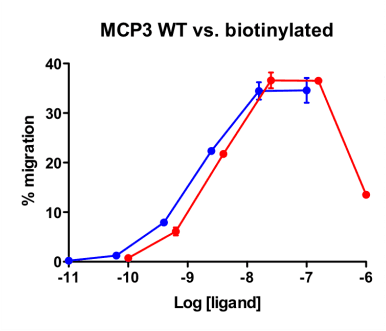 |
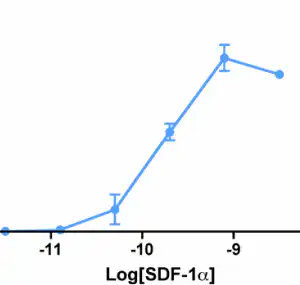
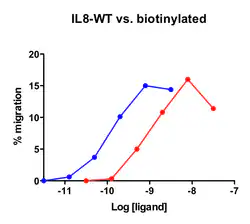
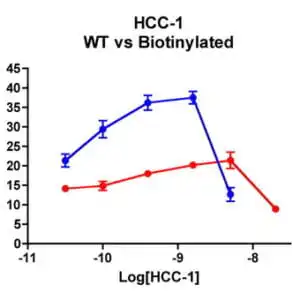
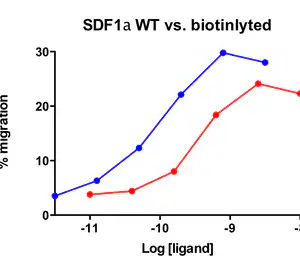
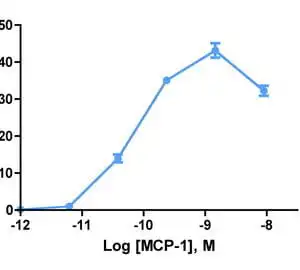
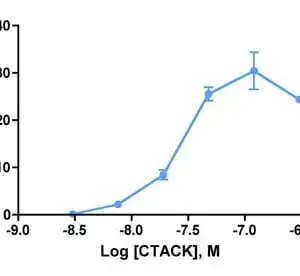
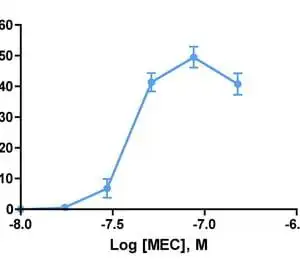
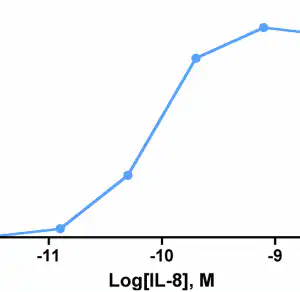
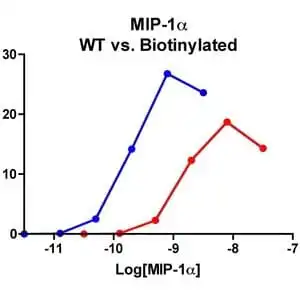
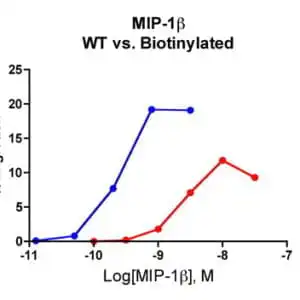
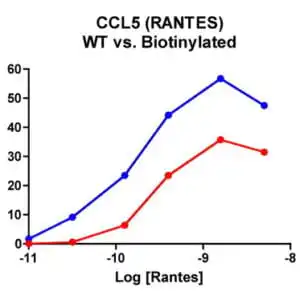
| Migration Assay: Cells expressing recombinant CCR2 were assayed for migration through the Transwell bare filter at various concentrations of MCP-3. The response is expressed as the % of total input cells (Blue: wild type; Red: biotinylated). |
FAQ & Publications
Frequently Asked Questions
What is the expression system used for Biotinylated Human CCL7 (MCP-3) 9020?
The Biotinylated Human CCL7 (MCP-3) 9020 protein is expressed in Escherichia coli (E.coli).
How should Biotinylated Human CCL7 (MCP-3) 9020 be stored to maintain stability?
The lyophilized protein should be stored at -20 to -70 °C as supplied for up to 12 months. After reconstitution, it can be stored under sterile conditions at 2 to 8 °C for 1 month or at -20 to -70 °C for 3 months. Avoid repeated freeze-thaw cycles.
What is the purity and molecular weight of this Biotinylated Human CCL7 (MCP-3)?
The protein has a purity greater than 97% as determined by SDS-PAGE and HPLC. Its predicted and actual molecular mass is approximately 11.374 kDa as confirmed by ESI Mass Spectrometry.
What is the functional role and receptor binding profile of Human CCL7 (MCP-3) provided in this product?
Human CCL7 (MCP-3) acts as a chemotactic factor attracting monocytes and eosinophils and augments monocyte anti-tumor activity. It binds and signals through chemokine receptors CCR1, CCR2, and CCR3, and functions as an antagonist for CCR5.
Publications
| pmid | title | authors | citation |
|---|---|---|---|
| We haven't added any publications to our database yet. | |||
Published literature highly relevant to the biological target of this product and referencing this antibody or clone are retrieved from the PubMed database provided by the United States National Library of Medicine at the National Institutes of Health.
Protocols
| relevant to this product |
|---|
| Migration assay |
Documents
| # | ||
|---|---|---|
| Please enter your product and batch number here. | ||
Only logged in customers who have purchased this product may leave a review.
Reviews
There are no reviews yet.