| Weight | 1 lbs |
|---|---|
| Dimensions | 9 × 5 × 2 in |
| host | mouse |
| isotype | IgG |
| clonality | monoclonal |
| concentration | concentrate, predilute |
| applications | IHC |
| reactivity | human |
| available size | 0.1 mL, 0.5 mL, 1 mL concentrated, 7 mL prediluted |

rabbit anti-IgM monoclonal antibody (ZR249) 6226
Price range: $160.00 through $528.00
Antibody summary
- Rabbit monoclonal to IgM
- Suitable for: Immunohistochemistry (formalin-fixed, paraffin-embedded tissues)
- Reacts with: Human
- Isotype:IgG
- Control: Lymph node
- Visualization: Cytoplasmic
- 0.1, 0.5, 1.0 mL concentrated, 7 mL prediluted
rabbit anti-IgM monoclonal antibody ZR249 6226
| target relevance |
|---|
| Homo sapiens IGHM Immunoglobulin heavy constant mu |
| Protein names Immunoglobulin heavy constant mu |
| Alternative names Ig mu chain C region, Ig mu chain C region BOT, Ig mu chain C region GAL, Ig mu chain C region OU |
| Gene names IGHM |
| Function Constant region of immunoglobulin heavy chains. Immunoglobulins, also known as antibodies, are membrane-bound or secreted glycoproteins produced by B lymphocytes. In the recognition phase of humoral immunity, the membrane-bound immunoglobulins serve as receptors which, upon binding of a specific antigen, trigger the clonal expansion and differentiation of B lymphocytes into immunoglobulins-secreting plasma cells. Secreted immunoglobulins mediate the effector phase of humoral immunity, which results in the elimination of bound antigens (PubMed:20176268, PubMed:22158414). The antigen binding site is formed by the variable domain of one heavy chain, together with that of its associated light chain. Thus, each immunoglobulin has two antigen binding sites with remarkable affinity for a particular antigen. The variable domains are assembled by a process called V-(D)-J rearrangement and can then be subjected to somatic hypermutations which, after exposure to antigen and selection, allow affinity maturation for a particular antigen (PubMed:17576170, PubMed:20176268) |
| Subcellular location Cell membrane |
| Structure Part of IgM B cell receptor complex on pre-B cells, immature and mature B cells. The BCR complex consists of one membrane-bound IgM molecule responsible for antigen binding, non-covalently associated with CD79A and CD79B signaling chains |
| Post-translational modification N-glycosylated; important for IgM secretion and its localization at the plasma membrane. The interaction with FCMR is glycan-independent |
| Involvement in disease Agammaglobulinemia 1, autosomal recessive A primary immunodeficiency characterized by profoundly low or absent serum antibodies and low or absent circulating B cells due to an early block of B-cell development. Affected individuals develop severe infections in the first years of life. |
| Keywords 3D-structure, Adaptive immunity, Alternative splicing, Cell membrane, Direct protein sequencing, Disulfide bond, Glycoprotein, Immunity, Immunoglobulin, Immunoglobulin domain, Membrane, Proteomics identification, Reference proteome, Secreted, Transmembrane, Transmembrane helix |
| Sequence GSASAPTLFPLVSCENSPSDTSSVAVGCLAQDFLPDSITFSWKYKNNSDISSTRGFPSVL RGGKYAATSQVLLPSKDVMQGTDEHVVCKVQHPNGNKEKNVPLPVIAELPPKVSVFVPPR DGFFGNPRKSKLICQATGFSPRQIQVSWLREGKQVGSGVTTDQVQAEAKESGPTTYKVTS TLTIKESDWLGQSMFTCRVDHRGLTFQQNASSMCVPDQDTAIRVFAIPPSFASIFLTKST KLTCLVTDLTTYDSVTISWTRQNGEAVKTHTNISESHPNATFSAVGEASICEDDWNSGER FTCTVTHTDLPSPLKQTISRPKGVALHRPDVYLLPPAREQLNLRESATITCLVTGFSPAD VFVQWMQRGQPLSPEKYVTSAPMPEPQAPGRYFAHSILTVSEEEWNTGETYTCVVAHEAL PNRVTERTVDKSTEGEVSADEEGFENLWATASTFIVLFLLSLFYSTTVTLFKVK |
| UniProt accession: P01871 |
Data
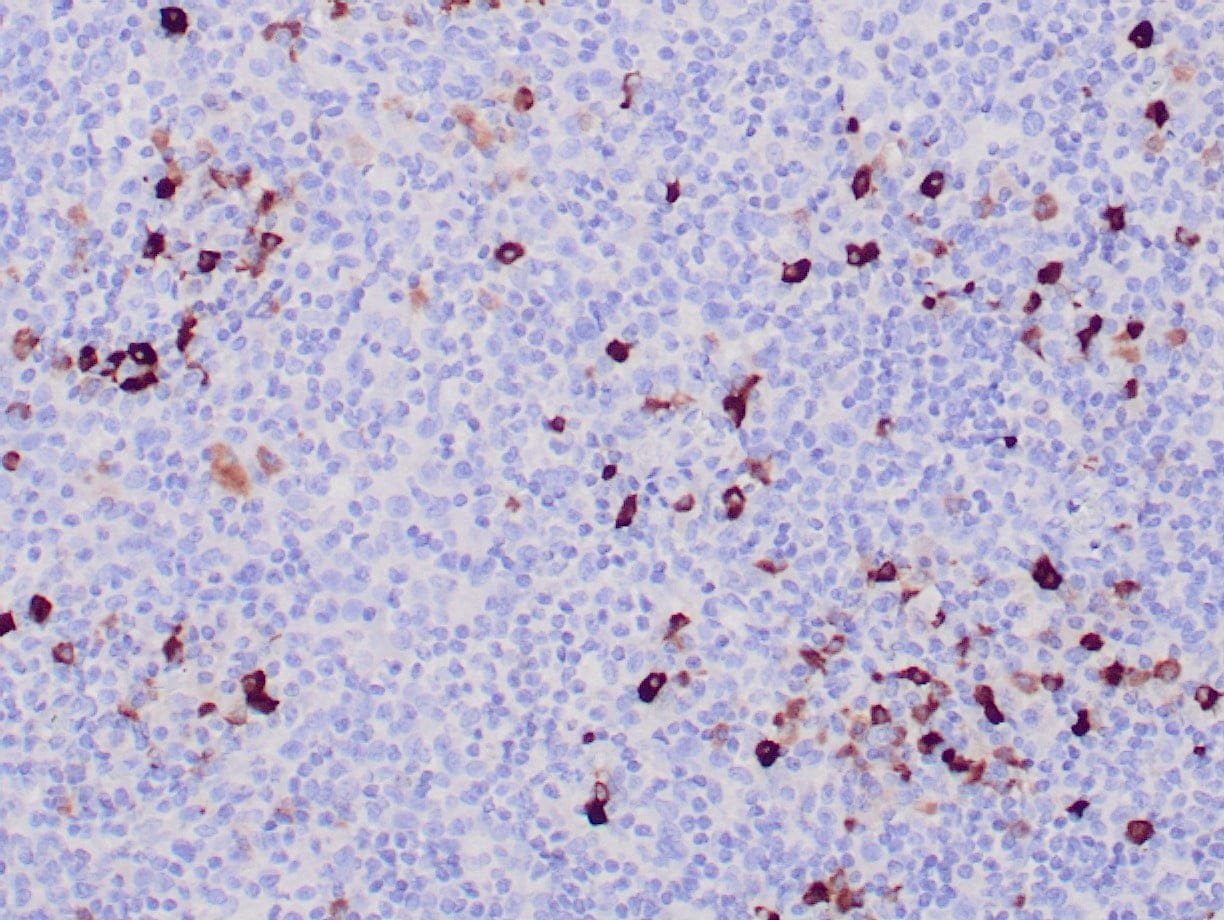 |
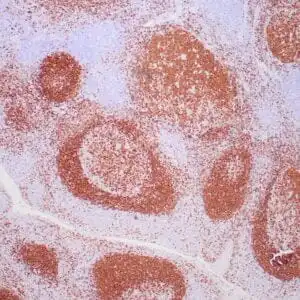
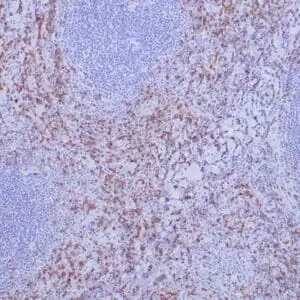
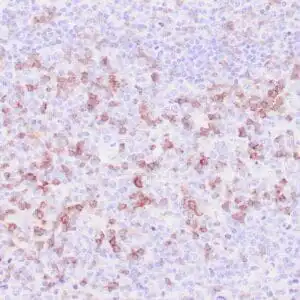
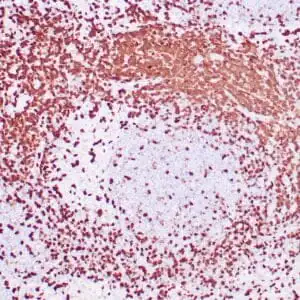
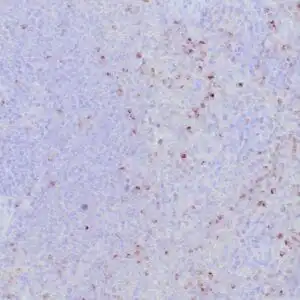
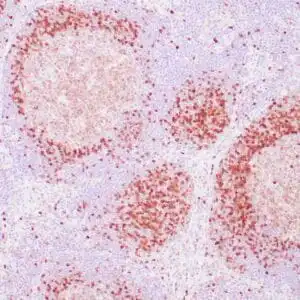
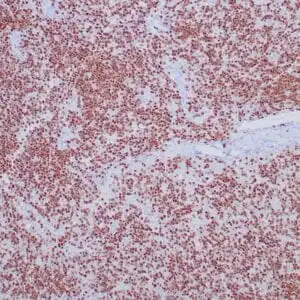
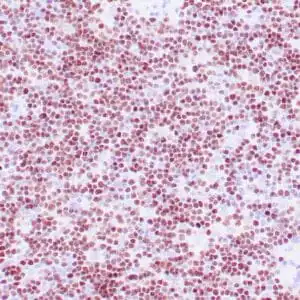
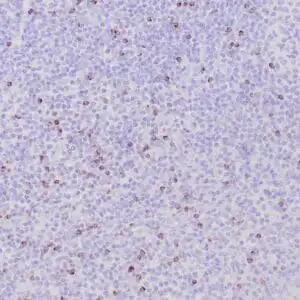
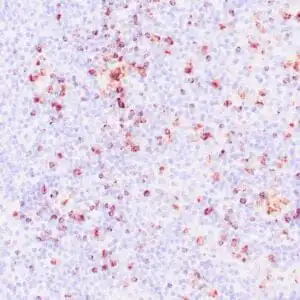
| Formalin-fixed, paraffin-embedded human tonsil stained with anti-IgM antibody using peroxidase-conjugate and DAB chromogen. Note cytoplasmic staining of plasma cells |
FAQ & Publications
Frequently Asked Questions
What species does the rabbit anti-IgM monoclonal antibody (ZR249) specifically react with?
This monoclonal antibody is reactive with human IgM.
What are the recommended storage conditions for the rabbit anti-IgM monoclonal antibody (ZR249) to maintain its stability?
For short-term storage, keep the antibody at 2-8°C. For long-term storage, it should be kept at -20°C, and freeze/thaw cycles should be avoided to preserve antibody integrity.
Publications
| pmid | title | authors | citation |
|---|---|---|---|
| We haven't added any publications to our database yet. | |||
Published literature highly relevant to the biological target of this product and referencing this antibody or clone are retrieved from the PubMed database provided by the United States National Library of Medicine at the National Institutes of Health.
Protocols
| relevant to this product |
|---|
| IHC |
Documents
| Batch Number | QC File | SDS |
|---|---|---|
| To view batch-specific Safety Datasheets and Quality Certificates associated with your account, please Log In. | ||
Only logged in customers who have purchased this product may leave a review.


Reviews
There are no reviews yet.