| Weight | 1 lbs |
|---|---|
| Dimensions | 9 × 5 × 2 in |
| host | mouse |
| isotype | IgG |
| clonality | monoclonal |
| concentration | concentrate, predilute |
| applications | IHC |
| reactivity | human |
| available size | 0.1 mL, 0.5 mL, 1 mL concentrated, 7 mL prediluted |

rabbit anti-FoxP1 monoclonal antibody (ZR333) 6185
Price range: $160.00 through $528.00
Antibody summary
- Rabbit monoclonal to FoxP1
- Suitable for: Immunohistochemistry (formalin-fixed, paraffin-embedded tissues)
- Reacts with: Human
- Isotype:IgG
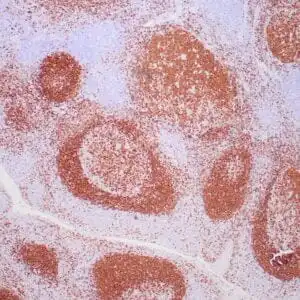
- Control: Tonsil
- Visualization: Nuclear
- 0.1, 0.5, 1.0 mL concentrated, 7 mL prediluted
rabbit anti-FoxP1 monoclonal antibody ZR333 6185
| target relevance |
|---|
| Homo sapiens FOXP1 Forkhead box protein P1 |
| Protein names Forkhead box protein P1 |
| Alternative names Mac-1-regulated forkhead |
| Gene names FOXP1 |
| Function Transcriptional repressor (PubMed:18347093, PubMed:26647308). Can act with CTBP1 to synergistically repress transcription but CTPBP1 is not essential (By similarity). Plays an important role in the specification and differentiation of lung epithelium. Acts cooperatively with FOXP4 to regulate lung secretory epithelial cell fate and regeneration by restricting the goblet cell lineage program; the function may involve regulation of AGR2. Essential transcriptional regulator of B-cell development. Involved in regulation of cardiac muscle cell proliferation. Involved in the columnar organization of spinal motor neurons. Promotes the formation of the lateral motor neuron column (LMC) and the preganglionic motor column (PGC) and is required for respective appropriate motor axon projections. The segment-appropriate generation of spinal cord motor columns requires cooperation with other Hox proteins. Can regulate PITX3 promoter activity; may promote midbrain identity in embryonic stem cell-derived dopamine neurons by regulating PITX3. Negatively regulates the differentiation of T follicular helper cells T(FH)s. Involved in maintenance of hair follicle stem cell quiescence; the function probably involves regulation of FGF18 (By similarity). Represses transcription of various pro-apoptotic genes and cooperates with NF-kappa B-signaling in promoting B-cell expansion by inhibition of caspase-dependent apoptosis (PubMed:25267198). Binds to CSF1R promoter elements and is involved in regulation of monocyte differentiation and macrophage functions; repression of CSF1R in monocytes seems to involve NCOR2 as corepressor (PubMed:15286807, PubMed:18347093, PubMed:18799727). Involved in endothelial cell proliferation, tube formation and migration indicative for a role in angiogenesis; the role in neovascularization seems to implicate suppression of SEMA5B (PubMed:24023716). Can negatively regulate androgen receptor signaling (PubMed:18640093). Acts as a transcriptional activator of the FBXL7 promoter; this activity is regulated by AURKA (PubMed:28218735) |
| Subcellular location Nucleus |
| Structure Forms homodimers and heterodimers with FOXP2 and FOXP4 (PubMed:25027557). Dimerization is required for DNA-binding. Self-associates (PubMed:26647308). Interacts with CTBP1 (By similarity). Interacts with NCOR2 and AR (PubMed:18347093, PubMed:18640093). Interacts with FOXP2 (PubMed:26647308). Interacts with TBR1 (PubMed:30250039). Interacts with AURKA; this interaction facilitates the phosphorylation of FOXP1, which suppresses the expression of FBXL7 (PubMed:28218735). Interacts with ZMYM2 (PubMed:32891193) |
| Involvement in disease Intellectual developmental disorder with language impairment and with or without autistic features A developmental disorder characterized by mild to moderate intellectual disability, language impairment, and autistic features in some patients. Patients show global delay, delayed walking, severely delayed speech development, and behavioral abnormalities, including irritability, hyperactivity, aggression, and stereotypical rigid behaviors. |
| Keywords 3D-structure, Alternative splicing, Chromosomal rearrangement, Disease variant, DNA-binding, Intellectual disability, Isopeptide bond, Metal-binding, Nucleus, Phosphoprotein, Proteomics identification, Reference proteome, Repressor, Transcription, Transcription regulation, Ubl conjugation, Zinc, Zinc-finger |
| Sequence MMQESGTETKSNGSAIQNGSGGSNHLLECGGLREGRSNGETPAVDIGAADLAHAQQQQQQ ALQVARQLLLQQQQQQQVSGLKSPKRNDKQPALQVPVSVAMMTPQVITPQQMQQILQQQV LSPQQLQVLLQQQQALMLQQQQLQEFYKKQQEQLQLQLLQQQHAGKQPKEQQQVATQQLA FQQQLLQMQQLQQQHLLSLQRQGLLTIQPGQPALPLQPLAQGMIPTELQQLWKEVTSAHT AEETTGNNHSSLDLTTTCVSSSAPSKTSLIMNPHASTNGQLSVHTPKRESLSHEEHPHSH PLYGHGVCKWPGCEAVCEDFQSFLKHLNSEHALDDRSTAQCRVQMQVVQQLELQLAKDKE RLQAMMTHLHVKSTEPKAAPQPLNLVSSVTLSKSASEASPQSLPHTPTTPTAPLTPVTQG PSVITTTSMHTVGPIRRRYSDKYNVPISSADIAQNQEFYKNAEVRPPFTYASLIRQAILE SPEKQLTLNEIYNWFTRMFAYFRRNAATWKNAVRHNLSLHKCFVRVENVKGAVWTVDEVE FQKRRPQKISGNPSLIKNMQSSHAYCTPLNAALQASMAENSIPLYTTASMGNPTLGNLAS AIREELNGAMEHTNSNESDSSPGRSPMQAVHPVHVKEEPLDPEEAEGPLSLVTTANHSPD FDHDRDYEDEPVNEDME |
| UniProt accession: Q9H334 |
Data
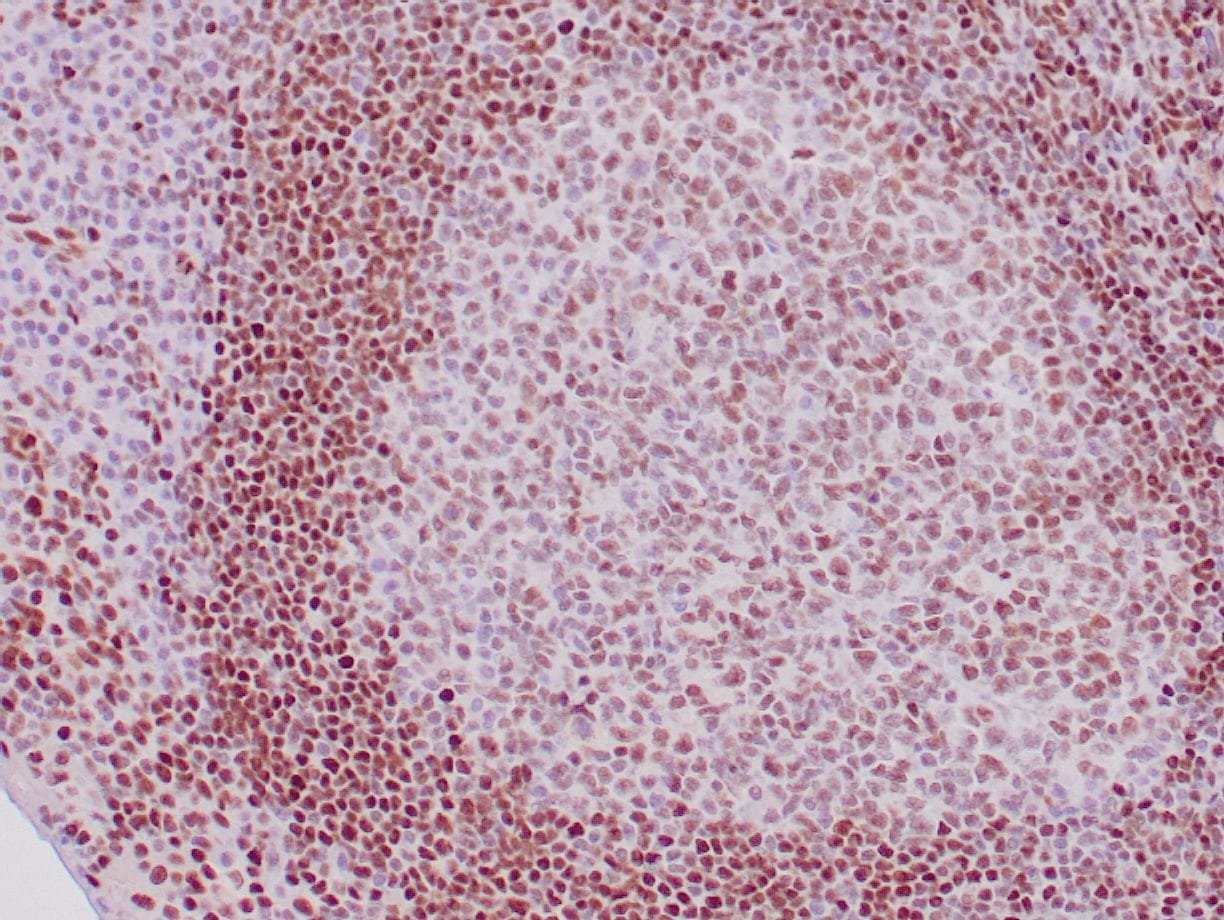 |
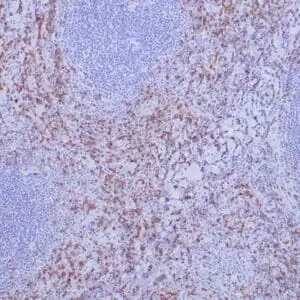
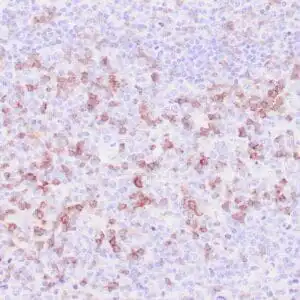
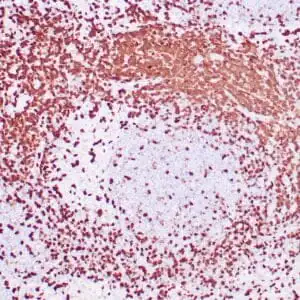
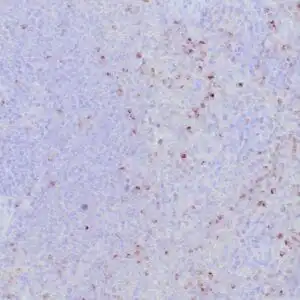
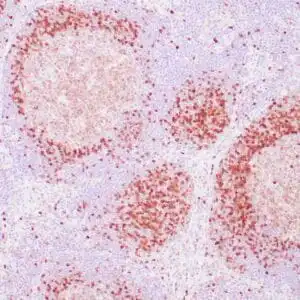
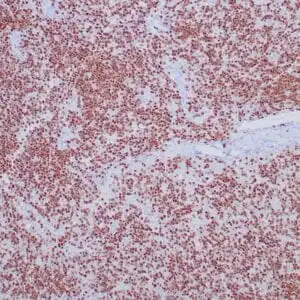
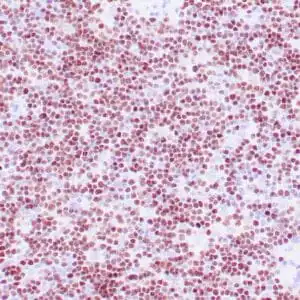
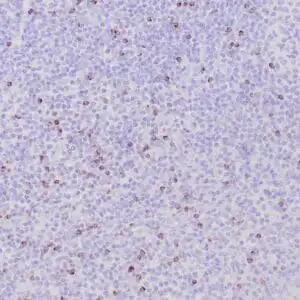
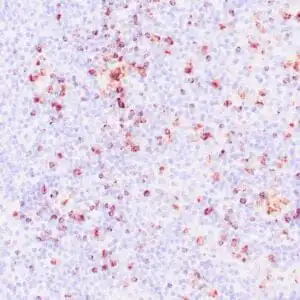
| Human tonsil stained with anti-FoxP1 antibody using peroxidase-conjugate and DAB chromogen. Note the nuclear staining of follicular and mantle B-cells. |
FAQ & Publications
Frequently Asked Questions
What species does the rabbit anti-FoxP1 monoclonal antibody (ZR333) specifically react with?
This antibody is reactive with human species only.
Which applications has the rabbit anti-FoxP1 monoclonal antibody been validated for?
The antibody has been tested and recommended for use in immunohistochemistry (IHC) on formalin-fixed, paraffin-embedded tissues.
What are the recommended storage conditions for this antibody to maintain its stability?
For short-term storage, keep the antibody at 2-8°C. For long-term storage, it should be stored at -20°C, and freeze/thaw cycles should be avoided.
What types of antibody formats and concentrations are available for the rabbit anti-FoxP1 monoclonal antibody?
The antibody is available as concentrated formats in 0.1 mL, 0.5 mL, and 1.0 mL volumes, as well as a 7 mL prediluted format.
What control tissue is recommended to validate staining specificity when using this antibody in IHC?
Human tonsil tissue is recommended as a positive control for immunohistochemical validation of this antibody.
Publications
| pmid | title | authors | citation |
|---|---|---|---|
| We haven't added any publications to our database yet. | |||
Published literature highly relevant to the biological target of this product and referencing this antibody or clone are retrieved from the PubMed database provided by the United States National Library of Medicine at the National Institutes of Health.
Protocols
| relevant to this product |
|---|
| IHC |
Documents
| Batch Number | QC File | SDS |
|---|---|---|
| To view batch-specific Safety Datasheets and Quality Certificates associated with your account, please Log In. | ||
Only logged in customers who have purchased this product may leave a review.


Reviews
There are no reviews yet.