| Weight | 1 lbs |
|---|---|
| Dimensions | 9 × 5 × 2 in |
| host | mouse |
| isotype | IgG |
| clonality | monoclonal |
| concentration | concentrate, predilute |
| applications | IHC |
| reactivity | human |
| available size | 0.1 mL, 0.5 mL, 1 mL concentrated, 7 mL prediluted |

rabbit anti-CD45RA monoclonal antibody (ZR118) 6096
Price range: $160.00 through $528.00
Antibody summary
- Rabbit monoclonal to CD45RA
- Suitable for: Immunohistochemistry (formalin-fixed, paraffin-embedded tissues)
- Reacts with: Human
- Isotype:IgG
- Control: Lymph node or tonsil
- Visualization: Cell membrane
- 0.1, 0.5, 1.0 mL concentrated, 7 mL prediluted
rabbit anti-CD45RA monoclonal antibody ZR118 6096
| target relevance |
|---|
| Homo sapiens PTPRC Receptor-type tyrosine-protein phosphatase C |
| Protein names Receptor-type tyrosine-protein phosphatase C |
| Alternative names Leukocyte common antigen, T200 |
| Gene names PTPRC |
| Protein family Belongs to the protein-tyrosine phosphatase family. Receptor class 1/6 subfamily |
| Function Protein tyrosine-protein phosphatase required for T-cell activation through the antigen receptor (PubMed:35767951). Acts as a positive regulator of T-cell coactivation upon binding to DPP4. The first PTPase domain has enzymatic activity, while the second one seems to affect the substrate specificity of the first one. Upon T-cell activation, recruits and dephosphorylates SKAP1 and FYN. Dephosphorylates LYN, and thereby modulates LYN activity (By similarity). Interacts with CLEC10A at antigen presenting cell-T cell contact; CLEC10A on immature dendritic cells recognizes Tn antigen-carrying PTPRC/CD45 receptor on effector T cells and modulates T cell activation threshold to limit autoreactivity |
| Catalytic activity O-phospho-L-tyrosyl-[protein] + H2O = L-tyrosyl-[protein] + phosphate |
| Subcellular location Cell membrane, Membrane raft, Synapse |
| Structure (Microbial infection) Interacts with human cytomegalovirus protein UL11; the interaction is required for binding of UL11 to T-cells |
| Post-translational modification Heavily N- and O-glycosylated |
| Involvement in disease Multiple sclerosis A multifactorial, inflammatory, demyelinating disease of the central nervous system. Sclerotic lesions are characterized by perivascular infiltration of monocytes and lymphocytes and appear as indurated areas in pathologic specimens (sclerosis in plaques). The pathological mechanism is regarded as an autoimmune attack of the myelin sheath, mediated by both cellular and humoral immunity. Clinical manifestations include visual loss, extra-ocular movement disorders, paresthesias, loss of sensation, weakness, dysarthria, spasticity, ataxia and bladder dysfunction. Genetic and environmental factors influence susceptibility to the disease. Immunodeficiency 105, severe combined An autosomal recessive disorder characterized by recurrent infections in early infancy, decreased or absent numbers of non-functional T cells, normal or increased levels of B cells, hypogammaglobulinemia, and normal or low NK cells. Clinical manifestations may include pneumonia, dermatitis, and lymphadenopathy. |
| Keywords 3D-structure, Alternative splicing, Cell membrane, Disease variant, Glycoprotein, Host-virus interaction, Hydrolase, Membrane, Phosphoprotein, Protein phosphatase, Proteomics identification, Reference proteome, Repeat, SCID, Signal, Synapse, Transmembrane, Transmembrane helix |
| Sequence MTMYLWLKLLAFGFAFLDTEVFVTGQSPTPSPTGLTTAKMPSVPLSSDPLPTHTTAFSPA STFERENDFSETTTSLSPDNTSTQVSPDSLDNASAFNTTGVSSVQTPHLPTHADSQTPSA GTDTQTFSGSAANAKLNPTPGSNAISDVPGERSTASTFPTDPVSPLTTTLSLAHHSSAAL PARTSNTTITANTSDAYLNASETTTLSPSGSAVISTTTIATTPSKPTCDEKYANITVDYL YNKETKLFTAKLNVNENVECGNNTCTNNEVHNLTECKNASVSISHNSCTAPDKTLILDVP PGVEKFQLHDCTQVEKADTTICLKWKNIETFTCDTQNITYRFQCGNMIFDNKEIKLENLE PEHEYKCDSEILYNNHKFTNASKIIKTDFGSPGEPQIIFCRSEAAHQGVITWNPPQRSFH NFTLCYIKETEKDCLNLDKNLIKYDLQNLKPYTKYVLSLHAYIIAKVQRNGSAAMCHFTT KSAPPSQVWNMTVSMTSDNSMHVKCRPPRDRNGPHERYHLEVEAGNTLVRNESHKNCDFR VKDLQYSTDYTFKAYFHNGDYPGEPFILHHSTSYNSKALIAFLAFLIIVTSIALLVVLYK IYDLHKKRSCNLDEQQELVERDDEKQLMNVEPIHADILLETYKRKIADEGRLFLAEFQSI PRVFSKFPIKEARKPFNQNKNRYVDILPYDYNRVELSEINGDAGSNYINASYIDGFKEPR KYIAAQGPRDETVDDFWRMIWEQKATVIVMVTRCEEGNRNKCAEYWPSMEEGTRAFGDVV VKINQHKRCPDYIIQKLNIVNKKEKATGREVTHIQFTSWPDHGVPEDPHLLLKLRRRVNA FSNFFSGPIVVHCSAGVGRTGTYIGIDAMLEGLEAENKVDVYGYVVKLRRQRCLMVQVEA QYILIHQALVEYNQFGETEVNLSELHPYLHNMKKRDPPSEPSPLEAEFQRLPSYRSWRTQ HIGNQEENKSKNRNSNVIPYDYNRVPLKHELEMSKESEHDSDESSDDDSDSEEPSKYINA SFIMSYWKPEVMIAAQGPLKETIGDFWQMIFQRKVKVIVMLTELKHGDQEICAQYWGEGK QTYGDIEVDLKDTDKSSTYTLRVFELRHSKRKDSRTVYQYQYTNWSVEQLPAEPKELISM IQVVKQKLPQKNSSEGNKHHKSTPLLIHCRDGSQQTGIFCALLNLLESAETEEVVDIFQV VKALRKARPGMVSTFEQYQFLYDVIASTYPAQNGQVKKNNHQEDKIEFDNEVDKVKQDAN CVNPLGAPEKLPEAKEQAEGSEPTSGTEGPEHSVNGPASPALNQGS |
| UniProt accession: P08575 |
Data
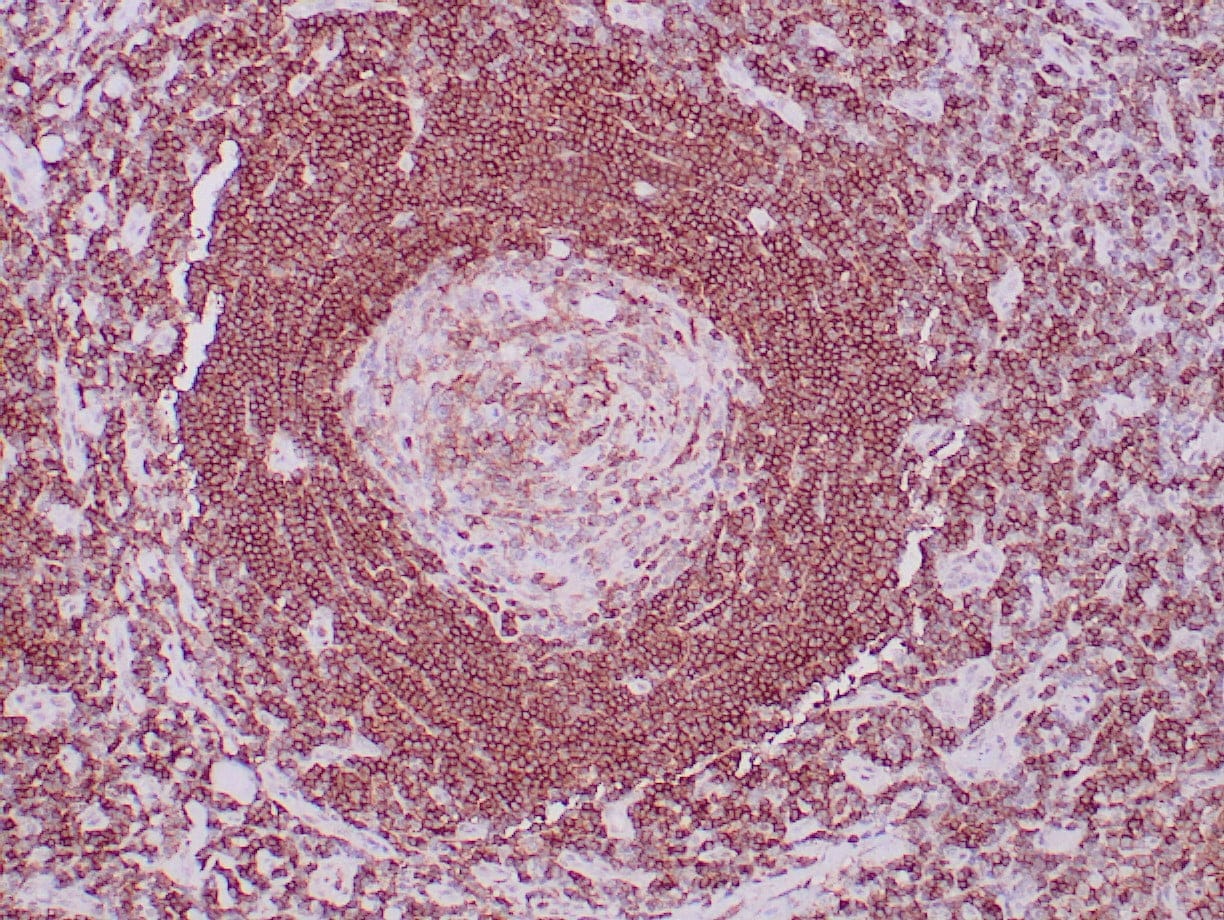 |
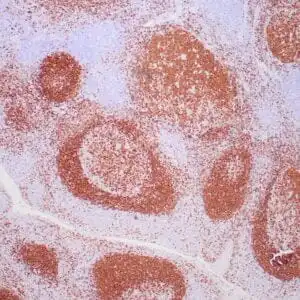
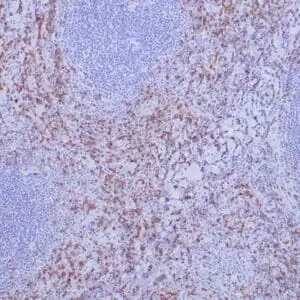
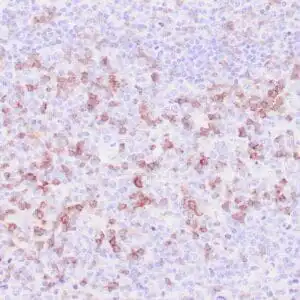
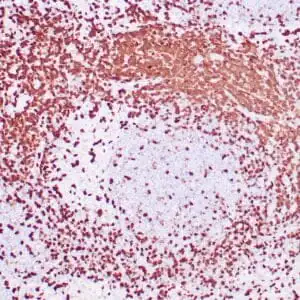
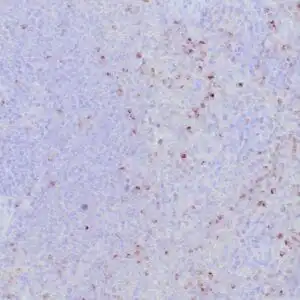
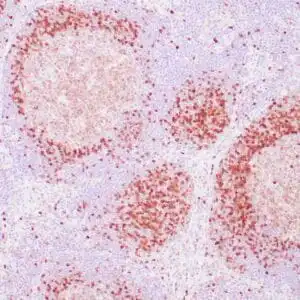
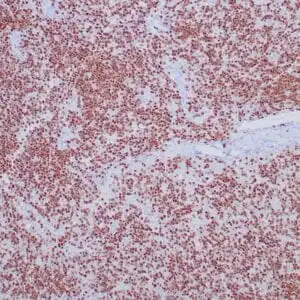
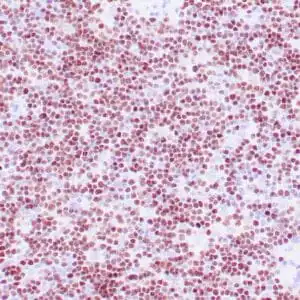
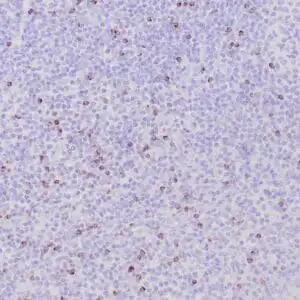
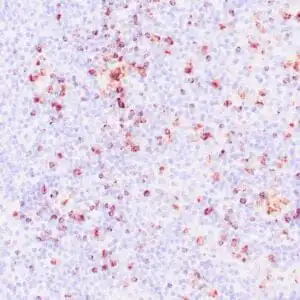
| Formalin-fixed, paraffin-embedded human lymph node stained with anti-CD45RA antibody using peroxidase- conjugate and DAB chromogen. Note the membrane staining of B-cells in mantle (strong) and in follicle (weak) |
FAQ & Publications
Frequently Asked Questions
What species does the rabbit anti-CD45RA monoclonal antibody (ZR118) specifically react with?
This antibody specifically reacts with human species.
What are the recommended applications and suitable tissue types for using this anti-CD45RA antibody?
The antibody is suitable for immunohistochemistry (IHC) on formalin-fixed, paraffin-embedded human tissues, with lymph node or tonsil recommended as positive controls.
How should the rabbit anti-CD45RA monoclonal antibody be stored to maintain its stability?
For short-term storage, keep the antibody at 2-8°C. For long-term storage, it should be stored at -20°C while avoiding repeated freeze/thaw cycles.
What are the available concentrations and sizes for this rabbit anti-CD45RA monoclonal antibody product?
This antibody is available as concentrated solutions in 0.1 mL, 0.5 mL, and 1.0 mL sizes, as well as a 7 mL prediluted format.
Publications
| pmid | title | authors | citation |
|---|---|---|---|
| We haven't added any publications to our database yet. | |||
Published literature highly relevant to the biological target of this product and referencing this antibody or clone are retrieved from the PubMed database provided by the United States National Library of Medicine at the National Institutes of Health.
Protocols
| relevant to this product |
|---|
| IHC |
Documents
| Batch Number | QC File | SDS |
|---|---|---|
| To view batch-specific Safety Datasheets and Quality Certificates associated with your account, please Log In. | ||
Only logged in customers who have purchased this product may leave a review.


Reviews
There are no reviews yet.