| Weight | 1 lbs |
|---|---|
| Dimensions | 9 × 5 × 2 in |
| host | mouse |
| isotype | IgG |
| clonality | monoclonal |
| concentration | concentrate, predilute |
| applications | IHC |
| reactivity | human |
| available size | 0.1 mL, 0.5 mL, 1 mL concentrated, 7 mL prediluted |

rabbit anti-CD138 monoclonal antibody (ZR251) 6061
Price range: $160.00 through $528.00
Antibody summary
- Rabbit monoclonal to CD138
- Suitable for: Immunohistochemistry (formalin-fixed, paraffin-embedded tissues)
- Reacts with: Human
- Isotype:IgG
- Control: Tonsil
- Visualization: Cell membrane/cytoplasmic
- 0.1, 0.5, 1.0 mL concentrated, 7 mL prediluted
rabbit anti-CD138 monoclonal antibody ZR251 6061
| target relevance |
|---|
| Homo sapiens SDC1 Syndecan-1 |
| Protein names Syndecan-1 |
| Gene names SDC1 |
| Protein family Belongs to the syndecan proteoglycan family |
| Function Cell surface proteoglycan that contains both heparan sulfate and chondroitin sulfate and that links the cytoskeleton to the interstitial matrix (By similarity). Regulates exosome biogenesis in concert with SDCBP and PDCD6IP (PubMed:22660413). Able to induce its own expression in dental mesenchymal cells and also in the neighboring dental epithelial cells via an MSX1-mediated pathway (By similarity) |
| Subcellular location Membrane, Secreted, Secreted, extracellular exosome |
| Structure Interacts with CDCP1. Interacts (via C-terminus) with TIAM1 (via PDZ domain). Interacts with MDK (By similarity) |
| Post-translational modification Shedding is enhanced by a number of factors such as heparanase, thrombin or EGF. Also by stress and wound healing. PMA-mediated shedding is inhibited by TIMP3 |
| Keywords 3D-structure, Glycoprotein, Heparan sulfate, Membrane, Phosphoprotein, Proteoglycan, Proteomics identification, Reference proteome, Secreted, Signal, Transmembrane, Transmembrane helix |
| Sequence MRRAALWLWLCALALSLQPALPQIVATNLPPEDQDGSGDDSDNFSGSGAGALQDITLSQQ TPSTWKDTQLLTAIPTSPEPTGLEATAASTSTLPAGEGPKEGEAVVLPEVEPGLTAREQE ATPRPRETTQLPTTHLASTTTATTAQEPATSHPHRDMQPGHHETSTPAGPSQADLHTPHT EDGGPSATERAAEDGASSQLPAAEGSGEQDFTFETSGENTAVVAVEPDRRNQSPVDQGAT GASQGLLDRKEVLGGVIAGGLVGLIFAVCLVGFMLYRMKKKDEGSYSLEEPKQANGGAYQ KPTKQEEFYA |
| UniProt accession: P18827 |
Data
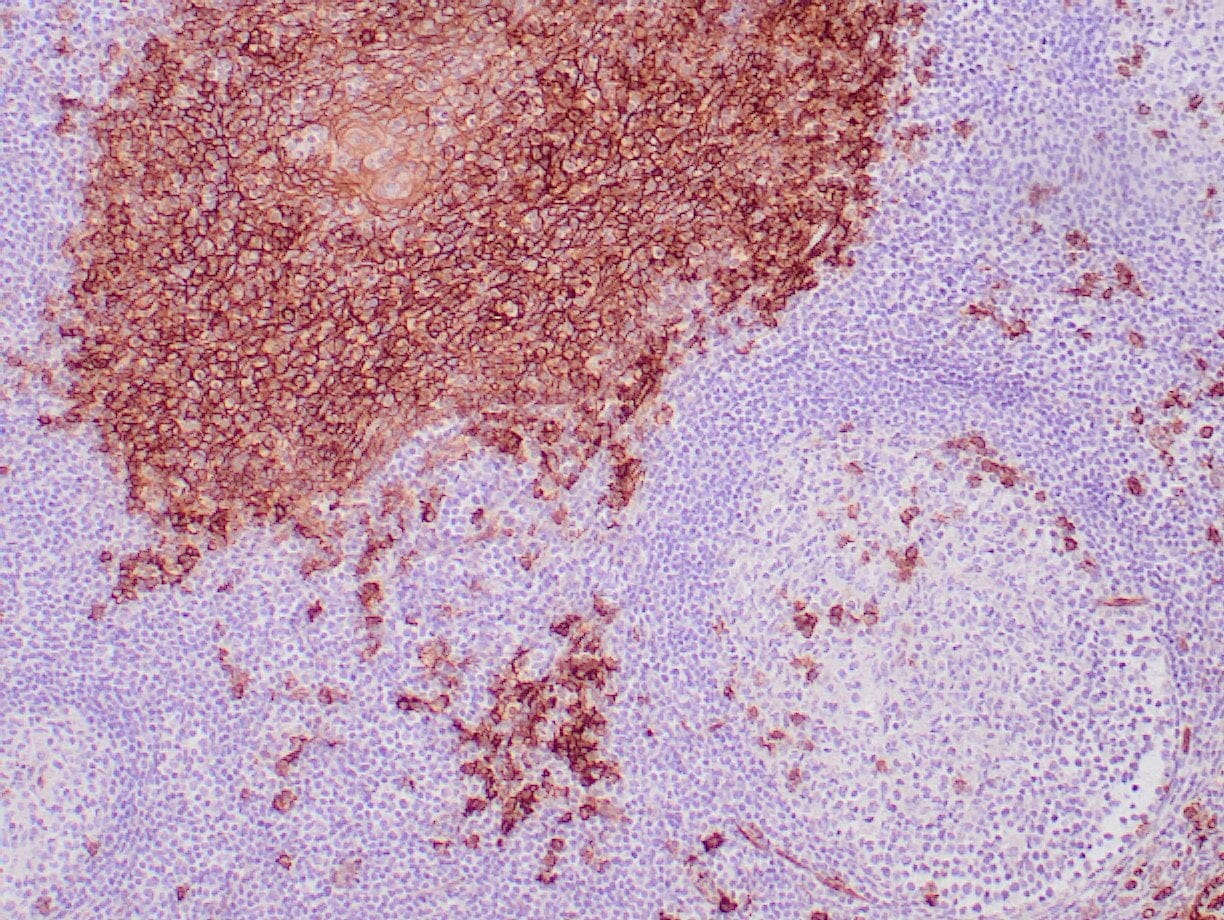 |
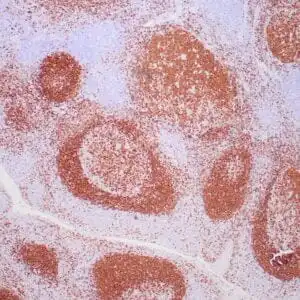
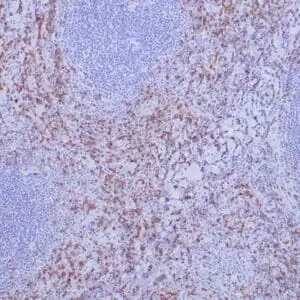
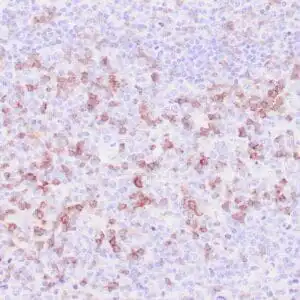
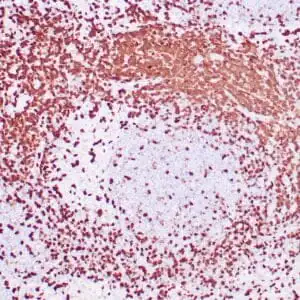
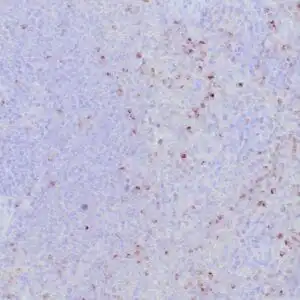
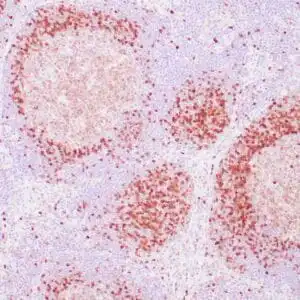
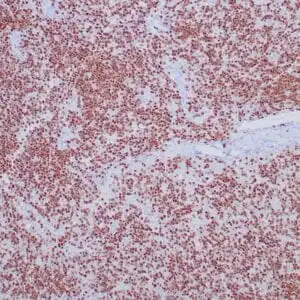
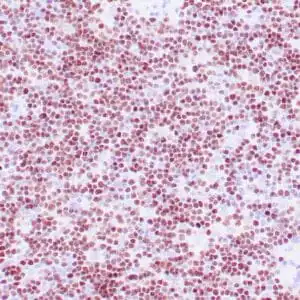
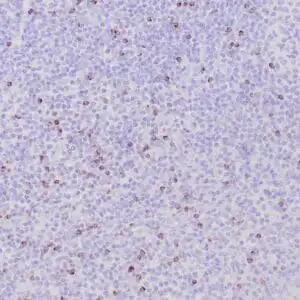
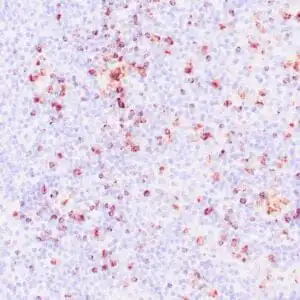
| Formalin-fixed, paraffin-embedded human tonsil stained with anti-CD138 antibody using peroxidase-conjugate and DAB chromogen. Note the cytoplasmic staining of plasma cells and squamous epithelium |
FAQ & Publications
Frequently Asked Questions
What species does the rabbit anti-CD138 monoclonal antibody (ZR251) specifically react with?
This antibody specifically reacts with human CD138 protein.
How should the rabbit anti-CD138 monoclonal antibody be stored to maintain its stability?
For short-term storage, keep the antibody at 2-8°C. For long-term storage, it should be stored at -20°C, avoiding repeated freeze/thaw cycles.
What is the recommended dilution range for using the concentrated rabbit anti-CD138 monoclonal antibody in immunohistochemistry (IHC)?
The recommended dilution for the concentrated antibody in IHC applications is between 1:100 and 1:200.
Publications
| pmid | title | authors | citation |
|---|---|---|---|
| We haven't added any publications to our database yet. | |||
Published literature highly relevant to the biological target of this product and referencing this antibody or clone are retrieved from the PubMed database provided by the United States National Library of Medicine at the National Institutes of Health.
Protocols
| relevant to this product |
|---|
| IHC |
Documents
| Batch Number | QC File | SDS |
|---|---|---|
| To view batch-specific Safety Datasheets and Quality Certificates associated with your account, please Log In. | ||
Only logged in customers who have purchased this product may leave a review.


Reviews
There are no reviews yet.