| Weight | 1 lbs |
|---|---|
| Dimensions | 9 × 5 × 2 in |
| host | mouse |
| isotype | IgG |
| clonality | monoclonal |
| concentration | concentrate, predilute |
| applications | IHC |
| reactivity | human |
| available size | 0.1 mL, 0.5 mL, 1 mL concentrated, 7 mL prediluted |

rabbit anti-CD10 monoclonal antibody (ZR329) 6053
Price range: $160.00 through $528.00
Antibody summary
- Rabbit monoclonal to CD10
- Suitable for: Immunohistochemistry (formalin-fixed, paraffin-embedded tissues)
- Reacts with: Human
- Isotype:IgG
- Control: Follicular lymphoma, lymph node
- Visualization: Membrane
- 0.1, 0.5, 1.0 mL concentrated, 7 mL prediluted
rabbit anti-CD10 monoclonal antibody ZR329 6053
| target relevance |
|---|
| Homo sapiens MME Neprilysin |
| Protein names Neprilysin |
| Alternative names Atriopeptidase, Common acute lymphocytic leukemia antigen, Enkephalinase, Neutral endopeptidase 24.11, Skin fibroblast elastase |
| Gene names MME |
| Protein family Belongs to the peptidase M13 family |
| Function Thermolysin-like specificity, but is almost confined on acting on polypeptides of up to 30 amino acids (PubMed:15283675, PubMed:6208535, PubMed:6349683, PubMed:8168535). Biologically important in the destruction of opioid peptides such as Met- and Leu-enkephalins by cleavage of a Gly-Phe bond (PubMed:17101991, PubMed:6349683). Catalyzes cleavage of bradykinin, substance P and neurotensin peptides (PubMed:6208535). Able to cleave angiotensin-1, angiotensin-2 and angiotensin 1-9 (PubMed:15283675, PubMed:6349683). Involved in the degradation of atrial natriuretic factor (ANF) and brain natriuretic factor (BNP(1-32)) (PubMed:16254193, PubMed:2531377, PubMed:2972276). Displays UV-inducible elastase activity toward skin preelastic and elastic fibers (PubMed:20876573) |
| Catalytic activity Preferential cleavage of polypeptides between hydrophobic residues, particularly with Phe or Tyr at P1'. substance P + H2O = substance P(1-9) + L-Leu-L-Met-NH2 substance P + H2O = substance P(1-7) + L-Phe-Gly-L-Leu-L-Met-NH2 neurotensin + H2O = neurotensin(1-11) + L-isoleucyl-L-leucine neurotensin + H2O = neurotensin(1-10) + L-tyrosyl-L-isoleucyl-L-leucine |
| Subcellular location Cell membrane |
| Post-translational modification Myristoylation is a determinant of membrane targeting Glycosylation at Asn-628 is necessary both for surface expression and neutral endopeptidase activity |
| Involvement in disease Charcot-Marie-Tooth disease, axonal, type 2T An axonal form of Charcot-Marie-Tooth disease, a disorder of the peripheral nervous system, characterized by progressive weakness and atrophy, initially of the peroneal muscles and later of the distal muscles of the arms. Charcot-Marie-Tooth disease is classified in two main groups on the basis of electrophysiologic properties and histopathology: primary peripheral demyelinating neuropathies (designated CMT1 when they are dominantly inherited) and primary peripheral axonal neuropathies (CMT2). Neuropathies of the CMT2 group are characterized by signs of axonal degeneration in the absence of obvious myelin alterations, normal or slightly reduced nerve conduction velocities, and progressive distal muscle weakness and atrophy. Spinocerebellar ataxia 43 A form of spinocerebellar ataxia, a clinically and genetically heterogeneous group of cerebellar disorders. Patients show progressive incoordination of gait and often poor coordination of hands, speech and eye movements, due to degeneration of the cerebellum with variable involvement of the brainstem and spinal cord. SCA43 is a slowly progressive, autosomal dominant form. |
| Keywords 3D-structure, Cell membrane, Charcot-Marie-Tooth disease, Disease variant, Disulfide bond, Glycoprotein, Hydrolase, Lipoprotein, Membrane, Metal-binding, Metalloprotease, Myristate, Neurodegeneration, Neuropathy, Phosphoprotein, Protease, Proteomics identification, Reference proteome, Signal-anchor, Spinocerebellar ataxia, Transmembrane, Transmembrane helix, Zinc |
| Sequence MGKSESQMDITDINTPKPKKKQRWTPLEISLSVLVLLLTIIAVTMIALYATYDDGICKSS DCIKSAARLIQNMDATTEPCTDFFKYACGGWLKRNVIPETSSRYGNFDILRDELEVVLKD VLQEPKTEDIVAVQKAKALYRSCINESAIDSRGGEPLLKLLPDIYGWPVATENWEQKYGA SWTAEKAIAQLNSKYGKKVLINLFVGTDDKNSVNHVIHIDQPRLGLPSRDYYECTGIYKE ACTAYVDFMISVARLIRQEERLPIDENQLALEMNKVMELEKEIANATAKPEDRNDPMLLY NKMTLAQIQNNFSLEINGKPFSWLNFTNEIMSTVNISITNEEDVVVYAPEYLTKLKPILT KYSARDLQNLMSWRFIMDLVSSLSRTYKESRNAFRKALYGTTSETATWRRCANYVNGNME NAVGRLYVEAAFAGESKHVVEDLIAQIREVFIQTLDDLTWMDAETKKRAEEKALAIKERI GYPDDIVSNDNKLNNEYLELNYKEDEYFENIIQNLKFSQSKQLKKLREKVDKDEWISGAA VVNAFYSSGRNQIVFPAGILQPPFFSAQQSNSLNYGGIGMVIGHEITHGFDDNGRNFNKD GDLVDWWTQQSASNFKEQSQCMVYQYGNFSWDLAGGQHLNGINTLGENIADNGGLGQAYR AYQNYIKKNGEEKLLPGLDLNHKQLFFLNFAQVWCGTYRPEYAVNSIKTDVHSPGNFRII GTLQNSAEFSEAFHCRKNSYMNPEKKCRVW |
| UniProt accession: P08473 |
Data
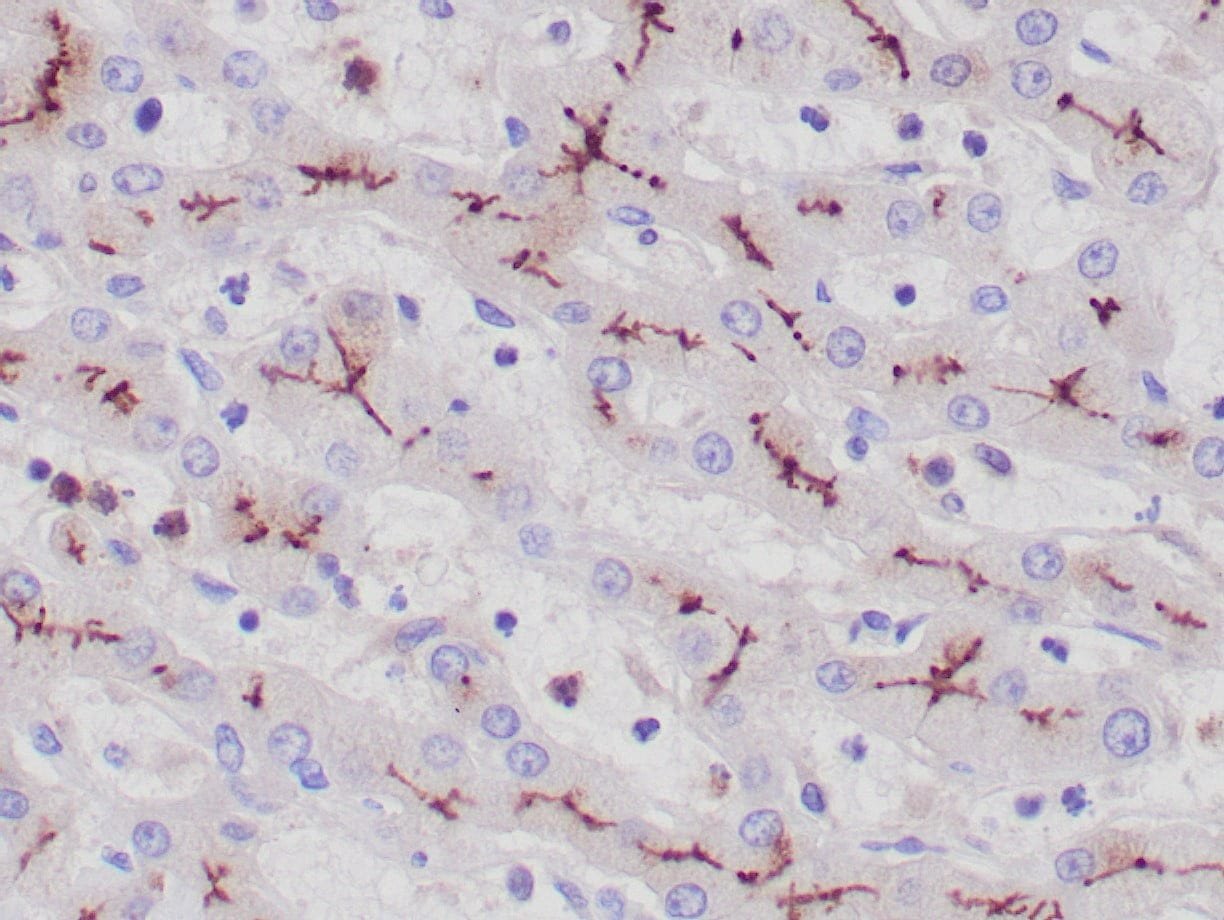 |
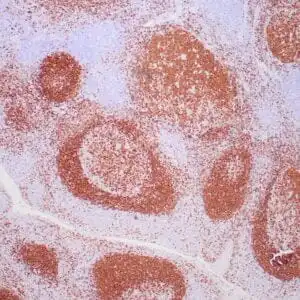
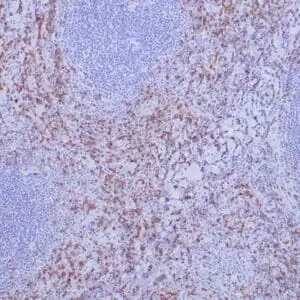
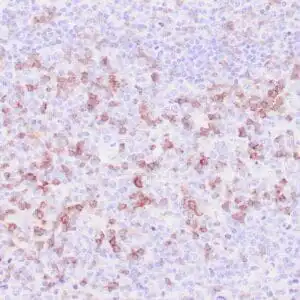
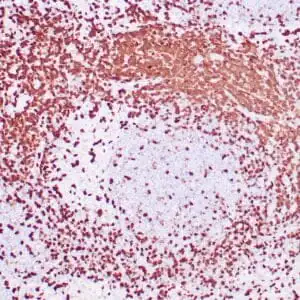
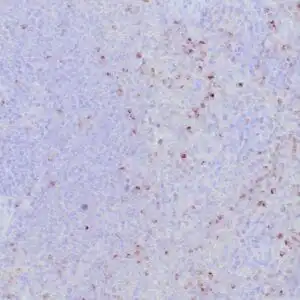
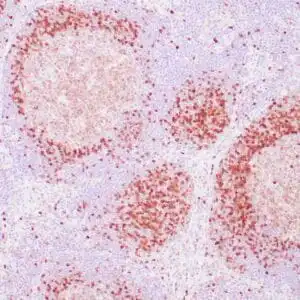
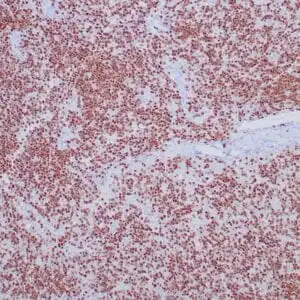
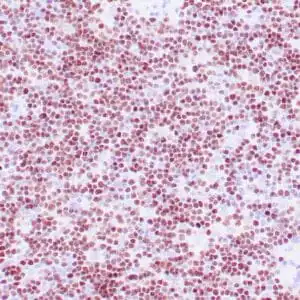
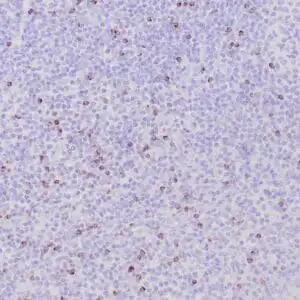
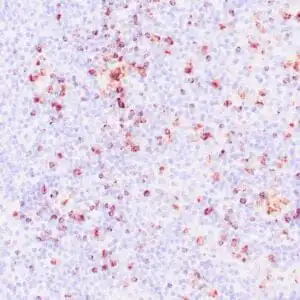
| Formalin-fixed, paraffin-embedded human liver stained with anti-CD10 antibody using peroxidase-conjugate and DAB chromogen. Note the canalicular staining of hepatocytes |
FAQ & Publications
Frequently Asked Questions
What applications is the rabbit anti-CD10 monoclonal antibody (ZR329) validated for?
This antibody is suitable for Immunohistochemistry (IHC) on formalin-fixed, paraffin-embedded human tissues.
Which species does the rabbit anti-CD10 monoclonal antibody (ZR329) react with?
This antibody specifically reacts with human CD10 protein.
How should the rabbit anti-CD10 monoclonal antibody (ZR329) be stored to maintain stability?
For short-term storage, keep the antibody at 2-8°C. For longer-term storage, it should be kept at -20°C, and freeze/thaw cycles should be avoided.
What is the recommended dilution for using the concentrated form of this anti-CD10 antibody in IHC?
The recommended dilution range for the concentrated antibody in immunohistochemistry is between 1:200 and 1:400.
What is the host species and clonality of this anti-CD10 antibody?
This antibody is a rabbit monoclonal antibody of the IgG isotype.
Publications
| pmid | title | authors | citation |
|---|---|---|---|
| We haven't added any publications to our database yet. | |||
Published literature highly relevant to the biological target of this product and referencing this antibody or clone are retrieved from the PubMed database provided by the United States National Library of Medicine at the National Institutes of Health.
Protocols
| relevant to this product |
|---|
| IHC |
Documents
| Batch Number | QC File | SDS |
|---|---|---|
| To view batch-specific Safety Datasheets and Quality Certificates associated with your account, please Log In. | ||
Only logged in customers who have purchased this product may leave a review.


Reviews
There are no reviews yet.