| Weight | 1 lbs |
|---|---|
| Dimensions | 9 × 5 × 2 in |
| host | mouse |
| isotype | IgG2b |
| clonality | monoclonal |
| concentration | concentrate, predilute |
| applications | IHC |
| reactivity | human |
| available size | 0.1 mL, 0.5 mL, 1 mL concentrated, 7 mL prediluted |

mouse anti-Granzyme B monoclonal antibody (ZM66) 6204
Price range: $160.00 through $528.00
Antibody summary
- Mouse monoclonal to Granzyme B
- Suitable for: Immunohistochemistry (formalin-fixed, paraffin-embedded tissues)
- Reacts with: Human
- Isotype:IgG2b
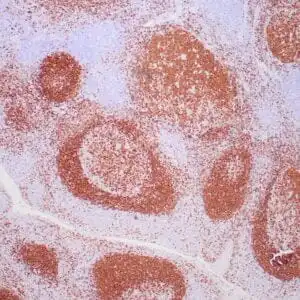
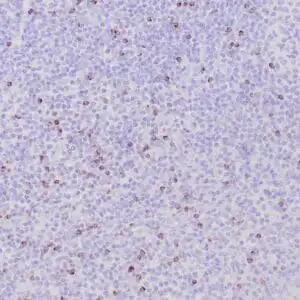
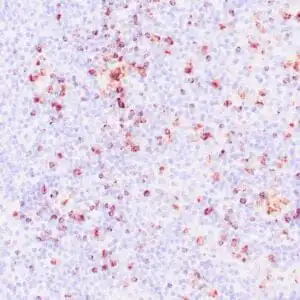
- Control: Tonsil
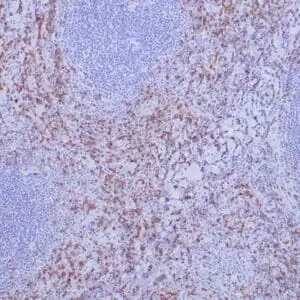
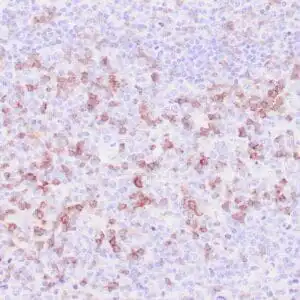
- Visualization: Granular cytoplasmic
- 0.1, 0.5, 1.0 mL concentrated, 7 mL prediluted
mouse anti-Granzyme B monoclonal antibody ZM66 6204
| target relevance |
|---|
| Homo sapiens GZMB Granzyme B |
| Protein names Granzyme B |
| Alternative names C11, CTLA-1, Cathepsin G-like 1, Cytotoxic T-lymphocyte proteinase 2, Fragmentin-2, Granzyme-2, Human lymphocyte protein, SECT, T-cell serine protease 1-3E |
| Gene names GZMB |
| Protein family Belongs to the peptidase S1 family. Granzyme subfamily |
| Function Abundant protease in the cytosolic granules of cytotoxic T-cells and NK-cells which activates caspase-independent pyroptosis when delivered into the target cell through the immunological synapse (PubMed:1985927, PubMed:3262682, PubMed:3263427). It cleaves after Asp (PubMed:1985927, PubMed:8258716). Once delivered into the target cell, acts by catalyzing cleavage of gasdermin-E (GSDME), releasing the pore-forming moiety of GSDME, thereby triggering pyroptosis and target cell death (PubMed:31953257, PubMed:32188940). Seems to be linked to an activation cascade of caspases (aspartate-specific cysteine proteases) responsible for apoptosis execution. Cleaves caspase-3, -9 and -10 (CASP3, CASP9 and CASP10, respectively) to give rise to active enzymes mediating apoptosis (PubMed:9852092). Cleaves and activates CASP7 in response to bacterial infection, promoting plasma membrane repair (By similarity) |
| Catalytic activity Preferential cleavage: -Asp-|-Xaa- >> -Asn-|-Xaa- > -Met-|-Xaa-, -Ser-|-Xaa-. |
| Subcellular location Secreted, Cytolytic granule |
| Keywords 3D-structure, Apoptosis, Cytolysis, Direct protein sequencing, Disulfide bond, Glycoprotein, Hydrolase, Lysosome, Protease, Proteomics identification, Reference proteome, Secreted, Serine protease, Signal, Zymogen |
| Sequence MQPILLLLAFLLLPRADAGEIIGGHEAKPHSRPYMAYLMIWDQKSLKRCGGFLIRDDFVL TAAHCWGSSINVTLGAHNIKEQEPTQQFIPVKRPIPHPAYNPKNFSNDIMLLQLERKAKR TRAVQPLRLPSNKAQVKPGQTCSVAGWGQTAPLGKHSHTLQEVKMTVQEDRKCESDLRHY YDSTIELCVGDPEIKKTSFKGDSGGPLVCNKVAQGIVSYGRNNGMPPRACTKVSSFVHWI KKTMKRY |
| UniProt accession: P10144 |
Data
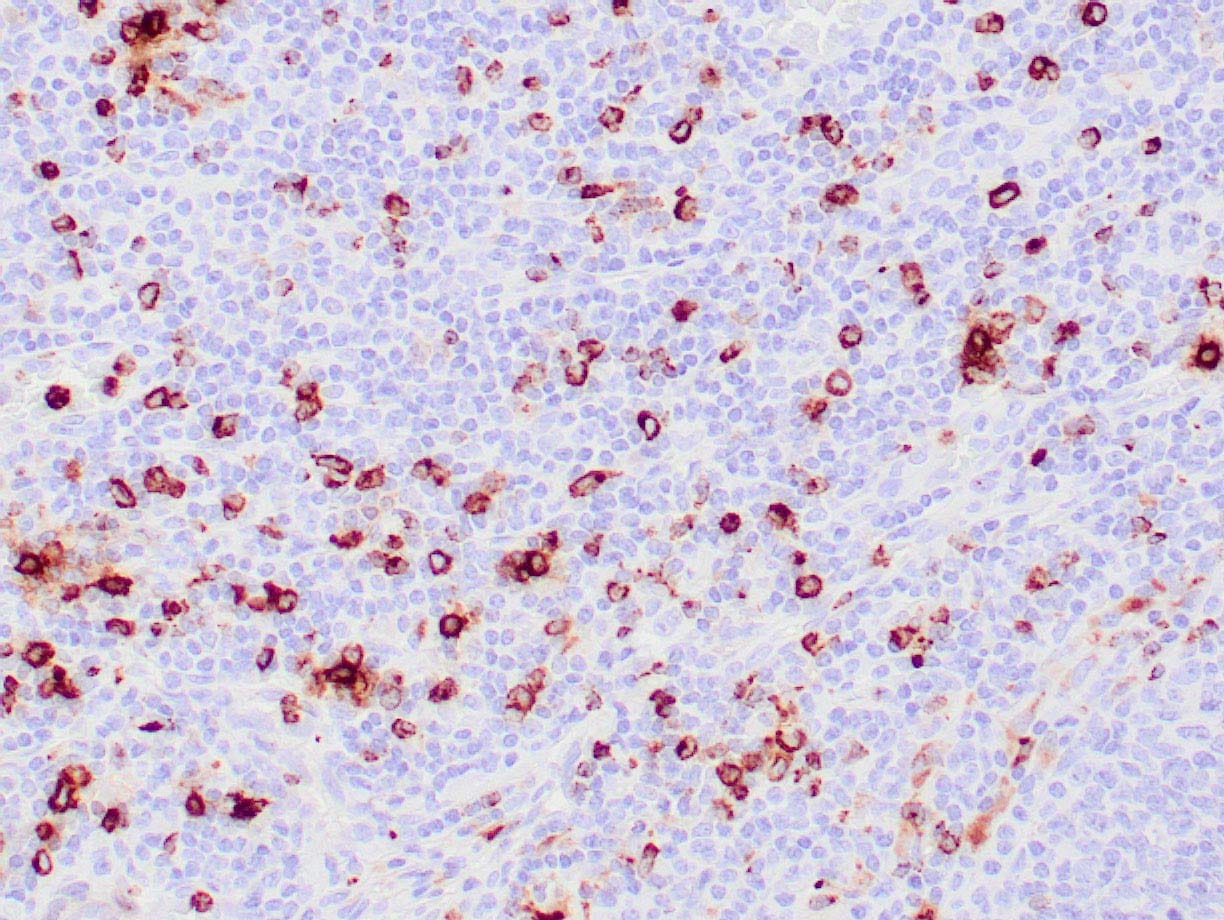 |
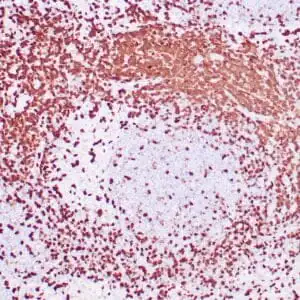
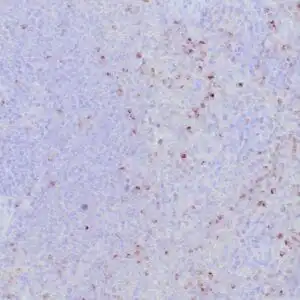
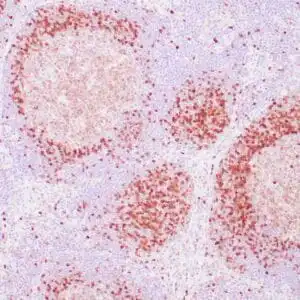
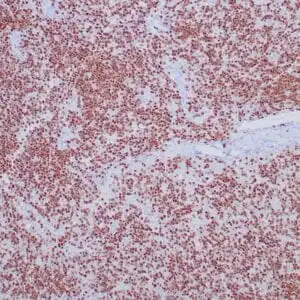
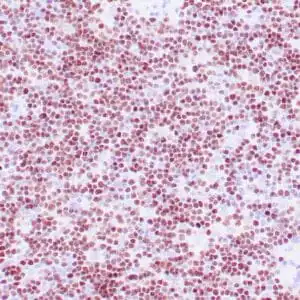
| Human tonsil stained with anti-Granzyme B antibody using peroxidase-conjugate and DAB chromogen. Note cytoplasmic granular staining of cytotoxic T-cells. |
FAQ & Publications
Frequently Asked Questions
What is the primary application of the Campylobacter jejuni IgG ELISA Kit MD-6204?
The Campylobacter jejuni IgG ELISA Kit MD-6204 is designed for indirect, quantitative detection of IgG antibodies against Campylobacter jejuni in serum, plasma, or whole blood samples using ELISA methodology.
How should the Campylobacter jejuni IgG ELISA Kit MD-6204 be stored to maintain its stability?
The kit components should be stored refrigerated at 2-8°C to ensure proper preservation and performance of the assay reagents.
Which species’ antibodies does the Campylobacter jejuni IgG ELISA Kit MD-6204 specifically detect?
This ELISA kit specifically detects IgG antibodies that are reactive to Campylobacter jejuni, the bacterial species targeted by the assay.
What controls are included in the Campylobacter jejuni IgG ELISA Kit MD-6204 to validate assay performance?
The kit includes positive, cutoff, and negative controls containing preservatives such as MIT and Oxypyrion to ensure assay accuracy and reliability during testing.
What species does the mouse anti-Granzyme B monoclonal antibody (ZM66) 6204 react with?
This antibody is reactive with human Granzyme B protein.
What are the recommended storage conditions for the mouse anti-Granzyme B monoclonal antibody (ZM66) 6204?
Store the antibody at 2-8°C for short term use and at -20°C for long term storage, avoiding freeze/thaw cycles.
For which application is this mouse anti-Granzyme B monoclonal antibody validated, and what is the suggested dilution?
It is validated for immunohistochemistry (IHC) on formalin-fixed, paraffin-embedded tissues with a recommended concentrated antibody dilution of 1:100-200.
Publications
| pmid | title | authors | citation |
|---|---|---|---|
| We haven't added any publications to our database yet. | |||
Published literature highly relevant to the biological target of this product and referencing this antibody or clone are retrieved from the PubMed database provided by the United States National Library of Medicine at the National Institutes of Health.
Protocols
| relevant to this product |
|---|
| IHC |
Documents
| Batch Number | QC File | SDS |
|---|---|---|
| To view batch-specific Safety Datasheets and Quality Certificates associated with your account, please Log In. | ||
Only logged in customers who have purchased this product may leave a review.


Reviews
There are no reviews yet.