| Weight | 1 lbs |
|---|---|
| Dimensions | 9 × 5 × 2 in |
| host | mouse |
| isotype | IgG |
| clonality | monoclonal |
| concentration | concentrate, predilute |
| applications | IHC |
| reactivity | human |
| available size | 0.1 mL, 0.5 mL, 1 mL concentrated, 7 mL prediluted |

rabbit anti-Smoothelin monoclonal antibody (ZR169) 6436
Price range: $160.00 through $528.00
Antibody summary
- Rabbit monoclonal to Smoothelin
- Suitable for: Immunohistochemistry (formalin-fixed, paraffin-embedded tissues)
- Reacts with: Human
- Isotype:IgG
- Control: Leiomyoma
- Visualization: Cytoplasmic and nuclear
- 0.1, 0.5, 1.0 mL concentrated, 7 mL prediluted
rabbit anti-Smoothelin monoclonal antibody ZR169 6436
| target relevance |
|---|
| Homo sapiens SVIL Supervillin |
| Protein names Supervillin |
| Alternative names Archvillin, p205/p250 |
| Gene names SVIL |
| Protein family Belongs to the villin/gelsolin family |
| Function Forms a high-affinity link between the actin cytoskeleton and the membrane. Is among the first costameric proteins to assemble during myogenesis and it contributes to myogenic membrane structure and differentiation (PubMed:12711699). Appears to be involved in myosin II assembly. May modulate myosin II regulation through MLCK during cell spreading, an initial step in cell migration. May play a role in invadopodial function (PubMed:19109420). In addition to its cytoskeletal activities, acts as a cofactor or scaffold for KDM1A, facilitating H3K9me2 demethylation and promoting gene activation, especially in neuronal contexts (PubMed:25684206) |
| Subcellular location Cell membrane, Cytoplasm, cytoskeleton, Cell projection, invadopodium, Cell projection, podosome, Midbody, Cleavage furrow |
| Structure Interacts with TRIP6 (By similarity). Interacts with DYNLT1 (By similarity). Interacts with KIF14; at midbody during cytokinesis (By similarity) |
| Involvement in disease Myopathy, myofibrillar, 10 A form of myofibrillar myopathy, a group of chronic neuromuscular disorders characterized at ultrastructural level by disintegration of the sarcomeric Z disk and myofibrils, and replacement of the normal myofibrillar markings by small dense granules, or larger hyaline masses, or amorphous material. MFM10 is an autosomal recessive disorder characterized by muscle pain, cramping, exercise fatigue, and progressive muscle rigidity. |
| Keywords 3D-structure, Actin-binding, Alternative splicing, Calcium, Cell junction, Cell membrane, Cell projection, Cytoplasm, Cytoskeleton, Desmin-related myopathy, Disease variant, Membrane, Methylation, Myofibrillar myopathy, Phosphoprotein, Proteomics identification, Reference proteome, Repeat |
| Sequence MKRKERIARRLEGIENDTQPILLQSCTGLVTHRLLEEDTPRYMRASDPASPHIGRSNEEE ETSDSSLEKQTRSKYCTETSGVHGDSPYGSGTMDTHSLESKAERIARYKAERRRQLAEKY GLTLDPEADSEYLSRYTKSRKEPDAVEKRGGKSDKQEESSRDASSLYPGTETMGLRTCAG ESKDYALHVGDGSSDPEVLLNIENQRRGQELSATRQAHDLSPAAESSSTFSFSGRDSSFT EVPRSPKHAHSSSLQQAASRSPSFGDPQLSPEARPSTGKPKHEWFLQKDSEGDTPSLINW PSRVKVREKLVKEESARNSPELASESVTQRRHQPAPVHYVSFQSEHSAFDRVPSKAAGST RQPIRGYVQPADTGHTAKLVTPETPENASECSWVASATQNVPKPPSLTVLEGDGRDSPVL HVCESKAEEEEGEGEGEEKEEDVCFTEALEQSKKTLLALEGDGLVRSPEDPSRNEDFGKP AVSTVTLEHQKELENVAQPPQAPHQPTERTGRSEMVLYIQSEPVSQDAKPTGHNREASKK RKVRTRSLSDFTGPPQLQALKYKDPASRRELELPSSKTEGPYGEISMLDTKVSVAQLRSA FLASANACRRPELKSRVERSAEGPGLPTGVERERGSRKPRRYFSPGESRKTSERFRTQPI TSAERKESDRCTSHSETPTVDDEEKVDERAKLSVAAKRLLFREMEKSFDEQNVPKRRSRN TAVEQRLRRLQDRSLTQPITTEEVVIAATEPIPASCSGGTHPVMARLPSPTVARSAVQPA RLQASAHQKALAKDQTNEGKELAEQGEPDSSTLSLAEKLALFNKLSQPVSKAISTRNRID TRQRRMNARYQTQPVTLGEVEQVQSGKLIPFSPAVNTSVSTVASTVAPMYAGDLRTKPPL DHNASATDYKFSSSIENSDSPVRSILKSQAWQPLVEGSENKGMLREYGETESKRALTGRD SGMEKYGSFEEAEASYPILNRAREGDSHKESKYAVPRRGSLERANPPITHLGDEPKEFSM AKMNAQGNLDLRDRLPFEEKVEVENVMKRKFSLRAAEFGEPTSEQTGTAAGKTIAQTTAP VSWKPQDSSEQPQEKLCKNPCAMFAAGEIKTPTGEGLLDSPSKTMSIKERLALLKKSGEE DWRNRLSRRQEGGKAPASSLHTQEAGRSLIKKRVTESRESQMTIEERKQLITVREEAWKT RGRGAANDSTQFTVAGRMVKKGLASPTAITPVASPICGKTRGTTPVSKPLEDIEARPDMQ LESDLKLDRLETFLRRLNNKVGGMHETVLTVTGKSVKEVMKPDDDETFAKFYRSVDYNMP RSPVEMDEDFDVIFDPYAPKLTSSVAEHKRAVRPKRRVQASKNPLKMLAAREDLLQEYTE QRLNVAFMESKRMKVEKMSSNSNFSEVTLAGLASKENFSNVSLRSVNLTEQNSNNSAVPY KRLMLLQIKGRRHVQTRLVEPRASALNSGDCFLLLSPHCCFLWVGEFANVIEKAKASELA TLIQTKRELGCRATYIQTIEEGINTHTHAAKDFWKLLGGQTSYQSAGDPKEDELYEAAII ETNCIYRLMDDKLVPDDDYWGKIPKCSLLQPKEVLVFDFGSEVYVWHGKEVTLAQRKIAF QLAKHLWNGTFDYENCDINPLDPGECNPLIPRKGQGRPDWAIFGRLTEHNETILFKEKFL DWTELKRSNEKNPGELAQHKEDPRTDVKAYDVTRMVSMPQTTAGTILDGVNVGRGYGLVE GHDRRQFEITSVSVDVWHILEFDYSRLPKQSIGQFHEGDAYVVKWKFMVSTAVGSRQKGE HSVRAAGKEKCVYFFWQGRHSTVSEKGTSALMTVELDEERGAQVQVLQGKEPPCFLQCFQ GGMVVHSGRREEEEENVQSEWRLYCVRGEVPVEGNLLEVACHCSSLRSRTSMVVLNVNKA LIYLWHGCKAQAHTKEVGRTAANKIKEQCPLEAGLHSSSKVTIHECDEGSEPLGFWDALG RRDRKAYDCMLQDPGSFNFAPRLFILSSSSGDFAATEFVYPARAPSVVSSMPFLQEDLYS APQPALFLVDNHHEVYLWQGWWPIENKITGSARIRWASDRKSAMETVLQYCKGKNLKKPA PKSYLIHAGLEPLTFTNMFPSWEHREDIAEITEMDTEVSNQITLVEDVLAKLCKTIYPLA DLLARPLPEGVDPLKLEIYLTDEDFEFALDMTRDEYNALPAWKQVNLKKAKGLF |
| UniProt accession: O95425 |
Data
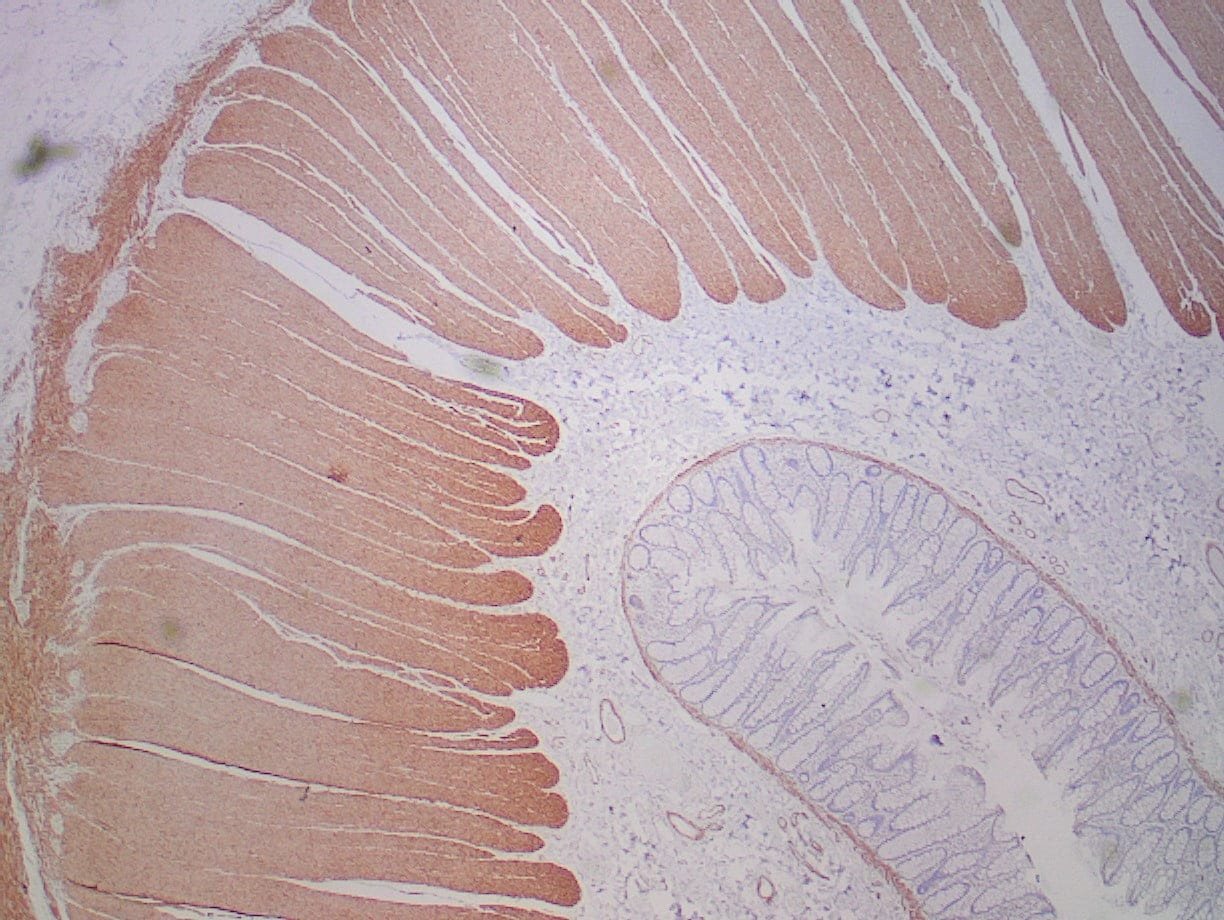 |
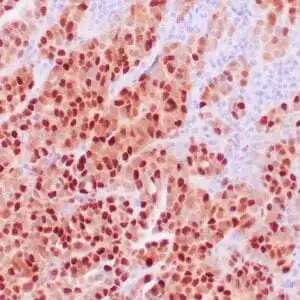
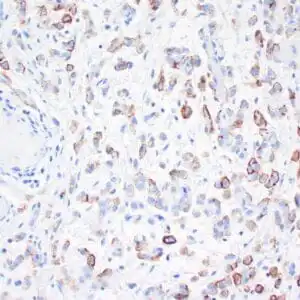
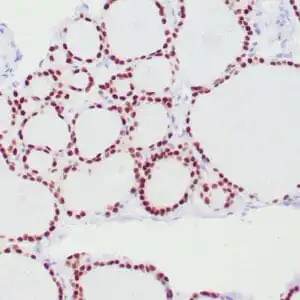
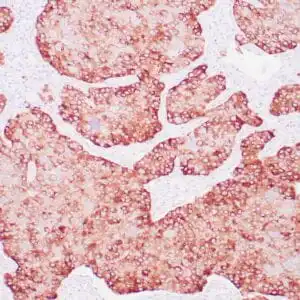
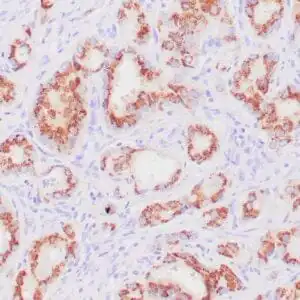
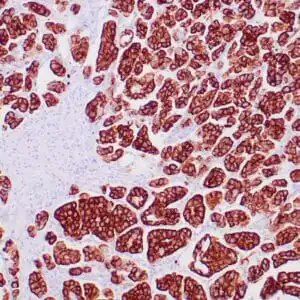
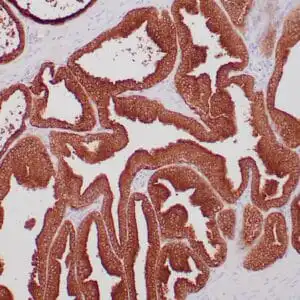
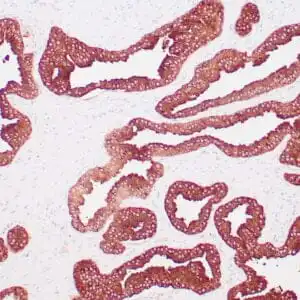
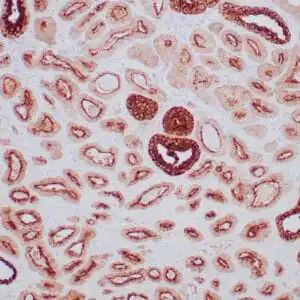
| Formalin-fixed, paraffin-embedded human colon stained with clone ZR169 using peroxidase-conjugate and DAB chromogen. Note strong cytoplasmic staining of muscularis propria and weak staining of muscularis mucosae. |
FAQ & Publications
Frequently Asked Questions
What species does the rabbit anti-Smoothelin monoclonal antibody (ZR169) specifically react with?
This antibody is reactive with human specimens, making it suitable for studies involving human tissues.
What are the recommended storage conditions for preserving the activity of the rabbit anti-Smoothelin monoclonal antibody (ZR169)?
For short-term storage, keep the antibody at 2-8°C. For long-term preservation, store it at -20°C and avoid repeated freeze-thaw cycles to maintain antibody integrity.
Which application and tissue control are validated for use with the rabbit anti-Smoothelin monoclonal antibody (ZR169)?
This antibody is validated for immunohistochemistry (IHC) on formalin-fixed, paraffin-embedded tissues, with leiomyoma tissue recommended as a positive control.
Publications
| pmid | title | authors | citation |
|---|---|---|---|
| We haven't added any publications to our database yet. | |||
Published literature highly relevant to the biological target of this product and referencing this antibody or clone are retrieved from the PubMed database provided by the United States National Library of Medicine at the National Institutes of Health.
Protocols
| relevant to this product |
|---|
| IHC |
Documents
| Batch Number | QC File | SDS |
|---|---|---|
| To view batch-specific Safety Datasheets and Quality Certificates associated with your account, please Log In. | ||
Only logged in customers who have purchased this product may leave a review.
Reviews
There are no reviews yet.