| Weight | 1 lbs |
|---|---|
| Dimensions | 9 × 5 × 2 in |
| host | mouse |
| isotype | IgG |
| clonality | monoclonal |
| concentration | concentrate, predilute |
| applications | IHC |
| reactivity | human |
| available size | 0.1 mL, 0.5 mL, 1 mL concentrated, 7 mL prediluted |

rabbit anti-PAX-2 monoclonal antibody (ZR224) 6319
Price range: $160.00 through $528.00
Antibody summary
- Rabbit monoclonal to PAX-2
- Suitable for: Immunohistochemistry (formalin-fixed, paraffin-embedded tissues)
- Reacts with: Human
- Isotype:IgG
- Control: Renal cell carcinoma
- Visualization: Nuclear
- 0.1, 0.5, 1.0 mL concentrated, 7 mL prediluted
rabbit anti-PAX-2 monoclonal antibody ZR224 6319
| target relevance |
|---|
| Homo sapiens PAX2 Paired box protein Pax-2 |
| Protein names Paired box protein Pax-2 |
| Gene names PAX2 |
| Function Transcription factor that may have a role in kidney cell differentiation (PubMed:24676634). Has a critical role in the development of the urogenital tract, the eyes, and the CNS |
| Subcellular location Nucleus |
| Structure Interacts with ELGN3; the interaction targets PAX2 for destruction. Interacts with TLE4 |
| Involvement in disease Papillorenal syndrome An autosomal dominant disorder characterized by both ocular and renal anomalies, but may also include vesicoureteral reflux, high frequency hearing loss, central nervous system anomalies, and/or genital anomalies. Eye anomalies in this disorder consist of a wide and sometimes excavated dysplastic optic disk with the emergence of the retinal vessels from the periphery of the disk, designated optic nerve coloboma or 'morning glory' anomaly. Associated findings may include a small corneal diameter, retinal coloboma, scleral staphyloma, optic nerve cyst, microphthalmia, and pigmentary macular dysplasia. The kidneys are small and abnormally formed (renal hypodysplasia), and have fewer than the normal number of glomeruli, which are enlarged (oligomeganephronia). These ocular and renal anomalies result in decreased visual acuity and retinal detachment, as well as hypertension, proteinuria, and renal insufficiency that frequently progresses to end-stage renal disease. Focal segmental glomerulosclerosis 7 A renal pathology defined by the presence of segmental sclerosis in glomeruli and resulting in proteinuria, reduced glomerular filtration rate and progressive decline in renal function. Renal insufficiency often progresses to end-stage renal disease, a highly morbid state requiring either dialysis therapy or kidney transplantation. |
| Keywords Alternative splicing, Developmental protein, Differentiation, Disease variant, DNA-binding, Nucleus, Paired box, Phosphoprotein, Proteomics identification, Reference proteome, Transcription, Transcription regulation |
| Sequence MDMHCKADPFSAMHPGHGGVNQLGGVFVNGRPLPDVVRQRIVELAHQGVRPCDISRQLRV SHGCVSKILGRYYETGSIKPGVIGGSKPKVATPKVVDKIAEYKRQNPTMFAWEIRDRLLA EGICDNDTVPSVSSINRIIRTKVQQPFHPTPDGAGTGVTAPGHTIVPSTASPPVSSASND PVGSYSINGILGIPRSNGEKRKRDEVEVYTDPAHIRGGGGLHLVWTLRDVSEGSVPNGDS QSGVDSLRKHLRADTFTQQQLEALDRVFERPSYPDVFQASEHIKSEQGNEYSLPALTPGL DEVKSSLSASTNPELGSNVSGTQTYPVVTGRDMASTTLPGYPPHVPPTGQGSYPTSTLAG MVPGSEFSGNPYSHPQYTAYNEAWRFSNPALLSSPYYYSAAPRGSAPAAAAAAYDRH |
| UniProt accession: Q02962 |
Data
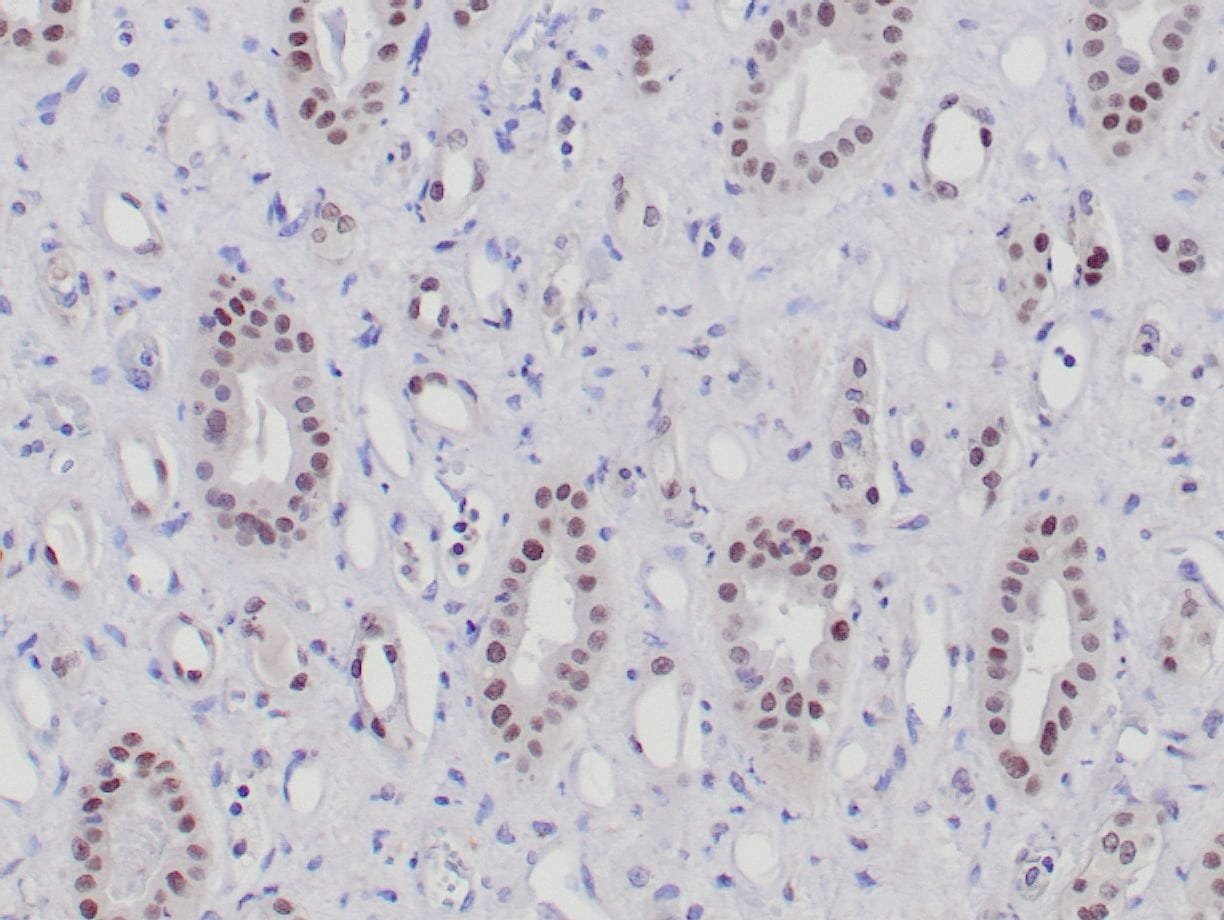 |
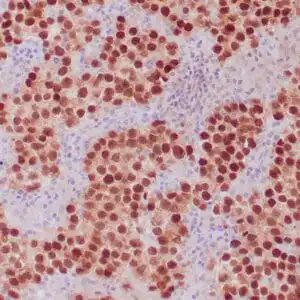
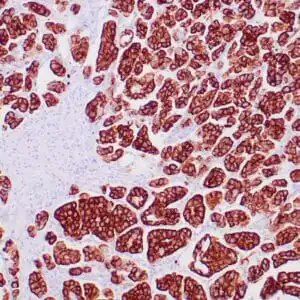
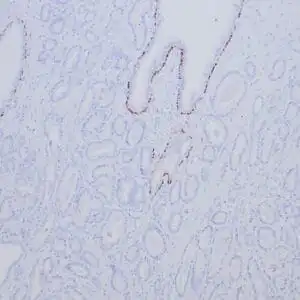
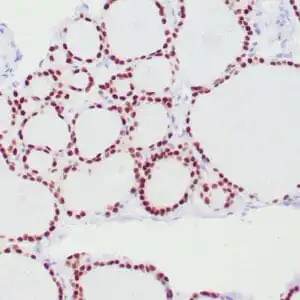
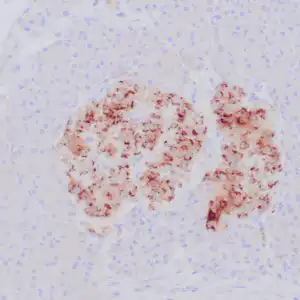
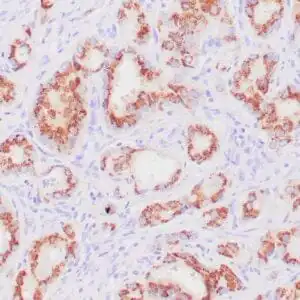
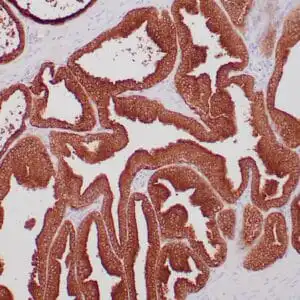
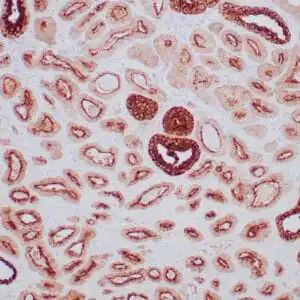
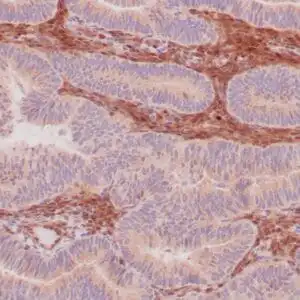
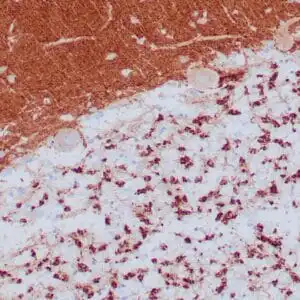
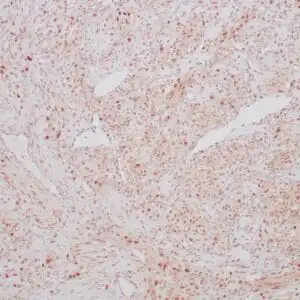
| Formalin-fixed, paraffin-embedded human normal kidney stained with anti-PAX-2 antibody using peroxidase-conjugate and DAB chromogen. Note nuclear staining of tubular cells |
FAQ & Publications
Frequently Asked Questions
What species is the rabbit anti-PAX-2 monoclonal antibody (ZR224) validated to react with?
This antibody is validated for reactivity with human tissue samples only.
Which applications is this rabbit anti-PAX-2 monoclonal antibody recommended for?
It is suitable for immunohistochemistry (IHC) on formalin-fixed, paraffin-embedded tissues.
How should the rabbit anti-PAX-2 monoclonal antibody be stored to maintain stability?
For short term storage, keep the antibody at 2-8°C, and for long term storage, freeze at -20°C. Avoid repeated freeze-thaw cycles to preserve antibody integrity.
What is the recommended dilution range for using the concentrated form of this rabbit anti-PAX-2 antibody in IHC?
The recommended dilution for the concentrated antibody is between 1:100 and 1:200 for immunohistochemistry applications.
Publications
| pmid | title | authors | citation |
|---|---|---|---|
| We haven't added any publications to our database yet. | |||
Published literature highly relevant to the biological target of this product and referencing this antibody or clone are retrieved from the PubMed database provided by the United States National Library of Medicine at the National Institutes of Health.
Protocols
| relevant to this product |
|---|
| IHC |
Documents
| Batch Number | QC File | SDS |
|---|---|---|
| To view batch-specific Safety Datasheets and Quality Certificates associated with your account, please Log In. | ||
Only logged in customers who have purchased this product may leave a review.

Reviews
There are no reviews yet.