| Weight | 1 lbs |
|---|---|
| Dimensions | 9 × 5 × 2 in |
| host | mouse |
| isotype | IgG |
| clonality | monoclonal |
| concentration | concentrate, predilute |
| applications | IHC |
| reactivity | human |
| available size | 0.1 mL, 0.5 mL, 1 mL concentrated, 7 mL prediluted |

rabbit anti-CD71 monoclonal antibody (ZR422) 6110
Price range: $160.00 through $528.00
Antibody summary
- Rabbit monoclonal to CD71
- Suitable for: Immunohistochemistry (formalin-fixed, paraffin-embedded tissues)
- Reacts with: Human
- Isotype:IgG
- Control: Bone marrow
- Visualization: Cytoplasmic
- 0.1, 0.5, 1.0 mL concentrated, 7 mL prediluted
rabbit anti-CD71 monoclonal antibody ZR422 6110
| target relevance |
|---|
| Homo sapiens TFRC Transferrin receptor protein 1 |
| Protein names Transferrin receptor protein 1 |
| Alternative names T9, Transferrin receptor 1, p90 |
| Gene names TFRC |
| Protein family Belongs to the peptidase M28 family. M28B subfamily |
| Function Cellular uptake of iron occurs via receptor-mediated endocytosis of ligand-occupied transferrin receptor into specialized endosomes (PubMed:26214738). Endosomal acidification leads to iron release. The apotransferrin-receptor complex is then recycled to the cell surface with a return to neutral pH and the concomitant loss of affinity of apotransferrin for its receptor. Transferrin receptor is necessary for development of erythrocytes and the nervous system (By similarity). A second ligand, the hereditary hemochromatosis protein HFE, competes for binding with transferrin for an overlapping C-terminal binding site. Positively regulates T and B cell proliferation through iron uptake (PubMed:26642240). Acts as a lipid sensor that regulates mitochondrial fusion by regulating activation of the JNK pathway (PubMed:26214738). When dietary levels of stearate (C18:0) are low, promotes activation of the JNK pathway, resulting in HUWE1-mediated ubiquitination and subsequent degradation of the mitofusin MFN2 and inhibition of mitochondrial fusion (PubMed:26214738). When dietary levels of stearate (C18:0) are high, TFRC stearoylation inhibits activation of the JNK pathway and thus degradation of the mitofusin MFN2 (PubMed:26214738). Mediates uptake of NICOL1 into fibroblasts where it may regulate extracellular matrix production (By similarity) |
| Subcellular location Secreted |
| Structure (Microbial infection) Interacts with Plasmodium vivax RBP2b; the interaction mediates parasite invasion into human reticulocytes |
| Post-translational modification Stearoylated by ZDHHC6 which inhibits TFRC-mediated activation of the JNK pathway and promotes mitochondrial fragmentation (PubMed:26214738). Stearoylation does not affect iron uptake (PubMed:26214738) N- and O-glycosylated, phosphorylated and palmitoylated. The serum form is only glycosylated Proteolytically cleaved on Arg-100 to produce the soluble serum form (sTfR) Palmitoylated on both Cys-62 and Cys-67. Cys-62 seems to be the major site of palmitoylation |
| Involvement in disease Immunodeficiency 46 An autosomal recessive primary immunodeficiency disorder characterized by early-onset chronic diarrhea, recurrent infections, hypo- or agammaglobulinemia, normal lymphocyte counts, intermittent neutropenia, and intermittent thrombocytopenia. |
| Keywords 3D-structure, Cell membrane, Direct protein sequencing, Disease variant, Disulfide bond, Endocytosis, Glycoprotein, Host cell receptor for virus entry, Host-virus interaction, Lipoprotein, Malaria, Membrane, Palmitate, Phosphoprotein, Proteomics identification, Receptor, Reference proteome, Secreted, Signal-anchor, Transducer, Transmembrane, Transmembrane helix |
| Sequence MMDQARSAFSNLFGGEPLSYTRFSLARQVDGDNSHVEMKLAVDEEENADNNTKANVTKPK RCSGSICYGTIAVIVFFLIGFMIGYLGYCKGVEPKTECERLAGTESPVREEPGEDFPAAR RLYWDDLKRKLSEKLDSTDFTGTIKLLNENSYVPREAGSQKDENLALYVENQFREFKLSK VWRDQHFVKIQVKDSAQNSVIIVDKNGRLVYLVENPGGYVAYSKAATVTGKLVHANFGTK KDFEDLYTPVNGSIVIVRAGKITFAEKVANAESLNAIGVLIYMDQTKFPIVNAELSFFGH AHLGTGDPYTPGFPSFNHTQFPPSRSSGLPNIPVQTISRAAAEKLFGNMEGDCPSDWKTD STCRMVTSESKNVKLTVSNVLKEIKILNIFGVIKGFVEPDHYVVVGAQRDAWGPGAAKSG VGTALLLKLAQMFSDMVLKDGFQPSRSIIFASWSAGDFGSVGATEWLEGYLSSLHLKAFT YINLDKAVLGTSNFKVSASPLLYTLIEKTMQNVKHPVTGQFLYQDSNWASKVEKLTLDNA AFPFLAYSGIPAVSFCFCEDTDYPYLGTTMDTYKELIERIPELNKVARAAAEVAGQFVIK LTHDVELNLDYERYNSQLLSFVRDLNQYRADIKEMGLSLQWLYSARGDFFRATSRLTTDF GNAEKTDRFVMKKLNDRVMRVEYHFLSPYVSPKESPFRHVFWGSGSHTLPALLENLKLRK QNNGAFNETLFRNQLALATWTIQGAANALSGDVWDIDNEF |
| UniProt accession: P02786 |
Data
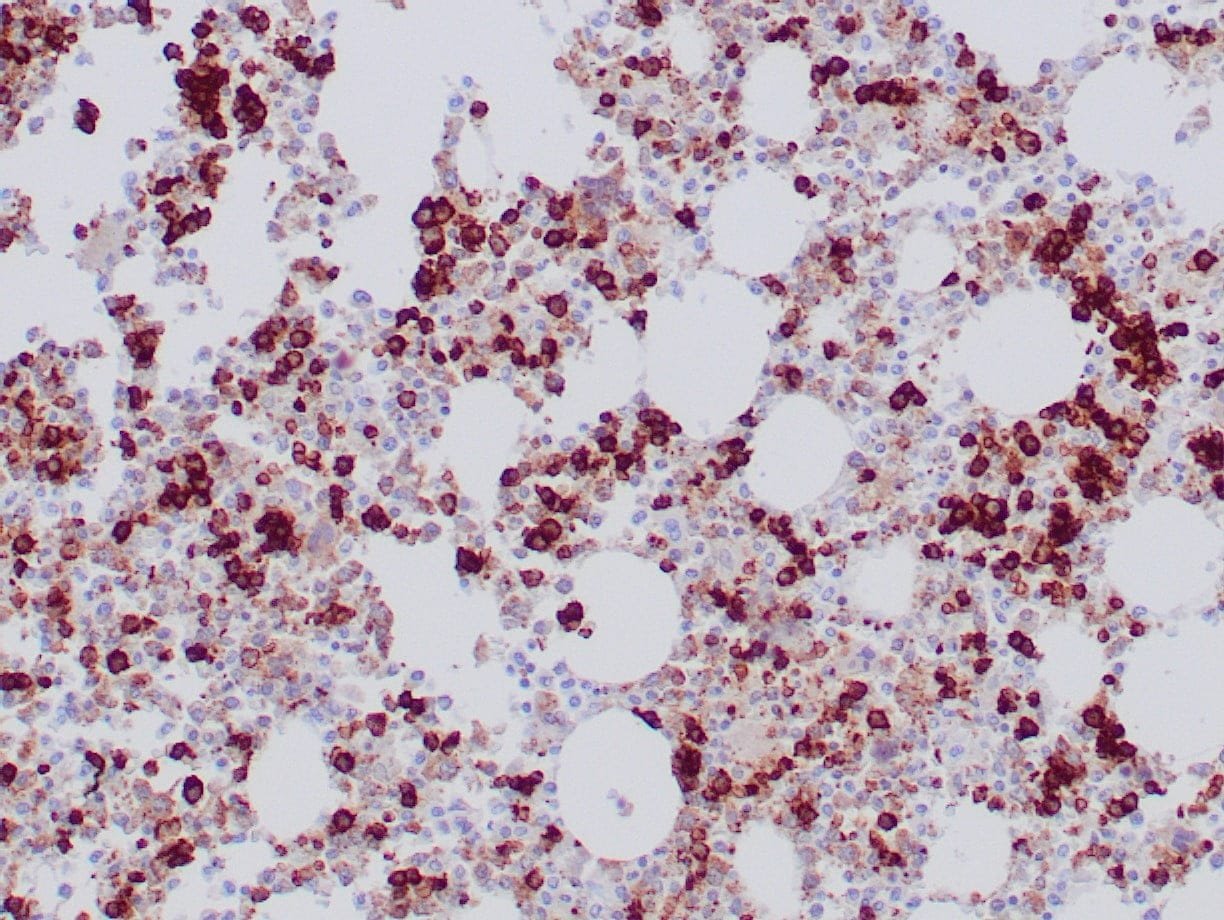 |
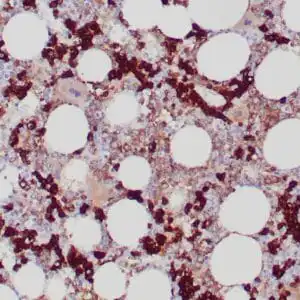
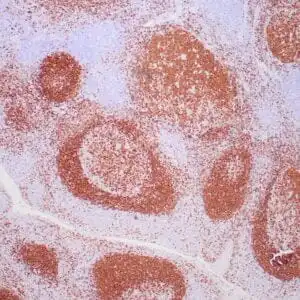
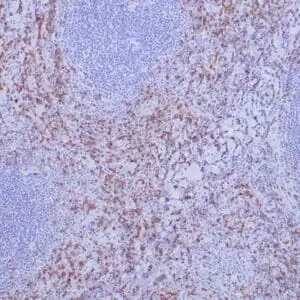
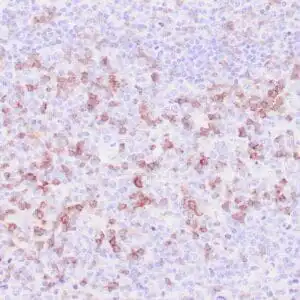
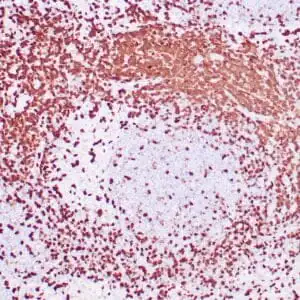
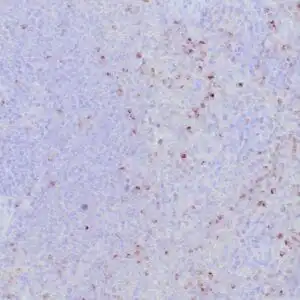
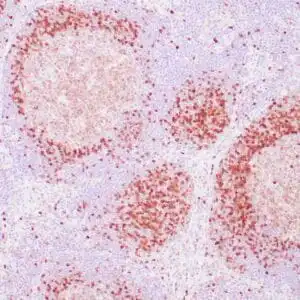
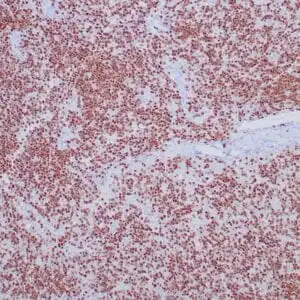
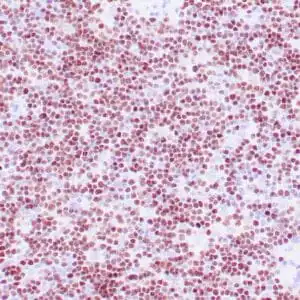
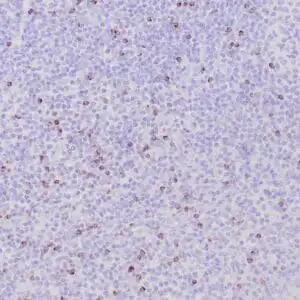
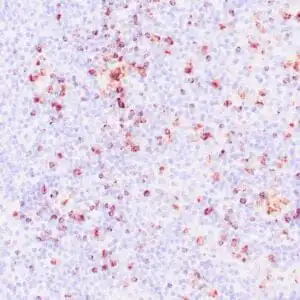
| Formalin-fixed, paraffin-embedded bone marrow stained with anti-CD71 antibody using peroxidase-conjugated and DAB chromogen. Note the cytoplasmic staining of erythroid precursors |
FAQ & Publications
Frequently Asked Questions
What species does the rabbit anti-CD71 monoclonal antibody (ZR422) specifically react with, and in which application has it been validated?
This rabbit anti-CD71 monoclonal antibody (ZR422) specifically reacts with human species and has been validated for immunohistochemistry (IHC) on formalin-fixed, paraffin-embedded tissues.
How should the rabbit anti-CD71 monoclonal antibody (ZR422) be stored to maintain its stability, and what are the available concentrations for this antibody?
The antibody should be stored at 2-8°C for short-term use and at -20°C for long-term storage, avoiding freeze/thaw cycles. It is available in concentrated forms of 0.1 mL, 0.5 mL, and 1.0 mL, as well as a 7 mL prediluted format.
Publications
| pmid | title | authors | citation |
|---|---|---|---|
| We haven't added any publications to our database yet. | |||
Published literature highly relevant to the biological target of this product and referencing this antibody or clone are retrieved from the PubMed database provided by the United States National Library of Medicine at the National Institutes of Health.
Protocols
| relevant to this product |
|---|
| IHC |
Documents
| Batch Number | QC File | SDS |
|---|---|---|
| To view batch-specific Safety Datasheets and Quality Certificates associated with your account, please Log In. | ||
Only logged in customers who have purchased this product may leave a review.


Reviews
There are no reviews yet.