| Weight | 1 lbs |
|---|---|
| Dimensions | 9 × 5 × 2 in |
| host | mouse |
| isotype | IgG2b |
| clonality | monoclonal |
| concentration | concentrate, predilute |
| applications | IHC |
| reactivity | human |
| available size | 0.1 mL, 0.5 mL, 1 mL concentrated, 7 mL prediluted |

mouse anti-TRAcP monoclonal antibody (ZM174) 6391
Price range: $160.00 through $528.00
Antibody summary
- Mouse monoclonal to TRAcP
- Suitable for: Immunohistochemistry (formalin-fixed, paraffin-embedded tissues)
- Reacts with: Human
- Isotype:IgG2b
- Control: Hairy cell leukemia
- Visualization: Cytoplasmic
- 0.1, 0.5, 1.0 mL concentrated, 7 mL prediluted
mouse anti-TRAcP monoclonal antibody ZM174 6391
| target relevance |
|---|
| Homo sapiens ACP5 Tartrate-resistant acid phosphatase type 5 |
| Protein names Tartrate-resistant acid phosphatase type 5 |
| Alternative names Tartrate-resistant acid ATPase, Type 5 acid phosphatase |
| Gene names ACP5 |
| Protein family Belongs to the metallophosphoesterase superfamily. Purple acid phosphatase family |
| Function Involved in osteopontin/bone sialoprotein dephosphorylation. Its expression seems to increase in certain pathological states such as Gaucher and Hodgkin diseases, the hairy cell, the B-cell, and the T-cell leukemias |
| Catalytic activity a phosphate monoester + H2O = an alcohol + phosphate |
| Subcellular location Lysosome |
| Structure Exists either as monomer or, after proteolytic processing, as a dimer of two chains linked by disulfide bond(s) |
| Involvement in disease Spondyloenchondrodysplasia with immune dysregulation A disease characterized by vertebral and metaphyseal dysplasia, spasticity with cerebral calcifications, and strong predisposition to autoimmune diseases. The skeletal dysplasia is characterized by radiolucent and irregular spondylar and metaphyseal lesions that represent islands of chondroid tissue within bone. |
| Keywords 3D-structure, Direct protein sequencing, Disease variant, Disulfide bond, Glycoprotein, Hydrolase, Iron, Lysosome, Metal-binding, Proteomics identification, Reference proteome, Signal |
| Sequence MDMWTALLILQALLLPSLADGATPALRFVAVGDWGGVPNAPFHTAREMANAKEIARTVQI LGADFILSLGDNFYFTGVQDINDKRFQETFEDVFSDRSLRKVPWYVLAGNHDHLGNVSAQ IAYSKISKRWNFPSPFYRLHFKIPQTNVSVAIFMLDTVTLCGNSDDFLSQQPERPRDVKL ARTQLSWLKKQLAAAREDYVLVAGHYPVWSIAEHGPTHCLVKQLRPLLATYGVTAYLCGH DHNLQYLQDENGVGYVLSGAGNFMDPSKRHQRKVPNGYLRFHYGTEDSLGGFAYVEISSK EMTVTYIEASGKSLFKTRLPRRARP |
| UniProt accession: P13686 |
Data
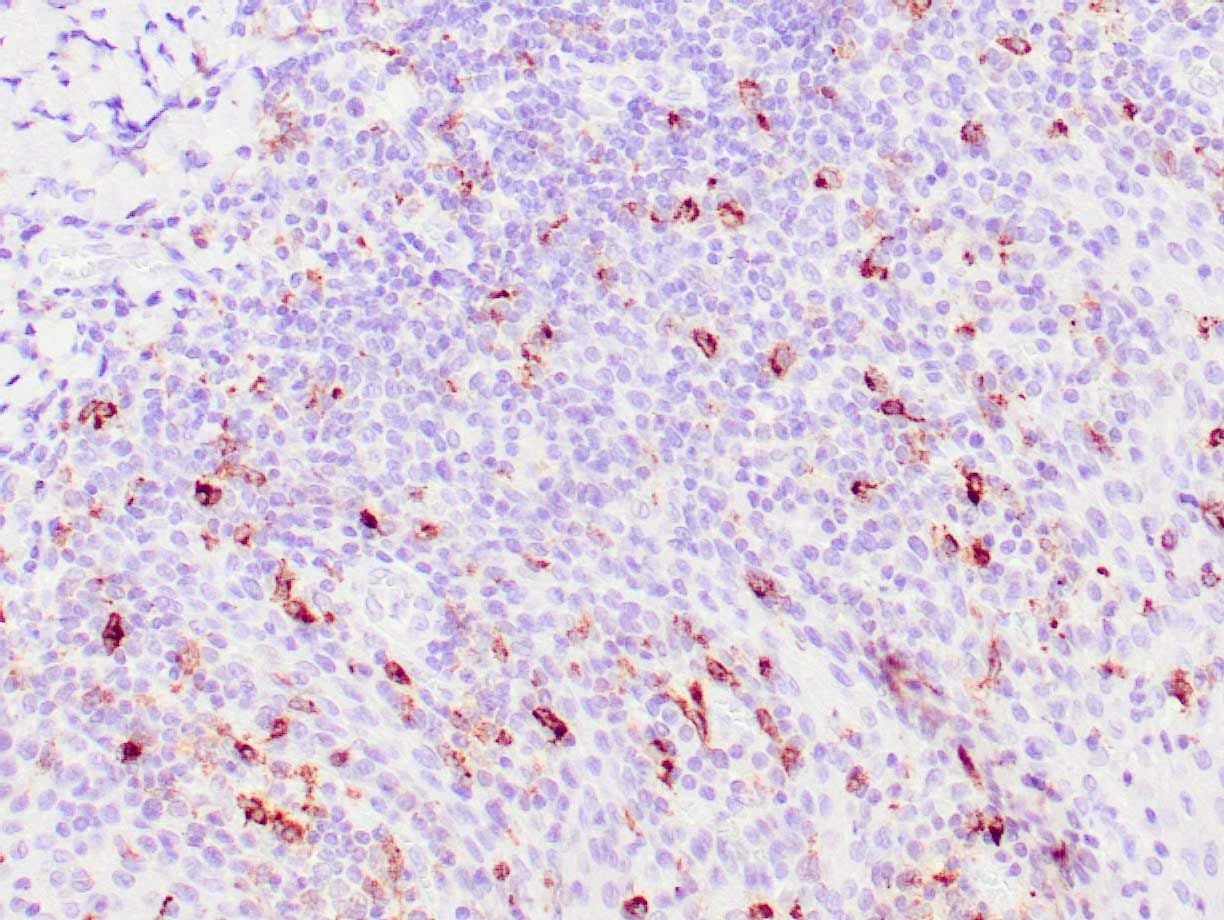 |
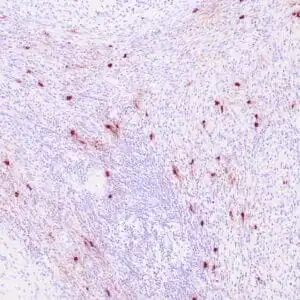
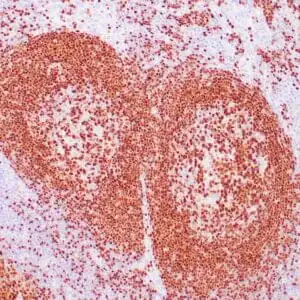
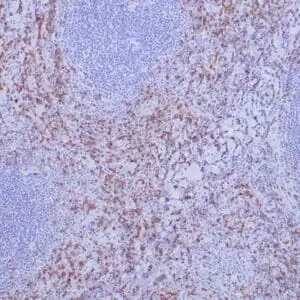
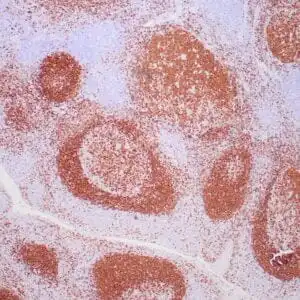
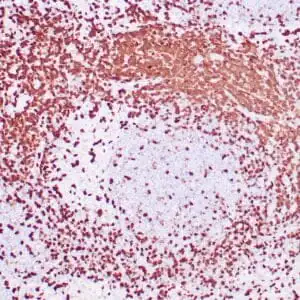
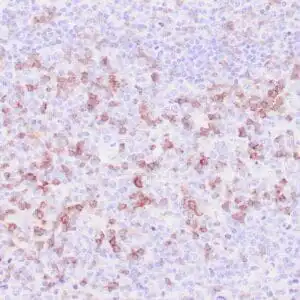
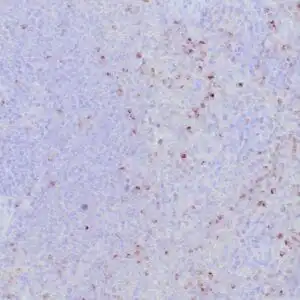
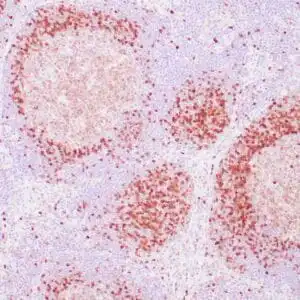
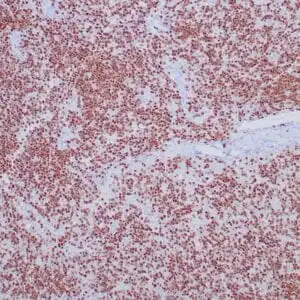
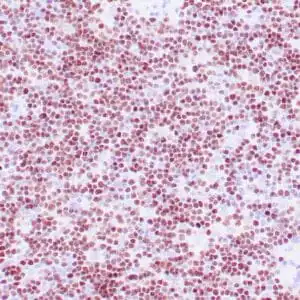
| Human spleen involved by hairy cell leukemia stained with anti-TRAcP antibody using peroxidase-conjugate and DAB chromogen. Note the cytoplasmic staining of leukemia cells. |
FAQ & Publications
Frequently Asked Questions
What species does the mouse anti-TRAcP monoclonal antibody (ZM174) 6391 react with?
This antibody is reactive with human samples.
What are the recommended storage conditions for the mouse anti-TRAcP monoclonal antibody (ZM174) 6391?
Store the antibody at 2-8°C for short term use. For longer term storage, keep it at -20°C and avoid freeze/thaw cycles.
Which application and sample type is the mouse anti-TRAcP monoclonal antibody (ZM174) 6391 validated for?
It is suitable for immunohistochemistry (IHC) on formalin-fixed, paraffin-embedded tissues.
Publications
| pmid | title | authors | citation |
|---|---|---|---|
| We haven't added any publications to our database yet. | |||
Published literature highly relevant to the biological target of this product and referencing this antibody or clone are retrieved from the PubMed database provided by the United States National Library of Medicine at the National Institutes of Health.
Protocols
| relevant to this product |
|---|
| IHC |
Documents
| Batch Number | QC File | SDS |
|---|---|---|
| To view batch-specific Safety Datasheets and Quality Certificates associated with your account, please Log In. | ||
Only logged in customers who have purchased this product may leave a review.

Reviews
There are no reviews yet.