| Weight | 1 lbs |
|---|---|
| Dimensions | 9 × 5 × 2 in |
| host | mouse |
| isotype | IgG1 |
| clonality | monoclonal |
| concentration | concentrate, predilute |
| applications | IHC |
| reactivity | human |
| available size | 0.1 mL, 0.5 mL, 1 mL concentrated, 7 mL prediluted |

mouse anti-Nucleophosmin (NPM1) monoclonal antibody (ZM82) 6295
Price range: $160.00 through $528.00
Antibody summary
- Mouse monoclonal to Nucleophosmin (NPM1)
- Suitable for: Immunohistochemistry (formalin-fixed, paraffin-embedded tissues)
- Reacts with: Human
- Isotype:IgG1
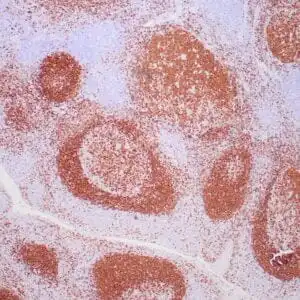
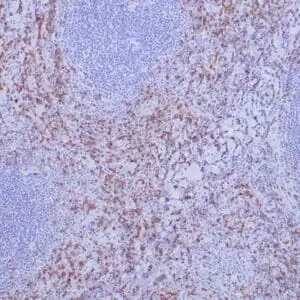
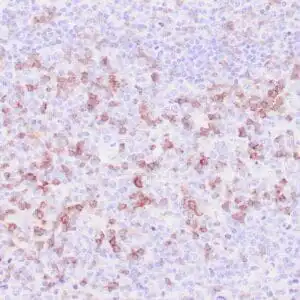
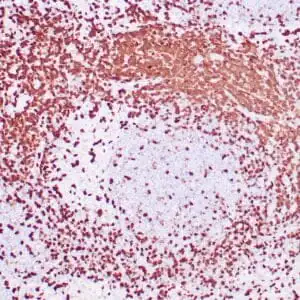
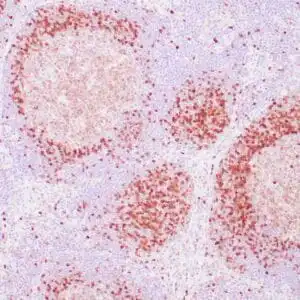
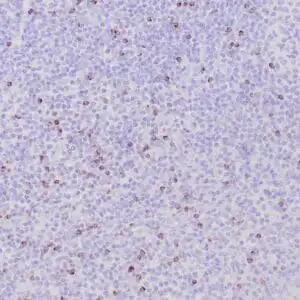
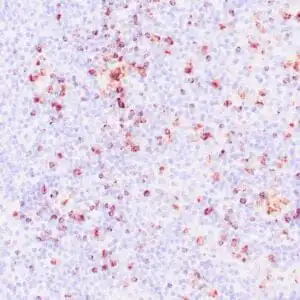
- Control: Tonsil
- Visualization: Nucleoli
- 0.1, 0.5, 1.0 mL concentrated, 7 mL prediluted
mouse anti-Nucleophosmin (NPM1) monoclonal antibody ZM82 6295
| target relevance |
|---|
| Homo sapiens NPM1 Nucleophosmin |
| Protein names Nucleophosmin |
| Alternative names Nucleolar phosphoprotein B23, Nucleolar protein NO38, Numatrin |
| Gene names NPM1 |
| Protein family Belongs to the nucleoplasmin family |
| Function Involved in diverse cellular processes such as ribosome biogenesis, centrosome duplication, protein chaperoning, histone assembly, cell proliferation, and regulation of tumor suppressors p53/TP53 and ARF. Binds ribosome presumably to drive ribosome nuclear export. Associated with nucleolar ribonucleoprotein structures and bind single-stranded nucleic acids. Acts as a chaperonin for the core histones H3, H2B and H4. Stimulates APEX1 endonuclease activity on apurinic/apyrimidinic (AP) double-stranded DNA but inhibits APEX1 endonuclease activity on AP single-stranded RNA. May exert a control of APEX1 endonuclease activity within nucleoli devoted to repair AP on rDNA and the removal of oxidized rRNA molecules. In concert with BRCA2, regulates centrosome duplication. Regulates centriole duplication: phosphorylation by PLK2 is able to trigger centriole replication. Negatively regulates the activation of EIF2AK2/PKR and suppresses apoptosis through inhibition of EIF2AK2/PKR autophosphorylation. Antagonizes the inhibitory effect of ATF5 on cell proliferation and relieves ATF5-induced G2/M blockade (PubMed:22528486). In complex with MYC enhances the transcription of MYC target genes (PubMed:25956029). May act as chaperonin or cotransporter in the nucleolar localization of transcription termination factor TTF1 (By similarity) |
| Subcellular location Nucleus, nucleolus, Nucleus, nucleoplasm, Cytoplasm, cytoskeleton, microtubule organizing center, centrosome |
| Structure (Microbial infection) Interacts with HTLV1 Rex protein (via N-terminal nuclear localization signal) |
| Post-translational modification Acetylated at C-terminal lysine residues, thereby increasing affinity to histones ADP-ribosylated Phosphorylated at Ser-4 by PLK1 and PLK2. Phosphorylation at Ser-4 by PLK2 in S phase is required for centriole duplication and is sufficient to trigger centriole replication. Phosphorylation at Ser-4 by PLK1 takes place during mitosis. Phosphorylated by CDK2 at Ser-125 and Thr-199. Phosphorylation at Thr-199 may trigger initiation of centrosome duplication. Phosphorylated by CDK1 at Thr-199, Thr-219, Thr-234 and Thr-237 during cell mitosis. When these four sites are phosphorylated, RNA-binding activity seem to be abolished. May be phosphorylated at Ser-70 by NEK2. The Thr-199 phosphorylated form has higher affinity for ROCK2. CDK6 triggers Thr-199 phosphorylation when complexed to Kaposi's sarcoma herpesvirus (KSHV) V-cyclin, leading to viral reactivation by reducing viral LANA levels Sumoylated by ARF Ubiquitinated. Ubiquitination leads to proteasomal degradation. Deubiquitinated by USP36 (PubMed:19208757) |
| Keywords 3D-structure, Acetylation, ADP-ribosylation, Alternative splicing, Chaperone, Chromosomal rearrangement, Cytoplasm, Cytoskeleton, Direct protein sequencing, Disulfide bond, Host-virus interaction, Isopeptide bond, Nucleus, Phosphoprotein, Proteomics identification, Proto-oncogene, Reference proteome, RNA-binding, Ubl conjugation |
| Sequence MEDSMDMDMSPLRPQNYLFGCELKADKDYHFKVDNDENEHQLSLRTVSLGAGAKDELHIV EAEAMNYEGSPIKVTLATLKMSVQPTVSLGGFEITPPVVLRLKCGSGPVHISGQHLVAVE EDAESEDEEEEDVKLLSISGKRSAPGGGSKVPQKKVKLAADEDDDDDDEEDDDEDDDDDD FDDEEAEEKAPVKKSIRDTPAKNAQKSNQNGKDSKPSSTPRSKGQESFKKQEKTPKTPKG PSSVEDIKAKMQASIEKGGSLPKVEAKFINYVKNCFRMTDQEAIQDLWQWRKSL |
| UniProt accession: P06748 |
Data
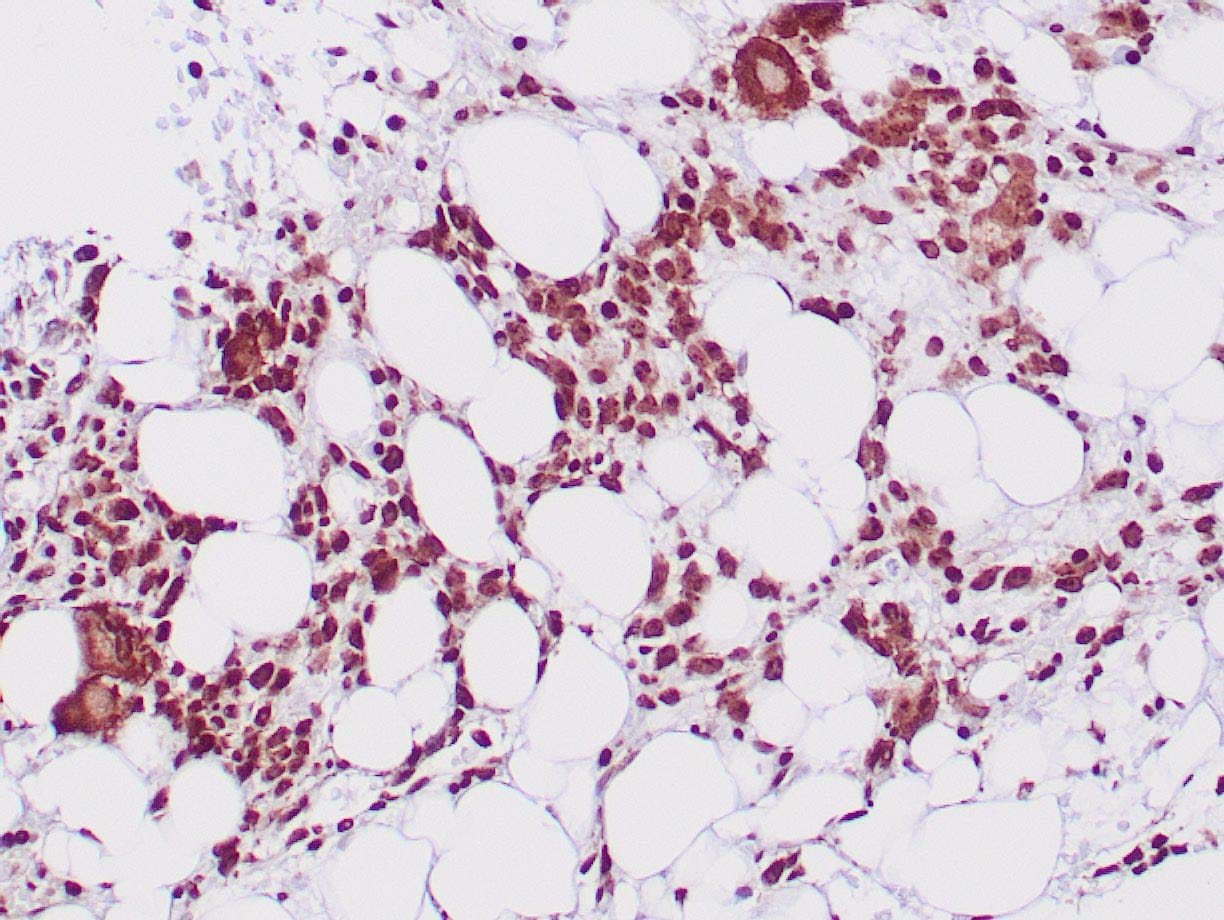 |
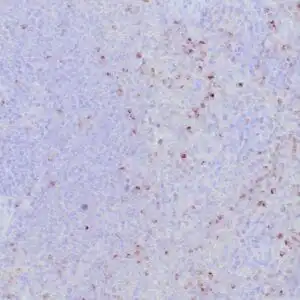
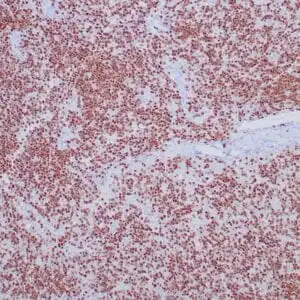
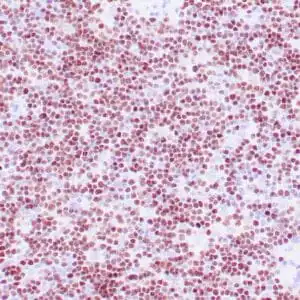
| Human bone marrow stained with anti-NPM1 antibody using peroxidase-conjugate and DAB chromogen. Note nuclear staining of myeloid cells. |
FAQ & Publications
Frequently Asked Questions
What species does the mouse anti-Nucleophosmin (NPM1) monoclonal antibody (ZM82) specifically react with?
This antibody is reactive with human species.
Which applications is this Nucleophosmin (NPM1) antibody validated for?
The antibody is suitable and tested for Immunohistochemistry (IHC) on formalin-fixed, paraffin-embedded tissues.
How should the mouse anti-Nucleophosmin (NPM1) monoclonal antibody be stored to maintain stability?
For short-term storage, keep the antibody at 2-8°C. For long-term storage, it should be kept at -20°C while avoiding repeated freeze/thaw cycles.
What immunogen was used to generate this mouse monoclonal antibody against Nucleophosmin (NPM1)?
The immunogen is a recombinant human NPM1 protein fragment corresponding to amino acids 185-287.
Publications
| pmid | title | authors | citation |
|---|---|---|---|
| We haven't added any publications to our database yet. | |||
Published literature highly relevant to the biological target of this product and referencing this antibody or clone are retrieved from the PubMed database provided by the United States National Library of Medicine at the National Institutes of Health.
Protocols
| relevant to this product |
|---|
| IHC |
Documents
| Batch Number | QC File | SDS |
|---|---|---|
| To view batch-specific Safety Datasheets and Quality Certificates associated with your account, please Log In. | ||
Only logged in customers who have purchased this product may leave a review.


Reviews
There are no reviews yet.