| Weight | 1 lbs |
|---|---|
| Dimensions | 9 × 5 × 2 in |
| host | mouse |
| isotype | IgG2b/κ |
| clonality | monoclonal |
| concentration | concentrate, predilute |
| applications | IHC |
| reactivity | human |
| available size | 0.1 mL, 0.5 mL, 1 mL concentrated, 7 mL prediluted |

mouse anti-Myeloperoxidase monoclonal antibody (ZM352) 6276
Price range: $160.00 through $528.00
Antibody summary
- Mouse monoclonal to Myeloperoxidase
- Suitable for: Immunohistochemistry (formalin-fixed, paraffin-embedded tissues)
- Reacts with: Human
- Isotype:IgG2b/κ
- Control: Spleen
- Visualization: Cytoplasmic
- 0.1, 0.5, 1.0 mL concentrated, 7 mL prediluted
mouse anti-Myeloperoxidase monoclonal antibody ZM352 6276
| target relevance |
|---|
| Homo sapiens MPO Myeloperoxidase |
| Protein names Myeloperoxidase |
| Gene names MPO |
| Protein family Belongs to the peroxidase family. XPO subfamily |
| Function Part of the host defense system of polymorphonuclear leukocytes. It is responsible for microbicidal activity against a wide range of organisms. In the stimulated PMN, MPO catalyzes the production of hypohalous acids, primarily hypochlorous acid in physiologic situations, and other toxic intermediates that greatly enhance PMN microbicidal activity (PubMed:9922160). Mediates the proteolytic cleavage of alpha-1-microglobulin to form t-alpha-1-microglobulin, which potently inhibits oxidation of low-density lipoprotein particles and limits vascular damage (PubMed:25698971) |
| Catalytic activity chloride + H2O2 + H(+) = hypochlorous acid + H2O |
| Subcellular location Lysosome |
| Structure Homodimer; disulfide-linked. Each monomer consists of a light and a heavy chain. Found in a complex with CP and LTF; interacts directly with CP, which protects CP antioxidant properties by MPO (PubMed:23843990) |
| Involvement in disease Myeloperoxidase deficiency A disorder characterized by decreased myeloperoxidase activity in neutrophils and monocytes that results in disseminated candidiasis. |
| Keywords 3D-structure, Alternative splicing, Calcium, Direct protein sequencing, Disease variant, Disulfide bond, Glycoprotein, Heme, Hydrogen peroxide, Iron, Lysosome, Metal-binding, Oxidation, Oxidoreductase, Peroxidase, Proteomics identification, Reference proteome, Signal |
| Sequence MGVPFFSSLRCMVDLGPCWAGGLTAEMKLLLALAGLLAILATPQPSEGAAPAVLGEVDTS LVLSSMEEAKQLVDKAYKERRESIKQRLRSGSASPMELLSYFKQPVAATRTAVRAADYLH VALDLLERKLRSLWRRPFNVTDVLTPAQLNVLSKSSGCAYQDVGVTCPEQDKYRTITGMC NNRRSPTLGASNRAFVRWLPAEYEDGFSLPYGWTPGVKRNGFPVALARAVSNEIVRFPTD QLTPDQERSLMFMQWGQLLDHDLDFTPEPAARASFVTGVNCETSCVQQPPCFPLKIPPND PRIKNQADCIPFFRSCPACPGSNITIRNQINALTSFVDASMVYGSEEPLARNLRNMSNQL GLLAVNQRFQDNGRALLPFDNLHDDPCLLTNRSARIPCFLAGDTRSSEMPELTSMHTLLL REHNRLATELKSLNPRWDGERLYQEARKIVGAMVQIITYRDYLPLVLGPTAMRKYLPTYR SYNDSVDPRIANVFTNAFRYGHTLIQPFMFRLDNRYQPMEPNPRVPLSRVFFASWRVVLE GGIDPILRGLMATPAKLNRQNQIAVDEIRERLFEQVMRIGLDLPALNMQRSRDHGLPGYN AWRRFCGLPQPETVGQLGTVLRNLKLARKLMEQYGTPNNIDIWMGGVSEPLKRKGRVGPL LACIIGTQFRKLRDGDRFWWENEGVFSMQQRQALAQISLPRIICDNTGITTVSKNNIFMS NSYPRDFVNCSTLPALNLASWREAS |
| UniProt accession: P05164 |
Data
 |
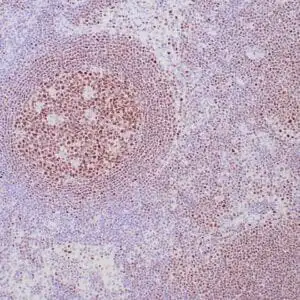
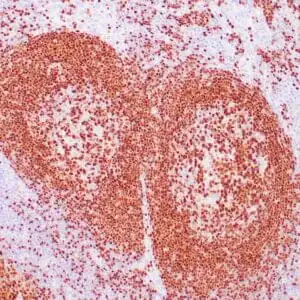
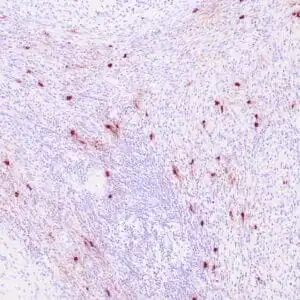
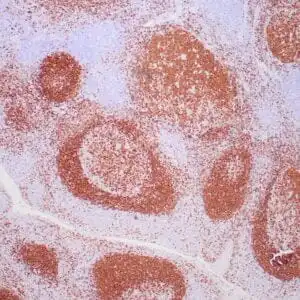
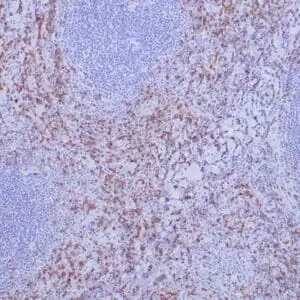
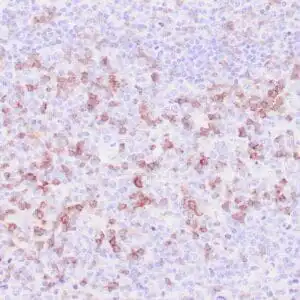
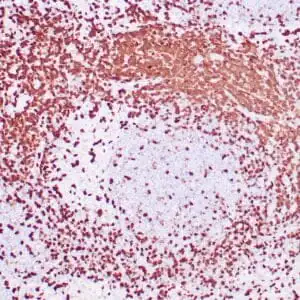
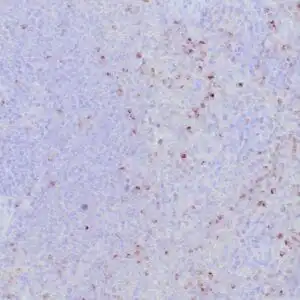
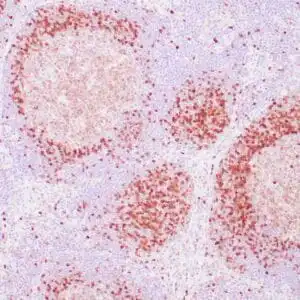
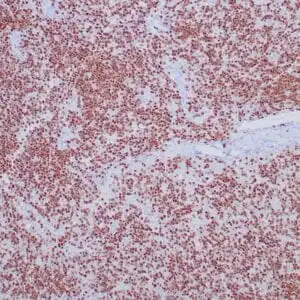
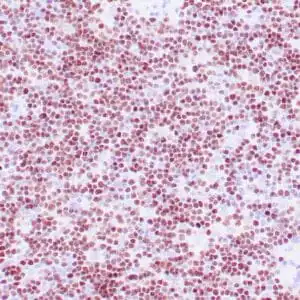
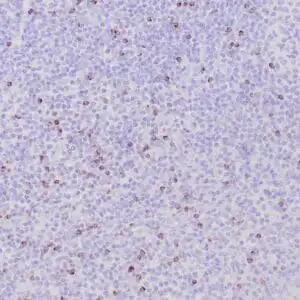
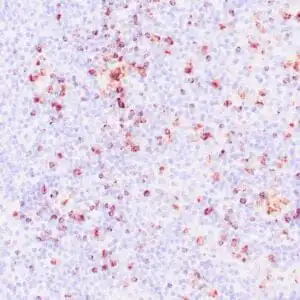
| Formalin-fixed, paraffin-embedded human bone marrow stained with anti-myeloperoxidase antibody using peroxidase-conjugate and DAB chromogen. Note the cytoplasmic staining of myeloid cells |
FAQ & Publications
Frequently Asked Questions
What species does the mouse anti-Myeloperoxidase monoclonal antibody (ZM352) specifically react with?
This monoclonal antibody specifically reacts with human Myeloperoxidase, making it suitable for studies involving human tissues.
What are the recommended storage conditions for this mouse anti-Myeloperoxidase antibody to maintain its stability?
For short-term storage, keep the antibody at 2-8°C. For longer-term preservation, store it at -20°C and avoid repeated freeze-thaw cycles to maintain antibody integrity.
Can you describe the suitable application and recommended dilution for using this antibody in immunohistochemistry?
This antibody is optimized for immunohistochemistry on formalin-fixed, paraffin-embedded human tissues. When using the concentrated form, a dilution of 1:100 to 1:200 is recommended for optimal staining results.
Publications
| pmid | title | authors | citation |
|---|---|---|---|
| We haven't added any publications to our database yet. | |||
Published literature highly relevant to the biological target of this product and referencing this antibody or clone are retrieved from the PubMed database provided by the United States National Library of Medicine at the National Institutes of Health.
Protocols
| relevant to this product |
|---|
| IHC |
Documents
| Batch Number | QC File | SDS |
|---|---|---|
| To view batch-specific Safety Datasheets and Quality Certificates associated with your account, please Log In. | ||
Only logged in customers who have purchased this product may leave a review.


Reviews
There are no reviews yet.