| Weight | 1 lbs |
|---|---|
| Dimensions | 9 × 5 × 2 in |
| host | mouse |
| isotype | IgG2a |
| clonality | monoclonal |
| concentration | concentrate, predilute |
| applications | IHC |
| reactivity | human |
| available size | 0.1 mL, 0.5 mL, 1 mL concentrated, 7 mL prediluted |

mouse anti-Fascin monoclonal antibody (ZM192) 6182
Price range: $160.00 through $528.00
Antibody summary
- Mouse monoclonal to Fascin
- Suitable for: Immunohistochemistry (formalin-fixed, paraffin-embedded tissues)
- Reacts with: Human
- Isotype:IgG2a
- Control: Hodgkin’s lymphoma or spleen
- Visualization: Cytoplasmic
- 0.1, 0.5, 1.0 mL concentrated, 7 mL prediluted
mouse anti-Fascin monoclonal antibody ZM192 6182
| target relevance |
|---|
| Homo sapiens FSCN1 Fascin |
| Protein names Fascin |
| Alternative names 55 kDa actin-bundling protein, Singed-like protein, p55 |
| Gene names FSCN1 |
| Protein family Belongs to the fascin family |
| Function Actin-binding protein that contains 2 major actin binding sites (PubMed:21685497, PubMed:23184945). Organizes filamentous actin into parallel bundles (PubMed:20393565, PubMed:21685497, PubMed:23184945). Plays a role in the organization of actin filament bundles and the formation of microspikes, membrane ruffles, and stress fibers (PubMed:22155786). Important for the formation of a diverse set of cell protrusions, such as filopodia, and for cell motility and migration (PubMed:20393565, PubMed:21685497, PubMed:23184945). Mediates reorganization of the actin cytoskeleton and axon growth cone collapse in response to NGF (PubMed:22155786) |
| Subcellular location Cytoplasm, cytosol, Cytoplasm, cell cortex, Cytoplasm, cytoskeleton, Cytoplasm, cytoskeleton, stress fiber, Cell projection, filopodium, Cell projection, invadopodium, Cell projection, microvillus, Cell junction |
| Structure Interacts with RUFY3 (via N-terminus); the interaction induces neuron axon development (By similarity). Interacts with NGFR (By similarity). Associates with CTNNB1 (By similarity). Interacts with PLXNB3 (PubMed:21706053) |
| Post-translational modification Phosphorylation at Ser-39 inhibits actin-binding (PubMed:8647875, PubMed:8999969). Phosphorylation is required for the reorganization of the actin cytoskeleton in response to NGF (PubMed:22155786) |
| Keywords 3D-structure, Acetylation, Actin-binding, Cell junction, Cell projection, Cytoplasm, Cytoskeleton, Direct protein sequencing, Isopeptide bond, Phosphoprotein, Proteomics identification, Reference proteome, Ubl conjugation |
| Sequence MTANGTAEAVQIQFGLINCGNKYLTAEAFGFKVNASASSLKKKQIWTLEQPPDEAGSAAV CLRSHLGRYLAADKDGNVTCEREVPGPDCRFLIVAHDDGRWSLQSEAHRRYFGGTEDRLS CFAQTVSPAEKWSVHIAMHPQVNIYSVTRKRYAHLSARPADEIAVDRDVPWGVDSLITLA FQDQRYSVQTADHRFLRHDGRLVARPEPATGYTLEFRSGKVAFRDCEGRYLAPSGPSGTL KAGKATKVGKDELFALEQSCAQVVLQAANERNVSTRQGMDLSANQDEETDQETFQLEIDR DTKKCAFRTHTGKYWTLTATGGVQSTASSKNASCYFDIEWRDRRITLRASNGKFVTSKKN GQLAASVETAGDSELFLMKLINRPIIVFRGEHGFIGCRKVTGTLDANRSSYDVFQLEFND GAYNIKDSTGKYWTVGSDSAVTSSGDTPVDFFFEFCDYNKVAIKVGGRYLKGDHAGVLKA SAETVDPASLWEY |
| UniProt accession: Q16658 |
Data
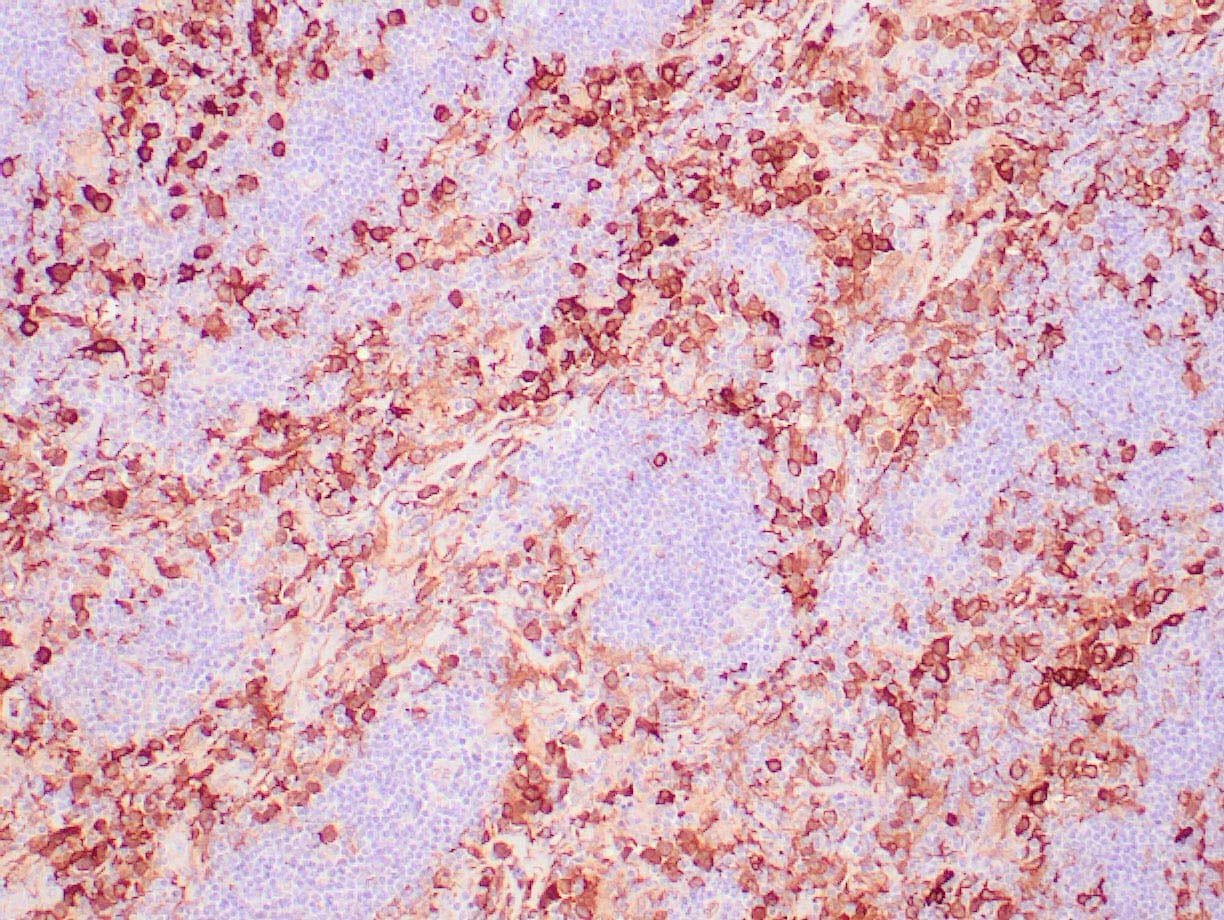 |
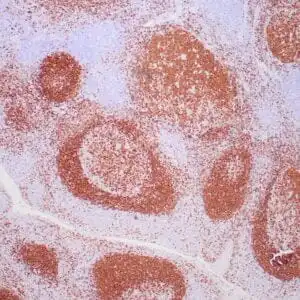
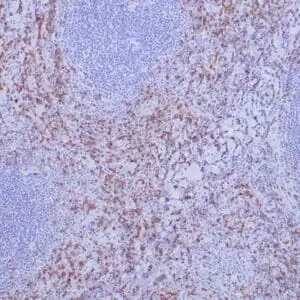
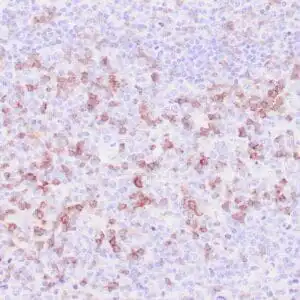
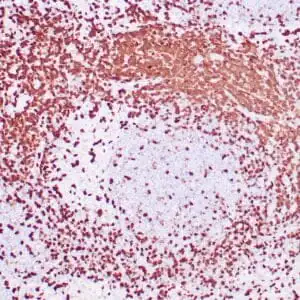
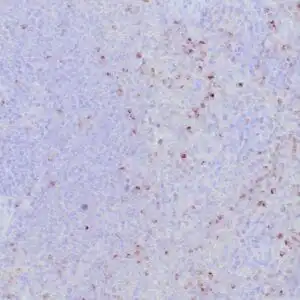
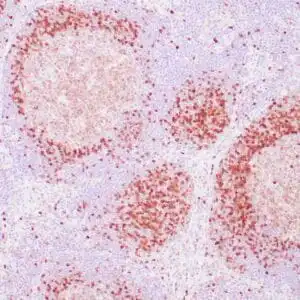
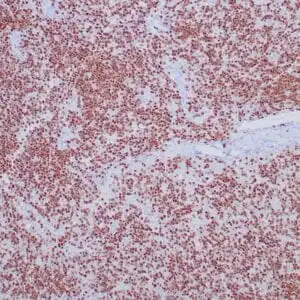
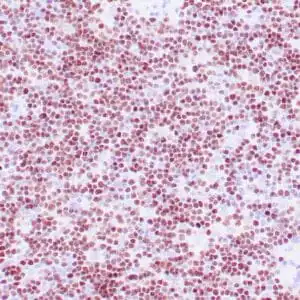
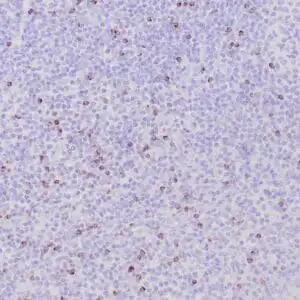
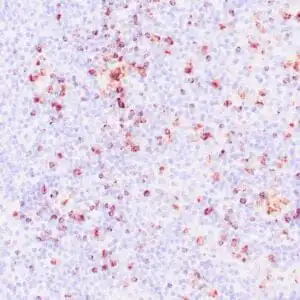
| Human Hodgkin lymphoma stained with anti-Fascin antibody using peroxidase-conjugate and DAB chromogen. Note the cytoplasmic staining of Hodgkin's cells. |
FAQ & Publications
Frequently Asked Questions
What species does the mouse anti-Fascin monoclonal antibody (ZM192) specifically react with?
This antibody specifically reacts with human Fascin protein.
For which application is the mouse anti-Fascin monoclonal antibody (ZM192) validated and recommended?
The antibody is validated and recommended for immunohistochemistry (IHC) on formalin-fixed, paraffin-embedded tissues.
How should the mouse anti-Fascin monoclonal antibody (ZM192) be stored to maintain stability?
For short-term storage, keep the antibody at 2-8°C. For long-term storage, it should be kept at -20°C, and freeze/thaw cycles should be avoided.
What is the recommended dilution range when using the concentrated form of this antibody for IHC?
The recommended dilution for the concentrated antibody in IHC applications is between 1:100 and 1:200.
What is the immunogen used to generate the mouse anti-Fascin monoclonal antibody (ZM192)?
The antibody was raised against the full-length recombinant human FSCN1 protein.
Publications
| pmid | title | authors | citation |
|---|---|---|---|
| We haven't added any publications to our database yet. | |||
Published literature highly relevant to the biological target of this product and referencing this antibody or clone are retrieved from the PubMed database provided by the United States National Library of Medicine at the National Institutes of Health.
Protocols
| relevant to this product |
|---|
| IHC |
Documents
| Batch Number | QC File | SDS |
|---|---|---|
| To view batch-specific Safety Datasheets and Quality Certificates associated with your account, please Log In. | ||
Only logged in customers who have purchased this product may leave a review.


Reviews
There are no reviews yet.