| Weight | 1 lbs |
|---|---|
| Dimensions | 9 × 5 × 2 in |
| host | mouse |
| isotype | IgG1 |
| clonality | monoclonal |
| concentration | concentrate, predilute |
| applications | IHC |
| reactivity | human |
| available size | 0.1 mL, 0.5 mL, 1 mL concentrated, 7 mL prediluted |

mouse anti-CD43 monoclonal antibody (DF-T1) 6093
Price range: $160.00 through $528.00
Antibody summary
- Mouse monoclonal to CD43
- Suitable for: Immunohistochemistry (formalin-fixed, paraffin-embedded tissues)
- Reacts with: Human
- Isotype:IgG1
- Control: Tonsil, CLL/SLL, or lymph node
- Visualization: Cell membrane
- 0.1, 0.5, 1.0 mL concentrated, 7 mL prediluted
mouse anti-CD43 monoclonal antibody DF-T1 6093
| target relevance |
|---|
| Homo sapiens SPN Leukosialin |
| Protein names Leukosialin |
| Alternative names GPL115, Galactoglycoprotein, Leukocyte sialoglycoprotein, Sialophorin |
| Gene names SPN |
| Function Predominant cell surface sialoprotein of leukocytes which regulates multiple T-cell functions, including T-cell activation, proliferation, differentiation, trafficking and migration. Positively regulates T-cell trafficking to lymph-nodes via its association with ERM proteins (EZR, RDX and MSN) (By similarity). Negatively regulates Th2 cell differentiation and predisposes the differentiation of T-cells towards a Th1 lineage commitment. Promotes the expression of IFN-gamma by T-cells during T-cell receptor (TCR) activation of naive cells and induces the expression of IFN-gamma by CD4(+) T-cells and to a lesser extent by CD8(+) T-cells (PubMed:18036228). Plays a role in preparing T-cells for cytokine sensing and differentiation into effector cells by inducing the expression of cytokine receptors IFNGR and IL4R, promoting IFNGR and IL4R signaling and by mediating the clustering of IFNGR with TCR (PubMed:24328034). Acts as a major E-selectin ligand responsible for Th17 cell rolling on activated vasculature and recruitment during inflammation. Mediates Th17 cells, but not Th1 cells, adhesion to E-selectin. Acts as a T-cell counter-receptor for SIGLEC1 (By similarity) |
| Subcellular location Nucleus, Nucleus, PML body |
| Structure Monomer (By similarity). Interacts with CTNNB1 (PubMed:15003504). Interacts with RDX (via FERM domain), EZR and MSN (By similarity) |
| Post-translational modification Glycosylated; has a high content of sialic acid and O-linked carbohydrate structures Phosphorylation at Ser-355 is regulated by chemokines, requires its association with ERM proteins (EZR, RDX and MSN) and is essential for its function in the regulation of T-cell trafficking to lymph nodes Has a high content of sialic acid and O-linked carbohydrate structures Cleavage by CTSG releases its extracellular domain and triggers its intramembrane proteolysis by gamma-secretase releasing the CD43 cytoplasmic tail chain (CD43-ct) which translocates to the nucleus Sumoylated |
| Keywords Cell projection, Direct protein sequencing, Glycoprotein, Membrane, Nucleus, Phosphoprotein, Proteomics identification, Reference proteome, Signal, Transmembrane, Transmembrane helix, Ubl conjugation |
| Sequence MATLLLLLGVLVVSPDALGSTTAVQTPTSGEPLVSTSEPLSSKMYTTSITSDPKADSTGD QTSALPPSTSINEGSPLWTSIGASTGSPLPEPTTYQEVSIKMSSVPQETPHATSHPAVPI TANSLGSHTVTGGTITTNSPETSSRTSGAPVTTAASSLETSRGTSGPPLTMATVSLETSK GTSGPPVTMATDSLETSTGTTGPPVTMTTGSLEPSSGASGPQVSSVKLSTMMSPTTSTNA STVPFRNPDENSRGMLPVAVLVALLAVIVLVALLLLWRRRQKRRTGALVLSRGGKRNGVV DAWAGPAQVPEEGAVTVTVGGSGGDKGSGFPDGEGSSRRPTLTTFFGRRKSRQGSLAMEE LKSGSGPSLKGEEEPLVASEDGAVDAPAPDEPEGGDGAAP |
| UniProt accession: P16150 |
Data
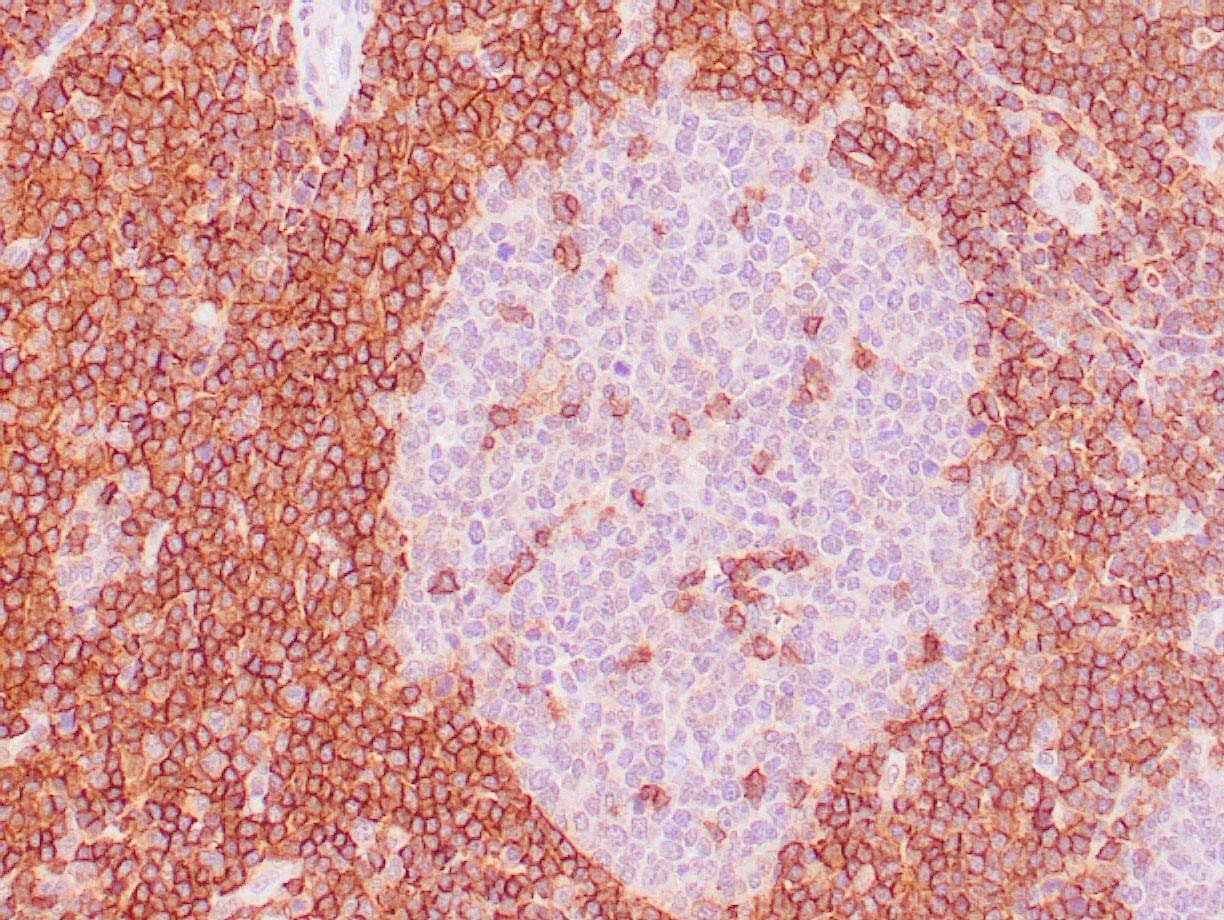 |
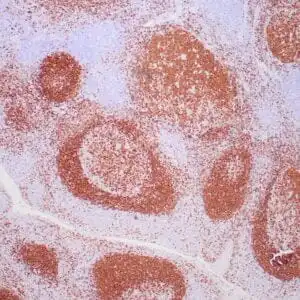
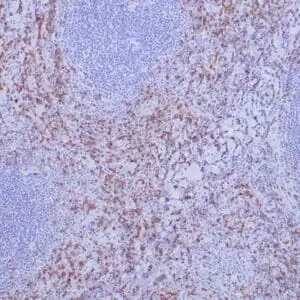
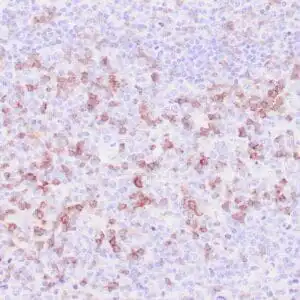
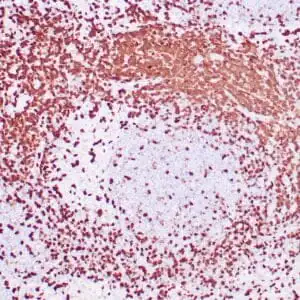
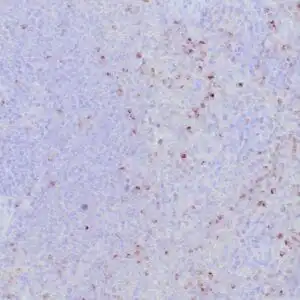
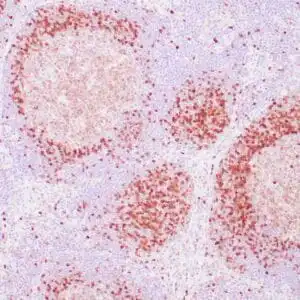
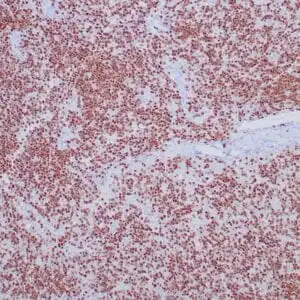
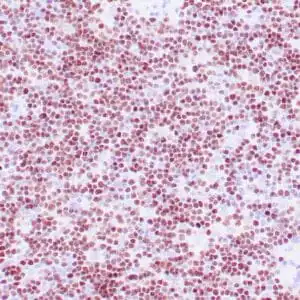
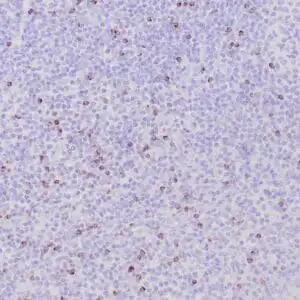
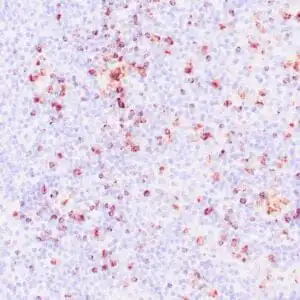
| Human lymph node stained with anti-CD43 antibody using peroxidase-conjugate and DAB chromogen. Note the cell membrane staining of perifollicular T-cells. |
FAQ & Publications
Frequently Asked Questions
What species is the mouse anti-CD43 monoclonal antibody (DF-T1) reactive with?
This antibody is reactive with human species.
For which application is the mouse anti-CD43 monoclonal antibody (DF-T1) validated?
It is validated for immunohistochemistry (IHC) on formalin-fixed, paraffin-embedded tissues.
How should the mouse anti-CD43 monoclonal antibody (DF-T1) be stored to maintain stability?
Store the antibody at 2-8°C for short-term use and at -20°C for long-term storage, avoiding freeze/thaw cycles to preserve antibody integrity.
What is the recommended dilution for using the concentrated mouse anti-CD43 monoclonal antibody in IHC?
The recommended dilution for the concentrated antibody in immunohistochemistry is 1:100.
Publications
| pmid | title | authors | citation |
|---|---|---|---|
| We haven't added any publications to our database yet. | |||
Published literature highly relevant to the biological target of this product and referencing this antibody or clone are retrieved from the PubMed database provided by the United States National Library of Medicine at the National Institutes of Health.
Protocols
| relevant to this product |
|---|
| IHC |
Documents
| Batch Number | QC File | SDS |
|---|---|---|
| To view batch-specific Safety Datasheets and Quality Certificates associated with your account, please Log In. | ||
Only logged in customers who have purchased this product may leave a review.


Reviews
There are no reviews yet.