| Weight | 1 lbs |
|---|---|
| Dimensions | 9 × 5 × 2 in |
| host | mouse |
| isotype | IgG1 |
| clonality | monoclonal |
| concentration | concentrate, predilute |
| applications | IHC |
| reactivity | human |
| available size | 0.1 mL, 0.5 mL, 1 mL concentrated, 7 mL prediluted |

mouse anti-CD1a monoclonal antibody (O10) 6069
Price range: $160.00 through $528.00
Antibody summary
- Mouse monoclonal to CD1a
- Suitable for: Immunohistochemistry (formalin-fixed, paraffin-embedded tissues)
- Reacts with: Human
- Isotype:IgG1
- Control: Skin or Langerhans cell histiocytosis X
- Visualization: Cell membrane and cytoplasmic
- 0.1, 0.5, 1.0 mL concentrated, 7 mL prediluted
mouse anti-CD1a monoclonal antibody O10 6069
| target relevance |
|---|
| Homo sapiens CD1A T-cell surface glycoprotein CD1a |
| Protein names T-cell surface glycoprotein CD1a |
| Alternative names T-cell surface antigen T6/Leu-6 |
| Gene names CD1A |
| Function Antigen-presenting protein that binds self and non-self lipid and glycolipid antigens and presents them to T-cell receptors on natural killer T-cells |
| Subcellular location Cell membrane, Membrane raft, Endosome membrane |
| Structure Heterodimer with B2M (beta-2-microglobulin). Interacts with CD74 |
| Keywords 3D-structure, Adaptive immunity, Cell membrane, Disulfide bond, Endosome, Glycoprotein, Immunity, Immunoglobulin domain, Membrane, Proteomics identification, Reference proteome, Signal, Transmembrane, Transmembrane helix |
| Sequence MLFLLLPLLAVLPGDGNADGLKEPLSFHVTWIASFYNHSWKQNLVSGWLSDLQTHTWDSN SSTIVFLCPWSRGNFSNEEWKELETLFRIRTIRSFEGIRRYAHELQFEYPFEIQVTGGCE LHSGKVSGSFLQLAYQGSDFVSFQNNSWLPYPVAGNMAKHFCKVLNQNQHENDITHNLLS DTCPRFILGLLDAGKAHLQRQVKPEAWLSHGPSPGPGHLQLVCHVSGFYPKPVWVMWMRG EQEQQGTQRGDILPSADGTWYLRATLEVAAGEAADLSCRVKHSSLEGQDIVLYWEHHSSV GFIILAVIVPLLLLIGLALWFRKRCFC |
| UniProt accession: P06126 |
Data
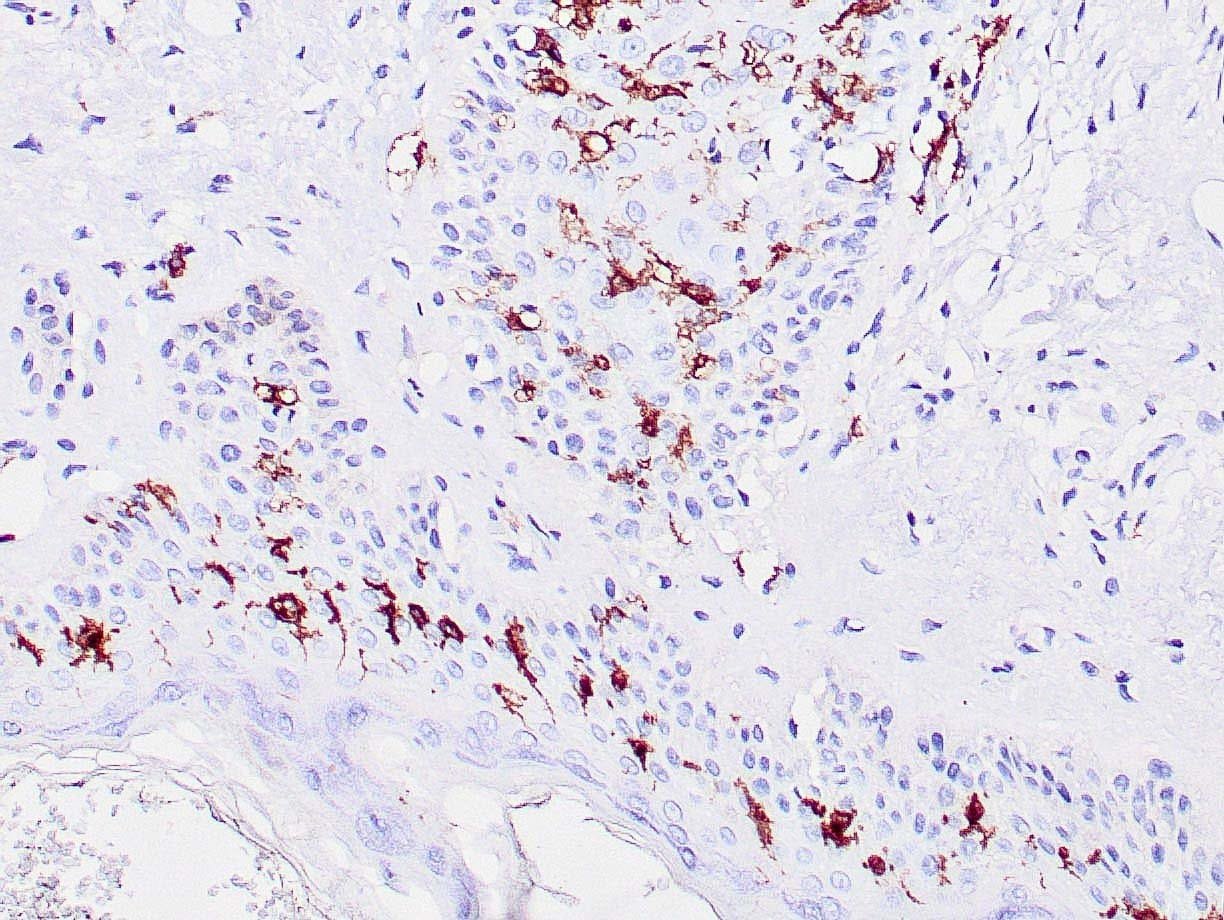 |
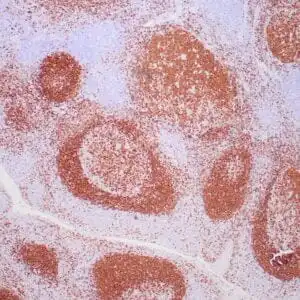
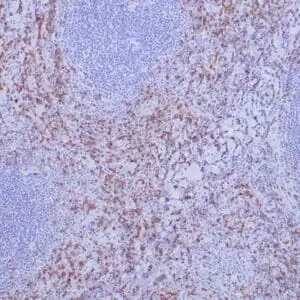
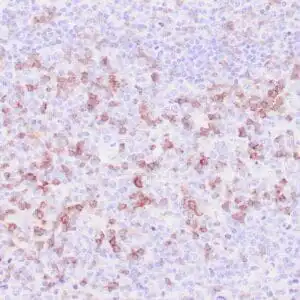
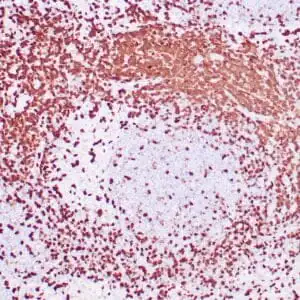
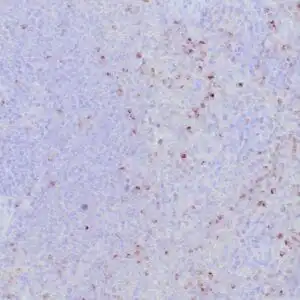
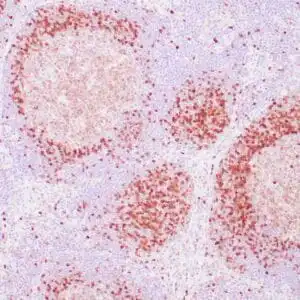
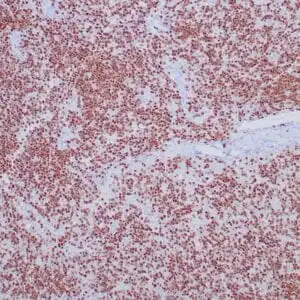
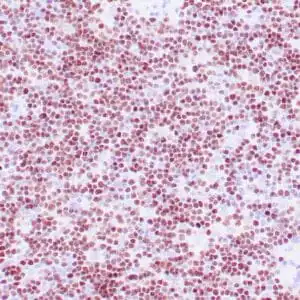
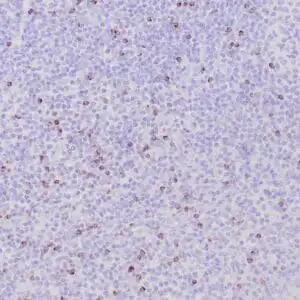
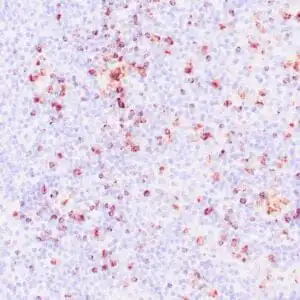
| Human skin stained with anti-CD1a antibody using peroxidase-conjugate and DAB chromogen. Note membrane staining of langerhan cells. |
FAQ & Publications
Frequently Asked Questions
What species does the mouse anti-CD1a monoclonal antibody (O10) react with?
This antibody specifically reacts with human CD1a antigen.
Which applications is the mouse anti-CD1a monoclonal antibody (O10) validated for?
It is validated for immunohistochemistry (IHC) on formalin-fixed, paraffin-embedded tissues.
How should the mouse anti-CD1a antibody be stored to maintain stability?
For short-term storage, keep the antibody at 2-8°C. For long-term storage, freeze at -20°C and avoid freeze/thaw cycles.
What is the recommended dilution for using the concentrated form of this antibody in IHC?
The concentrated antibody should be diluted between 1:50 and 1:100 for immunohistochemistry applications.
What controls are recommended when using the mouse anti-CD1a monoclonal antibody (O10) in experiments?
Skin tissue or Langerhans cell histiocytosis X samples are recommended as positive controls for this antibody.
Publications
| pmid | title | authors | citation |
|---|---|---|---|
| We haven't added any publications to our database yet. | |||
Published literature highly relevant to the biological target of this product and referencing this antibody or clone are retrieved from the PubMed database provided by the United States National Library of Medicine at the National Institutes of Health.
Protocols
| relevant to this product |
|---|
| IHC |
Documents
| Batch Number | QC File | SDS |
|---|---|---|
| To view batch-specific Safety Datasheets and Quality Certificates associated with your account, please Log In. | ||
Only logged in customers who have purchased this product may leave a review.


Reviews
There are no reviews yet.