| Weight | 1 lbs |
|---|---|
| Dimensions | 9 × 5 × 2 in |
| host | mouse |
| isotype | IgG1 |
| clonality | monoclonal |
| concentration | concentrate, predilute |
| applications | IHC |
| reactivity | human |
| available size | 0.1 mL, 0.5 mL, 1 mL concentrated, 7 mL prediluted |

mouse anti-CD13 monoclonal antibody (ZM287) 6060
Price range: $160.00 through $528.00
Antibody summary
- Mouse monoclonal to CD13
- Suitable for: Immunohistochemistry (formalin-fixed, paraffin-embedded tissues)
- Reacts with: Human
- Isotype:IgG1
- Control: Myeloid leukemia
- Visualization: Cytoplasmic
- 0.1, 0.5, 1.0 mL concentrated, 7 mL prediluted
mouse anti-CD13 monoclonal antibody ZM287 6060
| target relevance |
|---|
| Homo sapiens ANPEP Aminopeptidase N |
| Protein names Aminopeptidase N |
| Alternative names Alanyl aminopeptidase, Aminopeptidase M, Microsomal aminopeptidase, Myeloid plasma membrane glycoprotein CD13, gp150 |
| Gene names ANPEP |
| Protein family Belongs to the peptidase M1 family |
| Function Broad specificity aminopeptidase which plays a role in the final digestion of peptides generated from hydrolysis of proteins by gastric and pancreatic proteases. Also involved in the processing of various peptides including peptide hormones, such as angiotensin III and IV, neuropeptides, and chemokines. May also be involved the cleavage of peptides bound to major histocompatibility complex class II molecules of antigen presenting cells. May have a role in angiogenesis and promote cholesterol crystallization. May have a role in amino acid transport by acting as binding partner of amino acid transporter SLC6A19 and regulating its activity (By similarity) |
| Catalytic activity Release of an N-terminal amino acid, Xaa-|-Yaa- from a peptide, amide or arylamide. Xaa is preferably Ala, but may be most amino acids including Pro (slow action). When a terminal hydrophobic residue is followed by a prolyl residue, the two may be released as an intact Xaa-Pro dipeptide. |
| Subcellular location Cell membrane |
| Structure (Microbial infection) Interacts with the S1 domain of human coronavirus 229E/HCoV-229E spike protein |
| Post-translational modification Sulfated N- and O-glycosylated May undergo proteolysis and give rise to a soluble form |
| Keywords 3D-structure, Aminopeptidase, Angiogenesis, Cell membrane, Developmental protein, Differentiation, Direct protein sequencing, Disulfide bond, Glycoprotein, Host cell receptor for virus entry, Host-virus interaction, Hydrolase, Membrane, Metal-binding, Metalloprotease, Protease, Proteomics identification, Receptor, Reference proteome, Signal-anchor, Sulfation, Transmembrane, Transmembrane helix, Zinc |
| Sequence MAKGFYISKSLGILGILLGVAAVCTIIALSVVYSQEKNKNANSSPVASTTPSASATTNPA SATTLDQSKAWNRYRLPNTLKPDSYRVTLRPYLTPNDRGLYVFKGSSTVRFTCKEATDVI IIHSKKLNYTLSQGHRVVLRGVGGSQPPDIDKTELVEPTEYLVVHLKGSLVKDSQYEMDS EFEGELADDLAGFYRSEYMEGNVRKVVATTQMQAADARKSFPCFDEPAMKAEFNITLIHP KDLTALSNMLPKGPSTPLPEDPNWNVTEFHTTPKMSTYLLAFIVSEFDYVEKQASNGVLI RIWARPSAIAAGHGDYALNVTGPILNFFAGHYDTPYPLPKSDQIGLPDFNAGAMENWGLV TYRENSLLFDPLSSSSSNKERVVTVIAHELAHQWFGNLVTIEWWNDLWLNEGFASYVEYL GADYAEPTWNLKDLMVLNDVYRVMAVDALASSHPLSTPASEINTPAQISELFDAISYSKG ASVLRMLSSFLSEDVFKQGLASYLHTFAYQNTIYLNLWDHLQEAVNNRSIQLPTTVRDIM NRWTLQMGFPVITVDTSTGTLSQEHFLLDPDSNVTRPSEFNYVWIVPITSIRDGRQQQDY WLIDVRAQNDLFSTSGNEWVLLNLNVTGYYRVNYDEENWRKIQTQLQRDHSAIPVINRAQ IINDAFNLASAHKVPVTLALNNTLFLIEERQYMPWEAALSSLSYFKLMFDRSEVYGPMKN YLKKQVTPLFIHFRNNTNNWREIPENLMDQYSEVNAISTACSNGVPECEEMVSGLFKQWM ENPNNNPIHPNLRSTVYCNAIAQGGEEEWDFAWEQFRNATLVNEADKLRAALACSKELWI LNRYLSYTLNPDLIRKQDATSTIISITNNVIGQGLVWDFVQSNWKKLFNDYGGGSFSFSN LIQAVTRRFSTEYELQQLEQFKKDNEETGFGSGTRALEQALEKTKANIKWVKENKEVVLQ WFTENSK |
| UniProt accession: P15144 |
Data
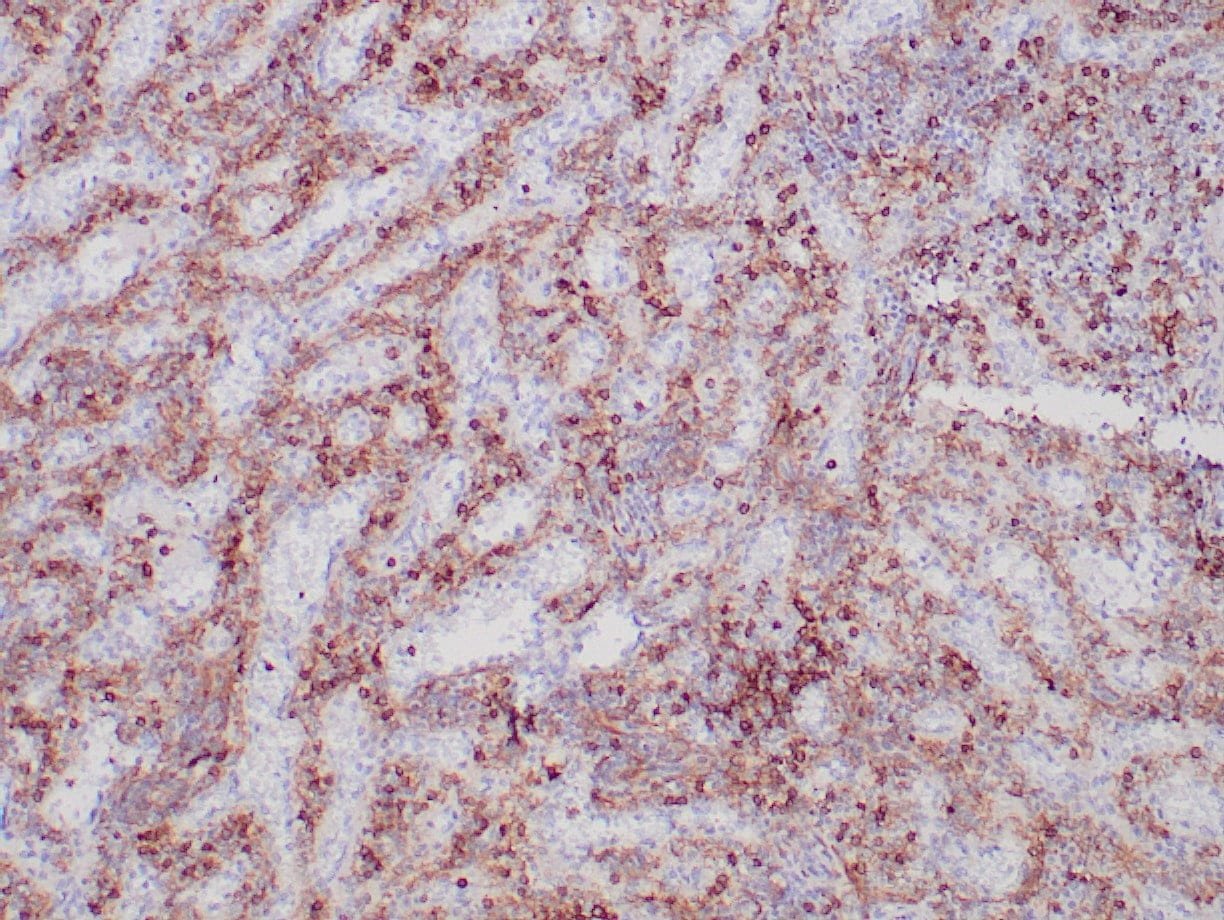 |
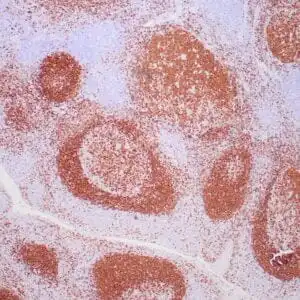
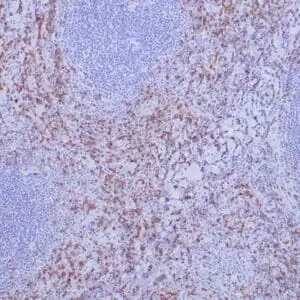
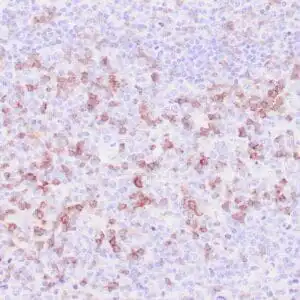
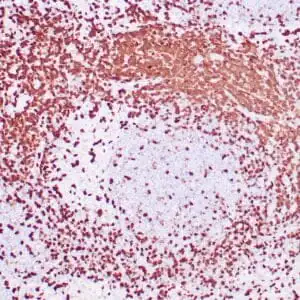
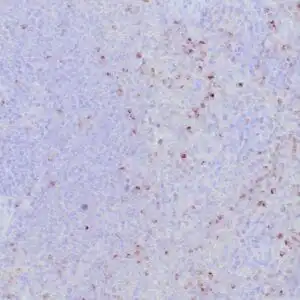
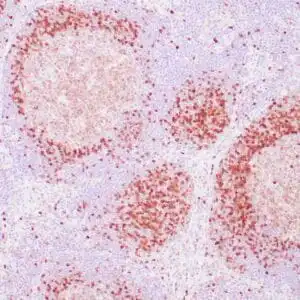
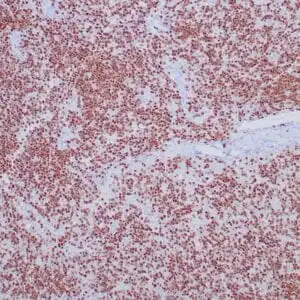
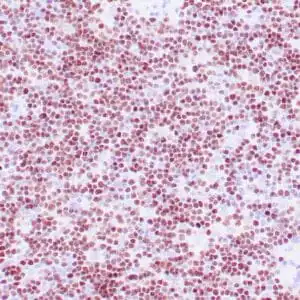
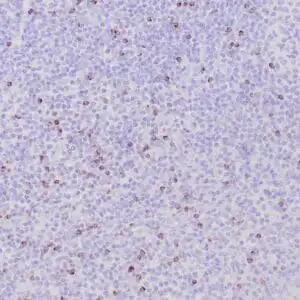
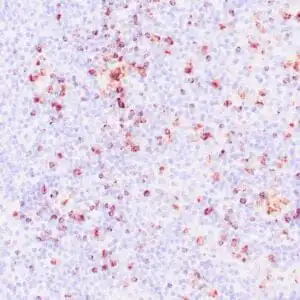
| Human spleen stained with anti-CD13 antibody using peroxidase-conjugate and DAB chromogen. Note cytoplasmic staining of myeloid cells. |
FAQ & Publications
Frequently Asked Questions
What is the recommended application and dilution for the mouse anti-CD13 monoclonal antibody (ZM287) 6060?
This mouse anti-CD13 monoclonal antibody is suitable for immunohistochemistry (IHC) on formalin-fixed, paraffin-embedded human tissues. The recommended dilution for the concentrated antibody is between 1:100 and 1:200.
How should the mouse anti-CD13 monoclonal antibody (ZM287) 6060 be stored to maintain stability?
For short-term storage, keep the antibody at 2-8°C. For long-term storage, it should be kept at -20°C. It is important to avoid freeze/thaw cycles to preserve antibody integrity.
Publications
| pmid | title | authors | citation |
|---|---|---|---|
| We haven't added any publications to our database yet. | |||
Published literature highly relevant to the biological target of this product and referencing this antibody or clone are retrieved from the PubMed database provided by the United States National Library of Medicine at the National Institutes of Health.
Protocols
| relevant to this product |
|---|
| IHC |
Documents
| Batch Number | QC File | SDS |
|---|---|---|
| To view batch-specific Safety Datasheets and Quality Certificates associated with your account, please Log In. | ||
Only logged in customers who have purchased this product may leave a review.


Reviews
There are no reviews yet.