| Weight | 1 lbs |
|---|---|
| Dimensions | 9 × 5 × 2 in |
| host | mouse |
| isotype | IgG |
| clonality | monoclonal |
| concentration | concentrate, predilute |
| applications | IHC |
| reactivity | human |
| available size | 0.1 mL, 0.5 mL, 1 mL concentrated, 7 mL prediluted |
rabbit anti-Cytokeratin 5/6 monoclonal antibody (ZR412) 6148
Price range: $160.00 through $528.00
Antibody summary
- Rabbit monoclonal to Cytokeratin 5/6
- Suitable for: Immunohistochemistry (formalin-fixed, paraffin-embedded tissues)
- Reacts with: Human
- Isotype:IgG
- Control: Prostate
- Visualization: Cytoplasmic
- 0.1, 0.5, 1.0 mL concentrated, 7 mL prediluted
rabbit anti-Cytokeratin 5/6 monoclonal antibody ZR412 6148
| target relevance |
|---|
| Homo sapiens KRT6A Keratin, type II cytoskeletal 6A |
| Protein names Keratin, type II cytoskeletal 6A |
| Alternative names Cytokeratin-6A, Cytokeratin-6D, Keratin-6A, Type-II keratin Kb6 |
| Gene names KRT6A |
| Protein family Belongs to the intermediate filament family |
| Function Structural component of intermediate filaments in epithelial keratinocytes. Forms heteropolymers with the type I keratins KRT16 and KRT17, assembling into keratin intermediate filament networks that contributes to the structural integrity and stress resilience of stratified epithelia, particularly in epidermis, nail bed and oral mucosa (PubMed:11886499, PubMed:17719747, PubMed:7545493). Rapidly induced in wound-edge keratinocytes and participates in cytoskeletal reorganization during re-epithelialization (By similarity). Negatively regulates collective keratinocyte migration by stabilizing non-muscle myosin MYH9 and desmoplakin, thereby altering cell-cell and cell-matrix adhesion and reducing the speed and directionality of epithelial sheet movement during wound repair (By similarity). Also limits epithelial migration by inhibiting SRC activity during wound repair (By similarity). Required for normal palmoplantar, nail unit and oral mucosa integrity (PubMed:11886499, PubMed:17719747, PubMed:7545493) |
| Subcellular location Cytoplasm |
| Structure Heterodimers composed of one type I and one type II keratins; forms parallel coiled-coil heterodimers (By similarity). Heterodimers associate in an antiparallel manner to form heterotetramers, which further assemble into higher-order keratin intermediate filaments (By similarity). Associates with KRT16 and/or KRT17 (By similarity). Interacts with TCHP (PubMed:15731013). Interacts with IIA/MYH2; the interaction stabilizes MYH2 (By similarity) |
| Involvement in disease Pachyonychia congenita 3 An autosomal dominant genodermatosis characterized by hypertrophic nail dystrophy, painful and highly debilitating plantar keratoderma, oral leukokeratosis, and a variety of epidermal cysts. |
| Keywords 3D-structure, Acetylation, Allergen, Coiled coil, Cytoplasm, Direct protein sequencing, Disease variant, Ectodermal dysplasia, Intermediate filament, Keratin, Palmoplantar keratoderma, Proteomics identification, Reference proteome |
| Sequence MASTSTTIRSHSSSRRGFSANSARLPGVSRSGFSSVSVSRSRGSGGLGGACGGAGFGSRS LYGLGGSKRISIGGGSCAISGGYGSRAGGSYGFGGAGSGFGFGGGAGIGFGLGGGAGLAG GFGGPGFPVCPPGGIQEVTVNQSLLTPLNLQIDPTIQRVRAEEREQIKTLNNKFASFIDK VRFLEQQNKVLETKWTLLQEQGTKTVRQNLEPLFEQYINNLRRQLDSIVGERGRLDSELR GMQDLVEDFKNKYEDEINKRTAAENEFVTLKKDVDAAYMNKVELQAKADTLTDEINFLRA LYDAELSQMQTHISDTSVVLSMDNNRNLDLDSIIAEVKAQYEEIAQRSRAEAESWYQTKY EELQVTAGRHGDDLRNTKQEIAEINRMIQRLRSEIDHVKKQCANLQAAIADAEQRGEMAL KDAKNKLEGLEDALQKAKQDLARLLKEYQELMNVKLALDVEIATYRKLLEGEECRLNGEG VGQVNISVVQSTVSSGYGGASGVGSGLGLGGGSSYSYGSGLGVGGGFSSSSGRAIGGGLS SVGGGSSTIKYTTTSSSSRKSYKH |
| UniProt accession: P02538 |
Data
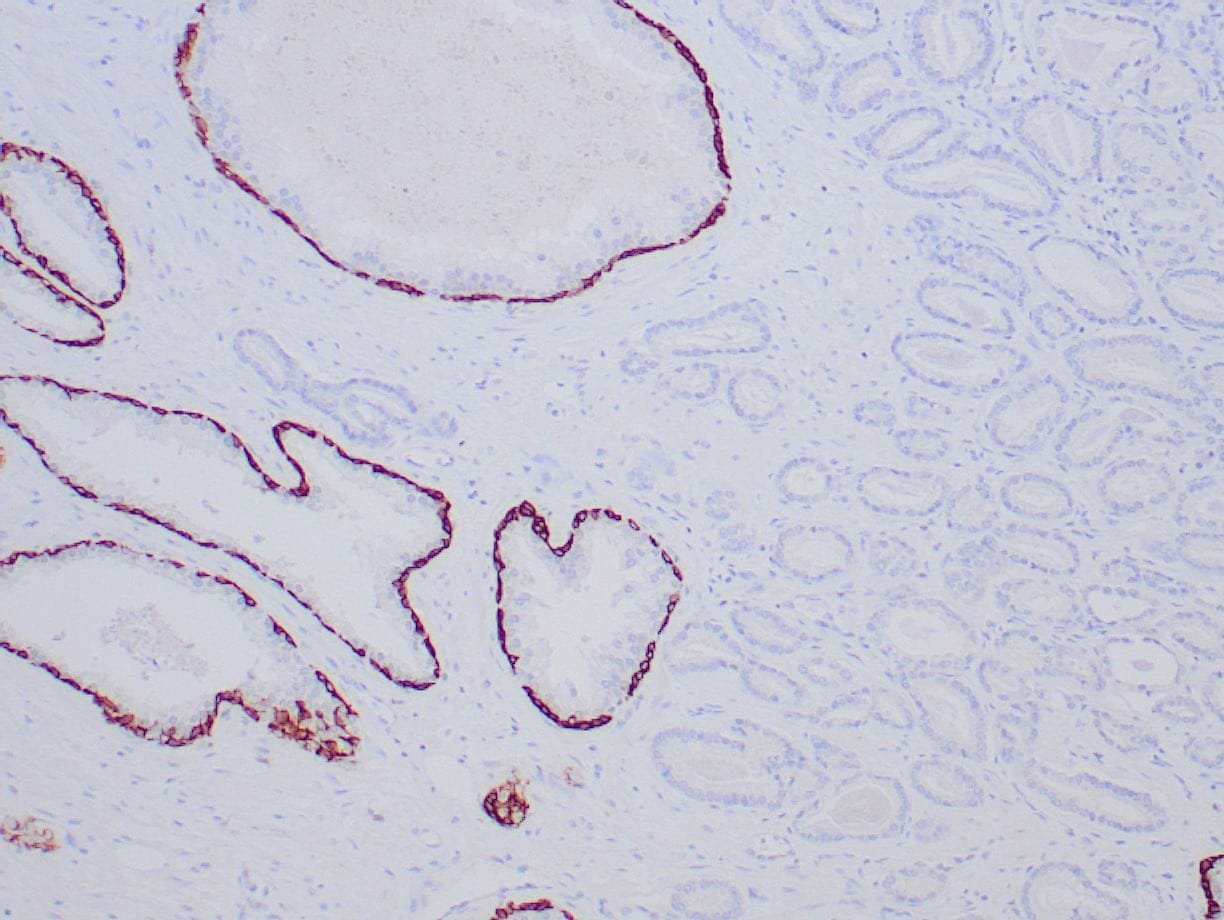 |
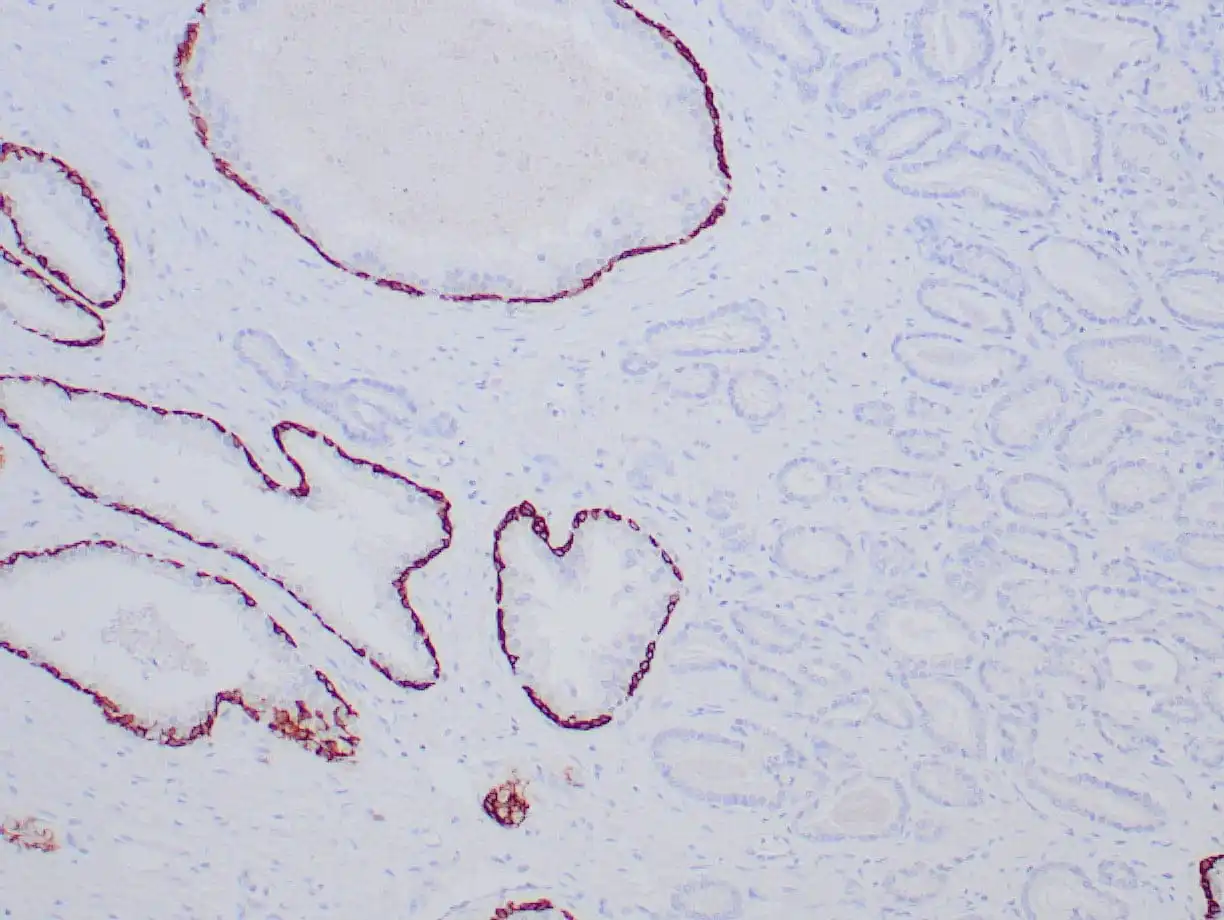
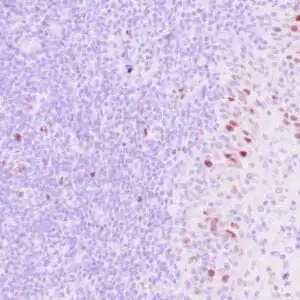
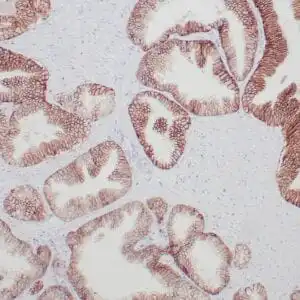
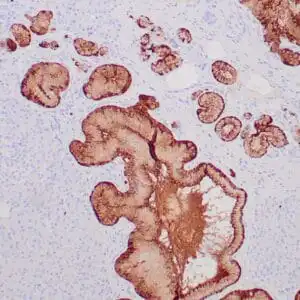
| Formalin-fixed, paraffin-embedded human prostate carcinoma stained with anti-cytokeratin 5/6 antibody using peroxidase-conjugate and DAB chromogen. Note the cytoplasmic staining of basal cells in the normal prostate (left), whereas carcinoma glands (right) are negative. |
FAQ & Publications
Frequently Asked Questions
What is the recommended dilution range for using the rabbit anti-Cytokeratin 5/6 monoclonal antibody (ZR412) in immunohistochemistry?
For immunohistochemistry applications, the concentrated rabbit anti-Cytokeratin 5/6 monoclonal antibody (ZR412) is recommended to be diluted between 1:100 and 1:200.
How should the rabbit anti-Cytokeratin 5/6 monoclonal antibody (ZR412) be stored to maintain its stability?
The antibody should be stored at 2-8°C for short term storage. For longer term storage, it is recommended to keep the antibody at -20°C and to avoid repeated freeze/thaw cycles to preserve antibody integrity.
Publications
| pmid | title | authors | citation |
|---|---|---|---|
| We haven't added any publications to our database yet. | |||
Published literature highly relevant to the biological target of this product and referencing this antibody or clone are retrieved from the PubMed database provided by the United States National Library of Medicine at the National Institutes of Health.
Protocols
| relevant to this product |
|---|
| IHC |
Documents
| Batch Number | QC File | SDS |
|---|---|---|
| To view batch-specific Safety Datasheets and Quality Certificates associated with your account, please Log In. | ||
Only logged in customers who have purchased this product may leave a review.
Reviews
There are no reviews yet.