| Weight | 1 lbs |
|---|---|
| Dimensions | 9 × 5 × 2 in |
| host | mouse |
| isotype | IgG1 |
| clonality | monoclonal |
| concentration | concentrate, predilute |
| applications | IHC |
| reactivity | human |
| available size | 0.1 mL, 0.5 mL, 1 mL concentrated, 7 mL prediluted |

mouse anti-PSAP monoclonal antibody (ZM162) 6349
Price range: $160.00 through $528.00
Antibody summary
- Mouse monoclonal to PSAP
- Suitable for: Immunohistochemistry (formalin-fixed, paraffin-embedded tissues)
- Reacts with: Human
- Isotype:IgG1
- Control: Human prostate
- Visualization: Cytoplasmic
- 0.1, 0.5, 1.0 mL concentrated, 7 mL prediluted
mouse anti-PSAP monoclonal antibody ZM162 6349
| target relevance |
|---|
| Homo sapiens ACP3 Prostatic acid phosphatase |
| Protein names Prostatic acid phosphatase |
| Alternative names 5'-nucleotidase, Acid phosphatase 3, Ecto-5'-nucleotidase, Protein tyrosine phosphatase ACP3, Thiamine monophosphatase |
| Gene names ACP3 |
| Protein family Belongs to the histidine acid phosphatase family |
| Function A non-specific tyrosine phosphatase that dephosphorylates a diverse number of substrates under acidic conditions (pH 4-6) including alkyl, aryl, and acyl orthophosphate monoesters and phosphorylated proteins (PubMed:10506173, PubMed:15280042, PubMed:20498373, PubMed:9584846). Has lipid phosphatase activity and inactivates lysophosphatidic acid in seminal plasma (PubMed:10506173, PubMed:15280042) |
| Catalytic activity a phosphate monoester + H2O = an alcohol + phosphate 1-(9Z-octadecenoyl)-sn-glycero-3-phosphate + H2O = 1-(9Z-octadecenoyl)-sn-glycerol + phosphate a ribonucleoside 5'-phosphate + H2O = a ribonucleoside + phosphate O-phospho-L-tyrosyl-[protein] + H2O = L-tyrosyl-[protein] + phosphate |
| Subcellular location Cell membrane, Lysosome membrane, Nucleus, Cytoplasm, cytosol |
| Structure Homodimer; dimer formation is required for phosphatase activity |
| Post-translational modification N-glycosylated. High mannose content, partially sialylated and fucosylated biantennary complex. Also fucosylated with partially sialylated triantennary complex oligosaccharides Proteolytically cleaved in seminal fluid to produce several peptides. Peptide PAPf39, the most prominent, forms amyloid beta-sheet fibrils, SEVI (semen-derived enhancer of viral infection) |
| Keywords 3D-structure, Alternative splicing, Amyloid, Cell membrane, Cytoplasm, Direct protein sequencing, Disulfide bond, Glycoprotein, Hydrolase, Lipid metabolism, Lysosome, Membrane, Nucleus, Proteomics identification, Reference proteome, Secreted, Signal |
| Sequence MRAAPLLLARAASLSLGFLFLLFFWLDRSVLAKELKFVTLVFRHGDRSPIDTFPTDPIKE SSWPQGFGQLTQLGMEQHYELGEYIRKRYRKFLNESYKHEQVYIRSTDVDRTLMSAMTNL AALFPPEGVSIWNPILLWQPIPVHTVPLSEDQLLYLPFRNCPRFQELESETLKSEEFQKR LHPYKDFIATLGKLSGLHGQDLFGIWSKVYDPLYCESVHNFTLPSWATEDTMTKLRELSE LSLLSLYGIHKQKEKSRLQGGVLVNEILNHMKRATQIPSYKKLIMYSAHDTTVSGLQMAL DVYNGLLPPYASCHLTELYFEKGEYFVEMYYRNETQHEPYPLMLPGCSPSCPLERFAELV GPVIPQDWSTECMTTNSHQGTEDSTD |
| UniProt accession: P15309 |
Data
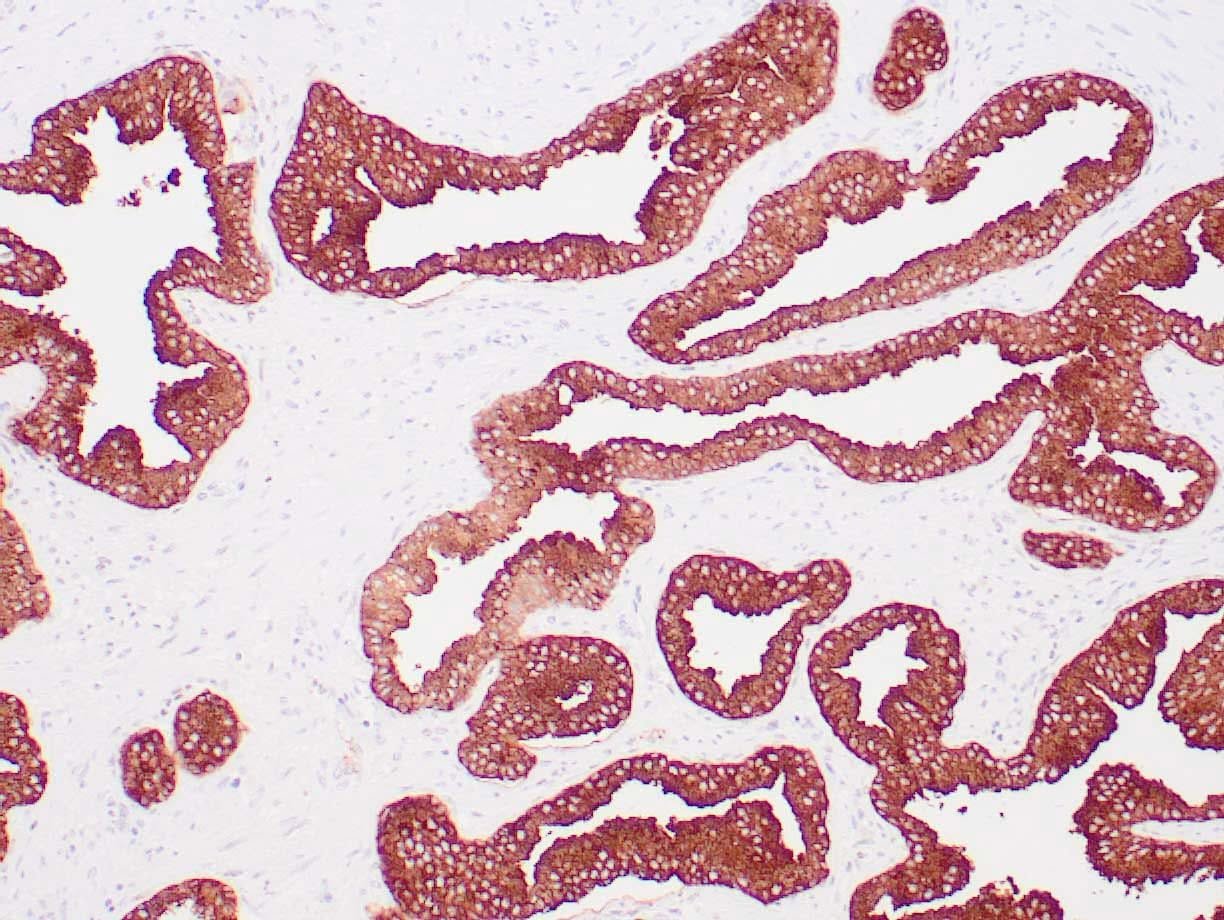 |
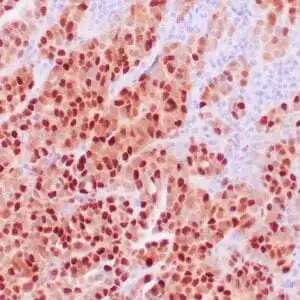
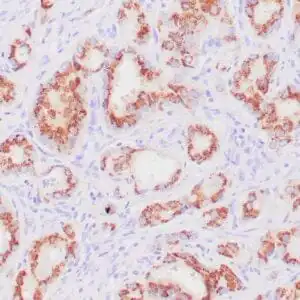
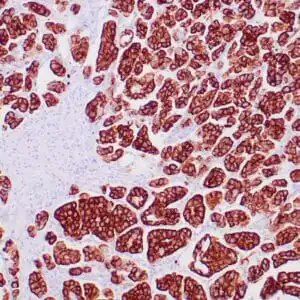
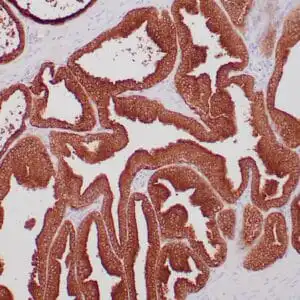
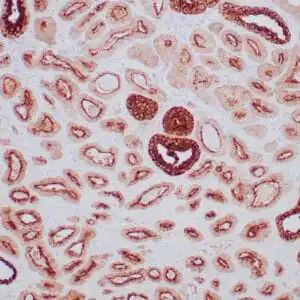
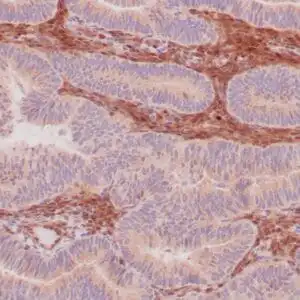
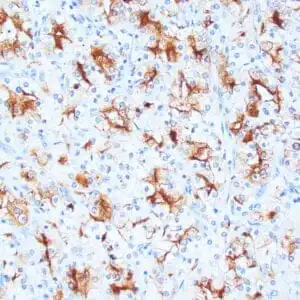
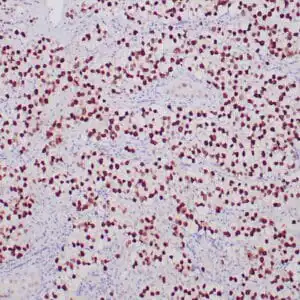
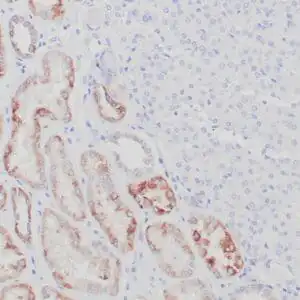
| Human prostate stained with anti-PSAP antibody using peroxidase-conjugate and DAB chromogen. Note the cytoplasmic staining of benign prostate glands. |
FAQ & Publications
Frequently Asked Questions
What species does the mouse anti-PSAP monoclonal antibody (ZM162) specifically react with?
The mouse anti-PSAP monoclonal antibody (ZM162) specifically reacts with human tissue.
What are the recommended storage conditions for the mouse anti-PSAP monoclonal antibody to maintain its stability?
For short-term storage, keep the antibody at 2-8°C, and for longer-term storage, store it at -20°C while avoiding freeze/thaw cycles to maintain stability.
Publications
| pmid | title | authors | citation |
|---|---|---|---|
| We haven't added any publications to our database yet. | |||
Published literature highly relevant to the biological target of this product and referencing this antibody or clone are retrieved from the PubMed database provided by the United States National Library of Medicine at the National Institutes of Health.
Protocols
| relevant to this product |
|---|
| IHC |
Documents
| Batch Number | QC File | SDS |
|---|---|---|
| To view batch-specific Safety Datasheets and Quality Certificates associated with your account, please Log In. | ||
Only logged in customers who have purchased this product may leave a review.
Reviews
There are no reviews yet.