| Weight | 1 lbs |
|---|---|
| Dimensions | 9 × 5 × 2 in |
| host | mouse |
| isotype | IgG1/K |
| clonality | monoclonal |
| concentration | concentrate, predilute |
| applications | IHC |
| reactivity | human |
| available size | 0.1 mL, 0.5 mL, 1 mL concentrated, 7 mL prediluted |

mouse anti-CD79a monoclonal antibody (JCB117) 6113
Price range: $160.00 through $528.00
Antibody summary
- Mouse monoclonal to CD79a
- Suitable for: Immunohistochemistry (formalin-fixed, paraffin-embedded tissues)
- Reacts with: Human
- Isotype:IgG1/K
- Control: Tonsil or lymph node
- Visualization: Membrane
- 0.1, 0.5, 1.0 mL concentrated, 7 mL prediluted
mouse anti-CD79a monoclonal antibody JCB117 6113
| target relevance |
|---|
| Homo sapiens CD79A B-cell antigen receptor complex-associated protein alpha chain |
| Protein names B-cell antigen receptor complex-associated protein alpha chain |
| Alternative names Ig-alpha, MB-1 membrane glycoprotein, Membrane-bound immunoglobulin-associated protein, Surface IgM-associated protein |
| Gene names CD79A |
| Function Required in cooperation with CD79B for initiation of the signal transduction cascade activated by binding of antigen to the B-cell antigen receptor complex (BCR) which leads to internalization of the complex, trafficking to late endosomes and antigen presentation. Also required for BCR surface expression and for efficient differentiation of pro- and pre-B-cells. Stimulates SYK autophosphorylation and activation. Binds to BLNK, bringing BLNK into proximity with SYK and allowing SYK to phosphorylate BLNK. Also interacts with and increases activity of some Src-family tyrosine kinases. Represses BCR signaling during development of immature B-cells |
| Subcellular location Cell membrane |
| Structure Heterodimer of alpha and beta chains; disulfide-linked. Part of the B-cell antigen receptor complex where the alpha/beta chain heterodimer is non-covalently associated with an antigen-specific membrane-bound surface immunoglobulin of two heavy chains and two light chains (PubMed:35981043). Interacts through its phosphorylated ITAM domain with the SH2 domains of SYK which stimulates SYK autophosphorylation and activation. Also interacts, when phosphorylated on Tyr-210, with the SH2 domain of BLNK/SLP65, bringing BLNK into proximity with SYK and allowing SYK to phosphorylate BLNK which is necessary for trafficking of the BCR to late endosomes. Interacts with Src-family tyrosine kinases including FYN and LYN, increasing their activity (By similarity) |
| Post-translational modification Phosphorylated on tyrosine, serine and threonine residues upon B-cell activation. Phosphorylation of tyrosine residues by Src-family kinases is an early and essential feature of the BCR signaling cascade. The phosphorylated tyrosines serve as docking sites for SH2-domain containing kinases, leading to their activation which in turn leads to phosphorylation of downstream targets. Phosphorylated by LYN. Phosphorylation of serine and threonine residues may prevent subsequent tyrosine phosphorylation Arginine methylation in the ITAM domain may interfere with the binding of SYK. It promotes signals leading to B-cell differentiation (By similarity) |
| Involvement in disease Agammaglobulinemia 3, autosomal recessive A primary immunodeficiency characterized by profoundly low or absent serum antibodies and low or absent circulating B-cells due to an early block of B-cell development. Affected individuals develop severe infections in the first years of life. |
| Keywords 3D-structure, Adaptive immunity, Alternative splicing, Cell membrane, Direct protein sequencing, Disulfide bond, Glycoprotein, Immunity, Immunoglobulin domain, Membrane, Methylation, Phosphoprotein, Proteomics identification, Receptor, Reference proteome, Signal, Transmembrane, Transmembrane helix |
| Sequence MPGGPGVLQALPATIFLLFLLSAVYLGPGCQALWMHKVPASLMVSLGEDAHFQCPHNSSN NANVTWWRVLHGNYTWPPEFLGPGEDPNGTLIIQNVNKSHGGIYVCRVQEGNESYQQSCG TYLRVRQPPPRPFLDMGEGTKNRIITAEGIILLFCAVVPGTLLLFRKRWQNEKLGLDAGD EYEDENLYEGLNLDDCSMYEDISRGLQGTYQDVGSLNIGDVQLEKP |
| UniProt accession: P11912 |
Data
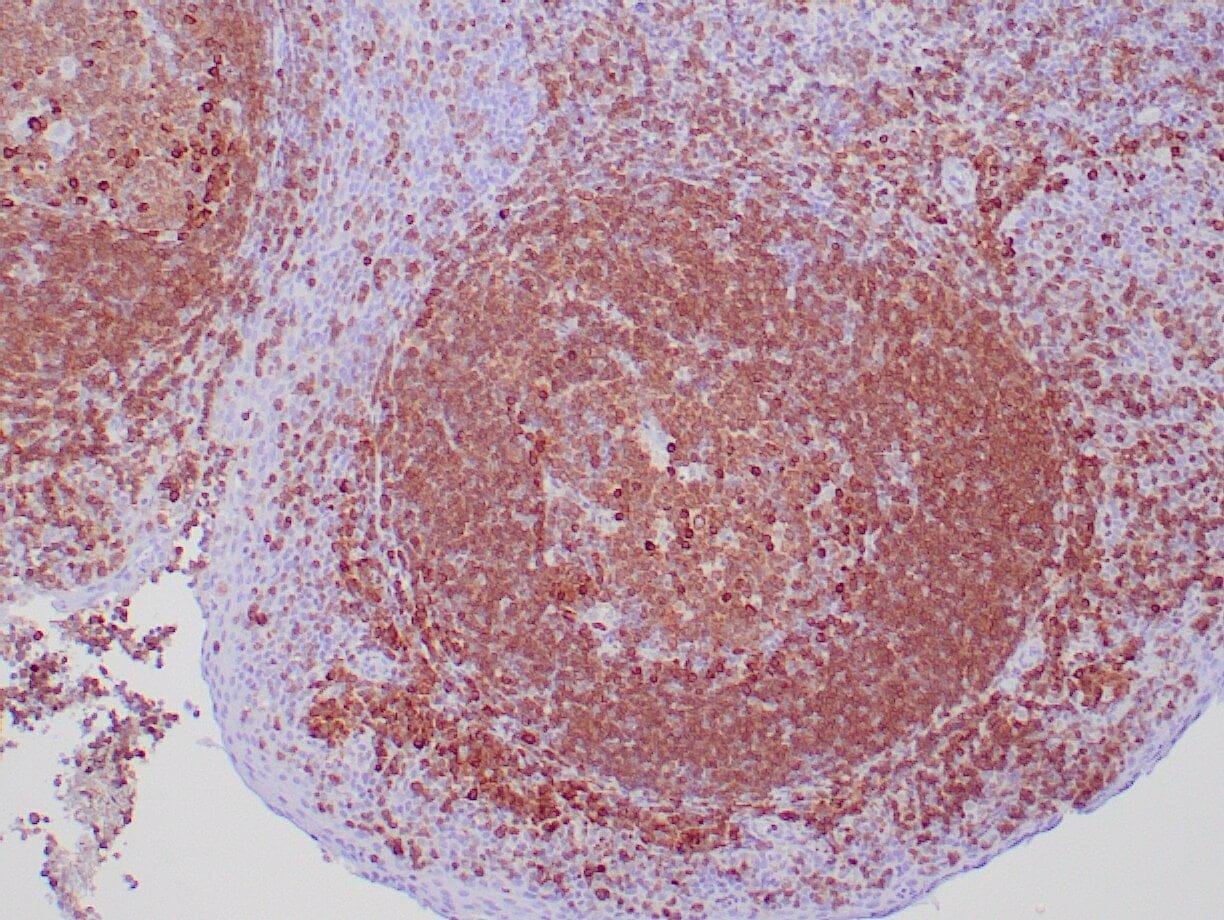 |
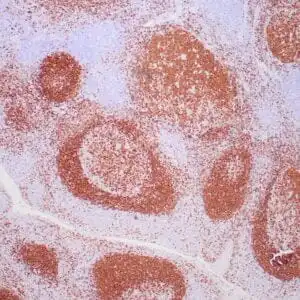
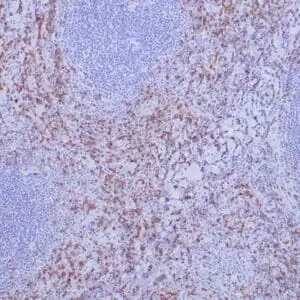
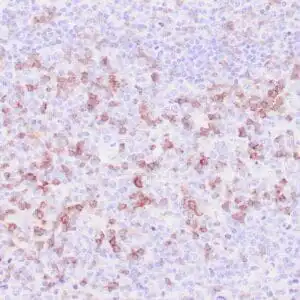
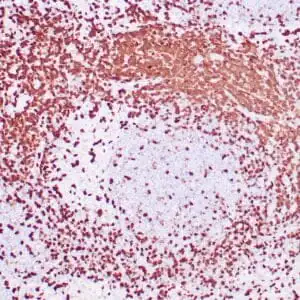
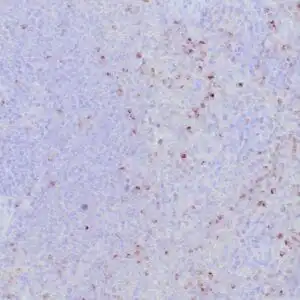
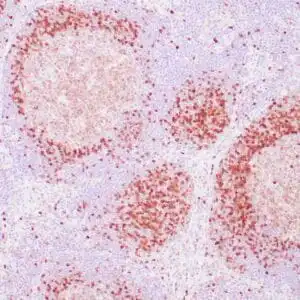
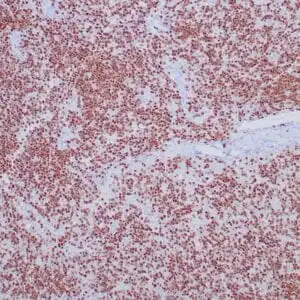
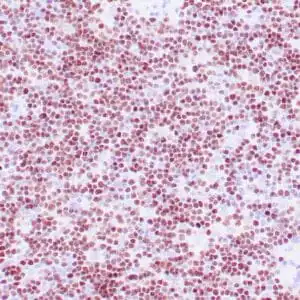
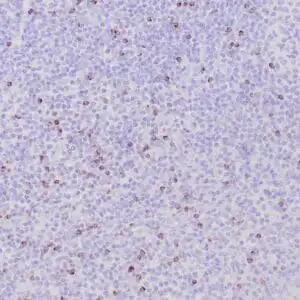
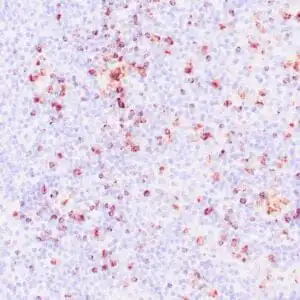
| Human tonsil stained with anti-CD79a antibody using peroxidase-conjugate and DAB chromogen. Note the cytoplasmic staining of follicular center and parafollicular B-cells. |
FAQ & Publications
Frequently Asked Questions
What species reactivity does the mouse anti-CD79a monoclonal antibody (JCB117) exhibit?
This antibody specifically reacts with human CD79a.
How should the mouse anti-CD79a monoclonal antibody (JCB117) be stored to maintain stability?
For short-term storage, keep the antibody at 2-8°C. For long-term storage, it should be kept at -20°C, and freeze/thaw cycles should be avoided to preserve antibody integrity.
Publications
| pmid | title | authors | citation |
|---|---|---|---|
| We haven't added any publications to our database yet. | |||
Published literature highly relevant to the biological target of this product and referencing this antibody or clone are retrieved from the PubMed database provided by the United States National Library of Medicine at the National Institutes of Health.
Protocols
| relevant to this product |
|---|
| IHC |
Documents
| Batch Number | QC File | SDS |
|---|---|---|
| To view batch-specific Safety Datasheets and Quality Certificates associated with your account, please Log In. | ||
Only logged in customers who have purchased this product may leave a review.


Reviews
There are no reviews yet.