| Weight | 1 lbs |
|---|---|
| Dimensions | 9 × 5 × 2 in |
| target | Legionella pneumophila |
| species reactivity | Legionella pneumophila |
| applications | ELISA |
| assay type | Indirect & quantitative |
| available size | 1 mg |

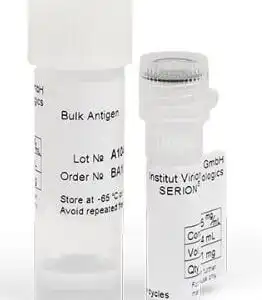
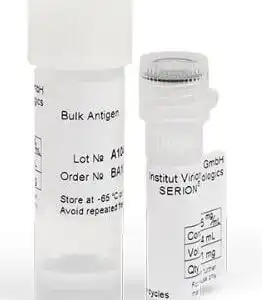
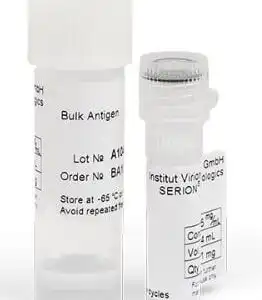
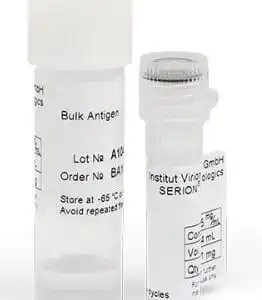
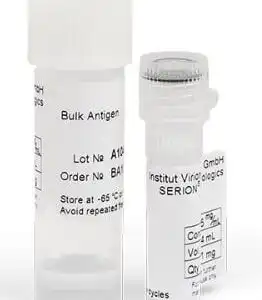
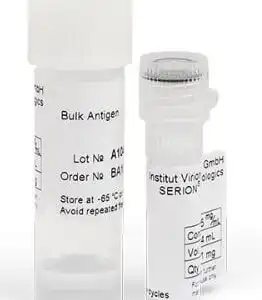
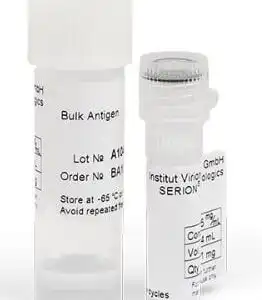
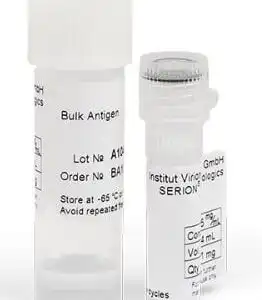
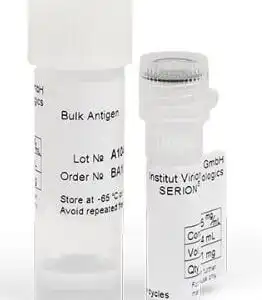
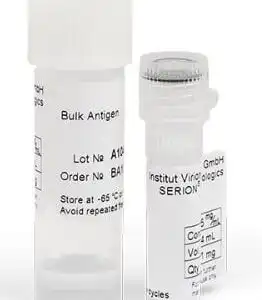
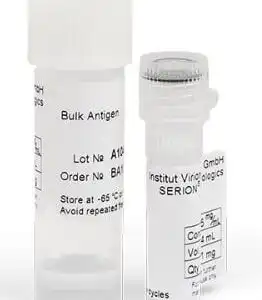
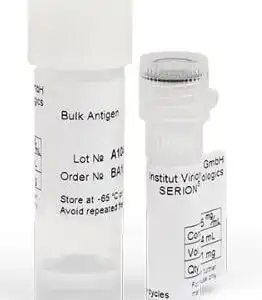
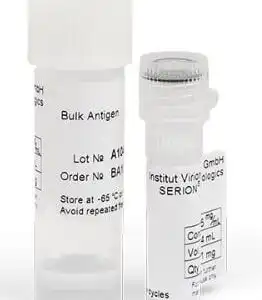
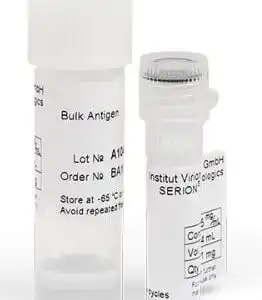
Legionella pneumophila Antigen BA106VS
$938.00
Summary
- Virion/Serion Immunologics Antigen for research use (RUO)
- Legionella pneumophila Antigen, recombinant
- Suitable for detection of IgA, IgG & IgM antibodies in ELISA
- Lot specific concentration, specified in mg/mL
- 1 mg
Legionella pneumophila Antigen BA106VS
| kit |
|---|
| Research area Infectious Disease |
| Storage Store at -65°C or lower. Avoid repeated freeze-thaw cycles. 10 years from date of manufacture (under recommended storage conditions). |
| Form liquid |
| Associated products Legionella pneumophila Antigen (BA106VS) Legionella pneumophila IgG Control Serum (BC106G) Legionella pneumophila IgM Control Serum (BC106M) Legionella pneumophila 1-7 IgG ELISA Kit (ESR106G) Legionella pneumophila 1-7 IgM ELISA Kit (ESR106M) |
| target relevance |
|---|
| Legionella pneumophila |
| Description Bacterium that causes Legionnaires' disease and Pontiac fever |
| Structure Legionella pneumophila is a Gram-negative, aerobic, rod-shaped bacterium belonging to the family Legionellaceae. The organism is naturally found in freshwater environments, including lakes, rivers, and streams, where it survives and replicates within free-living amoebae and other protozoa. In man-made water systems such as cooling towers, hot water tanks, plumbing systems, decorative fountains, and whirlpool spas, Legionella can proliferate under favorable conditions and form biofilms that enhance survival and persistence. L. pneumophila is a facultative intracellular pathogen that infects and replicates within alveolar macrophages and other host cells by preventing phagosome-lysosome fusion. Serogroup 1 is responsible for the majority of human infections. Legionella pneumophila is the primary causative agent of Legionnaires' disease, a severe form of pneumonia, and Pontiac fever, a milder self-limiting illness. |
| Diagnosis The diagnosis of Legionella pneumophila infection is performed through microbiological, molecular, and antigen detection methods. Detection of Legionella urinary antigen, particularly for L. pneumophila serogroup 1, is widely used due to its rapidity and high specificity. Polymerase chain reaction (PCR) assays performed on respiratory specimens provide highly sensitive detection and may identify a broader range of Legionella species and serogroups. Culture of respiratory samples on specialized buffered charcoal yeast extract (BCYE) agar remains the definitive diagnostic method and allows epidemiological comparison of clinical and environmental isolates. Serological testing may be used for retrospective diagnosis but is less useful for acute clinical management. Early diagnosis is important because prompt antimicrobial therapy significantly improves outcomes. |
| Symptoms Legionella pneumophila infection most commonly occurs following inhalation of contaminated aerosols generated from water systems. After an incubation period of approximately two to ten days, Legionnaires' disease typically presents with high fever, chills, cough, shortness of breath, fatigue, headache, muscle aches, and malaise. Gastrointestinal symptoms such as diarrhea, nausea, vomiting, and abdominal pain are common and may help distinguish Legionnaires' disease from other causes of pneumonia. Neurological manifestations including confusion, disorientation, and altered mental status may also occur. Severe infections can progress to respiratory failure, septic shock, multi-organ dysfunction, and death, particularly in elderly individuals, smokers, immunocompromised patients, and those with chronic underlying diseases. Pontiac fever presents as a milder influenza-like illness without pneumonia and generally resolves spontaneously within several days. |
Data
FAQ & Publications
Frequently Asked Questions
What applications is the Legionella pneumophila Antigen BA106VS suitable for?
The Legionella pneumophila Antigen BA106VS is suitable for use in ELISA assays to detect IgA, IgG, and IgM antibodies.
How should the Legionella pneumophila Antigen BA106VS be stored to maintain stability?
This antigen should be stored at -65°C or lower and repeated freeze-thaw cycles should be avoided to ensure stability. Under these recommended conditions, it has a shelf life of 10 years from the date of manufacture.
Does the Legionella pneumophila Antigen BA106VS react specifically with Legionella pneumophila species?
Yes, the antigen is reactive specifically with Legionella pneumophila species, making it suitable for research involving this human pathogenic bacterium.
Publications
| pmid | title | authors | citation |
|---|---|---|---|
| We haven't added any publications to our database yet. | |||
Published literature highly relevant to the biological target of this product and referencing this antibody or clone are retrieved from the PubMed database provided by the United States National Library of Medicine at the National Institutes of Health.
Protocols
| relevant to this product |
|---|
Only logged in customers who have purchased this product may leave a review.

Reviews
There are no reviews yet.