| Weight | 1 lbs |
|---|---|
| Dimensions | 9 × 5 × 2 in |
| target | Coxiella burnetii reactive IgG Phase I |
| species reactivity | Coxiella burnetii (Q fever) |
| applications | ELISA |
| assay type | Indirect & quantitative |
| available sizes | 96 tests |

Coxiella burnetii IgG Phase I ELISA kit-SERION classic ESR1311G
$355.00
Summary
- Virion/Serion Diagnostic Kit for research use (RUO)
- Coxiella burnetii IgG Phase I ELISA Kit
- Suitable for IgG detection
- Ready-to-use
- 96 tests
Coxiella burnetii IgG Phase I ELISA Kit ESR1311G
| kit | ||||||||||||||||||
|---|---|---|---|---|---|---|---|---|---|---|---|---|---|---|---|---|---|---|
| Assay type Indirect ELISA | ||||||||||||||||||
| Research area Infectious Disease | ||||||||||||||||||
| Sample type Serum, plasma, whole blood | ||||||||||||||||||
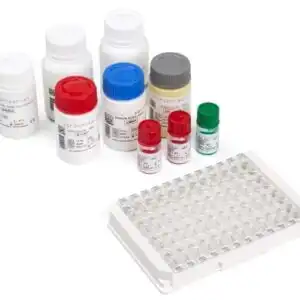
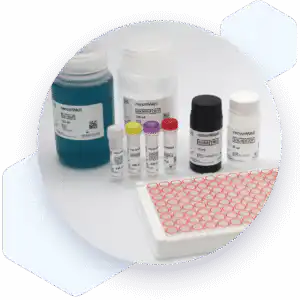
Components
| ||||||||||||||||||
| Storage Store at 2-8°C. | ||||||||||||||||||
| Associated products Coxiella burnetii Phase 2 IgG Control Serum (BC1312G) Coxiella burnetii Phase 2 IgM Control Serum (BC1312M) Coxiella burnetii IgA Phase I ELISA Kit (ESR1311A) Coxiella burnetii IgG Phase I ELISA Kit (ESR1311G) Coxiella burnetii IgG Phase II ELISA Kit (ESR1312G) Coxiella burnetii IgM Phase II ELISA Kit (ESR1312M) |
| target relevance |
|---|
| human antibody anti-Coxiella burnetii1 |
Data
FAQ & Publications
Frequently Asked Questions
What sample types are compatible with the Coxiella burnetii IgG Phase I ELISA Kit ESR1311G?
This ELISA kit is compatible with serum, plasma, and whole blood samples for the detection of Coxiella burnetii IgG Phase I antibodies.
How should the Coxiella burnetii IgG Phase I ELISA Kit ESR1311G be stored to maintain its stability?
The kit components should be stored at 2-8°C to ensure proper stability and performance of the assay.
What is the assay format used in the Coxiella burnetii IgG Phase I ELISA Kit ESR1311G and what does it detect?
The kit employs an indirect and quantitative ELISA assay format designed for the detection of IgG antibodies specific to Phase I antigens of Coxiella burnetii.
Publications
| pmid | title | authors | citation |
|---|---|---|---|
| We haven't added any publications to our database yet. | |||
Published literature highly relevant to the biological target of this product and referencing this antibody or clone are retrieved from the PubMed database provided by the United States National Library of Medicine at the National Institutes of Health.
Protocols
| relevant to this product |
|---|
| ESR1311G protocol |
Only logged in customers who have purchased this product may leave a review.

Reviews
There are no reviews yet.