| Weight | 1 lbs |
|---|---|
| Dimensions | 9 × 5 × 2 in |
| target | Aspergillus fumigatus reactive IgG |
| species reactivity | Aspergillus fumigatus |
| applications | ELISA |
| assay type | Indirect & quantitative |
| available sizes | 96 tests |

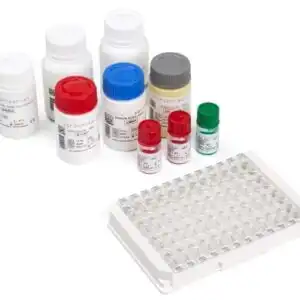
Aspergillus fumigatus IgG ELISA kit-SERION classic ESR132G
$364.00
Summary
- Virion/Serion Diagnostic Kit for research use (RUO)
- Aspergillus fumigatus IgG ELISA Kit
- Suitable for IgG detection
- Ready-to-use
- 96 tests
Aspergillus fumigatus IgG ELISA Kit ESR132G
| kit | ||||||||||||||||||
|---|---|---|---|---|---|---|---|---|---|---|---|---|---|---|---|---|---|---|
| Assay type Indirect ELISA | ||||||||||||||||||
| Research area Infectious Disease | ||||||||||||||||||
| Sample type Serum, plasma, whole blood | ||||||||||||||||||
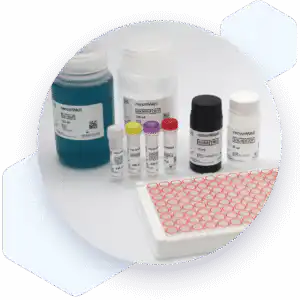
Components
| ||||||||||||||||||
| Storage Store at 2-8°C. | ||||||||||||||||||
| Associated products Aspergillus fumigatus IgA Control Serum (BC132A) Aspergillus fumigatus IgG Control Serum (BC132G) Aspergillus fumigatus IgM Control Serum (BC132M) Aspergillus fumigatus IgA ELISA Kit (ESR132A) Aspergillus fumigatus IgG ELISA Kit (ESR132G) Aspergillus fumigatus IgM ELISA Kit (ESR132M) |
| target relevance |
|---|
| Aspergillus fumigatus |
| Description Fungus that causes aspergillosis and invasive fungal infections |
| Structure Aspergillus fumigatus is a filamentous fungus belonging to the family Aspergillaceae and is the most common cause of human aspergillosis. The organism is widely distributed in the environment and is commonly found in soil, compost, decaying vegetation, stored grain, and airborne organic matter. Aspergillus fumigatus reproduces through the formation of abundant airborne asexual spores known as conidia, which are readily inhaled by humans on a daily basis. The fungus exhibits thermotolerance and can grow at temperatures exceeding those of many other environmental fungi, contributing to its pathogenic potential. In healthy individuals, inhaled conidia are efficiently cleared by innate immune defenses; however, in immunocompromised hosts or individuals with underlying lung disease, the fungus may germinate and invade tissues. Aspergillus fumigatus is capable of forming hyphae that penetrate host tissues and blood vessels, resulting in significant tissue damage and dissemination. |
| Diagnosis The diagnosis of Aspergillus fumigatus infection is performed through microbiological, histopathological, serological, molecular, and radiological methods. Culture of respiratory specimens, bronchoalveolar lavage fluid, or tissue samples may yield Aspergillus species, although culture alone does not always distinguish colonization from invasive disease. Microscopic examination may reveal characteristic septate hyphae with acute-angle branching. Detection of galactomannan antigen and beta-D-glucan in blood or respiratory samples is commonly used to support the diagnosis of invasive aspergillosis. Polymerase chain reaction (PCR) assays provide sensitive detection of Aspergillus DNA and are increasingly used in specialized laboratories. Imaging studies, particularly computed tomography (CT) of the chest, often demonstrate characteristic pulmonary findings such as nodules, cavitary lesions, or the halo sign. Definitive diagnosis may require histopathological evidence of tissue invasion. |
| Symptoms Clinical manifestations of Aspergillus fumigatus infection vary according to the host's immune status and underlying lung disease. Allergic bronchopulmonary aspergillosis (ABPA) commonly presents with wheezing, cough, mucus production, and worsening asthma symptoms. Chronic pulmonary aspergillosis may cause persistent cough, fatigue, weight loss, shortness of breath, and hemoptysis. Invasive aspergillosis, which primarily affects severely immunocompromised individuals, often presents with fever, chest pain, cough, shortness of breath, and progressive pulmonary infiltrates despite antibacterial therapy. The infection may disseminate to the brain, kidneys, heart, liver, and other organs, resulting in neurological symptoms, organ dysfunction, and sepsis. Without prompt diagnosis and antifungal treatment, invasive aspergillosis is associated with high morbidity and mortality. |
Data
FAQ & Publications
Frequently Asked Questions
What sample types are compatible with the Aspergillus fumigatus IgG ELISA Kit ESR132G?
The Aspergillus fumigatus IgG ELISA Kit ESR132G is compatible with serum, plasma, and whole blood samples for IgG detection.
How should the Aspergillus fumigatus IgG ELISA Kit ESR132G be stored to maintain its stability?
The kit components should be stored at 2-8°C to ensure proper stability and performance.
What is the assay format and detection method used in the Aspergillus fumigatus IgG ELISA Kit ESR132G?
This product uses an indirect and quantitative ELISA assay format to detect Aspergillus fumigatus reactive IgG antibodies.
Publications
| pmid | title | authors | citation |
|---|---|---|---|
| We haven't added any publications to our database yet. | |||
Published literature highly relevant to the biological target of this product and referencing this antibody or clone are retrieved from the PubMed database provided by the United States National Library of Medicine at the National Institutes of Health.
Protocols
| relevant to this product |
|---|
| ESR132G protocol |
Only logged in customers who have purchased this product may leave a review.

Reviews
There are no reviews yet.