| Weight | 1 lbs |
|---|---|
| Dimensions | 9 × 5 × 2 in |
| host | mouse |
| isotype | IgG |
| clonality | monoclonal |
| concentration | concentrate, predilute |
| applications | IHC |
| reactivity | human |
| available size | 0.1 mL, 0.5 mL, 1 mL concentrated, 7 mL prediluted |

rabbit anti-Toxoplasma gondii monoclonal antibody Poly 6389
Price range: $160.00 through $528.00
Antibody summary
- Rabbit monoclonal to Toxoplasma gondii
- Suitable for: Immunohistochemistry (formalin-fixed, paraffin-embedded tissues)
- Reacts with: Human
- Isotype:IgG
- Control: Toxoplasma Gondii infected tissue
- Visualization: Organisms
- 0.1, 0.5, 1.0 mL concentrated, 7 mL prediluted
rabbit anti-Toxoplasma gondii monoclonal antibody Poly 6389
| target relevance |
|---|
| Protein names Toxoplasma |
| Structure Toxoplasma gondii is a parasitic protozoan (specifically an apicomplexan) that causes toxoplasmosis. Found worldwide, T. gondii is capable of infecting virtually all warm-blooded animals,: 1 but felids are the only known definitive hosts in which the parasite may undergo sexual reproduction. |
| Biotechnology The diagnosis of toxoplasmosis is based on clinical findings and serological investigations. ELISA tests are recommended for the demonstration of IgG and IgM antibodies. Screening for Toxoplasma infections during pregnancy is of significant importance in prenatal care. The transmission of Toxoplasma gondii via the transplacental route has been observed in all stages of pregnancy, although the risk of a prenatal transmission as well as the outcome of infection depends on the stage of pregnancy. The risk of an infection of the unborn child via transplacental transmission is limited to seronegative women who acquire a primary infection during pregnancy. IgM antibodies directed against Toxoplasma gondii can persist for months after infection. Therefore, the determination of the IgG antibody avidity allows for differentiation of primary from past infections. |
Data
 |
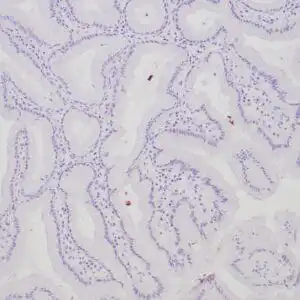
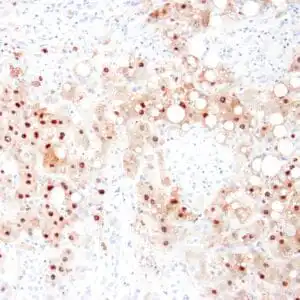
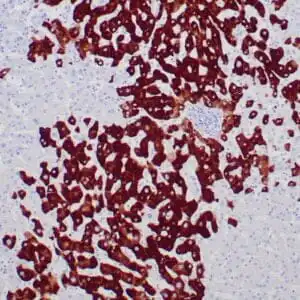
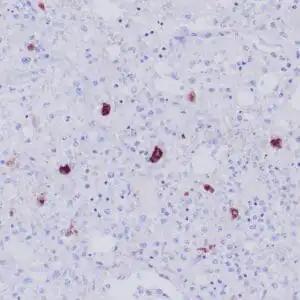
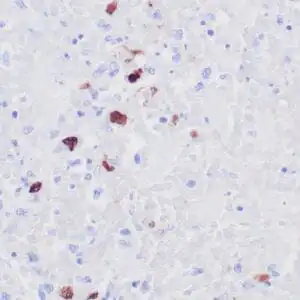
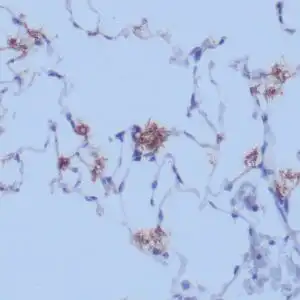
| Human lung infected with toxoplasma gondii stained with anti-toxoplasma gondii antibody using peroxidase-conjugate and DAB chromogen. Note positive staining of organisms.. |
FAQ & Publications
Frequently Asked Questions
What is the recommended dilution range for using the rabbit anti-Toxoplasma gondii monoclonal antibody in immunohistochemistry?
The rabbit anti-Toxoplasma gondii monoclonal antibody Poly 6389 is recommended to be used at a dilution range of 1:10 to 1:30 when concentrated for immunohistochemistry applications on formalin-fixed, paraffin-embedded tissues.
How should the rabbit anti-Toxoplasma gondii monoclonal antibody be stored to maintain its stability?
For short-term storage, the antibody should be kept at 2-8°C. For long-term preservation, it is recommended to store the antibody at -20°C and to avoid repeated freeze/thaw cycles to maintain antibody integrity.
Publications
| pmid | title | authors | citation |
|---|---|---|---|
| We haven't added any publications to our database yet. | |||
Published literature highly relevant to the biological target of this product and referencing this antibody or clone are retrieved from the PubMed database provided by the United States National Library of Medicine at the National Institutes of Health.
Protocols
| relevant to this product |
|---|
| IHC |
Documents
| Batch Number | QC File | SDS |
|---|---|---|
| To view batch-specific Safety Datasheets and Quality Certificates associated with your account, please Log In. | ||
Only logged in customers who have purchased this product may leave a review.




Reviews
There are no reviews yet.