| Weight | 1 lbs |
|---|---|
| Dimensions | 9 × 5 × 2 in |
| host | rabbit |
| isotype | IgG |
| clonality | polyclonal |
| concentration | 1 mg/mL |
| applications | IP, WB |
| reactivity | human |
| available sizes | 10 µL, 100 µL |

rabbit anti-KPc polyclonal antibody 1022
Price range: $100.00 through $2,600.00
Antibody summary
- Rabbit polyclonal to PKC-eta (Protein kinase C)
- Suitable for: WB, IP
- Reacts with: Hu
- Isotype: IgG
- 100 µL, 20 µL
rabbit anti- pkc polyclonal antibody 1022
| target relevance |
|---|
| Homo sapiens PRKCH Protein kinase C eta type |
| Protein names Protein kinase C eta type |
| Alternative names PKC-L, nPKC-eta |
| Gene names PRKCH |
| Protein family Belongs to the protein kinase superfamily. AGC Ser/Thr protein kinase family. PKC subfamily |
| Function Calcium-independent, phospholipid- and diacylglycerol (DAG)-dependent serine/threonine-protein kinase that is involved in the regulation of cell differentiation in keratinocytes and pre-B cell receptor, mediates regulation of epithelial tight junction integrity and foam cell formation, and is required for glioblastoma proliferation and apoptosis prevention in MCF-7 cells. In keratinocytes, binds and activates the tyrosine kinase FYN, which in turn blocks epidermal growth factor receptor (EGFR) signaling and leads to keratinocyte growth arrest and differentiation. Associates with the cyclin CCNE1-CDK2-CDKN1B complex and inhibits CDK2 kinase activity, leading to RB1 dephosphorylation and thereby G1 arrest in keratinocytes. In association with RALA activates actin depolymerization, which is necessary for keratinocyte differentiation. In the pre-B cell receptor signaling, functions downstream of BLNK by up-regulating IRF4, which in turn activates L chain gene rearrangement. Regulates epithelial tight junctions (TJs) by phosphorylating occludin (OCLN) on threonine residues, which is necessary for the assembly and maintenance of TJs. In association with PLD2 and via TLR4 signaling, is involved in lipopolysaccharide (LPS)-induced RGS2 down-regulation and foam cell formation. Upon PMA stimulation, mediates glioblastoma cell proliferation by activating the mTOR pathway, the PI3K/AKT pathway and the ERK1-dependent phosphorylation of ELK1. Involved in the protection of glioblastoma cells from irradiation-induced apoptosis by preventing caspase-9 activation. In camptothecin-treated MCF-7 cells, regulates NF-kappa-B upstream signaling by activating IKBKB, and confers protection against DNA damage-induced apoptosis. Promotes oncogenic functions of ATF2 in the nucleus while blocking its apoptotic function at mitochondria. Phosphorylates ATF2 which promotes its nuclear retention and transcriptional activity and negatively regulates its mitochondrial localization |
| Catalytic activity L-seryl-[protein] + ATP = O-phospho-L-seryl-[protein] + ADP + H(+) L-threonyl-[protein] + ATP = O-phospho-L-threonyl-[protein] + ADP + H(+) |
| Subcellular location Cytoplasm |
| Structure Interacts with FYN (By similarity). Interacts with RALA (By similarity). Interacts with DGKQ (PubMed:15632189). Interacts with PRKCH upstream open reading frame 2; the interaction leads to inhibition of kinase activity (PubMed:34593629) |
| Involvement in disease Ischemic stroke A stroke is an acute neurologic event leading to death of neural tissue of the brain and resulting in loss of motor, sensory and/or cognitive function. Ischemic strokes, resulting from vascular occlusion, is considered to be a highly complex disease consisting of a group of heterogeneous disorders with multiple genetic and environmental risk factors. |
| Keywords 3D-structure, Alternative splicing, ATP-binding, Cytoplasm, Differentiation, Kinase, Metal-binding, Nucleotide-binding, Phosphoprotein, Proteomics identification, Reference proteome, Repeat, Serine/threonine-protein kinase, Transferase, Zinc, Zinc-finger |
| Sequence MSSGTMKFNGYLRVRIGEAVGLQPTRWSLRHSLFKKGHQLLDPYLTVSVDQVRVGQTSTK QKTNKPTYNEEFCANVTDGGHLELAVFHETPLGYDHFVANCTLQFQELLRTTGASDTFEG WVDLEPEGKVFVVITLTGSFTEATLQRDRIFKHFTRKRQRAMRRRVHQINGHKFMATYLR QPTYCSHCREFIWGVFGKQGYQCQVCTCVVHKRCHHLIVTACTCQNNINKVDSKIAEQRF GINIPHKFSIHNYKVPTFCDHCGSLLWGIMRQGLQCKICKMNVHIRCQANVAPNCGVNAV ELAKTLAGMGLQPGNISPTSKLVSRSTLRRQGKESSKEGNGIGVNSSNRLGIDNFEFIRV LGKGSFGKVMLARVKETGDLYAVKVLKKDVILQDDDVECTMTEKRILSLARNHPFLTQLF CCFQTPDRLFFVMEFVNGGDLMFHIQKSRRFDEARARFYAAEIISALMFLHDKGIIYRDL KLDNVLLDHEGHCKLADFGMCKEGICNGVTTATFCGTPDYIAPEILQEMLYGPAVDWWAM GVLLYEMLCGHAPFEAENEDDLFEAILNDEVVYPTWLHEDATGILKSFMTKNPTMRLGSL TQGGEHAILRHPFFKEIDWAQLNHRQIEPPFRPRIKSREDVSNFDPDFIKEEPVLTPIDE GHLPMINQDEFRNFSYVSPELQP |
| UniProt accession: P24723 |
Data
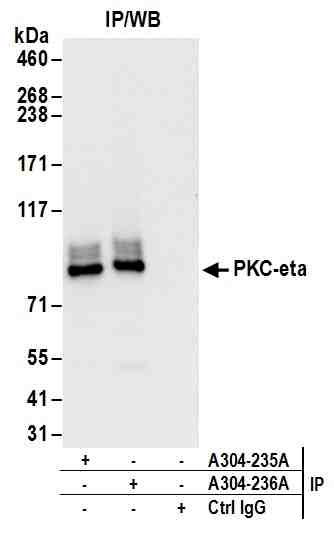 |
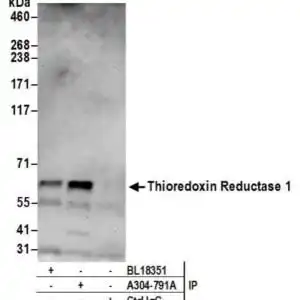
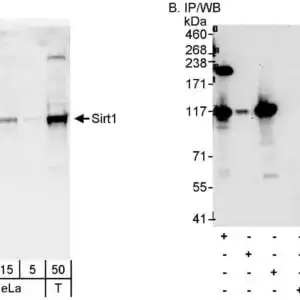
| Detection of human PKC-eta by western blot of immunoprecipitates. Samples: Whole cell lysate (1 mg for IP; 20% of IP loaded) from Jurkat cells. Antibodies: Affinity purified rabbit anti-PKC-eta antibody #1021 used for IP at 6 µg/mg lysate. PKC-eta was also immunoprecipitated by rabbit anti-PKC-eta antibody. For blotting immunoprecipitated PKC-eta was used at 1 µg/ml. Detection: Chemiluminescence with an exposure time of 3 seconds. |
FAQ & Publications
Frequently Asked Questions
What applications is the rabbit anti-PKC eta polyclonal antibody 1022 validated for?
This antibody is validated for use in Western Blot (WB) and Immunoprecipitation (IP) applications.
What is the recommended dilution for Western Blot using this anti-PKC eta antibody?
For Western Blot, the recommended dilution is 1:1000.
How should the rabbit anti-PKC eta polyclonal antibody 1022 be stored to maintain stability?
Store the antibody at 2-8°C, and it expires one year from the date of receipt.
What species does the rabbit anti-PKC eta polyclonal antibody 1022 react with?
This antibody reacts specifically with human PKC eta protein.
What is the concentration and form of the rabbit anti-PKC eta polyclonal antibody 1022 provided?
The antibody is provided as a liquid at a concentration of 1 mg/mL.
What species reactivity does the rabbit anti-PKC-eta polyclonal antibody 1022 exhibit?
This antibody specifically reacts with human PKC-eta protein.
What are the recommended applications and dilutions for using this PKC-eta polyclonal antibody in experiments?
The antibody is suitable for immunoprecipitation (IP) using 20 µL per mg of lysate and Western blotting (WB) at a dilution of 1:1000.
How should the rabbit anti-PKC-eta polyclonal antibody 1022 be stored to maintain stability?
Store the antibody at 2-8°C, and it remains stable for up to one year from the date of receipt.
Publications
| pmid | title | authors | citation |
|---|---|---|---|
| We haven't added any publications to our database yet. | |||
Published literature highly relevant to the biological target of this product and referencing this antibody or clone are retrieved from the PubMed database provided by the United States National Library of Medicine at the National Institutes of Health.
Protocols
| relevant to this product |
|---|
| Western blot |
Documents
| Batch Number | QC File | SDS |
|---|---|---|
| To view batch-specific Safety Datasheets and Quality Certificates associated with your account, please Log In. | ||
Only logged in customers who have purchased this product may leave a review.

Reviews
There are no reviews yet.