| Weight | 1 lbs |
|---|---|
| Dimensions | 9 × 5 × 2 in |
| host | mouse |
| isotype | IgG |
| clonality | monoclonal |
| concentration | concentrate, predilute |
| applications | IHC |
| reactivity | human |
| available size | 0.1 mL, 0.5 mL, 1 mL concentrated, 7 mL prediluted |

rabbit anti-IDH1 (R132H) monoclonal antibody (ZR7) 6220
Price range: $160.00 through $528.00
Antibody summary
- Rabbit monoclonal to IDH1 (R132H)
- Suitable for: Immunohistochemistry (formalin-fixed, paraffin-embedded tissues)
- Reacts with: Human
- Isotype:IgG
- Control: Infiltrating glioma
- Visualization: Nuclear
- 0.1, 0.5, 1.0 mL concentrated, 7 mL prediluted
rabbit anti-IDH1 (R132H) monoclonal antibody ZR7 6220
| target relevance |
|---|
| Homo sapiens IDH1 Isocitrate dehydrogenase [NADP] cytoplasmic |
| Protein names Isocitrate dehydrogenase [NADP] cytoplasmic |
| Alternative names Cytosolic NADP-isocitrate dehydrogenase, IDPc, NADP(+)-specific ICDH, Oxalosuccinate decarboxylase |
| Gene names IDH1 |
| Protein family Belongs to the isocitrate and isopropylmalate dehydrogenases family |
| Function Catalyzes the NADP(+)-dependent oxidative decarboxylation of isocitrate (D-threo-isocitrate) to 2-ketoglutarate (2-oxoglutarate), which is required by other enzymes such as the phytanoyl-CoA dioxygenase (PubMed:10521434, PubMed:19935646). Plays a critical role in the generation of NADPH, an important cofactor in many biosynthesis pathways (PubMed:10521434). May act as a corneal epithelial crystallin and may be involved in maintaining corneal epithelial transparency (By similarity) |
| Catalytic activity D-threo-isocitrate + NADP(+) = 2-oxoglutarate + CO2 + NADPH |
| Subcellular location Cytoplasm, cytosol, Peroxisome |
| Structure Homodimer |
| Post-translational modification Acetylation at Lys-374 dramatically reduces catalytic activity |
| Involvement in disease Glioma Gliomas are benign or malignant central nervous system neoplasms derived from glial cells. They comprise astrocytomas and glioblastoma multiforme that are derived from astrocytes, oligodendrogliomas derived from oligodendrocytes and ependymomas derived from ependymocytes. |
| Keywords 3D-structure, Acetylation, Cytoplasm, Direct protein sequencing, Glyoxylate bypass, Magnesium, Manganese, Metal-binding, NADP, Oxidoreductase, Peroxisome, Phosphoprotein, Proteomics identification, Reference proteome, Tricarboxylic acid cycle |
| Sequence MSKKISGGSVVEMQGDEMTRIIWELIKEKLIFPYVELDLHSYDLGIENRDATNDQVTKDA AEAIKKHNVGVKCATITPDEKRVEEFKLKQMWKSPNGTIRNILGGTVFREAIICKNIPRL VSGWVKPIIIGRHAYGDQYRATDFVVPGPGKVEITYTPSDGTQKVTYLVHNFEEGGGVAM GMYNQDKSIEDFAHSSFQMALSKGWPLYLSTKNTILKKYDGRFKDIFQEIYDKQYKSQFE AQKIWYEHRLIDDMVAQAMKSEGGFIWACKNYDGDVQSDSVAQGYGSLGMMTSVLVCPDG KTVEAEAAHGTVTRHYRMYQKGQETSTNPIASIFAWTRGLAHRAKLDNNKELAFFANALE EVSIETIEAGFMTKDLAACIKGLPNVQRSDYLNTFEFMDKLGENLKIKLAQAKL |
| UniProt accession: O75874 |
Data
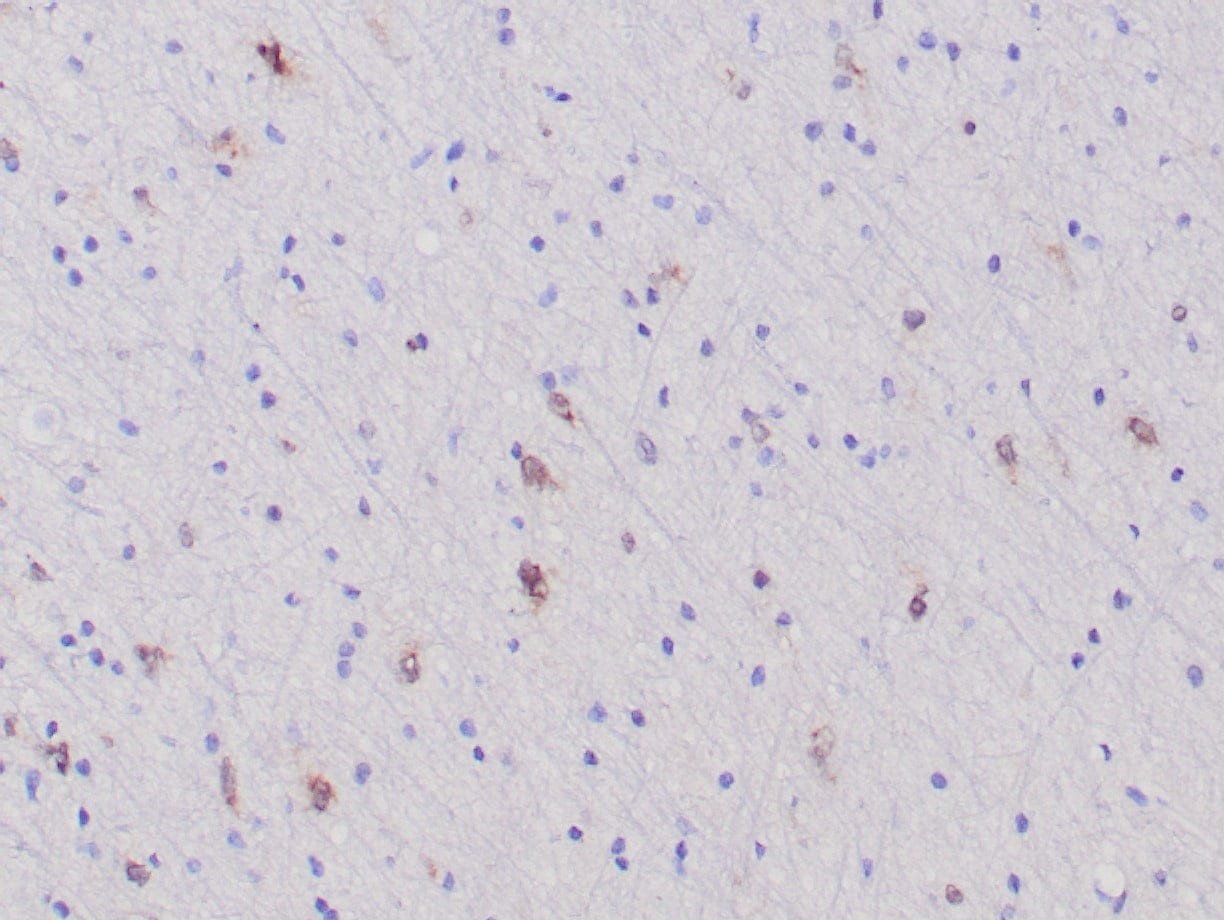 |
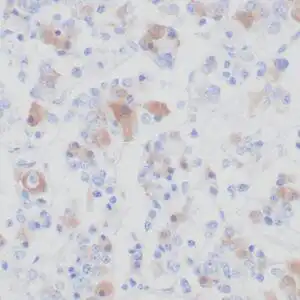
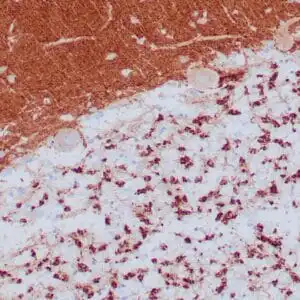
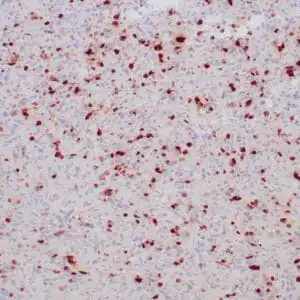
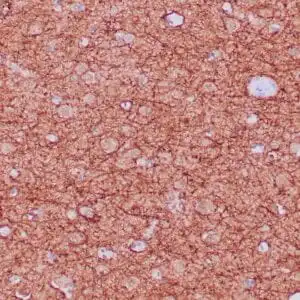
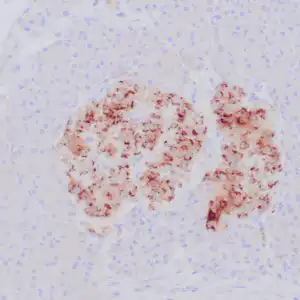
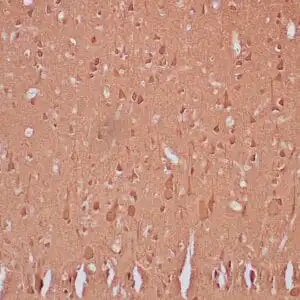
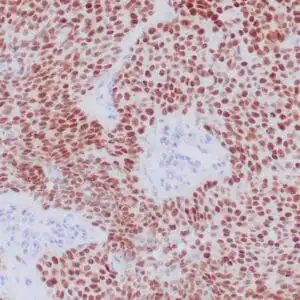
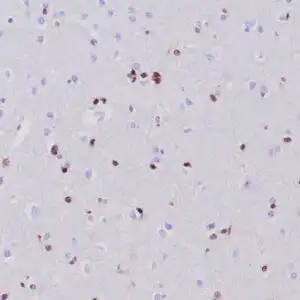
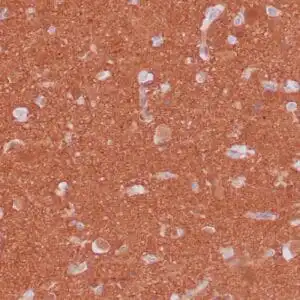
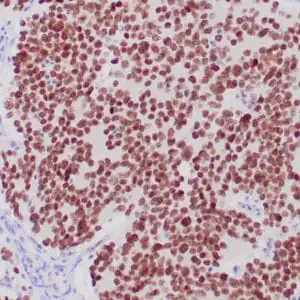
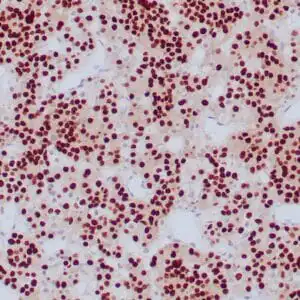
| Formalin-fixed, paraffin-embedded human glioma stained with anti-IHD1 antibody using peroxidase-conjugate and DAB chromogen. Note nuclear and cytoplasmic staining of infiltrating glioma cells whereas normal glial cells are negative |
FAQ & Publications
Frequently Asked Questions
What species is the rabbit anti-IDH1 (R132H) monoclonal antibody (ZR7) reactive with?
This antibody is reactive with human species only.
What is the recommended application and dilution for using this antibody in immunohistochemistry?
The antibody is suitable for immunohistochemistry (IHC) on formalin-fixed, paraffin-embedded tissues, with a recommended dilution of 1:100-200 when using the concentrated form.
How should the rabbit anti-IDH1 (R132H) antibody be stored to maintain stability?
Store the antibody at 2-8°C for short-term use and at -20°C for long-term storage, while avoiding repeated freeze/thaw cycles.
What is the host and clonality of this anti-IDH1 (R132H) antibody?
The antibody is a rabbit monoclonal IgG.
What type of positive control is recommended when using this antibody in immunohistochemistry?
An infiltrating glioma sample is recommended as a positive control for this antibody.
Publications
| pmid | title | authors | citation |
|---|---|---|---|
| We haven't added any publications to our database yet. | |||
Published literature highly relevant to the biological target of this product and referencing this antibody or clone are retrieved from the PubMed database provided by the United States National Library of Medicine at the National Institutes of Health.
Protocols
| relevant to this product |
|---|
| IHC |
Documents
| Batch Number | QC File | SDS |
|---|---|---|
| To view batch-specific Safety Datasheets and Quality Certificates associated with your account, please Log In. | ||
Only logged in customers who have purchased this product may leave a review.

Reviews
There are no reviews yet.