| Weight | 1 lbs |
|---|---|
| Dimensions | 9 × 5 × 2 in |
| host | mouse |
| isotype | IgG |
| clonality | monoclonal |
| concentration | concentrate, predilute |
| applications | IHC |
| reactivity | human |
| available size | 0.1 mL, 0.5 mL, 1 mL concentrated, 7 mL prediluted |

rabbit anti-Glucagon monoclonal antibody (EP74) 6195
Price range: $160.00 through $528.00
Antibody summary
- Rabbit monoclonal to Glucagon
- Suitable for: Immunohistochemistry (formalin-fixed, paraffin-embedded tissues)
- Reacts with: Human
- Isotype:IgG
- Control: Normal pancreas
- Visualization: Cytoplasmic
- 0.1, 0.5, 1.0 mL concentrated, 7 mL prediluted
rabbit anti-Glucagon monoclonal antibody EP74 6195
| target relevance |
|---|
| Homo sapiens GCG Pro-glucagon |
| Protein names Pro-glucagon |
| Gene names GCG |
| Protein family Belongs to the glucagon family |
| Function Plays a key role in glucose metabolism and homeostasis. Regulates blood glucose by increasing gluconeogenesis and decreasing glycolysis. A counterregulatory hormone of insulin, raises plasma glucose levels in response to insulin-induced hypoglycemia. Plays an important role in initiating and maintaining hyperglycemic conditions in diabetes. Binds to and activates the glucagon receptor GCGR, which couples to the G(s) G protein and elevates intracellular cAMP, triggering downstream metabolic responses (PubMed:32193322) |
| Subcellular location Secreted |
| Structure Interacts with GCGR |
| Post-translational modification Proglucagon is post-translationally processed in a tissue-specific manner in pancreatic A cells and intestinal L cells. In pancreatic A cells, the major bioactive hormone is glucagon cleaved by PCSK2/PC2. In the intestinal L cells PCSK1/PC1 liberates GLP-1, GLP-2, glicentin and oxyntomodulin. GLP-1 is further N-terminally truncated by post-translational processing in the intestinal L cells resulting in GLP-1(7-37) GLP-1-(7-36)amide. The C-terminal amidation is neither important for the metabolism of GLP-1 nor for its effects on the endocrine pancreas |
| Keywords 3D-structure, Amidation, Cleavage on pair of basic residues, Direct protein sequencing, Hormone, Pharmaceutical, Phosphoprotein, Proteomics identification, Reference proteome, Secreted, Signal |
| Sequence MKSIYFVAGLFVMLVQGSWQRSLQDTEEKSRSFSASQADPLSDPDQMNEDKRHSQGTFTS DYSKYLDSRRAQDFVQWLMNTKRNRNNIAKRHDEFERHAEGTFTSDVSSYLEGQAAKEFI AWLVKGRGRRDFPEEVAIVEELGRRHADGSFSDEMNTILDNLAARDFINWLIQTKITDRK |
| UniProt accession: P01275 |
Data
 |
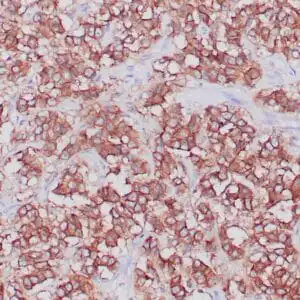
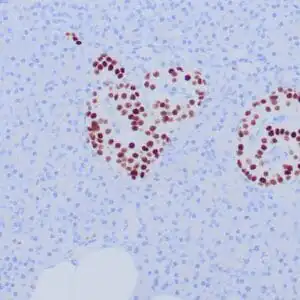
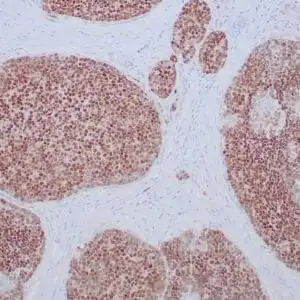
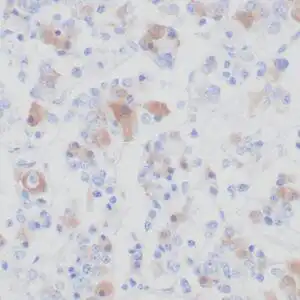
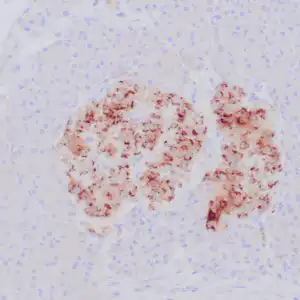
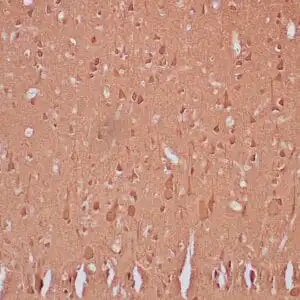
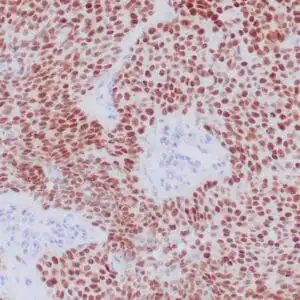
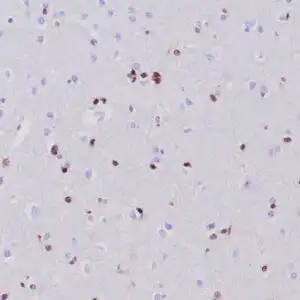
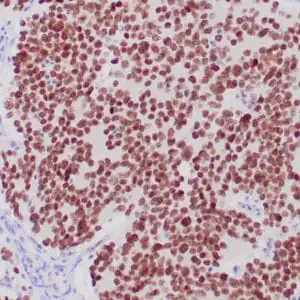
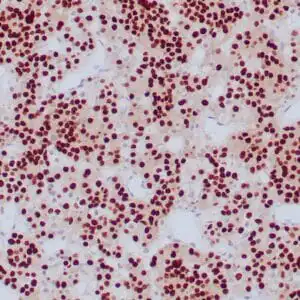
| Human pancreas stained with anti-Glucagon antibody using peroxidase-conjugate and DAB chromogen. Note the cytoplasmic staining of islet cells. |
FAQ & Publications
Frequently Asked Questions
What species is the rabbit anti-Glucagon monoclonal antibody EP74 validated to react with?
The rabbit anti-Glucagon monoclonal antibody EP74 has been validated to react with human tissue.
What are the recommended storage conditions for maintaining the stability of this antibody?
For short-term storage, keep the antibody at 2-8°C. For longer-term preservation, store it at -20°C and avoid repeated freeze/thaw cycles.
Which applications and tissue types is this antibody suitable for?
This antibody is suitable for immunohistochemistry (IHC) on formalin-fixed, paraffin-embedded human tissues, with normal pancreas tissue used as a positive control.
Publications
| pmid | title | authors | citation |
|---|---|---|---|
| We haven't added any publications to our database yet. | |||
Published literature highly relevant to the biological target of this product and referencing this antibody or clone are retrieved from the PubMed database provided by the United States National Library of Medicine at the National Institutes of Health.
Protocols
| relevant to this product |
|---|
| IHC |
Documents
| Batch Number | QC File | SDS |
|---|---|---|
| To view batch-specific Safety Datasheets and Quality Certificates associated with your account, please Log In. | ||
Only logged in customers who have purchased this product may leave a review.


Reviews
There are no reviews yet.