| Weight | 1 lbs |
|---|---|
| Dimensions | 9 × 5 × 2 in |
| host | rabbit |
| isotype | IgG |
| clonality | polyclonal |
| concentration | 1 mg/mL |
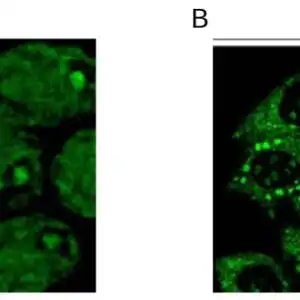
| applications | ICC/IF, WB |
| reactivity | DREAM |
| available sizes | 100 µg |

rabbit anti-DREAM polyclonal antibody 5090
$376.00
Antibody summary
- Rabbit polyclonal to DREAM
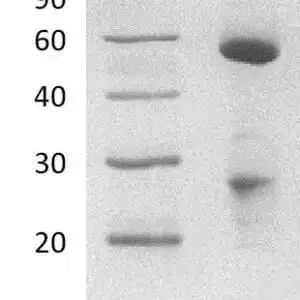
- Suitable for: WB
- Isotype: Whole IgG
- 100 µg
rabbit anti-DREAM polyclonal antibody 5090
| target relevance |
|---|
| Protein names Calsenilin (A-type potassium channel modulatory protein 3) (DRE-antagonist modulator) (DREAM) (Kv channel-interacting protein 3) (KChIP3) |
| Gene names KCNIP3,KCNIP3 CSEN DREAM KCHIP3 |
| Protein family Recoverin family |
| Mass 29231Da |
| Function FUNCTION: Calcium-dependent transcriptional repressor that binds to the DRE element of genes including PDYN and FOS. Affinity for DNA is reduced upon binding to calcium and enhanced by binding to magnesium. Seems to be involved in nociception (By similarity). {ECO:0000250|UniProtKB:Q9QXT8}.; FUNCTION: Regulatory subunit of Kv4/D (Shal)-type voltage-gated rapidly inactivating A-type potassium channels, such as KCND2/Kv4.2 and KCND3/Kv4.3. Modulates channel expression at the cell membrane, gating characteristics, inactivation kinetics and rate of recovery from inactivation in a calcium-dependent and isoform-specific manner. {ECO:0000269|PubMed:10676964, ECO:0000269|PubMed:12829703, ECO:0000269|PubMed:15485870, ECO:0000269|PubMed:16123112, ECO:0000269|PubMed:18957440}.; FUNCTION: May play a role in the regulation of PSEN2 proteolytic processing and apoptosis. Together with PSEN2 involved in modulation of amyloid-beta formation. {ECO:0000269|PubMed:11259376, ECO:0000269|PubMed:11988022, ECO:0000269|PubMed:9771752}. |
| Subellular location SUBCELLULAR LOCATION: Cytoplasm {ECO:0000269|PubMed:18957440}. Cell membrane {ECO:0000269|PubMed:15485870, ECO:0000269|PubMed:18957440}; Lipid-anchor {ECO:0000250}. Endoplasmic reticulum {ECO:0000269|PubMed:11278424, ECO:0000269|PubMed:18957440}. Golgi apparatus {ECO:0000269|PubMed:11278424}. Nucleus {ECO:0000269|PubMed:21070824}. Note=Also membrane-bound, associated with the plasma membrane (PubMed:15485870). In the presence of PSEN2 associated with the endoplasmic reticulum and Golgi. The sumoylated form is present only in the nucleus. {ECO:0000269|PubMed:11278424, ECO:0000269|PubMed:15485870, ECO:0000269|PubMed:21070824}. |
| Tissues TISSUE SPECIFICITY: Highly expressed in brain. Widely expressed at lower levels. Expression levels are elevated in brain cortex regions affected by Alzheimer disease. {ECO:0000269|PubMed:14720210}. |
| Structure SUBUNIT: Binds to DNA as a homomultimer. Dimerization is induced by binding to calcium (PubMed:17962406). Interacts with the C-terminus of PSEN1 and PSEN2 and with PSEN2 CTF subunit. Associates with KCN1. Component of heteromultimeric potassium channels. Identified in potassium channel complexes containing KCND1, KCND2, KCND3, KCNIP1, KCNIP2, KCNIP3, KCNIP4, DPP6 and DPP10 (By similarity). Interacts with KCND2 and KCND3. {ECO:0000250|UniProtKB:Q9QXT8, ECO:0000269|PubMed:11278424, ECO:0000269|PubMed:15485870, ECO:0000269|PubMed:17962406, ECO:0000269|PubMed:18957440}. |
| Post-translational modification PTM: Palmitoylated. Palmitoylation enhances association with the plasma membrane (By similarity). {ECO:0000250}.; PTM: Proteolytically cleaved by caspase-3. {ECO:0000269|PubMed:11278424}.; PTM: Phosphorylation at Ser-63 inhibits cleavage by CASP3. {ECO:0000269|PubMed:11278424, ECO:0000269|PubMed:12837631}. |
| Target Relevance information above includes information from UniProt accession: Q9Y2W7 |
| The UniProt Consortium |
Data
| No results found |
FAQ & Publications
Frequently Asked Questions
What applications is the rabbit anti-DREAM polyclonal antibody 5090 validated for, and what are the recommended dilutions?
The rabbit anti-DREAM polyclonal antibody 5090 is validated for Western blot (WB) applications. The recommended dilution for immunoblotting is 1:500 to 1:1,000.
How should the rabbit anti-DREAM polyclonal antibody 5090 be stored to maintain its stability?
This antibody should be stored at -20°C and is stable for at least one year under these conditions. It is important to avoid multiple freeze-thaw cycles to maintain antibody integrity.
Publications
| pmid | title | authors | citation |
|---|---|---|---|
| We haven't added any publications to our database yet. | |||
Published literature highly relevant to the biological target of this product and referencing this antibody or clone are retrieved from the PubMed database provided by the United States National Library of Medicine at the National Institutes of Health.
Protocols
| relevant to this product |
|---|
| Western blot IHC ICC |
Documents
| Batch Number | QC File | SDS |
|---|---|---|
| To view batch-specific Safety Datasheets and Quality Certificates associated with your account, please Log In. | ||
Only logged in customers who have purchased this product may leave a review.


Reviews
There are no reviews yet.