| Weight | 1 lbs |
|---|---|
| Dimensions | 9 × 5 × 2 in |
| host | mouse |
| isotype | IgG |
| clonality | monoclonal |
| concentration | concentrate, predilute |
| applications | IHC |
| reactivity | human |
| available size | 0.1 mL, 0.5 mL, 1 mL concentrated, 7 mL prediluted |

rabbit anti-CD99 monoclonal antibody (ZR423) 6116
Price range: $160.00 through $528.00
Antibody summary
- Rabbit monoclonal to CD99
- Suitable for: Immunohistochemistry (formalin-fixed, paraffin-embedded tissues)
- Reacts with: Human
- Isotype:IgG
- Control: Ewing’s sarcoma
- Visualization: Cell membrane
- 0.1, 0.5, 1.0 mL concentrated, 7 mL prediluted
rabbit anti-CD99 monoclonal antibody ZR423 6116
| target relevance |
|---|
| Homo sapiens CD99 CD99 antigen |
| Protein names CD99 antigen |
| Alternative names 12E7, E2 antigen, Protein MIC2, T-cell surface glycoprotein E2 |
| Gene names CD99 |
| Protein family Belongs to the CD99 family |
| Function Involved in T-cell adhesion processes and in spontaneous rosette formation with erythrocytes. Plays a role in a late step of leukocyte extravasation helping leukocytes to overcome the endothelial basement membrane. Acts at the same site as, but independently of, PECAM1. Involved in T-cell adhesion processes (By similarity) |
| Subcellular location Membrane |
| Post-translational modification Extensively O-glycosylated |
| Keywords 3D-structure, Alternative splicing, Cell adhesion, Direct protein sequencing, Glycoprotein, Membrane, Phosphoprotein, Proteomics identification, Reference proteome, Signal, Transmembrane, Transmembrane helix |
| Sequence MARGAALALLLFGLLGVLVAAPDGGFDLSDALPDNENKKPTAIPKKPSAGDDFDLGDAVV DGENDDPRPPNPPKPMPNPNPNHPSSSGSFSDADLADGVSGGEGKGGSDGGGSHRKEGEE ADAPGVIPGIVGAVVVAVAGAISSFIAYQKKKLCFKENAEQGEVDMESHRNANAEPAVQR TLLEK |
| UniProt accession: P14209 |
Data
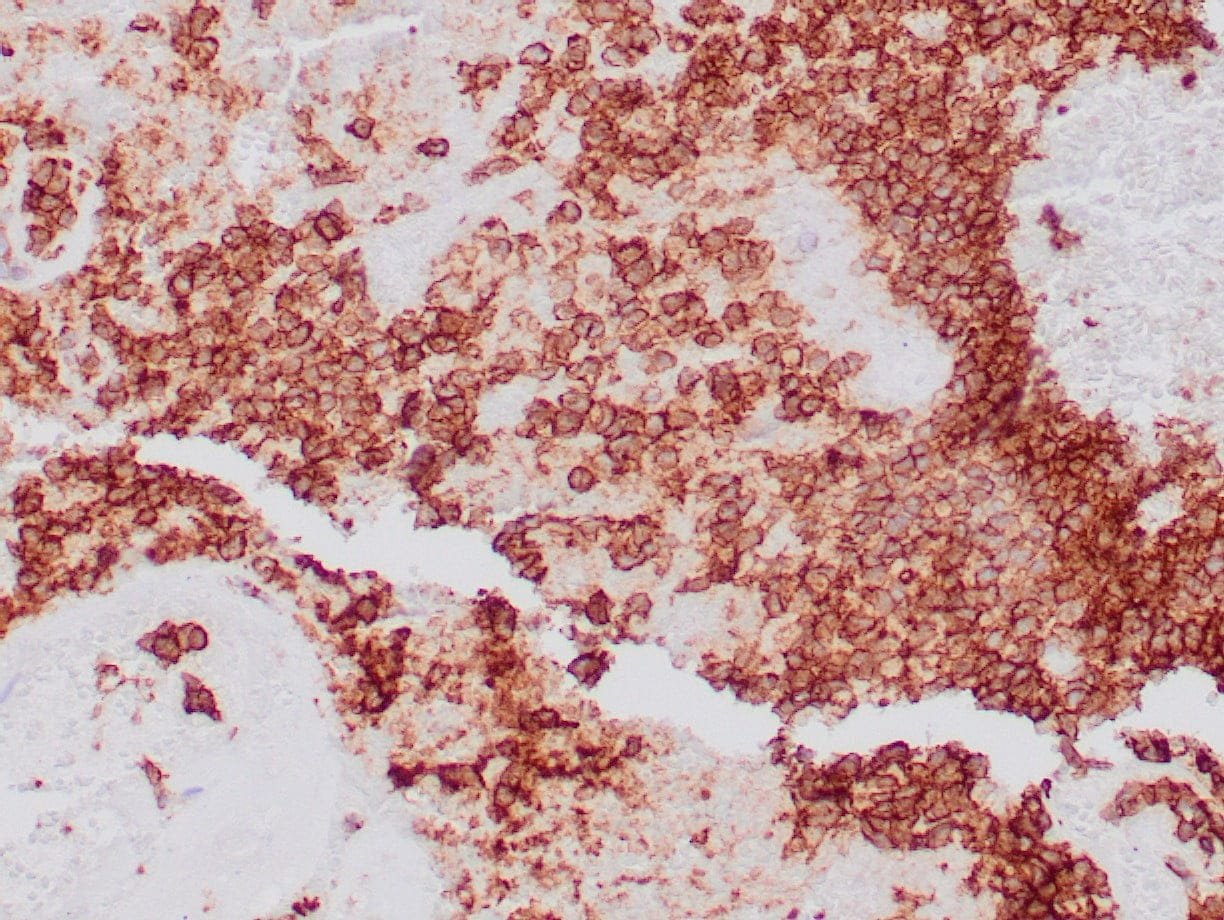 |
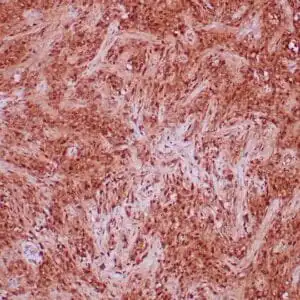
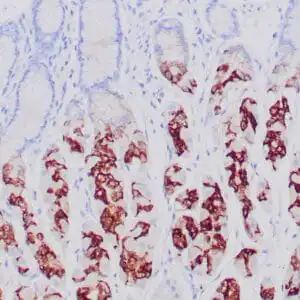
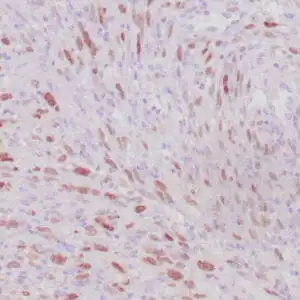
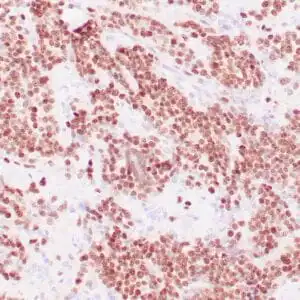
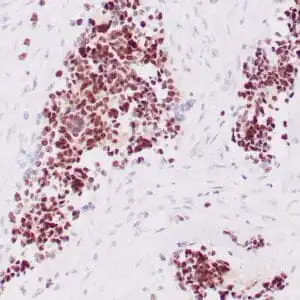
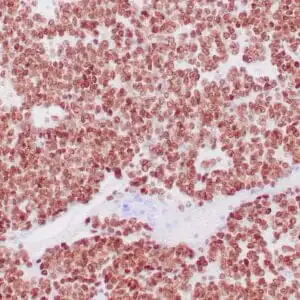
| Formalin-fixed, paraffin-embedded human Ewing's sarcoma stained with clone ZR423 antibody using peroxidase-conjugate and DAB chromogen. Note the cell membrane staining of tumor cells |
FAQ & Publications
Frequently Asked Questions
What species does the rabbit anti-CD99 monoclonal antibody (ZR423) specifically react with?
This antibody is reactive with human tissue samples.
Which application is recommended for using the rabbit anti-CD99 monoclonal antibody (ZR423)?
It is suitable for immunohistochemistry (IHC) on formalin-fixed, paraffin-embedded tissues.
How should the rabbit anti-CD99 monoclonal antibody be stored to maintain stability?
Store the antibody at 2-8°C for short-term use and at -20°C for longer-term storage, avoiding freeze/thaw cycles.
What is the recommended dilution range when using the concentrated form of this antibody in IHC?
The recommended dilution for the concentrated antibody is between 1:100 and 1:200.
Publications
| pmid | title | authors | citation |
|---|---|---|---|
| We haven't added any publications to our database yet. | |||
Published literature highly relevant to the biological target of this product and referencing this antibody or clone are retrieved from the PubMed database provided by the United States National Library of Medicine at the National Institutes of Health.
Protocols
| relevant to this product |
|---|
| IHC |
Documents
| Batch Number | QC File | SDS |
|---|---|---|
| To view batch-specific Safety Datasheets and Quality Certificates associated with your account, please Log In. | ||
Only logged in customers who have purchased this product may leave a review.

Reviews
There are no reviews yet.