| Weight | 1 lbs |
|---|---|
| Dimensions | 9 × 5 × 2 in |
| host | mouse |
| isotype | IgG |
| clonality | monoclonal |
| concentration | concentrate, predilute |
| applications | IHC |
| reactivity | human |
| available size | 0.1 mL, 0.5 mL, 1 mL concentrated, 7 mL prediluted |

rabbit anti-CD163 monoclonal antibody (ZR426) 6065
Price range: $160.00 through $528.00
Antibody summary
- Rabbit monoclonal to CD163
- Suitable for: Immunohistochemistry (formalin-fixed, paraffin-embedded tissues)
- Reacts with: Human
- Isotype:IgG
- Control: Liver
- Visualization: Cytoplasmic and membranous
- 0.1, 0.5, 1.0 mL concentrated, 7 mL prediluted
rabbit anti-CD163 monoclonal antibody ZR426 6065
| target relevance |
|---|
| Homo sapiens CD163 Scavenger receptor cysteine-rich type 1 protein M130 |
| Protein names Scavenger receptor cysteine-rich type 1 protein M130 |
| Alternative names Hemoglobin scavenger receptor |
| Gene names CD163 |
| Function Acute phase-regulated receptor involved in clearance and endocytosis of hemoglobin/haptoglobin complexes by macrophages and may thereby protect tissues from free hemoglobin-mediated oxidative damage. May play a role in the uptake and recycling of iron, via endocytosis of hemoglobin/haptoglobin and subsequent breakdown of heme. Binds hemoglobin/haptoglobin complexes in a calcium-dependent and pH-dependent manner. Exhibits a higher affinity for complexes of hemoglobin and multimeric haptoglobin of HP*1F phenotype than for complexes of hemoglobin and dimeric haptoglobin of HP*1S phenotype. Induces a cascade of intracellular signals that involves tyrosine kinase-dependent calcium mobilization, inositol triphosphate production and secretion of IL6 and CSF1. Isoform 3 exhibits the higher capacity for ligand endocytosis and the more pronounced surface expression when expressed in cells |
| Subcellular location Cell membrane |
| Structure Interacts with CSNK2B |
| Post-translational modification A soluble form (sCD163) is produced by proteolytic shedding which can be induced by lipopolysaccharide, phorbol ester and Fc region of immunoglobulin gamma. This cleavage is dependent on protein kinase C and tyrosine kinases and can be blocked by protease inhibitors. The shedding is inhibited by the tissue inhibitor of metalloproteinase TIMP3, and thus probably induced by membrane-bound metalloproteinases ADAMs Phosphorylated |
| Keywords 3D-structure, Acute phase, Alternative splicing, Cell membrane, Disulfide bond, Glycoprotein, Inflammatory response, Membrane, Phosphoprotein, Proteomics identification, Reference proteome, Repeat, Secreted, Signal, Transmembrane, Transmembrane helix |
| Sequence MSKLRMVLLEDSGSADFRRHFVNLSPFTITVVLLLSACFVTSSLGGTDKELRLVDGENKC SGRVEVKVQEEWGTVCNNGWSMEAVSVICNQLGCPTAIKAPGWANSSAGSGRIWMDHVSC RGNESALWDCKHDGWGKHSNCTHQQDAGVTCSDGSNLEMRLTRGGNMCSGRIEIKFQGRW GTVCDDNFNIDHASVICRQLECGSAVSFSGSSNFGEGSGPIWFDDLICNGNESALWNCKH QGWGKHNCDHAEDAGVICSKGADLSLRLVDGVTECSGRLEVRFQGEWGTICDDGWDSYDA AVACKQLGCPTAVTAIGRVNASKGFGHIWLDSVSCQGHEPAIWQCKHHEWGKHYCNHNED AGVTCSDGSDLELRLRGGGSRCAGTVEVEIQRLLGKVCDRGWGLKEADVVCRQLGCGSAL KTSYQVYSKIQATNTWLFLSSCNGNETSLWDCKNWQWGGLTCDHYEEAKITCSAHREPRL VGGDIPCSGRVEVKHGDTWGSICDSDFSLEAASVLCRELQCGTVVSILGGAHFGEGNGQI WAEEFQCEGHESHLSLCPVAPRPEGTCSHSRDVGVVCSRYTEIRLVNGKTPCEGRVELKT LGAWGSLCNSHWDIEDAHVLCQQLKCGVALSTPGGARFGKGNGQIWRHMFHCTGTEQHMG DCPVTALGASLCPSEQVASVICSGNQSQTLSSCNSSSLGPTRPTIPEESAVACIESGQLR LVNGGGRCAGRVEIYHEGSWGTICDDSWDLSDAHVVCRQLGCGEAINATGSAHFGEGTGP IWLDEMKCNGKESRIWQCHSHGWGQQNCRHKEDAGVICSEFMSLRLTSEASREACAGRLE VFYNGAWGTVGKSSMSETTVGVVCRQLGCADKGKINPASLDKAMSIPMWVDNVQCPKGPD TLWQCPSSPWEKRLASPSEETWITCDNKIRLQEGPTSCSGRVEIWHGGSWGTVCDDSWDL DDAQVVCQQLGCGPALKAFKEAEFGQGTGPIWLNEVKCKGNESSLWDCPARRWGHSECGH KEDAAVNCTDISVQKTPQKATTGRSSRQSSFIAVGILGVVLLAIFVALFFLTKKRRQRQR LAVSSRGENLVHQIQYREMNSCLNADDLDLMNSSENSHESADFSAAELISVSKFLPISGM EKEAILSHTEKENGNL |
| UniProt accession: Q86VB7 |
Data
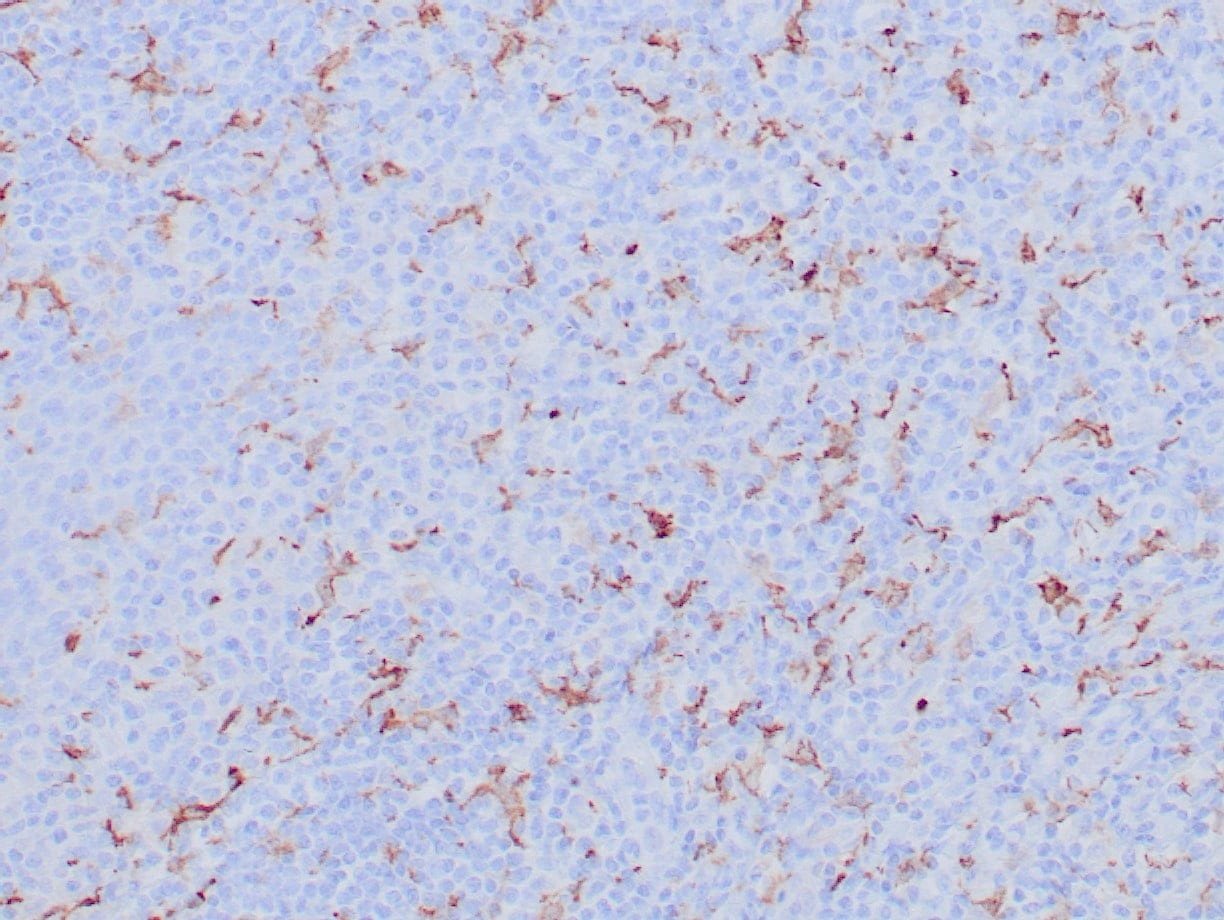 |
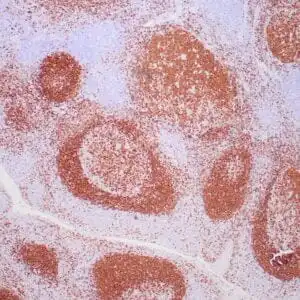
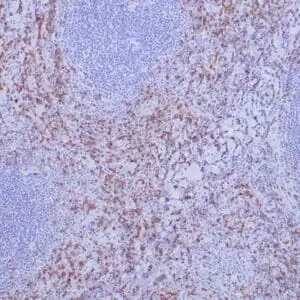
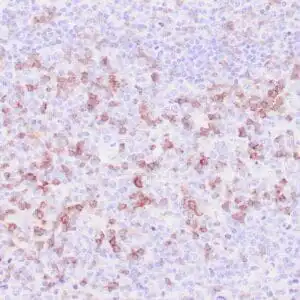
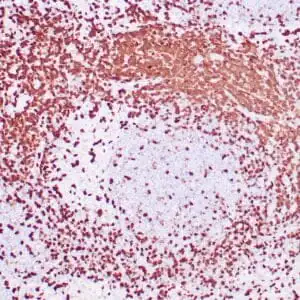
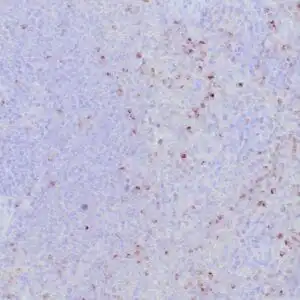
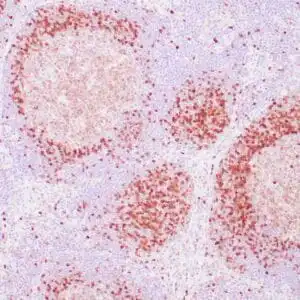
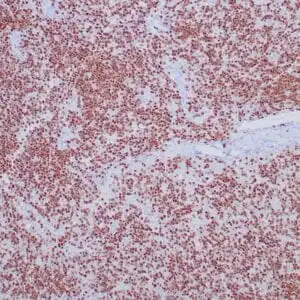
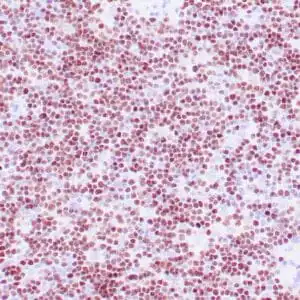
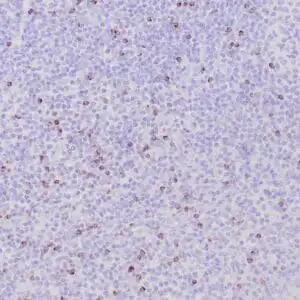
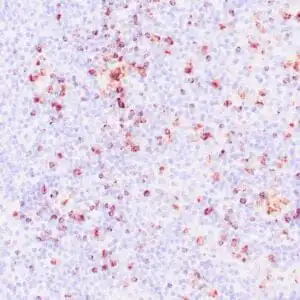
| Human lymph node stained with anti-CD163 antibody using peroxidase-conjugate and DAB chromogen. Note membrane staining of histiocytes. |
FAQ & Publications
Frequently Asked Questions
What applications is the rabbit anti-CD163 monoclonal antibody (ZR426) suitable for, and what is the recommended dilution for use in immunohistochemistry?
This rabbit monoclonal anti-CD163 antibody is suitable for immunohistochemistry (IHC) on formalin-fixed, paraffin-embedded human tissues. The recommended dilution for the concentrated antibody is 1:100-200.
How should the rabbit anti-CD163 monoclonal antibody (ZR426) be stored to maintain its stability?
For short-term storage, keep the antibody at 2-8°C. For longer-term storage, it should be kept at -20°C. It is important to avoid freeze/thaw cycles to preserve antibody integrity.
Publications
| pmid | title | authors | citation |
|---|---|---|---|
| We haven't added any publications to our database yet. | |||
Published literature highly relevant to the biological target of this product and referencing this antibody or clone are retrieved from the PubMed database provided by the United States National Library of Medicine at the National Institutes of Health.
Protocols
| relevant to this product |
|---|
| IHC |
Documents
| Batch Number | QC File | SDS |
|---|---|---|
| To view batch-specific Safety Datasheets and Quality Certificates associated with your account, please Log In. | ||
Only logged in customers who have purchased this product may leave a review.


Reviews
There are no reviews yet.