| Weight | 1 lbs |
|---|---|
| Dimensions | 9 × 5 × 2 in |
| host | mouse |
| isotype | IgG |
| clonality | monoclonal |
| concentration | concentrate, predilute |
| applications | IHC |
| reactivity | human |
| available size | 0.1 mL, 0.5 mL, 1 mL concentrated, 7 mL prediluted |

rabbit anti-ATRX monoclonal antibody (ZR244) 6442
Price range: $160.00 through $528.00
Antibody summary
- Rabbit monoclonal to ATRX
- Suitable for: Immunohistochemistry (formalin-fixed, paraffin-embedded tissues)
- Reacts with: Human
- Isotype:IgG
- Control: High-grade glioma
- Visualization: Nuclear
- 0.1, 0.5, 1.0 mL concentrated, 7 mL prediluted
rabbit anti-ATRX monoclonal antibody ZR244 6442
| target relevance |
|---|
| Homo sapiens ATRX Transcriptional regulator ATRX |
| Protein names Transcriptional regulator ATRX |
| Alternative names ATP-dependent helicase ATRX, X-linked helicase II, X-linked nuclear protein, Znf-HX |
| Gene names ATRX |
| Protein family Belongs to the SNF2/RAD54 helicase family |
| Function Involved in transcriptional regulation and chromatin remodeling. Facilitates DNA replication in multiple cellular environments and is required for efficient replication of a subset of genomic loci. Binds to DNA tandem repeat sequences in both telomeres and euchromatin and in vitro binds DNA quadruplex structures. May help stabilizing G-rich regions into regular chromatin structures by remodeling G4 DNA and incorporating H3.3-containing nucleosomes. Catalytic component of the chromatin remodeling complex ATRX:DAXX which has ATP-dependent DNA translocase activity and catalyzes the replication-independent deposition of histone H3.3 in pericentric DNA repeats outside S-phase and telomeres, and the in vitro remodeling of H3.3-containing nucleosomes. Its heterochromatin targeting is proposed to involve a combinatorial readout of histone H3 modifications (specifically methylation states of H3K9 and H3K4) and association with CBX5. Involved in maintaining telomere structural integrity in embryonic stem cells which probably implies recruitment of CBX5 to telomeres. Reports on the involvement in transcriptional regulation of telomeric repeat-containing RNA (TERRA) are conflicting; according to a report, it is not sufficient to decrease chromatin condensation at telomeres nor to increase expression of telomeric RNA in fibroblasts (PubMed:24500201). May be involved in telomere maintenance via recombination in ALT (alternative lengthening of telomeres) cell lines. Acts as a negative regulator of chromatin incorporation of transcriptionally repressive histone MACROH2A1, particularily at telomeres and the alpha-globin cluster in erythroleukemic cells. Participates in the allele-specific gene expression at the imprinted IGF2/H19 gene locus. On the maternal allele, required for the chromatin occupancy of SMC1 and CTCF within the H19 imprinting control region (ICR) and involved in esatblishment of histone tails modifications in the ICR. May be involved in brain development and facial morphogenesis. Binds to zinc-finger coding genes with atypical chromatin signatures and regulates its H3K9me3 levels. Forms a complex with ZNF274, TRIM28 and SETDB1 to facilitate the deposition and maintenance of H3K9me3 at the 3' exons of zinc-finger genes (PubMed:27029610) |
| Catalytic activity ATP + H2O = ADP + phosphate + H(+) |
| Subcellular location Nucleus, Chromosome, telomere, Nucleus, PML body |
| Structure Interacts with DAXX to form the chromatin remodeling complex ATRX:DAXX. Probably binds EZH2. Binds annexin V in a calcium and phosphatidylcholine/phosphatidylserine-dependent manner. Interacts directly with CBX5 via the PxVxL motif. Interacts with RAD50, MRE11 and NBN; indicative for an association with the MRN complex. Interacts with histone MACROH2A1. Interacts with histone H3 peptides methylated at 'Lys-10' with preferences H3K9me3 > H3K9me2 > H3K9me1. Interacts with histone H3 peptides unmethylated at 'Lys-5' (H3K4me0). Interacts with MECP2, SMC1 and SMC3. Interacts with SETDB1, TRIM28 and ZNF274 (PubMed:27029610) |
| Post-translational modification Phosphorylated at serine residues during mitose. Phosphorylation may promote the release from the nuclear matrix and progression to mitosis |
| Involvement in disease Alpha-thalassemia/impaired intellectual development syndrome, X-linked A disorder characterized by severe psychomotor retardation, facial dysmorphism, urogenital abnormalities, and alpha-thalassemia. An essential phenotypic trait are hemoglobin H erythrocyte inclusions. Intellectual disability-hypotonic facies syndrome, X-linked, 1 A disorder characterized by significantly below average general intellectual functioning associated with impairments in adaptive behavior and manifested during the developmental period. MRXSHF1 features include severe intellectual disability, dysmorphic facies, and a highly skewed X-inactivation pattern in carrier women. Other more variable features include hypogonadism, deafness, renal anomalies, and mild skeletal defects. Alpha-thalassemia myelodysplasia syndrome A disorder characterized by hypochromic, microcytic red blood cells, hemoglobin H detected in peripheral blood, and multilineage myelodysplasia. |
| Keywords 3D-structure, Acetylation, Alternative splicing, ATP-binding, Chromatin regulator, Chromosome, Disease variant, DNA damage, DNA repair, DNA-binding, Helicase, Hydrolase, Intellectual disability, Isopeptide bond, Metal-binding, Methylation, Nucleotide-binding, Nucleus, Phosphoprotein, Proteomics identification, Reference proteome, Telomere, Transcription, Transcription regulation, Ubl conjugation, Zinc, Zinc-finger |
| Sequence MTAEPMSESKLNTLVQKLHDFLAHSSEESEETSSPPRLAMNQNTDKISGSGSNSDMMENS KEEGTSSSEKSKSSGSSRSKRKPSIVTKYVESDDEKPLDDETVNEDASNENSENDITMQS LPKGTVIVQPEPVLNEDKDDFKGPEFRSRSKMKTENLKKRGEDGLHGIVSCTACGQQVNH FQKDSIYRHPSLQVLICKNCFKYYMSDDISRDSDGMDEQCRWCAEGGNLICCDFCHNAFC KKCILRNLGRKELSTIMDENNQWYCYICHPEPLLDLVTACNSVFENLEQLLQQNKKKIKV DSEKSNKVYEHTSRFSPKKTSSNCNGEEKKLDDSCSGSVTYSYSALIVPKEMIKKAKKLI ETTANMNSSYVKFLKQATDNSEISSATKLRQLKAFKSVLADIKKAHLALEEDLNSEFRAM DAVNKEKNTKEHKVIDAKFETKARKGEKPCALEKKDISKSEAKLSRKQVDSEHMHQNVPT EEQRTNKSTGGEHKKSDRKEEPQYEPANTSEDLDMDIVSVPSSVPEDIFENLETAMEVQS SVDHQGDGSSGTEQEVESSSVKLNISSKDNRGGIKSKTTAKVTKELYVKLTPVSLSNSPI KGADCQEVPQDKDGYKSCGLNPKLEKCGLGQENSDNEHLVENEVSLLLEESDLRRSPRVK TTPLRRPTETNPVTSNSDEECNETVKEKQKLSVPVRKKDKRNSSDSAIDNPKPNKLPKSK QSETVDQNSDSDEMLAILKEVSRMSHSSSSDTDINEIHTNHKTLYDLKTQAGKDDKGKRK RKSSTSGSDFDTKKGKSAKSSIISKKKRQTQSESSNYDSELEKEIKSMSKIGAARTTKKR IPNTKDFDSSEDEKHSKKGMDNQGHKNLKTSQEGSSDDAERKQERETFSSAEGTVDKDTT IMELRDRLPKKQQASASTDGVDKLSGKEESFTSLEVRKVAETKEKSKHLKTKTCKKVQDG LSDIAEKFLKKDQSDETSEDDKKQSKKGTEEKKKPSDFKKKVIKMEQQYESSSDGTEKLP EREEICHFPKGIKQIKNGTTDGEKKSKKIRDKTSKKKDELSDYAEKSTGKGDSCDSSEDK KSKNGAYGREKKRCKLLGKSSRKRQDCSSSDTEKYSMKEDGCNSSDKRLKRIELRERRNL SSKRNTKEIQSGSSSSDAEESSEDNKKKKQRTSSKKKAVIVKEKKRNSLRTSTKRKQADI TSSSSSDIEDDDQNSIGEGSSDEQKIKPVTENLVLSSHTGFCQSSGDEALSKSVPVTVDD DDDDNDPENRIAKKMLLEEIKANLSSDEDGSSDDEPEEGKKRTGKQNEENPGDEEAKNQV NSESDSDSEESKKPRYRHRLLRHKLTVSDGESGEEKKTKPKEHKEVKGRNRRKVSSEDSE DSDFQESGVSEEVSESEDEQRPRTRSAKKAELEENQRSYKQKKKRRRIKVQEDSSSENKS NSEEEEEEKEEEEEEEEEEEEEEEDENDDSKSPGKGRKKIRKILKDDKLRTETQNALKEE EERRKRIAEREREREKLREVIEIEDASPTKCPITTKLVLDEDEETKEPLVQVHRNMVIKL KPHQVDGVQFMWDCCCESVKKTKKSPGSGCILAHCMGLGKTLQVVSFLHTVLLCDKLDFS TALVVCPLNTALNWMNEFEKWQEGLKDDEKLEVSELATVKRPQERSYMLQRWQEDGGVMI IGYEMYRNLAQGRNVKSRKLKEIFNKALVDPGPDFVVCDEGHILKNEASAVSKAMNSIRS RRRIILTGTPLQNNLIEYHCMVNFIKENLLGSIKEFRNRFINPIQNGQCADSTMVDVRVM KKRAHILYEMLAGCVQRKDYTALTKFLPPKHEYVLAVRMTSIQCKLYQYYLDHLTGVGNN SEGGRGKAGAKLFQDFQMLSRIWTHPWCLQLDYISKENKGYFDEDSMDEFIASDSDETSM SLSSDDYTKKKKKGKKGKKDSSSSGSGSDNDVEVIKVWNSRSRGGGEGNVDETGNNPSVS LKLEESKATSSSNPSSPAPDWYKDFVTDADAEVLEHSGKMVLLFEILRMAEEIGDKVLVF SQSLISLDLIEDFLELASREKTEDKDKPLIYKGEGKWLRNIDYYRLDGSTTAQSRKKWAE EFNDETNVRGRLFIISTKAGSLGINLVAANRVIIFDASWNPSYDIQSIFRVYRFGQTKPV YVYRFLAQGTMEDKIYDRQVTKQSLSFRVVDQQQVERHFTMNELTELYTFEPDLLDDPNS EKKKKRDTPMLPKDTILAELLQIHKEHIVGYHEHDSLLDHKEEEELTEEERKAAWAEYEA EKKGLTMRFNIPTGTNLPPVSFNSQTPYIPFNLGALSAMSNQQLEDLINQGREKVVEATN SVTAVRIQPLEDIISAVWKENMNLSEAQVQALALSRQASQELDVKRREAIYNDVLTKQQM LISCVQRILMNRRLQQQYNQQQQQQMTYQQATLGHLMMPKPPNLIMNPSNYQQIDMRGMY QPVAGGMQPPPLQRAPPPMRSKNPGPSQGKSM |
| UniProt accession: P46100 |
Data
 |
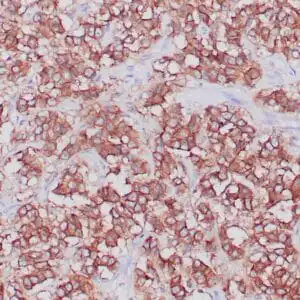
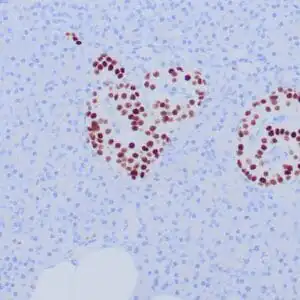
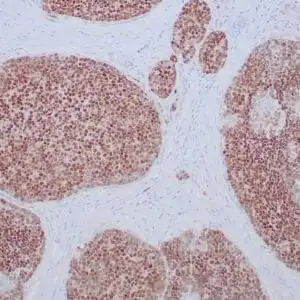
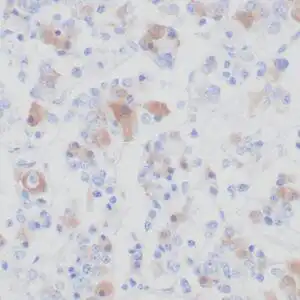
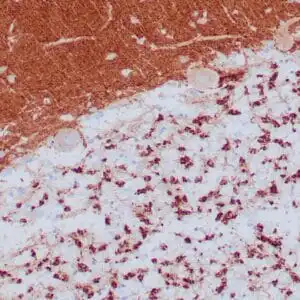
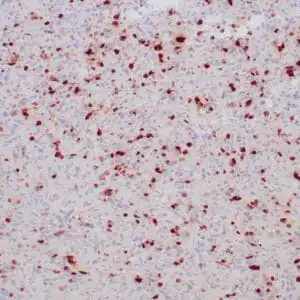
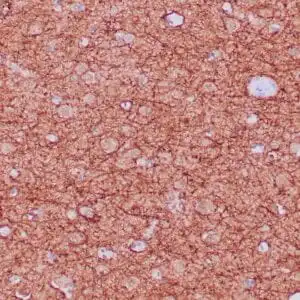
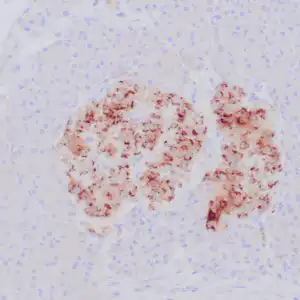
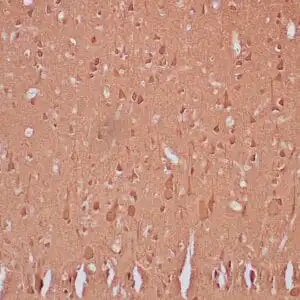
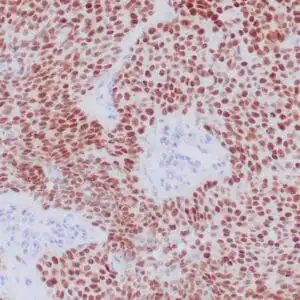
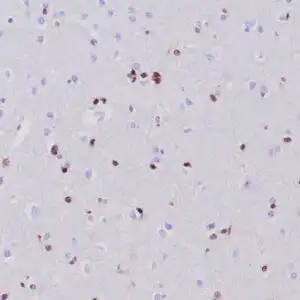
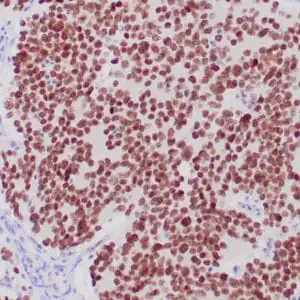
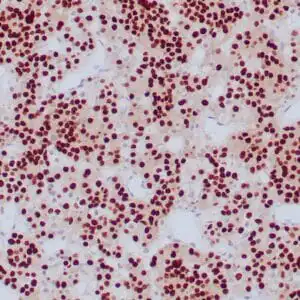
| Formalin-fixed, paraffin-embedded human glioblastoma stained with anti-ATRX antibody using peroxidase-conjugate and DAB chromogen. Note no nuclear staining of neoplastic cells (ARTX mutation) |
FAQ & Publications
Frequently Asked Questions
What species is the rabbit anti-ATRX monoclonal antibody (ZR244) validated to react with?
This antibody is validated to react with human species.
Which applications is this ATRX monoclonal antibody suitable for?
The antibody is suitable for Immunohistochemistry (IHC) on formalin-fixed, paraffin-embedded tissues.
How should the rabbit anti-ATRX monoclonal antibody be stored to maintain stability?
For short-term storage, keep the antibody at 2-8°C. For long-term storage, it should be stored at -20°C, avoiding freeze-thaw cycles.
What is the recommended dilution range for using the concentrated form of this antibody in IHC?
The recommended dilution for the concentrated antibody in IHC is between 1:100 and 1:200.
What is the host species and clonality of the anti-ATRX antibody (ZR244)?
The antibody is a rabbit monoclonal antibody.
Publications
| pmid | title | authors | citation |
|---|---|---|---|
| We haven't added any publications to our database yet. | |||
Published literature highly relevant to the biological target of this product and referencing this antibody or clone are retrieved from the PubMed database provided by the United States National Library of Medicine at the National Institutes of Health.
Protocols
| relevant to this product |
|---|
| IHC |
Documents
| Batch Number | QC File | SDS |
|---|---|---|
| To view batch-specific Safety Datasheets and Quality Certificates associated with your account, please Log In. | ||
Only logged in customers who have purchased this product may leave a review.


Reviews
There are no reviews yet.