| Weight | 1 lbs |
|---|---|
| Dimensions | 9 × 5 × 2 in |
| host | mouse |
| isotype | IgG2a |
| clonality | monoclonal |
| concentration | concentrate, predilute |
| applications | IHC |
| reactivity | human |
| available size | 0.1 mL, 0.5 mL, 1 mL concentrated, 7 mL prediluted |

mouse anti-INI-1 monoclonal antibody (25) 6231
Price range: $160.00 through $528.00
Antibody summary
- Mouse monoclonal to INI-1
- Suitable for: Immunohistochemistry (formalin-fixed, paraffin-embedded tissues)
- Reacts with: Human
- Isotype:IgG2a
- Control: Brain or astrocytoma
- Visualization: Nuclear
- 0.1, 0.5, 1.0 mL concentrated, 7 mL prediluted
mouse anti-INI-1 monoclonal antibody 25 6231
| target relevance |
|---|
| Homo sapiens SMARCB1 SWI/SNF-related matrix-associated actin-dependent regulator of chromatin subfamily B member 1 |
| Protein names SWI/SNF-related matrix-associated actin-dependent regulator of chromatin subfamily B member 1 |
| Alternative names BRG1-associated factor 47, Integrase interactor 1 protein, SNF5 homolog |
| Gene names SMARCB1 |
| Protein family Belongs to the SNF5 family |
| Function Core component of the BAF (hSWI/SNF) complex. This ATP-dependent chromatin-remodeling complex plays important roles in cell proliferation and differentiation, in cellular antiviral activities and inhibition of tumor formation. The BAF complex is able to create a stable, altered form of chromatin that constrains fewer negative supercoils than normal. This change in supercoiling would be due to the conversion of up to one-half of the nucleosomes on polynucleosomal arrays into asymmetric structures, termed altosomes, each composed of 2 histones octamers. Stimulates in vitro the remodeling activity of SMARCA4/BRG1/BAF190A. Involved in activation of CSF1 promoter. Belongs to the neural progenitors-specific chromatin remodeling complex (npBAF complex) and the neuron-specific chromatin remodeling complex (nBAF complex). During neural development a switch from a stem/progenitor to a postmitotic chromatin remodeling mechanism occurs as neurons exit the cell cycle and become committed to their adult state. The transition from proliferating neural stem/progenitor cells to postmitotic neurons requires a switch in subunit composition of the npBAF and nBAF complexes. As neural progenitors exit mitosis and differentiate into neurons, npBAF complexes which contain ACTL6A/BAF53A and PHF10/BAF45A, are exchanged for homologous alternative ACTL6B/BAF53B and DPF1/BAF45B or DPF3/BAF45C subunits in neuron-specific complexes (nBAF). The npBAF complex is essential for the self-renewal/proliferative capacity of the multipotent neural stem cells. The nBAF complex along with CREST plays a role regulating the activity of genes essential for dendrite growth (By similarity). Plays a key role in cell-cycle control and causes cell cycle arrest in G0/G1 |
| Subcellular location Nucleus |
| Structure (Microbial infection) Binds tightly to the human immunodeficiency virus-type 1 (HIV-1) integrase in vitro and stimulates its DNA-joining activity. Interacts with human papillomavirus 18 E1 protein to stimulate its viral replication (PubMed:10365963). Interacts with Epstein-Barr virus protein EBNA-2 (PubMed:8709224) |
| Involvement in disease Rhabdoid tumor predisposition syndrome 1 A familial cancer syndrome predisposing to renal or extrarenal malignant rhabdoid tumors and to a variety of tumors of the central nervous system, including choroid plexus carcinoma, medulloblastoma, and central primitive neuroectodermal tumors. Rhabdoid tumors are the most aggressive and lethal malignancies occurring in early childhood. Schwannomatosis 1 An autosomal dominant tumor predisposition syndrome characterized by the development of multiple benign nerve sheath tumors called schwannomas on cranial, spinal, and peripheral nerves, without involvement of the vestibular nerve. Affected individuals may also have multiple meningiomas. Coffin-Siris syndrome 3 A form of Coffin-Siris syndrome, a congenital multiple malformation syndrome with broad phenotypic and genetic variability. Cardinal features are intellectual disability, coarse facial features, hypertrichosis, and hypoplastic or absent fifth digit nails or phalanges. Additional features include malformations of the cardiac, gastrointestinal, genitourinary, and/or central nervous systems. Sucking/feeding difficulties, poor growth, ophthalmologic abnormalities, hearing impairment, and spinal anomalies are common findings. Both autosomal dominant and autosomal recessive inheritance patterns have been reported. |
| Keywords 3D-structure, Activator, Alternative splicing, Cell cycle, Chromatin regulator, Disease variant, DNA-binding, Host-virus interaction, Hypotrichosis, Intellectual disability, Isopeptide bond, Neurogenesis, Nucleus, Phosphoprotein, Proteomics identification, Reference proteome, Repeat, Transcription, Transcription regulation, Tumor suppressor, Ubl conjugation |
| Sequence MMMMALSKTFGQKPVKFQLEDDGEFYMIGSEVGNYLRMFRGSLYKRYPSLWRRLATVEER KKIVASSHGKKTKPNTKDHGYTTLATSVTLLKASEVEEILDGNDEKYKAVSISTEPPTYL REQKAKRNSQWVPTLPNSSHHLDAVPCSTTINRNRMGRDKKRTFPLCFDDHDPAVIHENA SQPEVLVPIRLDMEIDGQKLRDAFTWNMNEKLMTPEMFSEILCDDLDLNPLTFVPAIASA IRQQIESYPTDSILEDQSDQRVIIKLNIHVGNISLVDQFEWDMSEKENSPEKFALKLCSE LGLGGEFVTTIAYSIRGQLSWHQKTYAFSENPLPTVEIAIRNTGDADQWCPLLETLTDAE MEKKIRDQDRNTRRMRRLANTAPAW |
| UniProt accession: Q12824 |
Data
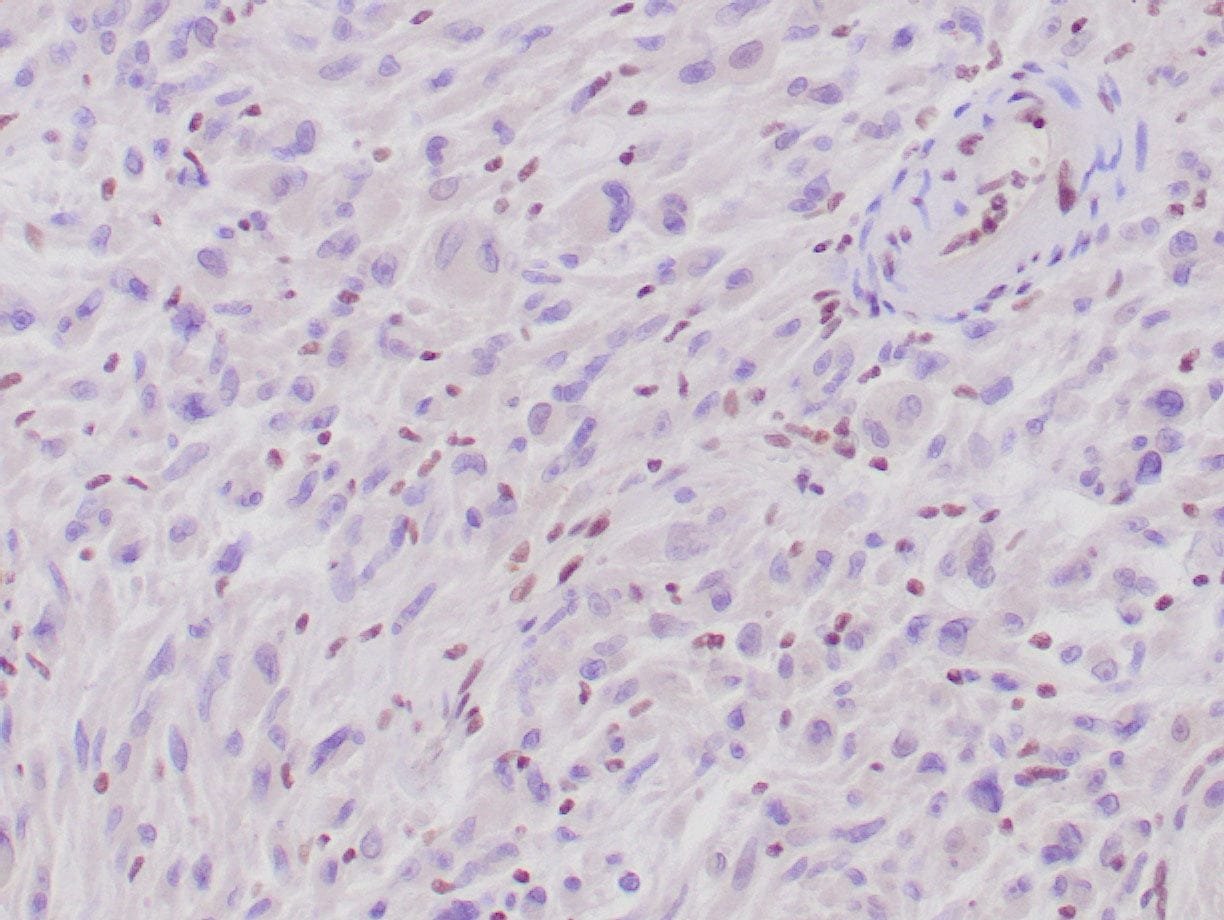 |
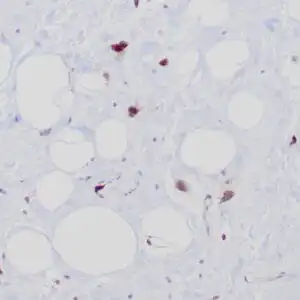
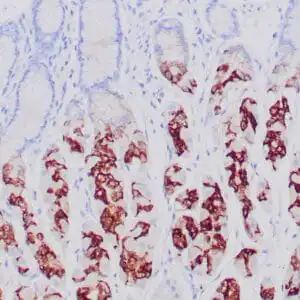
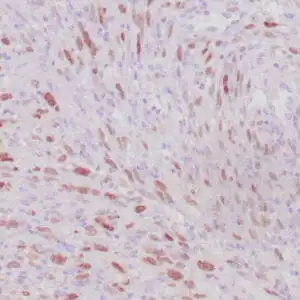
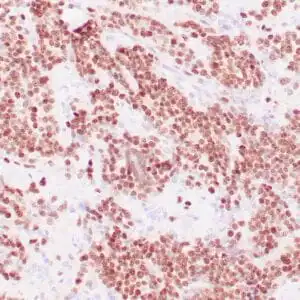
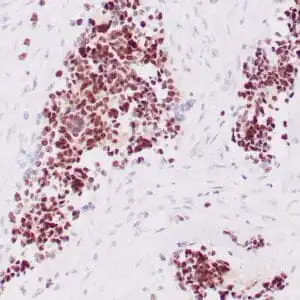
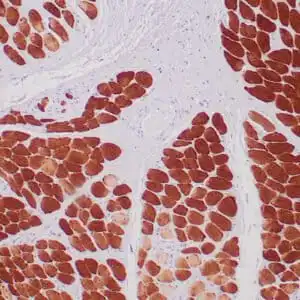
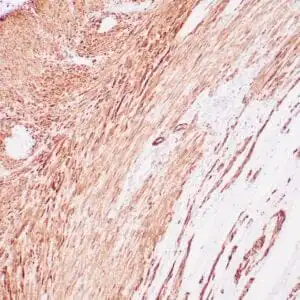
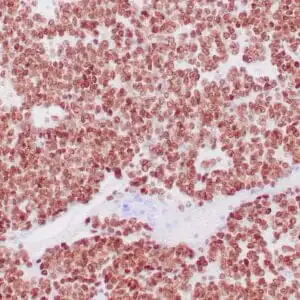
| Human epithelioid sarcoma stained with anti-INI-1 antibody using peroxidase-conjugate and DAB. Note the absence of nuclear staining of stromal/endothelial cells and absence of staining in tumor cells, whereas the background cells with nuclear staining. |
FAQ & Publications
Frequently Asked Questions
What species does the mouse anti-INI-1 monoclonal antibody (25) 6231 react with?
This antibody specifically reacts with human antigens.
Which applications is the mouse anti-INI-1 monoclonal antibody suitable for?
It is suitable for immunohistochemistry (IHC) on formalin-fixed, paraffin-embedded tissues.
How should the mouse anti-INI-1 monoclonal antibody be stored to maintain stability?
For short-term storage, keep the antibody at 2-8°C. For long-term storage, keep it at -20°C and avoid repeated freeze/thaw cycles.
What are the available sizes and concentrations for this antibody?
The antibody is available in 0.1 mL, 0.5 mL, and 1.0 mL concentrated formats, as well as a 7 mL prediluted format.
What type of antibody is the mouse anti-INI-1 monoclonal antibody (25) 6231 in terms of host and clonality?
This is a mouse-derived monoclonal antibody of the IgG2a isotype.
Publications
| pmid | title | authors | citation |
|---|---|---|---|
| We haven't added any publications to our database yet. | |||
Published literature highly relevant to the biological target of this product and referencing this antibody or clone are retrieved from the PubMed database provided by the United States National Library of Medicine at the National Institutes of Health.
Protocols
| relevant to this product |
|---|
| IHC |
Documents
| Batch Number | QC File | SDS |
|---|---|---|
| To view batch-specific Safety Datasheets and Quality Certificates associated with your account, please Log In. | ||
Only logged in customers who have purchased this product may leave a review.

Reviews
There are no reviews yet.