| Weight | 1 lbs |
|---|---|
| Dimensions | 9 × 5 × 2 in |
| target | Protein A |
| species reactivity | Staphylococcus |
| applications | sandwich (sELISA) |
| assay type | direct & quantitative |
| available size | 96 tests |
| sensitivity | 46.875 pg/ml |
| range | 78.125–5000 pg/ml |
Protein A ELISA Kit 60810
$570.00
Summary
- ELISA kit for research use (RUO)
- Reactivity: Protein A
- Suitable for: ELISA
- Time:3 hours
- Sample types: Serum, plasma, tissue homogenates and other biological fluids
Protein A ELISA Kit
| kit | ||||||||||||||||||
|---|---|---|---|---|---|---|---|---|---|---|---|---|---|---|---|---|---|---|
| Assay type sandwich (sELISA) | ||||||||||||||||||
| Research area host cell protein | ||||||||||||||||||
| Sample type Serum, plasma, tissue homogenates and other biological fluids | ||||||||||||||||||
Components
| ||||||||||||||||||
| Storage Store at 2-8°C. |
| target relevance |
|---|
| Staphylococcus aureus SPA Immunoglobulin G-binding protein A |
| Protein names Immunoglobulin G-binding protein A |
| Alternative names Staphylococcal protein A |
| Gene names spa |
| Protein family Belongs to the immunoglobulin-binding protein SpA family |
| Function Plays a role in the inhibition of the host innate and adaptive immune responses. Possesses five immunoglobulin-binding domains that capture both the fragment crystallizable region (Fc region) and the Fab region (part of Ig that identifies antigen) of immunoglobulins (By similarity). In turn, Staphylococcus aureus is protected from phagocytic killing via inhibition of Ig Fc region. In addition, the host elicited B-cell response is prevented due to a decrease of antibody-secreting cell proliferation that enter the bone marrow, thereby decreasing long-term antibody production. Inhibits osteogenesis by preventing osteoblast proliferation and expression of alkaline phosphatase, type I collagen, osteopontin and osteocalcin. Acts directly as a pro-inflammatory factor in the lung through its ability to bind and activate tumor necrosis factor alpha receptor 1/TNFRSF1A (By similarity) |
| Subcellular location Secreted, cell wall |
| Structure Interacts with host TNFRSF1A; this interaction leads to the stimulation of both surface expression and shedding of TNFRSF1A. Interacts (via B domain) with IgG1, IgG2 and IgG4; spa interferes with IgG oligomerization and IgG:C1 complement complex formation, preventing complement activation and ultimately protecting bacteria from phagocytic killing |
| Keywords 3D-structure, Cell wall, Direct protein sequencing, IgG-binding protein, Peptidoglycan-anchor, Repeat, Secreted, Signal, Virulence |
| Sequence MKKKNIYSIRKLGVGIASVTLGTLLISGGVTPAANAAQHDEAQQNAFYQVLNMPNLNADQ RNGFIQSLKDDPSQSANVLGEAQKLNDSQAPKADAQQNKFNKDQQSAFYEILNMPNLNEE QRNGFIQSLKDDPSQSTNVLGEAKKLNESQAPKADNNFNKEQQNAFYEILNMPNLNEEQR NGFIQSLKDDPSQSANLLAEAKKLNESQAPKADNKFNKEQQNAFYEILHLPNLNEEQRNG FIQSLKDDPSQSANLLAEAKKLNDAQAPKADNKFNKEQQNAFYEILHLPNLTEEQRNGFI QSLKDDPSVSKEILAEAKKLNDAQAPKEEDNNKPGKEDGNKPGKEDGNKPGKEDNKKPGK EDGNKPGKEDNKKPGKEDGNKPGKEDGNKPGKEDGNKPGKEDGNKPGKEDGNGVHVVKPG DTVNDIAKANGTTADKIAADNKLADKNMIKPGQELVVDKKQPANHADANKAQALPETGEE NPFIGTTVFGGLSLALGAALLAGRRREL |
| UniProt accession: P38507 |
Data
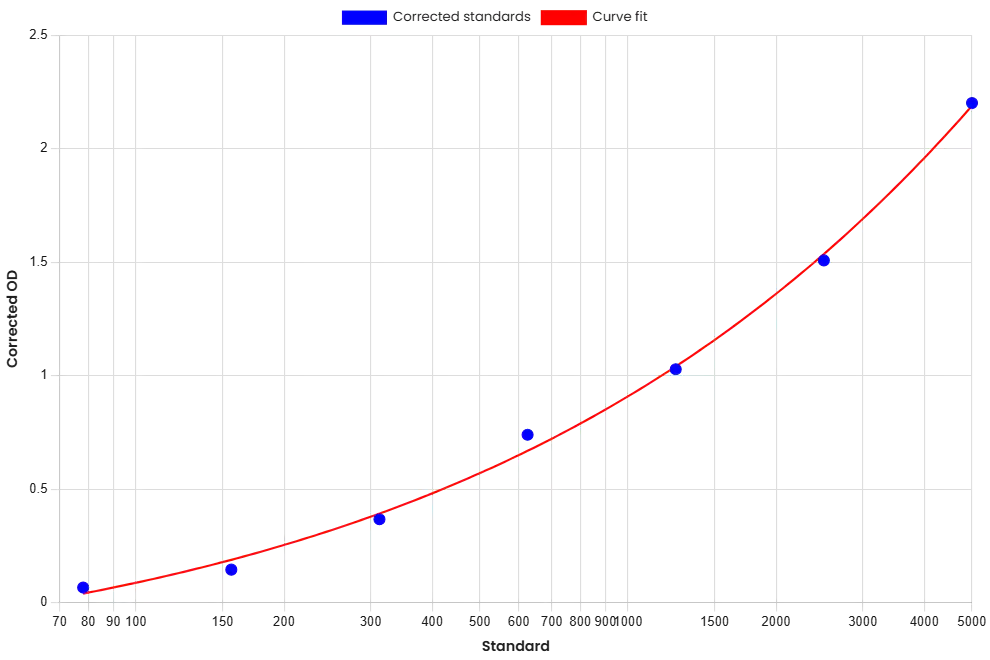
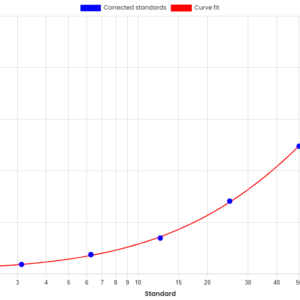
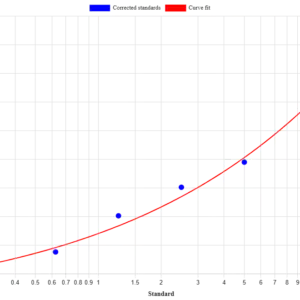
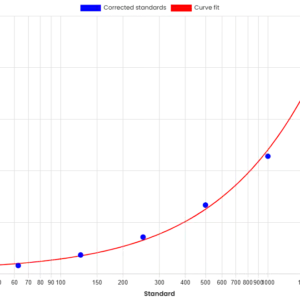
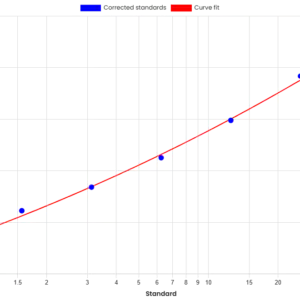
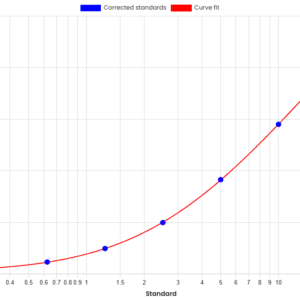
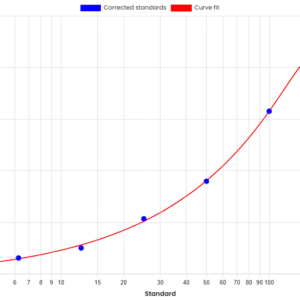
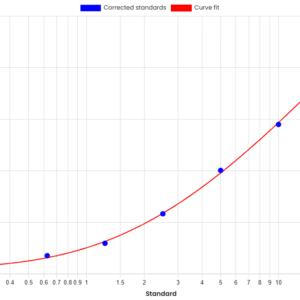
Standard Curve
X axis: log |
Y axis: linear
| Standard | STD [pg/mL] | OD1 | OD2 | Average OD | Corrected OD |
|---|---|---|---|---|---|
| Blank #8 | 0 | 0.07 | 0.07 | 0.07 | 0 |
| Standard #7 | 78.13 | 0.14 | 0.14 | 0.14 | 0.07 |
| Standard #6 | 156.25 | 0.21 | 0.22 | 0.22 | 0.15 |
| Standard #5 | 312.5 | 0.43 | 0.45 | 0.44 | 0.37 |
| Standard #4 | 625 | 0.8 | 0.82 | 0.81 | 0.74 |
| Standard #3 | 1250 | 1.08 | 1.12 | 1.1 | 1.03 |
| Standard #2 | 2500 | 1.56 | 1.6 | 1.58 | 1.51 |
| Standard #1 | 5000 | 2.24 | 2.3 | 2.27 | 2.2 |
Precision
| Sample | n | Mean | Standard Deviation | CV (%) |
|---|---|---|---|---|
| Intra Sample 1 | 20 | 157.3 | 8.24 | 5.24 |
| Inter Sample 1 | 20 | 151.4 | 8.1 | 5.35 |
| Intra Sample 2 | 20 | 625.8 | 32.48 | 5.19 |
| Inter Sample 2 | 20 | 647.8 | 34.27 | 5.29 |
| Intra Sample 3 | 20 | 2585 | 132.61 | 5.13 |
| Inter Sample 3 | 20 | 2563 | 134.04 | 5.23 |
Stability
| 37°C 1 Month (%) | 2–8°C 6 Months (%) | 2–8°C 12 Months (%) |
|---|---|---|
| 80 | 95-100 | 85-98 |
FAQ & Publications
Publications
| pmid | title | authors | citation |
|---|---|---|---|
| We haven't added any publications to our database yet. | |||
Published literature highly relevant to the biological target of this product and referencing this antibody or clone are retrieved from the PubMed database provided by the United States National Library of Medicine at the National Institutes of Health.
Protocols
| Relevant to this product |
|---|
| View Protocol | View PDF |
Documents
| # | ||
|---|---|---|
| Please enter your product and batch number here. | ||
Only logged in customers who have purchased this product may leave a review.


Reviews
There are no reviews yet.