| Weight | 1 lbs |
|---|---|
| Dimensions | 9 × 5 × 2 in |
| host | rabbit |
| isotype | IgG |
| clonality | polyclonal |
| concentration | 1 mg/mL |
| applications | ICC/IF, WB |
| reactivity | STAT3 (phospho-Tyr705) |
| available sizes | 100 µL |
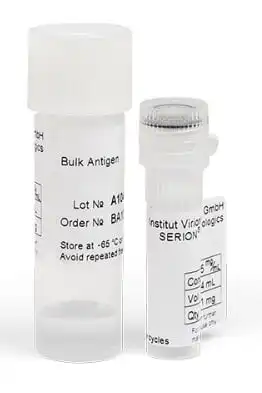
rabbit anti-STAT3 (phospho-Tyr705) polyclonal antibody 9167
$366.00
Antibody summary
- Rabbit polyclonal to STAT3 (phospho-Tyr705)
- Suitable for: WB,IHC
- Isotype: Whole IgG
- 100 µl
rabbit anti-STAT3 (phospho-Tyr705) polyclonal antibody 9167
| antibody |
|---|
| Tested applications WB,IHC,IHC |
| Recommended dilutions Immunoblotting: use at dilution of 1:500-1:1,000. A band of ~88kDa is detected. Immunohistochemistry: use at dilution of 1:50-1:100. These are recommended working dilutions. End user should determine optimal dilutions for their applications. |
| Immunogen Peptide sequence that includes phosphorylation site of tyrosine 705 (A-P-Y(p)-L-K) derived from human STAT3 and conjugated to KLH. |
| Size and concentration 100µL and 1 mg/mL |
| Form liquid |
| Storage Instructions This antibody is stable for at least one (1) year at -20°C. |
| Storage buffer PBS (without Mg2 and Ca2 ), pH 7.4, 150mM NaCl, |
| Purity affinity purified |
| Clonality polyclonal |
| Isotype IgG |
| Compatible secondaries goat anti-rabbit IgG, H&L chain specific, peroxidase conjugated, conjugated polyclonal antibody 9512 goat anti-rabbit IgG, H&L chain specific, biotin conjugated polyclonal antibody 2079 goat anti-rabbit IgG, H&L chain specific, FITC conjugated polyclonal antibody 7863 goat anti-rabbit IgG, H&L chain specific, Cross Absorbed polyclonal antibody 2371 goat anti-rabbit IgG, H&L chain specific, biotin conjugated polyclonal antibody, crossabsorbed 1715 goat anti-rabbit IgG, H&L chain specific, FITC conjugated polyclonal antibody, crossabsorbed 1720 |
| Isotype control Rabbit polyclonal - Isotype Control |
| target relevance |
|---|
| Homo sapiens STAT3 Signal transducer and activator of transcription 3 |
| Protein names Signal transducer and activator of transcription 3 |
| Alternative names Acute-phase response factor |
| Gene names STAT3 |
| Protein family Belongs to the transcription factor STAT family |
| Function Signal transducer and transcription activator that mediates cellular responses to interleukins, KITLG/SCF, LEP and other growth factors (PubMed:10688651, PubMed:12359225, PubMed:12873986, PubMed:15194700, PubMed:15653507, PubMed:16285960, PubMed:17344214, PubMed:18242580, PubMed:18782771, PubMed:22306293, PubMed:23084476, PubMed:28262505, PubMed:32929201, PubMed:38404237). Once activated, recruits coactivators, such as NCOA1 or MED1, to the promoter region of the target gene (PubMed:15653507, PubMed:16285960, PubMed:17344214, PubMed:18782771, PubMed:28262505, PubMed:32929201). May mediate cellular responses to activated FGFR1, FGFR2, FGFR3 and FGFR4 (PubMed:12873986). Upon activation of IL6ST/gp130 signaling by interleukin-6 (IL6), binds to the IL6-responsive elements identified in the promoters of various acute-phase protein genes (PubMed:12359225). Activated by IL31 through IL31RA (PubMed:15194700). Acts as a regulator of inflammatory response by regulating differentiation of naive CD4(+) T-cells into T-helper Th17 or regulatory T-cells (Treg): acetylation promotes its transcription activity and cell differentiation while deacetylation and oxidation of lysine residues by LOXL3 inhibits differentiation (PubMed:28065600, PubMed:28262505). Involved in cell cycle regulation by inducing the expression of key genes for the progression from G1 to S phase, such as CCND1 (PubMed:17344214). Mediates the effects of LEP on melanocortin production, body energy homeostasis and lactation (By similarity). May play an apoptotic role by transctivating BIRC5 expression under LEP activation (PubMed:18242580). Cytoplasmic STAT3 represses macroautophagy by inhibiting EIF2AK2/PKR activity (PubMed:23084476). Plays a crucial role in basal beta cell functions, such as regulation of insulin secretion (By similarity). Following JAK/STAT signaling activation and as part of a complex with NFATC3 and NFATC4, binds to the alpha-beta E4 promoter region of CRYAB and activates transcription in cardiomyocytes (By similarity) |
| Subcellular location Cytoplasm, Nucleus |
| Structure (Microbial infection) Interacts with human cytomegalovirus (HHV-5) immediate early protein IE1; this interaction leads to STAT3 nuclear accumulation and disruption of IL6-induced STAT3 phosphorylation |
| Post-translational modification Tyrosine phosphorylated upon stimulation with EGF. Tyrosine phosphorylated in response to constitutively activated FGFR1, FGFR2, FGFR3 and FGFR4 (By similarity). Activated through tyrosine phosphorylation by BMX. Tyrosine phosphorylated in response to IL6, IL11, LIF, CNTF, KITLG/SCF, CSF1, EGF, PDGF, IFN-alpha, LEP and OSM. Activated KIT promotes phosphorylation on tyrosine residues and subsequent translocation to the nucleus. Phosphorylated on serine upon DNA damage, probably by ATM or ATR. Serine phosphorylation is important for the formation of stable DNA-binding STAT3 homodimers and maximal transcriptional activity. ARL2BP may participate in keeping the phosphorylated state of STAT3 within the nucleus. Upon LPS challenge, phosphorylated within the nucleus by IRAK1. Upon erythropoietin treatment, phosphorylated on Ser-727 by RPS6KA5. Dephosphorylation on tyrosine residues by PTPN2 negatively regulates IL6/interleukin-6 signaling (By similarity). Phosphorylation at Tyr-705 by PTK6, isoform M2 of PKM (PKM2) or FER leads to an increase of its transcriptional activity (PubMed:12763138, PubMed:16568091, PubMed:21135090, PubMed:22306293, PubMed:32929201). Phosphorylation at Tyr-705 is increased in the presence of calcineurin (By similarity). Phosphorylation at Tyr-640 by TYK2 negatively regulates transcriptional activity (PubMed:29162862) Acetylated on lysine residues by EP300/p300, promoting its activation (PubMed:15653507, PubMed:16285960, PubMed:18782771). Acetylation at Lys-49 and Lys-87 by EP300/p300 promotes its activation (PubMed:15653507, PubMed:16285960, PubMed:28262505). Acetylation at Lys-87 by EP300/p300 promotes its association with BRD2 and recruitment to chromatin (PubMed:28262505). Deacetylated at Lys-49 and Lys-87 by HDAC1 (PubMed:16285960). Acetylation at Lys-685 by EP300/p300 promotes its homodimerization and activation (PubMed:15653507). Deacetylated at Lys-685 by HDAC3 (PubMed:15653507). Acetylated on lysine residues by CREBBP (PubMed:28065600). Deacetylation by LOXL3 leads to disrupt STAT3 dimerization and inhibit STAT3 transcription activity (PubMed:28065600). Oxidation of lysine residues to allysine on STAT3 preferentially takes place on lysine residues that are acetylated (PubMed:28065600) Some lysine residues are oxidized to allysine by LOXL3, leading to disrupt STAT3 dimerization and inhibit STAT3 transcription activity (PubMed:28065600). Oxidation of lysine residues to allysine on STAT3 preferentially takes place on lysine residues that are acetylated (PubMed:28065600) (Microbial infection) Phosphorylated on Tyr-705 in the presence of S.typhimurium SarA Methylated at Lys-140. Demethylation at Lys-140 by Jmjd1c facilitates its dephosphorylation by Ptpn6 |
| Involvement in disease Hyper-IgE syndrome 1, autosomal dominant, with recurrent infections A rare disorder of immunity and connective tissue characterized by immunodeficiency, chronic eosinophilia, distinctive coarse facial appearance, abnormal dentition, hyperextensibility of the joints, and bone fractures. Autoimmune disease, multisystem, infantile-onset, 1 A disorder characterized by early childhood onset of a spectrum of autoimmune manifestations affecting multiple organs, including insulin-dependent diabetes mellitus and autoimmune enteropathy or celiac disease. Other features include short stature, non-specific dermatitis, hypothyroidism, autoimmune arthritis, and delayed puberty. |
| Keywords 3D-structure, Acetylation, Activator, Alternative splicing, Cytoplasm, Diabetes mellitus, Disease variant, DNA-binding, Dwarfism, Host-virus interaction, Methylation, Nucleus, Phosphoprotein, Proteomics identification, Reference proteome, SH2 domain, Transcription, Transcription regulation |
| Sequence MAQWNQLQQLDTRYLEQLHQLYSDSFPMELRQFLAPWIESQDWAYAASKESHATLVFHNL LGEIDQQYSRFLQESNVLYQHNLRRIKQFLQSRYLEKPMEIARIVARCLWEESRLLQTAA TAAQQGGQANHPTAAVVTEKQQMLEQHLQDVRKRVQDLEQKMKVVENLQDDFDFNYKTLK SQGDMQDLNGNNQSVTRQKMQQLEQMLTALDQMRRSIVSELAGLLSAMEYVQKTLTDEEL ADWKRRQQIACIGGPPNICLDRLENWITSLAESQLQTRQQIKKLEELQQKVSYKGDPIVQ HRPMLEERIVELFRNLMKSAFVVERQPCMPMHPDRPLVIKTGVQFTTKVRLLVKFPELNY QLKIKVCIDKDSGDVAALRGSRKFNILGTNTKVMNMEESNNGSLSAEFKHLTLREQRCGN GGRANCDASLIVTEELHLITFETEVYHQGLKIDLETHSLPVVVISNICQMPNAWASILWY NMLTNNPKNVNFFTKPPIGTWDQVAEVLSWQFSSTTKRGLSIEQLTTLAEKLLGPGVNYS GCQITWAKFCKENMAGKGFSFWVWLDNIIDLVKKYILALWNEGYIMGFISKERERAILST KPPGTFLLRFSESSKEGGVTFTWVEKDISGKTQIQSVEPYTKQQLNNMSFAEIIMGYKIM DATNILVSPLVYLYPDIPKEEAFGKYCRPESQEHPEADPGSAAPYLKTKFICVTPTTCSN TIDLPMSPRTLDSLMQFGNNGEGAEPSAGGQFESLTFDMELTSECATSPM |
| UniProt accession: P40763 |
Data
| No results found |
FAQ & Publications
Frequently Asked Questions
What applications is the rabbit anti-STAT3 (phospho-Tyr705) polyclonal antibody 9167 validated for?
This antibody is validated for use in Western Blotting (WB) and Immunohistochemistry (IHC). Recommended dilutions are 1:500-1:1,000 for immunoblotting and 1:50-1:100 for immunohistochemistry.
How should the rabbit anti-STAT3 (phospho-Tyr705) antibody 9167 be stored to maintain stability?
The antibody should be stored at -20°C, where it remains stable for at least one year. It is supplied in PBS buffer without magnesium and calcium ions, at pH 7.4 with 150mM NaCl.
What is the immunogen used to generate the rabbit anti-STAT3 (phospho-Tyr705) polyclonal antibody 9167?
The immunogen is a peptide sequence that includes the phosphorylation site at tyrosine 705 (A-P-Y(p)-L-K) derived from human STAT3, conjugated to KLH.
Is the rabbit anti-STAT3 (phospho-Tyr705) antibody 9167 monoclonal or polyclonal, and what is its isotype?
This antibody is polyclonal and of the IgG isotype, raised in rabbit.
Publications
| pmid | title | authors | citation |
|---|---|---|---|
| We haven't added any publications to our database yet. | |||
Published literature highly relevant to the biological target of this product and referencing this antibody or clone are retrieved from the PubMed database provided by the United States National Library of Medicine at the National Institutes of Health.
Protocols
| relevant to this product |
|---|
| Western blot IHC |
Documents
| Batch Number | QC File | SDS |
|---|---|---|
| To view batch-specific Safety Datasheets and Quality Certificates associated with your account, please Log In. | ||
Only logged in customers who have purchased this product may leave a review.


Reviews
There are no reviews yet.