| Weight | 1 lbs |
|---|---|
| Dimensions | 9 × 5 × 2 in |
| host | rabbit |
| isotype | IgG |
| clonality | polyclonal |
| concentration | 1 mg/mL |
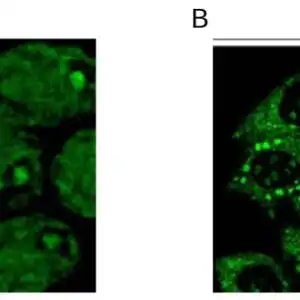
| applications | ICC/IF, WB |
| reactivity | STAT6 (phospho-Tyr641) |
| available sizes | 100 µL |

rabbit anti-STAT6 (phospho-Tyr641) polyclonal antibody 6192
$366.00
Antibody summary
- Rabbit polyclonal to STAT6 (phospho-Tyr641)
- Suitable for: WB,IHC
- Isotype: Whole IgG
- 100 µl
rabbit anti-STAT6 (phospho-Tyr641) polyclonal antibody 6192
| antibody |
|---|
| Tested applications WB,IHC,IHC |
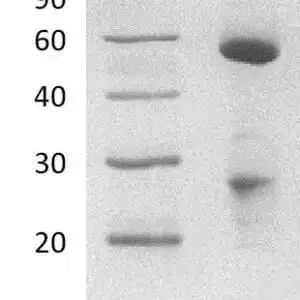
| Recommended dilutions Immunoblotting: use at dilution of 1:500-1:1,000. A band of~110kDa is detected. Immunohistochemistry: use at dilution of 1:50- 1:100. These are recommended working dilutions. End user should determine optimal dilutions for their applications. |
| Immunogen Peptide sequence that includes phosphorylation site of tyrosine 641 (R-G-Y(p)-V-P) derived from human STAT6 and conjugated to KLH. |
| Size and concentration 100µL and 1 mg/mL |
| Form liquid |
| Storage Instructions This antibody is stable for at least one (1) year at -20°C. |
| Storage buffer PBS (without Mg2 and Ca2 ), pH 7.4, 150mM NaCl, |
| Purity affinity purified |
| Clonality polyclonal |
| Isotype IgG |
| Compatible secondaries goat anti-rabbit IgG, H&L chain specific, peroxidase conjugated, conjugated polyclonal antibody 9512 goat anti-rabbit IgG, H&L chain specific, biotin conjugated polyclonal antibody 2079 goat anti-rabbit IgG, H&L chain specific, FITC conjugated polyclonal antibody 7863 goat anti-rabbit IgG, H&L chain specific, Cross Absorbed polyclonal antibody 2371 goat anti-rabbit IgG, H&L chain specific, biotin conjugated polyclonal antibody, crossabsorbed 1715 goat anti-rabbit IgG, H&L chain specific, FITC conjugated polyclonal antibody, crossabsorbed 1720 |
| Isotype control Rabbit polyclonal - Isotype Control |
| target relevance |
|---|
| Homo sapiens STAT6 Signal transducer and activator of transcription 6 |
| Protein names Signal transducer and activator of transcription 6 |
| Alternative names IL-4 Stat |
| Gene names STAT6 |
| Protein family Belongs to the transcription factor STAT family |
| Function Carries out a dual function: signal transduction and activation of transcription. Involved in IL4/interleukin-4- and IL3/interleukin-3-mediated signaling |
| Subcellular location Cytoplasm, Nucleus |
| Structure Forms a homodimer or a heterodimer with a related family member (By similarity). Interacts with NCOA1 via its C-terminal LXXLL motif |
| Post-translational modification Tyrosine phosphorylated on Tyr-641 following stimulation by IL4/interleukin-4 (PubMed:27796300). Tyrosine phosphorylated following stimulation by IL3/interleukin-3 (By similarity). Dephosphorylation on tyrosine residues by PTPN2 negatively regulates the IL4/interleukin-4 mediated signaling (PubMed:17210636) Mono-ADP-ribosylated by PARP14 |
| Involvement in disease Hyper-IgE syndrome 6, autosomal dominant, with recurrent infections An immunologic disorder characterized by severe allergic disease with onset in infancy. Common features are treatment-resistant atopic dermatitis, food allergies, asthma, eosinophilic gastrointestinal disease, and severe episodes of anaphylaxis. Half of the patients present with recurrent skin, respiratory, and viral infections. Clinical laboratory testing is notable for eosinophilia and markedly elevated serum IgE levels. |
| Keywords 3D-structure, Acetylation, Activator, ADP-ribosylation, Alternative splicing, Cytoplasm, Disease variant, DNA-binding, Nucleus, Phosphoprotein, Proteomics identification, Reference proteome, SH2 domain, Transcription, Transcription regulation |
| Sequence MSLWGLVSKMPPEKVQRLYVDFPQHLRHLLGDWLESQPWEFLVGSDAFCCNLASALLSDT VQHLQASVGEQGEGSTILQHISTLESIYQRDPLKLVATFRQILQGEKKAVMEQFRHLPMP FHWKQEELKFKTGLRRLQHRVGEIHLLREALQKGAEAGQVSLHSLIETPANGTGPSEALA MLLQETTGELEAAKALVLKRIQIWKRQQQLAGNGAPFEESLAPLQERCESLVDIYSQLQQ EVGAAGGELEPKTRASLTGRLDEVLRTLVTSCFLVEKQPPQVLKTQTKFQAGVRFLLGLR FLGAPAKPPLVRADMVTEKQARELSVPQGPGAGAESTGEIINNTVPLENSIPGNCCSALF KNLLLKKIKRCERKGTESVTEEKCAVLFSASFTLGPGKLPIQLQALSLPLVVIVHGNQDN NAKATILWDNAFSEMDRVPFVVAERVPWEKMCETLNLKFMAEVGTNRGLLPEHFLFLAQK IFNDNSLSMEAFQHRSVSWSQFNKEILLGRGFTFWQWFDGVLDLTKRCLRSYWSDRLIIG FISKQYVTSLLLNEPDGTFLLRFSDSEIGGITIAHVIRGQDGSPQIENIQPFSAKDLSIR SLGDRIRDLAQLKNLYPKKPKDEAFRSHYKPEQMGKDGRGYVPATIKMTVERDQPLPTPE LQMPTMVPSYDLGMAPDSSMSMQLGPDMVPQVYPPHSHSIPPYQGLSPEESVNVLSAFQE PHLQMPPSLGQMSLPFDQPHPQGLLPCQPQEHAVSSPDPLLCSDVTMVEDSCLSQPVTAF PQGTWIGEDIFPPLLPPTEQDLTKLLLEGQGESGGGSLGAQPLLQPSHYGQSGISMSHMD LRANPSW |
| UniProt accession: P42226 |
Data
| No results found |
FAQ & Publications
Frequently Asked Questions
What applications has the rabbit anti-STAT6 (phospho-Tyr641) polyclonal antibody 6192 been validated for?
This antibody has been tested and validated for Western blotting (WB) and immunohistochemistry (IHC) applications.
What are the recommended dilutions for using this antibody in Western blot and immunohistochemistry assays?
For Western blotting, it is recommended to use this antibody at a dilution of 1:500 to 1:1,000, where it detects a band of approximately 110 kDa. For immunohistochemistry, a dilution of 1:50 to 1:100 is suggested. However, optimal dilutions should be determined by the end user for their specific applications.
How should the rabbit anti-STAT6 (phospho-Tyr641) antibody be stored to maintain its stability?
The antibody should be stored at -20°C, where it remains stable for at least one year. It is supplied in PBS buffer without magnesium and calcium ions, pH 7.4, containing 150 mM NaCl.
What is the host species and clonality of this anti-STAT6 (phospho-Tyr641) antibody, and what is the immunogen used?
The antibody is a rabbit-derived polyclonal IgG. The immunogen is a peptide sequence encompassing the phosphorylation site of tyrosine 641 (R-G-Y(p)-V-P) from human STAT6, conjugated to keyhole limpet hemocyanin (KLH).
Publications
| pmid | title | authors | citation |
|---|---|---|---|
| We haven't added any publications to our database yet. | |||
Published literature highly relevant to the biological target of this product and referencing this antibody or clone are retrieved from the PubMed database provided by the United States National Library of Medicine at the National Institutes of Health.
Protocols
| relevant to this product |
|---|
| Western blot IHC |
Documents
| Batch Number | QC File | SDS |
|---|---|---|
| To view batch-specific Safety Datasheets and Quality Certificates associated with your account, please Log In. | ||
Only logged in customers who have purchased this product may leave a review.


Reviews
There are no reviews yet.