| Weight | 1 lbs |
|---|---|
| Dimensions | 9 × 5 × 2 in |
| host | mouse |
| isotype | IgG |
| clonality | monoclonal |
| concentration | concentrate, predilute |
| applications | IHC |
| reactivity | human |
| available size | 0.1 mL, 0.5 mL, 1 mL concentrated, 7 mL prediluted |

rabbit anti-SOX-10 monoclonal antibody (ZR275) 6366
Price range: $160.00 through $528.00
Antibody summary
- Rabbit monoclonal to SOX-10
- Suitable for: Immunohistochemistry (formalin-fixed, paraffin-embedded tissues)
- Reacts with: Human
- Isotype:IgG
- Control: Melanoma
- Visualization: Nuclear
- 0.1, 0.5, 1.0 mL concentrated, 7 mL prediluted
rabbit anti-SOX-10 monoclonal antibody ZR275 6366
| target relevance |
|---|
| Homo sapiens SOX10 Transcription factor SOX-10 |
| Protein names Transcription factor SOX-10 |
| Gene names SOX10 |
| Function Transcription factor that plays a central role in developing and mature glia (By similarity). Specifically activates expression of myelin genes, during oligodendrocyte (OL) maturation, such as DUSP15 and MYRF, thereby playing a central role in oligodendrocyte maturation and CNS myelination (By similarity). Once induced, MYRF cooperates with SOX10 to implement the myelination program (By similarity). Transcriptional activator of MITF, acting synergistically with PAX3 (PubMed:21965087). Transcriptional activator of MBP, via binding to the gene promoter (By similarity) |
| Subcellular location Cytoplasm, Nucleus, Mitochondrion outer membrane |
| Structure Monomer. Interacts with ARMCX3 at the mitochondrial outer membrane surface. Interacts with PAX3 (PubMed:21965087) |
| Involvement in disease Waardenburg syndrome 2E An autosomal dominant auditory-pigmentary disorder characterized by sensorineural deafness, pigmentary disturbances of the hair, skin and eyes, and absence of dystopia canthorum which is the lateral displacement of the inner canthus of each eye. Individuals with WS2E may have neurologic abnormalities, including mental impairment, myelination defects, and ataxia. Some patients can manifest features of Kallmann syndrome. Waardenburg syndrome 4C A disorder characterized by the association of Waardenburg features (depigmentation and deafness) with the absence of enteric ganglia in the distal part of the intestine (Hirschsprung disease). Peripheral demyelinating neuropathy, central dysmyelinating leukodystrophy, Waardenburg syndrome and Hirschsprung disease A complex neurocristopathy that includes features of 4 distinct syndromes: peripheral demyelinating neuropathy, central dysmyelinating leukodystrophy, Waardenburg syndrome and Hirschsprung disease. |
| Keywords Activator, Alternative splicing, Cytoplasm, Deafness, Disease variant, DNA-binding, Hirschsprung disease, Kallmann syndrome, Membrane, Mitochondrion, Mitochondrion outer membrane, Nucleus, Phosphoprotein, Proteomics identification, Reference proteome, Transcription, Transcription regulation, Waardenburg syndrome |
| Sequence MAEEQDLSEVELSPVGSEEPRCLSPGSAPSLGPDGGGGGSGLRASPGPGELGKVKKEQQD GEADDDKFPVCIREAVSQVLSGYDWTLVPMPVRVNGASKSKPHVKRPMNAFMVWAQAARR KLADQYPHLHNAELSKTLGKLWRLLNESDKRPFIEEAERLRMQHKKDHPDYKYQPRRRKN GKAAQGEAECPGGEAEQGGTAAIQAHYKSAHLDHRHPGEGSPMSDGNPEHPSGQSHGPPT PPTTPKTELQSGKADPKRDGRSMGEGGKPHIDFGNVDIGEISHEVMSNMETFDVAELDQY LPPNGHPGHVSSYSAAGYGLGSALAVASGHSAWISKPPGVALPTVSPPGVDAKAQVKTET AGPQGPPHYTDQPSTSQIAYTSLSLPHYGSAFPSISRPQFDYSDHQPSGPYYGHSGQASG LYSAFSYMGPSQRPLYTAISDPSPSGPQSHSPTHWEQPVYTTLSRP |
| UniProt accession: P56693 |
Data
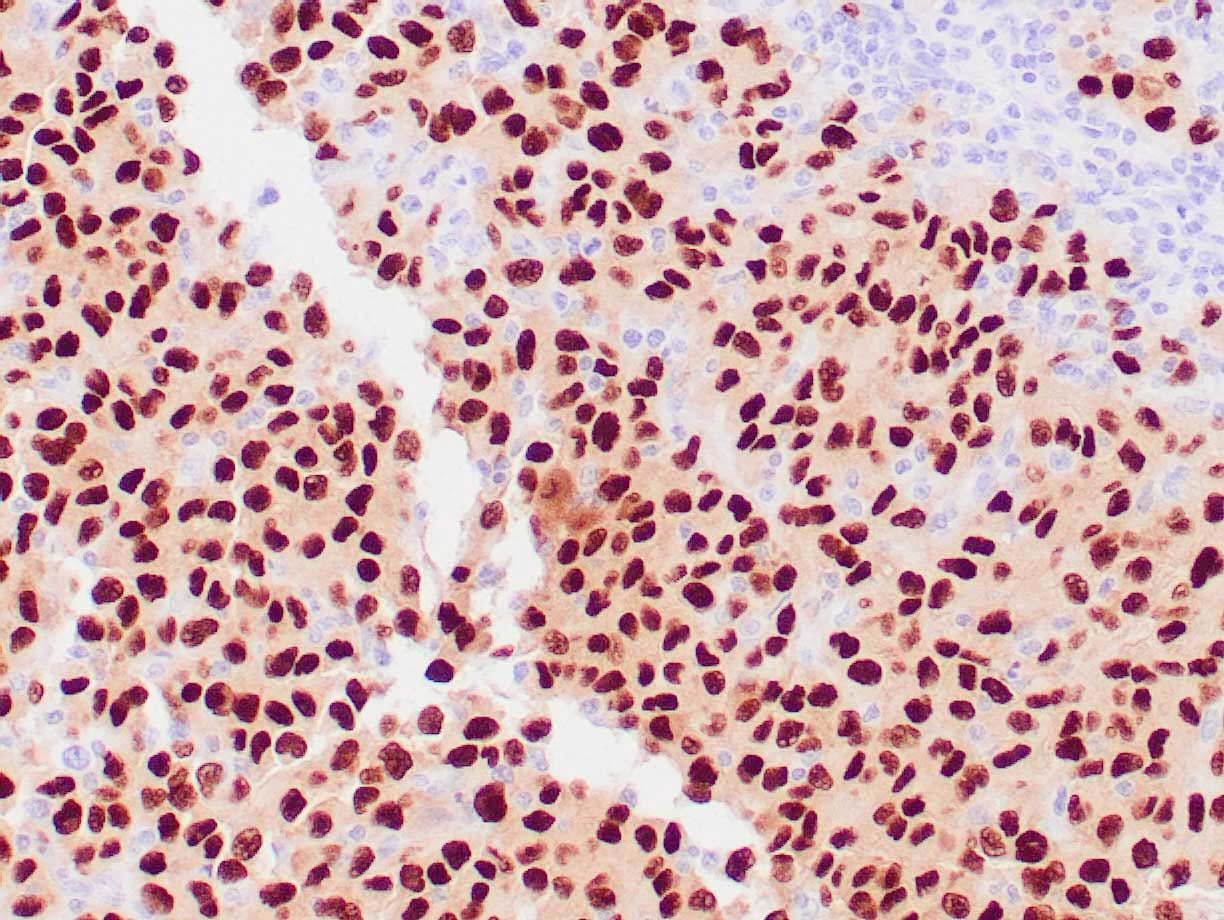 |
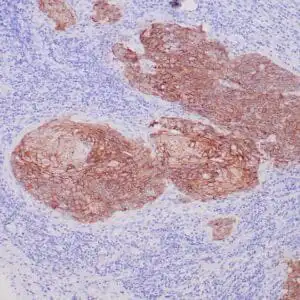
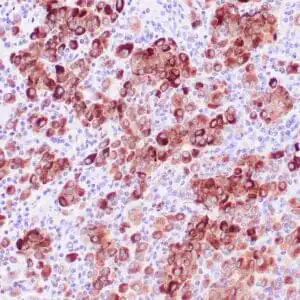
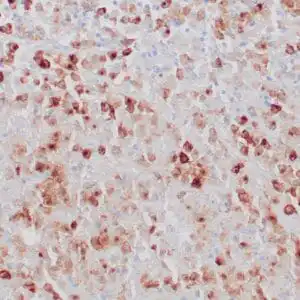
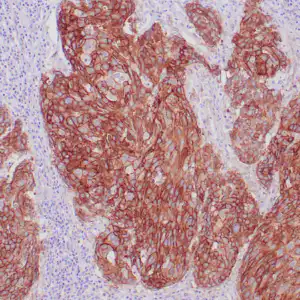
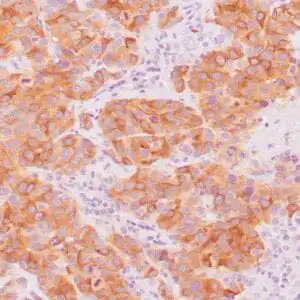
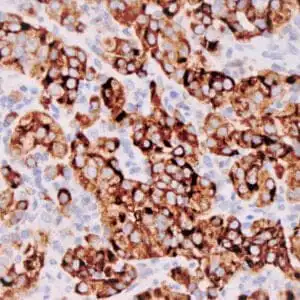
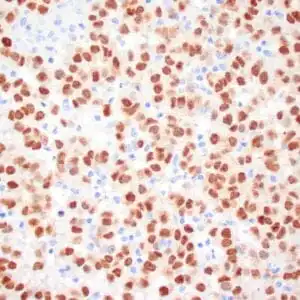
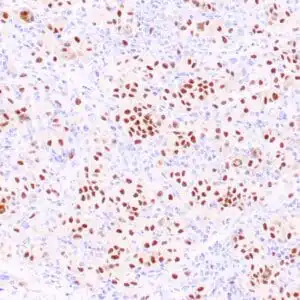
| Human malignant melanoma stained with anti-SOX-10 antibody using peroxidase-conjugate and DAB chromogen. Note the nuclear staining of tumor cells. |
FAQ & Publications
Frequently Asked Questions
What applications is the rabbit anti-SOX-10 monoclonal antibody (ZR275) validated for?
This antibody is validated for immunohistochemistry (IHC) on formalin-fixed, paraffin-embedded human tissue samples.
How should the rabbit anti-SOX-10 antibody be stored to maintain its stability?
For short-term storage, keep the antibody at 2-8°C; for longer-term storage, keep it at -20°C and avoid repeated freeze/thaw cycles.
What species does this SOX-10 antibody react with?
The rabbit anti-SOX-10 monoclonal antibody specifically reacts with human SOX-10 protein.
What is the recommended dilution for using the concentrated form of this antibody in IHC?
For immunohistochemistry applications, the concentrated antibody is recommended to be diluted between 1:100 and 1:200.
Can you provide information about the immunogen used to generate this rabbit anti-SOX-10 antibody?
The antibody was raised against a recombinant human SOX10 protein fragment corresponding to amino acids approximately 115 to 269.
Publications
| pmid | title | authors | citation |
|---|---|---|---|
| We haven't added any publications to our database yet. | |||
Published literature highly relevant to the biological target of this product and referencing this antibody or clone are retrieved from the PubMed database provided by the United States National Library of Medicine at the National Institutes of Health.
Protocols
| relevant to this product |
|---|
| IHC |
Documents
| Batch Number | QC File | SDS |
|---|---|---|
| To view batch-specific Safety Datasheets and Quality Certificates associated with your account, please Log In. | ||
Only logged in customers who have purchased this product may leave a review.
Reviews
There are no reviews yet.