| Weight | 1 lbs |
|---|---|
| Dimensions | 9 × 5 × 2 in |
| host | mouse |
| isotype | IgG |
| clonality | monoclonal |
| concentration | concentrate, predilute |
| applications | IHC |
| reactivity | human |
| available size | 0.1 mL, 0.5 mL, 1 mL concentrated, 7 mL prediluted |

rabbit anti-Desmoglein-3 monoclonal antibody (ZR128) 6159
Price range: $160.00 through $528.00
Antibody summary
- Rabbit monoclonal to Desmoglein-3
- Suitable for: Immunohistochemistry (formalin-fixed, paraffin-embedded tissues)
- Reacts with: Human
- Isotype:IgG
- Control: Squamous cell carcinoma
- Visualization: Membrane
- 0.1, 0.5, 1.0 mL concentrated, 7 mL prediluted
rabbit anti-Desmoglein-3 monoclonal antibody ZR128 6159
| target relevance |
|---|
| Homo sapiens DSC3 Desmocollin-3 |
| Protein names Desmocollin-3 |
| Alternative names Cadherin family member 3, Desmocollin-4, HT-CP |
| Gene names DSC3 |
| Function A component of desmosome cell-cell junctions which are required for positive regulation of cellular adhesion (By similarity). Required for cell-cell adhesion in the epidermis, as a result required for the maintenance of the dermal cohesion and the dermal barrier function (PubMed:19717567). Required for cell-cell adhesion of epithelial cell layers surrounding the telogen hair club, as a result plays an important role in telogen hair shaft anchorage (By similarity). Essential for successful completion of embryo compaction and embryo development (By similarity) |
| Subcellular location Cell membrane, Cell junction, desmosome, Cytoplasm |
| Structure May form homodimers (PubMed:19717567). Interacts with DSG1; there is evidence to suggest that the interaction promotes cell-cell adhesion of keratinocytes (PubMed:19717567) |
| Involvement in disease Hypotrichosis and recurrent skin vesicles A disorder characterized by hypotrichosis and the appearance of recurrent skin vesicle formation. Affected individuals show sparse and fragile hair on scalp, as well as absent eyebrows and eyelashes. Vesicles filled with thin, watery fluid are observed on the scalp and skin of most of the body. Mucosal vesicles are absent. |
| Keywords Alternative splicing, Calcium, Cell adhesion, Cell junction, Cell membrane, Cleavage on pair of basic residues, Cytoplasm, Direct protein sequencing, Glycoprotein, Hypotrichosis, Membrane, Metal-binding, Proteomics identification, Reference proteome, Repeat, Signal, Transmembrane, Transmembrane helix |
| Sequence MAAAGPRRSVRGAVCLHLLLTLVIFSRAGEACKKVILNVPSKLEADKIIGRVNLEECFRS ADLIRSSDPDFRVLNDGSVYTARAVALSDKKRSFTIWLSDKRKQTQKEVTVLLEHQKKVS KTRHTRETVLRRAKRRWAPIPCSMQENSLGPFPLFLQQVESDAAQNYTVFYSISGRGVDK EPLNLFYIERDTGNLFCTRPVDREEYDVFDLIAYASTADGYSADLPLPLPIRVEDENDNH PVFTEAIYNFEVLESSRPGTTVGVVCATDRDEPDTMHTRLKYSILQQTPRSPGLFSVHPS TGVITTVSHYLDREVVDKYSLIMKVQDMDGQFFGLIGTSTCIITVTDSNDNAPTFRQNAY EAFVEENAFNVEILRIPIEDKDLINTANWRVNFTILKGNENGHFKISTDKETNEGVLSVV KPLNYEENRQVNLEIGVNNEAPFARDIPRVTALNRALVTVHVRDLDEGPECTPAAQYVRI KENLAVGSKINGYKAYDPENRNGNGLRYKKLHDPKGWITIDEISGSIITSKILDREVETP KNELYNITVLAIDKDDRSCTGTLAVNIEDVNDNPPEILQEYVVICKPKMGYTDILAVDPD EPVHGAPFYFSLPNTSPEISRLWSLTKVNDTAARLSYQKNAGFQEYTIPITVKDRAGQAA TKLLRVNLCECTHPTQCRATSRSTGVILGKWAILAILLGIALLFSVLLTLVCGVFGATKG KRFPEDLAQQNLIISNTEAPGDDRVCSANGFMTQTTNNSSQGFCGTMGSGMKNGGQETIE MMKGGNQTLESCRGAGHHHTLDSCRGGHTEVDNCRYTYSEWHSFTQPRLGEKLHRCNQNE DRMPSQDYVLTYNYEGRGSPAGSVGCCSEKQEEDGLDFLNNLEPKFITLAEACTKR |
| UniProt accession: Q14574 |
Data
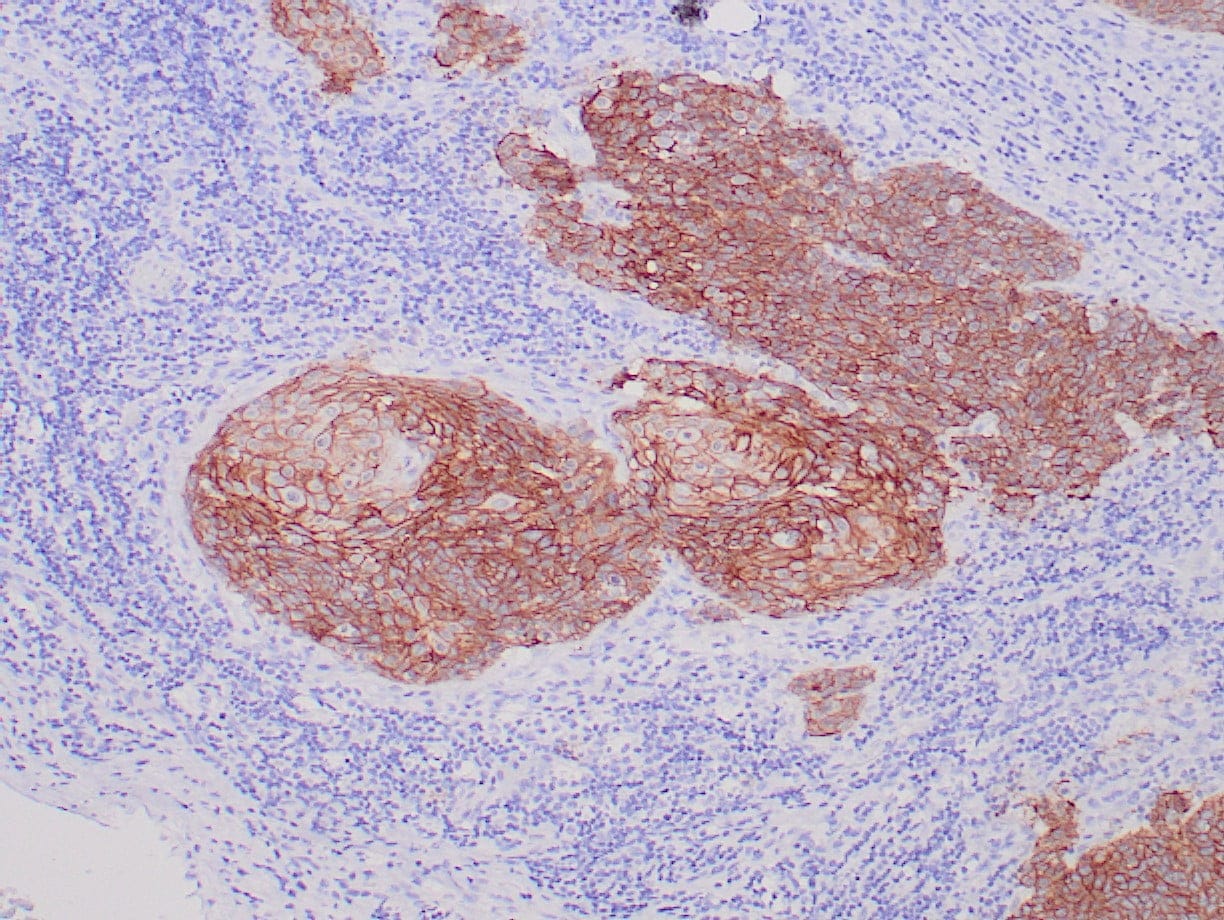 |
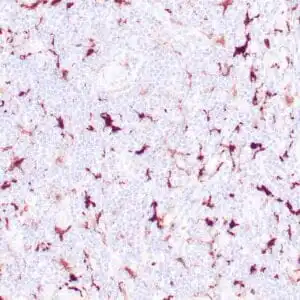
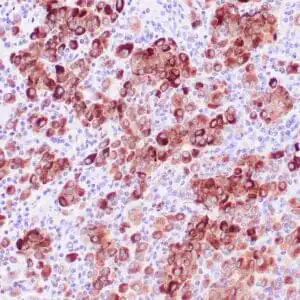
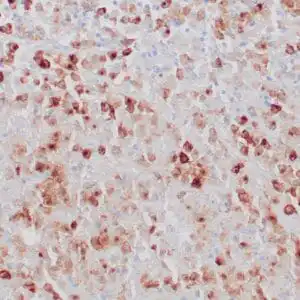
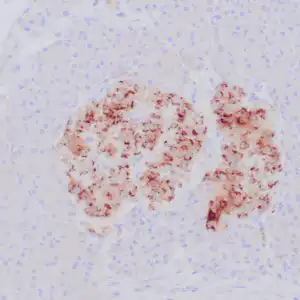
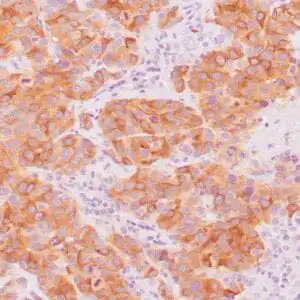
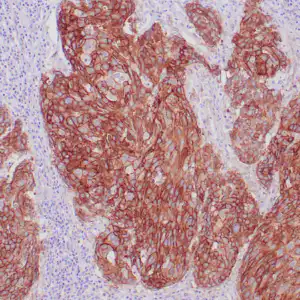
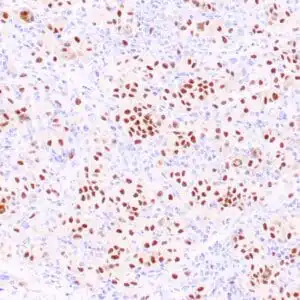
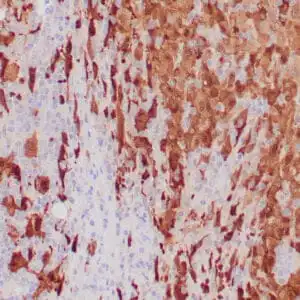
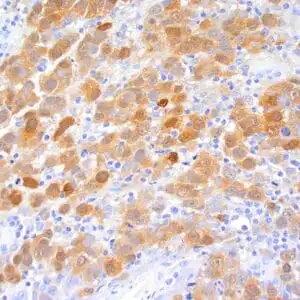
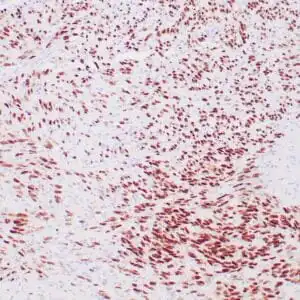
| Formalin-fixed, paraffin-embedded human squamous cell carcinoma stained with anti-desmoglein-3 monoclonal antibody using peroxidase-conjugate and DAB chromogen. Note membranous staining of tumor cells |
FAQ & Publications
Frequently Asked Questions
What is the recommended application for the rabbit anti-Desmoglein-3 monoclonal antibody (ZR128)?
This antibody is suitable for Immunohistochemistry (IHC) on formalin-fixed, paraffin-embedded human tissues.
How should the rabbit anti-Desmoglein-3 antibody be stored to maintain its stability?
For short-term storage, keep the antibody at 2-8°C. For longer-term storage, it should be stored at -20°C. Avoid repeated freeze/thaw cycles to preserve antibody integrity.
Which species is this anti-Desmoglein-3 monoclonal antibody reactive with?
The antibody specifically reacts with human Desmoglein-3 protein.
What is the host species and clonality of the anti-Desmoglein-3 antibody ZR128?
This antibody is a rabbit monoclonal antibody of the IgG isotype.
What immunogen was used to generate the rabbit anti-Desmoglein-3 monoclonal antibody?
The immunogen was a recombinant fragment of the human DSG3 protein, approximately amino acids 379 to 491.
Publications
| pmid | title | authors | citation |
|---|---|---|---|
| We haven't added any publications to our database yet. | |||
Published literature highly relevant to the biological target of this product and referencing this antibody or clone are retrieved from the PubMed database provided by the United States National Library of Medicine at the National Institutes of Health.
Protocols
| relevant to this product |
|---|
| IHC |
Documents
| Batch Number | QC File | SDS |
|---|---|---|
| To view batch-specific Safety Datasheets and Quality Certificates associated with your account, please Log In. | ||
Only logged in customers who have purchased this product may leave a review.
Reviews
There are no reviews yet.