| Weight | 1 lbs |
|---|---|
| Dimensions | 9 × 5 × 2 in |
| host | rabbit |
| isotype | IgG |
| clonality | polyclonal |
| concentration | 1 mg/mL |
| applications | ICC/IF, WB |
| reactivity | RAD17 |
| available sizes | 100 µg |

rabbit anti-RAD17 polyclonal antibody 3738
$376.00
Antibody summary
- Rabbit polyclonal to RAD17
- Suitable for: WB
- Isotype: Whole IgG
- 100 µg
rabbit anti-RAD17 polyclonal antibody 3738
| target relevance |
|---|
| Homo sapiens RAD17 Cell cycle checkpoint protein RAD17 |
| Protein names Cell cycle checkpoint protein RAD17 |
| Alternative names RF-C/activator 1 homolog |
| Gene names RAD17 |
| Protein family Belongs to the rad17/RAD24 family |
| Function Essential for sustained cell growth, maintenance of chromosomal stability, and ATR-dependent checkpoint activation upon DNA damage (PubMed:10208430, PubMed:11418864, PubMed:11687627, PubMed:11799063, PubMed:12672690, PubMed:14624239, PubMed:15235112). Has a weak ATPase activity required for binding to chromatin (PubMed:10208430, PubMed:11418864, PubMed:11687627, PubMed:11799063, PubMed:12672690, PubMed:14624239, PubMed:15235112). Participates in the recruitment of the 9-1-1 (RAD1-RAD9-HUS1) complex and RHNO1 onto chromatin, and in CHEK1 activation (PubMed:21659603). Involved in homologous recombination by mediating recruitment of the MRN complex to DNA damage sites (PubMed:24534091). May also serve as a sensor of DNA replication progression (PubMed:12578958, PubMed:14500819, PubMed:15538388) |
| Subcellular location Nucleus, Chromosome |
| Structure Part of a DNA-binding complex containing RFC2, RFC3, RFC4 and RFC5 (PubMed:10884395, PubMed:11572977, PubMed:11687627, PubMed:12400013, PubMed:14624239). Interacts with RAD1 and RAD9 within the 9-1-1 (RAD1-RAD9-HUS1) complex (PubMed:10884395, PubMed:11418864, PubMed:12578958, PubMed:36841485, PubMed:9660800). Interacts with RAD9B, POLE, SNU13 and MCM7 (PubMed:10593953, PubMed:14500819, PubMed:14611806, PubMed:15538388). DNA damage promotes interaction with ATR or ATM and disrupts interaction with the 9-1-1 (RAD1-RAD9-HUS1) complex (PubMed:10884395, PubMed:11418864, PubMed:12578958). Interacts (when phosphorylated) with NBN; promoting recruitment of the MRN complex to DNA damage sites (PubMed:24534091) |
| Post-translational modification Phosphorylation on Ser-646 and Ser-656 is cell cycle-regulated, enhanced by genotoxic stress, and required for activation of checkpoint signaling (PubMed:11418864, PubMed:14500819, PubMed:14871926). Phosphorylation is mediated by ATR upon UV or replication arrest, whereas it may be mediated both by ATR and ATM upon ionizing radiation (PubMed:11418864, PubMed:11799063). Phosphorylation on both sites is required for interaction with RAD1 but dispensable for interaction with RFC3 or RFC4 (PubMed:11687627). Phosphorylation at Thr-633 by ATM in response to DNA damage promotes interaction with NBN and recruitment of the MRN complex to DNA damage sites (PubMed:24534091) |
| Keywords 3D-structure, Alternative splicing, ATP-binding, Cell cycle, Chromosome, DNA damage, Nucleotide-binding, Nucleus, Phosphoprotein, Proteomics identification, Reference proteome |
| Sequence MSKTFLRPKVSSTKVTDWVDPSFDDFLECSGVSTITATSLGVNNSSHRRKNGPSTLESSR FPARKRGNLSSLEQIYGLENSKEYLSENEPWVDKYKPETQHELAVHKKKIEEVETWLKAQ VLERQPKQGGSILLITGPPGCGKTTTLKILSKEHGIQVQEWINPVLPDFQKDDFKGMFNT ESSFHMFPYQSQIAVFKEFLLRATKYNKLQMLGDDLRTDKKIILVEDLPNQFYRDSHTLH EVLRKYVRIGRCPLIFIISDSLSGDNNQRLLFPKEIQEECSISNISFNPVAPTIMMKFLN RIVTIEANKNGGKITVPDKTSLELLCQGCSGDIRSAINSLQFSSSKGENNLRPRKKGMSL KSDAVLSKSKRRKKPDRVFENQEVQAIGGKDVSLFLFRALGKILYCKRASLTELDSPRLP SHLSEYERDTLLVEPEEVVEMSHMPGDLFNLYLHQNYIDFFMEIDDIVRASEFLSFADIL SGDWNTRSLLREYSTSIATRGVMHSNKARGYAHCQGGGSSFRPLHKPQWFLINKKYRENC LAAKALFPDFCLPALCLQTQLLPYLALLTIPMRNQAQISFIQDIGRLPLKRHFGRLKMEA LTDREHGMIDPDSGDEAQLNGGHSAEESLGEPTQATVPETWSLPLSQNSASELPASQPQP FSAQGDMEENIIIEDYESDGT |
| UniProt accession: O75943 |
Data
| No results found |
FAQ & Publications
Frequently Asked Questions
What applications has the rabbit anti-RAD17 polyclonal antibody 3738 been validated for?
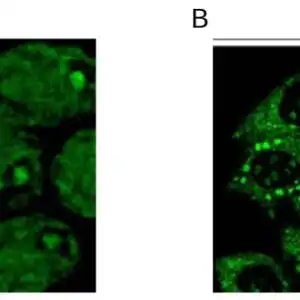
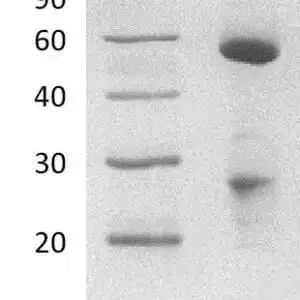
This antibody has been tested and validated for use in Western blot (WB) and immunocytochemistry/immunofluorescence (ICC/IF) applications.
How should the rabbit anti-RAD17 polyclonal antibody 3738 be stored to maintain stability?
The antibody should be stored at -20°C where it remains stable for at least one year. It is important to avoid multiple freeze-thaw cycles to preserve antibody integrity.
What is the immunogen used to generate the rabbit anti-RAD17 polyclonal antibody 3738?
The immunogen is a peptide corresponding to amino acids 2-15 of human RAD17 protein.
Publications
| pmid | title | authors | citation |
|---|---|---|---|
| We haven't added any publications to our database yet. | |||
Published literature highly relevant to the biological target of this product and referencing this antibody or clone are retrieved from the PubMed database provided by the United States National Library of Medicine at the National Institutes of Health.
Protocols
| relevant to this product |
|---|
| Western blot IHC ICC |
Documents
| Batch Number | QC File | SDS |
|---|---|---|
| To view batch-specific Safety Datasheets and Quality Certificates associated with your account, please Log In. | ||
Only logged in customers who have purchased this product may leave a review.


Reviews
There are no reviews yet.