| Weight | 1 lbs |
|---|---|
| Dimensions | 9 × 5 × 2 in |
| host | rabbit |
| isotype | IgG |
| clonality | polyclonal |
| concentration | 1 mg/mL |
| applications | ICC/IF, WB |
| reactivity | PTEN (Phospho-Ser370) |
| available sizes | 100 µL |

rabbit anti-PTEN (Phospho-Ser370) polyclonal antibody 2958
$366.00
Antibody summary
- Rabbit polyclonal to PTEN (Phospho-Ser370)
- Suitable for: WB,IHC,IF
- Isotype: Whole IgG
- 100 µl
rabbit anti-PTEN (Phospho-Ser370) polyclonal antibody 2958
| antibody |
|---|
| Tested applications WB,IHC,IHC,ICC/IF |
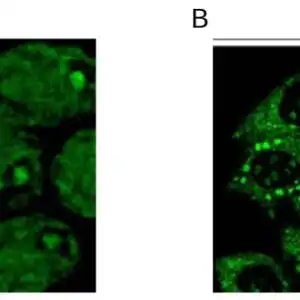
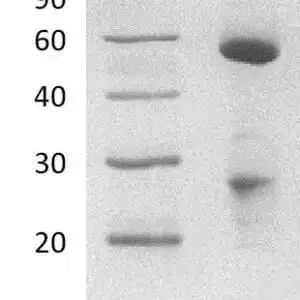
| Recommended dilutions Immunoblotting: use at dilution of 1:500-1:1,000. A band of ~54kDa is detected. Immunohistochemistry: use at dilution of 1:50-1:100. Immunofluorescence: use at dilution of 1:100-1:200. These are recommended working dilutions. End user should determine optimal dilution |
| Immunogen Peptide sequence that includes phosphorylation site of Serine 370 (D-V-S(p)-D-N) derived from human PTEN and conjugated to KLH. |
| Size and concentration 100µL and 1 mg/mL |
| Form liquid |
| Storage Instructions This antibody is stable for at least one (1) year at -20°C. |
| Storage buffer PBS (without Mg2 and Ca2 ), pH 7.4, 150mM NaCl, |
| Purity affinity purified |
| Clonality polyclonal |
| Isotype IgG |
| Compatible secondaries goat anti-rabbit IgG, H&L chain specific, peroxidase conjugated, conjugated polyclonal antibody 9512 goat anti-rabbit IgG, H&L chain specific, biotin conjugated polyclonal antibody 2079 goat anti-rabbit IgG, H&L chain specific, FITC conjugated polyclonal antibody 7863 goat anti-rabbit IgG, H&L chain specific, Cross Absorbed polyclonal antibody 2371 goat anti-rabbit IgG, H&L chain specific, biotin conjugated polyclonal antibody, crossabsorbed 1715 goat anti-rabbit IgG, H&L chain specific, FITC conjugated polyclonal antibody, crossabsorbed 1720 |
| Isotype control Rabbit polyclonal - Isotype Control |
| target relevance |
|---|
| Homo sapiens PTEN Phosphatidylinositol 3,4,5-trisphosphate 3-phosphatase and dual-specificity protein phosphatase PTEN |
| Protein names Phosphatidylinositol 3,4,5-trisphosphate 3-phosphatase and dual-specificity protein phosphatase PTEN |
| Alternative names Inositol polyphosphate 3-phosphatase, Mutated in multiple advanced cancers 1, Phosphatase and tensin homolog |
| Gene names PTEN |
| Protein family Belongs to the PTEN phosphatase protein family |
| Function Dual-specificity protein phosphatase, dephosphorylating tyrosine-, serine- and threonine-phosphorylated proteins (PubMed:9187108, PubMed:9256433, PubMed:9616126). Also functions as a lipid phosphatase, removing the phosphate in the D3 position of the inositol ring of PtdIns(3,4,5)P3/phosphatidylinositol 3,4,5-trisphosphate, PtdIns(3,4)P2/phosphatidylinositol 3,4-diphosphate and PtdIns3P/phosphatidylinositol 3-phosphate with a preference for PtdIns(3,4,5)P3 (PubMed:16824732, PubMed:26504226, PubMed:9593664, PubMed:9811831). Furthermore, this enzyme can also act as a cytosolic inositol 3-phosphatase acting on Ins(1,3,4,5,6)P5/inositol 1,3,4,5,6 pentakisphosphate and possibly Ins(1,3,4,5)P4/1D-myo-inositol 1,3,4,5-tetrakisphosphate (PubMed:11418101, PubMed:15979280). Antagonizes the PI3K-AKT/PKB signaling pathway by dephosphorylating phosphoinositides and thereby modulating cell cycle progression and cell survival (PubMed:31492966, PubMed:37279284). The unphosphorylated form cooperates with MAGI2 to suppress AKT1 activation (PubMed:11707428). In motile cells, suppresses the formation of lateral pseudopods and thereby promotes cell polarization and directed movement (PubMed:22279049). Dephosphorylates tyrosine-phosphorylated focal adhesion kinase and inhibits cell migration and integrin-mediated cell spreading and focal adhesion formation (PubMed:22279049). Required for growth factor-induced epithelial cell migration; growth factor stimulation induces PTEN phosphorylation which changes its binding preference from the p85 regulatory subunit of the PI3K kinase complex to DLC1 and results in translocation of the PTEN-DLC1 complex to the posterior of migrating cells to promote RHOA activation (PubMed:26166433). Meanwhile, TNS3 switches binding preference from DLC1 to p85 and the TNS3-p85 complex translocates to the leading edge of migrating cells to activate RAC1 activation (PubMed:26166433). Plays a role as a key modulator of the AKT-mTOR signaling pathway controlling the tempo of the process of newborn neurons integration during adult neurogenesis, including correct neuron positioning, dendritic development and synapse formation (By similarity). Involved in the regulation of synaptic function in excitatory hippocampal synapses. Recruited to the postsynaptic membrane upon NMDA receptor activation, is required for the modulation of synaptic activity during plasticity. Enhancement of lipid phosphatase activity is able to drive depression of AMPA receptor-mediated synaptic responses, activity required for NMDA receptor-dependent long-term depression (LTD) (By similarity). May be a negative regulator of insulin signaling and glucose metabolism in adipose tissue. The nuclear monoubiquitinated form possesses greater apoptotic potential, whereas the cytoplasmic nonubiquitinated form induces less tumor suppressive ability (PubMed:10468583, PubMed:18716620) |
| Catalytic activity a 1,2-diacyl-sn-glycero-3-phospho-(1D-myo-inositol-3,4,5-trisphosphate) + H2O = a 1,2-diacyl-sn-glycero-3-phospho-(1D-myo-inositol-4,5-bisphosphate) + phosphate O-phospho-L-seryl-[protein] + H2O = L-seryl-[protein] + phosphate O-phospho-L-threonyl-[protein] + H2O = L-threonyl-[protein] + phosphate O-phospho-L-tyrosyl-[protein] + H2O = L-tyrosyl-[protein] + phosphate 1,2-dioctanoyl-sn-glycero-3-phospho-(1D-myo-inositol-3,4,5-trisphosphate) + H2O = 1,2-dioctanoyl-sn-glycero-3-phospho-(1D-myo-inositol-4,5-bisphosphate) + phosphate 1,2-dihexadecanoyl-sn-glycero-3-phospho-(1D-myo-inositol-3,4,5-trisphosphate) + H2O = 1,2-dihexadecanoyl-sn-glycero-3-phospho-(1D-myo-inositol-4,5-bisphosphate) + phosphate 1D-myo-inositol 1,3,4,5,6-pentakisphosphate + H2O = 1D-myo-inositol 1,4,5,6-tetrakisphosphate + phosphate 1D-myo-inositol 1,3,4,5-tetrakisphosphate + H2O = 1D-myo-inositol 1,4,5-trisphosphate + phosphate |
| Subcellular location Secreted |
| Structure Monomer. The unphosphorylated form interacts with the second PDZ domain of MAGI2 and with DLG1 and MAST2 in vitro (PubMed:10646847, PubMed:10760291, PubMed:11707428). Interacts with MAGI2, MAGI3, MAST1 and MAST3, but neither with MAST4 nor with DLG5; interaction with MAGI2 increases protein stability (PubMed:10748157, PubMed:15951562). Interacts with NEDD4 (PubMed:17218260). Interacts with NDFIP1 and NDFIP2; in the presence of NEDD4 or ITCH, this interaction promotes PTEN ubiquitination (PubMed:20534535, PubMed:25801959). Interacts (via C2 domain) with FRK (PubMed:19345329). Interacts with USP7; the interaction is direct (PubMed:18716620). Interacts with ROCK1 (By similarity). Interacts with XIAP/BIRC4 (PubMed:19473982). Interacts with STK11; the interaction phosphorylates PTEN (PubMed:15987703). Interacts with PPP1R16B (PubMed:25007873). Interacts with NOP53; regulates PTEN phosphorylation and increases its stability (PubMed:15355975). Interacts (via PDZ domain-binding motif) with DLG4; the interaction is induced by NMDA and is required for PTEN location at postsynaptic density (By similarity). Interacts with the regulatory p85 subunit of the PI3K kinase complex and with Rho GTPase-activating protein DLC1; in resting cells, interacts (via C2 tensin-type domain) with p85 but, following growth factor stimulation, PTEN is phosphorylated which leads to weakened interaction with p85 and enhanced interaction (via C2 tensin-type domain) with DLC1 while p85 interaction with TNS3 increases (PubMed:26166433) |
| Post-translational modification Constitutively phosphorylated by CK2 under normal conditions. Phosphorylated in vitro by MAST1, MAST2, MAST3 and STK11. Phosphorylation results in an inhibited activity towards PIP3. Phosphorylation can both inhibit or promote PDZ-binding. Phosphorylation at Tyr-336 by FRK/PTK5 protects this protein from ubiquitin-mediated degradation probably by inhibiting its binding to NEDD4. Phosphorylation by ROCK1 is essential for its stability and activity. Phosphorylation by PLK3 promotes its stability and prevents its degradation by the proteasome. Phosphorylated on Thr-319 and Thr-321 in the C2-type tensin domain following EGF stimulation which changes its binding preference from the p85 regulatory subunit of the PI3K kinase complex to DLC1 (PubMed:26166433) Monoubiquitinated; monoubiquitination is increased in presence of retinoic acid. Deubiquitinated by USP7; leading to its nuclear exclusion. Monoubiquitination of one of either Lys-13 and Lys-289 amino acid is sufficient to modulate PTEN compartmentalization. Ubiquitinated by XIAP/BIRC4 Ubiquitinated by the DCX(DCAF13) E3 ubiquitin ligase complex, leading to its degradation ISGylated. ISGylation promotes PTEN degradation |
| Involvement in disease Cowden syndrome 1 An autosomal dominant hamartomatous polyposis syndrome with age-related penetrance. Cowden syndrome is characterized by hamartomatous lesions affecting derivatives of ectodermal, mesodermal and endodermal layers, macrocephaly, facial trichilemmomas (benign tumors of the hair follicle infundibulum), acral keratoses, papillomatous papules, and elevated risk for development of several types of malignancy, particularly breast carcinoma in women and thyroid carcinoma in both men and women. Colon cancer and renal cell carcinoma have also been reported. Hamartomas can be found in virtually every organ, but most commonly in the skin, gastrointestinal tract, breast and thyroid. Lhermitte-Duclos disease A rare disease characterized by the occurrence of a slowly enlarging mass within the cerebellar cortex corresponding histologically to a cerebellar hamartoma. It manifests, most commonly in the third and fourth decades of life, with increased intracranial pressure, headache, nausea, cerebellar dysfunction, occlusive hydrocephalus, ataxia, visual disturbances and other cranial nerve palsies. Various associated abnormalities may be present such as megalencephaly, microgyria, hydromyelia, polydactyly, partial gigantism, macroglossia. LDD is part of the PTEN hamartoma tumor syndromes spectrum that also includes Cowden syndrome. Squamous cell carcinoma of the head and neck A non-melanoma skin cancer affecting the head and neck. The hallmark of cutaneous SCC is malignant transformation of normal epidermal keratinocytes. Endometrial cancer A malignancy of endometrium, the mucous lining of the uterus. Most endometrial cancers are adenocarcinomas, cancers that begin in cells that make and release mucus and other fluids. Glioma 2 Gliomas are benign or malignant central nervous system neoplasms derived from glial cells. They comprise astrocytomas and glioblastoma multiforme that are derived from astrocytes, oligodendrogliomas derived from oligodendrocytes and ependymomas derived from ependymocytes. Prostate cancer A malignancy originating in tissues of the prostate. Most prostate cancers are adenocarcinomas that develop in the acini of the prostatic ducts. Other rare histopathologic types of prostate cancer that occur in approximately 5% of patients include small cell carcinoma, mucinous carcinoma, prostatic ductal carcinoma, transitional cell carcinoma, squamous cell carcinoma, basal cell carcinoma, adenoid cystic carcinoma (basaloid), signet-ring cell carcinoma and neuroendocrine carcinoma. Macrocephaly/autism syndrome Patients have autism spectrum disorders and macrocephaly, with head circumferences ranging from +2.5 to +8 SD for age and sex (average head circumference +4.0 SD). |
| Keywords 3D-structure, Acetylation, Alternative initiation, Alternative splicing, Apoptosis, Autism spectrum disorder, Cell projection, Cytoplasm, Disease variant, Hydrolase, Isopeptide bond, Lipid metabolism, Lipid-binding, Neurogenesis, Nucleus, Phosphoprotein, Protein phosphatase, Proteomics identification, Reference proteome, Secreted, Synapse, Tumor suppressor, Ubl conjugation |
| Sequence MTAIIKEIVSRNKRRYQEDGFDLDLTYIYPNIIAMGFPAERLEGVYRNNIDDVVRFLDSK HKNHYKIYNLCAERHYDTAKFNCRVAQYPFEDHNPPQLELIKPFCEDLDQWLSEDDNHVA AIHCKAGKGRTGVMICAYLLHRGKFLKAQEALDFYGEVRTRDKKGVTIPSQRRYVYYYSY LLKNHLDYRPVALLFHKMMFETIPMFSGGTCNPQFVVCQLKVKIYSSNSGPTRREDKFMY FEFPQPLPVCGDIKVEFFHKQNKMLKKDKMFHFWVNTFFIPGPEETSEKVENGSLCDQEI DSICSIERADNDKEYLVLTLTKNDLDKANKDKANRYFSPNFKVKLYFTKTVEEPSNPEAS SSTSVTPDVSDNEPDHYRYSDTTDSDPENEPFDEDQHTQITKV |
| UniProt accession: P60484 |
Data
| No results found |
FAQ & Publications
Frequently Asked Questions
What are the recommended dilution ranges for using the rabbit anti-PTEN (Phospho-Ser370) polyclonal antibody in Western blot, immunohistochemistry, and immunofluorescence?
For Western blot, use at a dilution of 1:500 to 1:1,000. For immunohistochemistry, use at 1:50 to 1:100. For immunofluorescence, use at 1:100 to 1:200. These are recommended working dilutions, but the optimal dilution should be determined by the end user.
How should the rabbit anti-PTEN (Phospho-Ser370) polyclonal antibody be stored to maintain stability?
This antibody should be stored at -20°C, where it remains stable for at least one year. It is supplied in a PBS buffer without magnesium and calcium ions, at pH 7.4, containing 150 mM NaCl.
Publications
| pmid | title | authors | citation |
|---|---|---|---|
| We haven't added any publications to our database yet. | |||
Published literature highly relevant to the biological target of this product and referencing this antibody or clone are retrieved from the PubMed database provided by the United States National Library of Medicine at the National Institutes of Health.
Protocols
| relevant to this product |
|---|
| Western blot IHC ICC |
Documents
| Batch Number | QC File | SDS |
|---|---|---|
| To view batch-specific Safety Datasheets and Quality Certificates associated with your account, please Log In. | ||
Only logged in customers who have purchased this product may leave a review.


Reviews
There are no reviews yet.