| Weight | 1 lbs |
|---|---|
| Dimensions | 9 × 5 × 2 in |
| host | rabbit |
| isotype | IgG |
| clonality | polyclonal |
| concentration | 1 mg/mL |
| applications | ICC/IF, WB |
| reactivity | PID/MTA2 |
| available sizes | 100 µg |


rabbit anti-PID/MTA2 polyclonal antibody 6449
$445.00
Antibody summary
- Rabbit polyclonal to PID/MTA2
- Suitable for: ELISA,WB,ICC,IF,IHC-P
- Isotype: Whole IgG
- 100 µg
rabbit anti-PID/MTA2 polyclonal antibody 6449
| antibody |
|---|
| Tested applications WB,IHC,IHC,ICC/IF,ELISA |
| Recommended dilutions Immunoblotting: use at 0.5-1 ug/mL. In immunoblots, a band of 75 kD is detected. Positive control: HeLa cell lysate. |
| Immunogen Peptide corresponding to aa 652-668 of human PID/MTA2. This sequence differs from that of mouse by one amino acid. |
| Size and concentration 100µg and lot specific |
| Form liquid |
| Storage Instructions This antibody is stable for at least one (1) year at -20°C. Avoid multiple freeze- thaw cycles. |
| Storage buffer PBS, pH 7.4. |
| Purity peptide affinity purification |
| Clonality polyclonal |
| Isotype IgG |
| Compatible secondaries goat anti-rabbit IgG, H&L chain specific, peroxidase conjugated, conjugated polyclonal antibody 9512 goat anti-rabbit IgG, H&L chain specific, biotin conjugated polyclonal antibody 2079 goat anti-rabbit IgG, H&L chain specific, FITC conjugated polyclonal antibody 7863 goat anti-rabbit IgG, H&L chain specific, Cross Absorbed polyclonal antibody 2371 goat anti-rabbit IgG, H&L chain specific, biotin conjugated polyclonal antibody, crossabsorbed 1715 goat anti-rabbit IgG, H&L chain specific, FITC conjugated polyclonal antibody, crossabsorbed 1720 |
| Isotype control Rabbit polyclonal - Isotype Control |
| target relevance |
|---|
| Homo sapiens MTA2 Metastasis-associated protein MTA2 |
| Protein names Metastasis-associated protein MTA2 |
| Alternative names Metastasis-associated 1-like 1, p53 target protein in deacetylase complex |
| Gene names MTA2 |
| Protein family Belongs to the metastasis-associated protein family |
| Function May function as a transcriptional coregulator (PubMed:16428440, PubMed:28977666). Acts as a component of the histone deacetylase NuRD complex which participates in the remodeling of chromatin (PubMed:16428440, PubMed:28977666) |
| Subcellular location Nucleus |
| Structure Component of the nucleosome remodeling and deacetylase (NuRD) repressor complex, composed of core proteins MTA1, MTA2, MTA3, RBBP4, RBBP7, HDAC1, HDAC2, MBD2, MBD3, and peripherally associated proteins CDK2AP1, CDK2AP2, GATAD2A, GATAD2B, CHD3, CHD4 and CHD5 (PubMed:16428440, PubMed:28977666, PubMed:33283408). The exact stoichiometry of the NuRD complex is unknown, and some subunits such as MBD2 and MBD3, GATAD2A and GATAD2B, and CHD3, CHD4 and CHD5 define mutually exclusive NuRD complexes (PubMed:16428440, PubMed:28977666, PubMed:33283408). Interacts with CHD3 (PubMed:28977666). Interacts with CHD4 (PubMed:28977666). Interacts with GATAD2A (PubMed:33283408). Interacts with HDAC7 (By similarity). Interacts with MBD3 (By similarity). Interacts with p53/TP53 (PubMed:11099047). Interacts with MINT (PubMed:11331609). Interacts with PIMREG (PubMed:18757745). Interacts with NACC2 (PubMed:22926524). Interacts with ERCC6 (PubMed:26030138). Interacts with PWWP2B (By similarity). Interacts with transcription factor BCL11A (PubMed:39423807) |
| Keywords Acetylation, Alternative splicing, DNA-binding, Isopeptide bond, Metal-binding, Nucleus, Phosphoprotein, Proteomics identification, Reference proteome, Ubl conjugation, Zinc, Zinc-finger |
| Sequence MAANMYRVGDYVYFENSSSNPYLVRRIEELNKTANGNVEAKVVCLFRRRDISSSLNSLAD SNAREFEEESKQPGVSEQQRHQLKHRELFLSRQFESLPATHIRGKCSVTLLNETDILSQY LEKEDCFFYSLVFDPVQKTLLADQGEIRVGCKYQAEIPDRLVEGESDNRNQQKMEMKVWD PDNPLTDRQIDQFLVVARAVGTFARALDCSSSIRQPSLHMSAAAASRDITLFHAMDTLQR NGYDLAKAMSTLVPQGGPVLCRDEMEEWSASEAMLFEEALEKYGKDFNDIRQDFLPWKSL ASIVQFYYMWKTTDRYIQQKRLKAAEADSKLKQVYIPTYTKPNPNQIISVGSKPGMNGAG FQKGLTCESCHTTQSAQWYAWGPPNMQCRLCASCWIYWKKYGGLKTPTQLEGATRGTTEP HSRGHLSRPEAQSLSPYTTSANRAKLLAKNRQTFLLQTTKLTRLARRMCRDLLQPRRAAR RPYAPINANAIKAECSIRLPKAAKTPLKIHPLVRLPLATIVKDLVAQAPLKPKTPRGTKT PINRNQLSQNRGLGGIMVKRAYETMAGAGVPFSANGRPLASGIRSSSQPAAKRQKLNPAD APNPVVFVATKDTRALRKALTHLEMRRAARRPNLPLKVKPTLIAVRPPVPLPAPSHPAST NEPIVLED |
| UniProt accession: O94776 |
Data
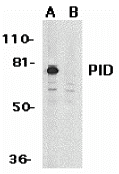 |
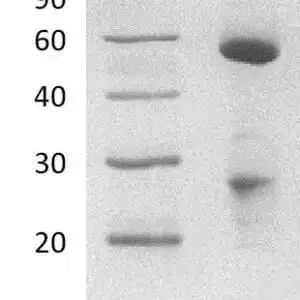
| Western blot analysis of PID expression in HeLa whole cell lysates in the absence (A) or presence (B) of blocking peptide with PID antibody at 1 µg/mL. |
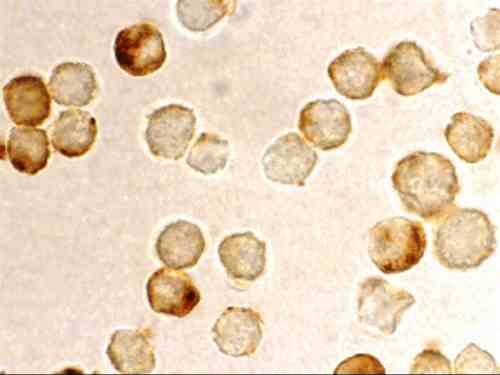 |
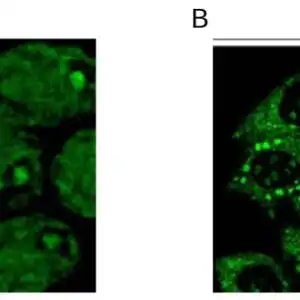
| Immunocytochemistry staining of HeLa using PID antibody at 10 µg/mL. |
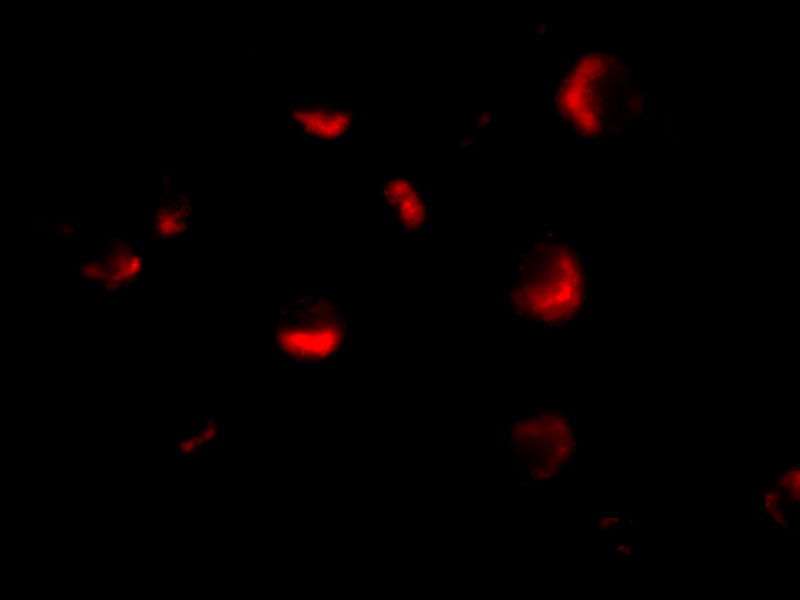 |
| Immunofluorescence of PID in HeLa cells with PID antibody at 10 µg/mL. |
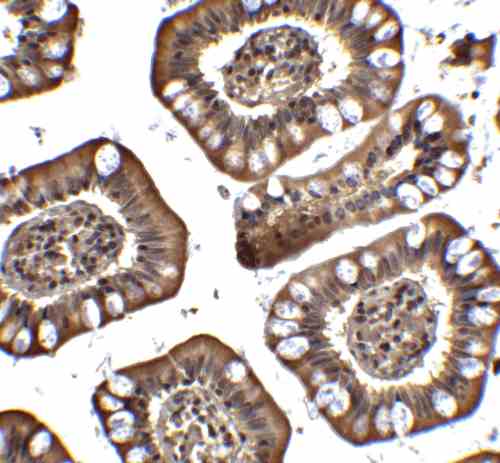 |
| Immunohistochemistry of PID in human small intestine tissue with PID antibody at 2.5 µg/mL. |
FAQ & Publications
Frequently Asked Questions
What applications has the rabbit anti-PID/MTA2 polyclonal antibody 6449 been validated for?
This antibody has been tested and is suitable for Western blot (WB), immunohistochemistry (IHC), immunocytochemistry/immunofluorescence (ICC/IF), and ELISA applications.
How should I store the rabbit anti-PID/MTA2 polyclonal antibody to ensure stability?
The antibody is stable for at least one year when stored at -20°C. It is recommended to avoid multiple freeze-thaw cycles to maintain antibody integrity.
What is the recommended dilution for immunoblotting using this antibody, and what size band should be expected?
For immunoblotting, use at 0.5 to 1 µg/mL concentration. A specific protein band of approximately 75 kDa should be detected.
What is the immunogen used to generate the rabbit anti-PID/MTA2 polyclonal antibody 6449?
The antibody was raised against a peptide corresponding to amino acids 652-668 of human PID/MTA2, which differs from the mouse sequence by one amino acid.
Publications
| pmid | title | authors | citation |
|---|---|---|---|
| We haven't added any publications to our database yet. | |||
Published literature highly relevant to the biological target of this product and referencing this antibody or clone are retrieved from the PubMed database provided by the United States National Library of Medicine at the National Institutes of Health.
Protocols
| relevant to this product |
|---|
| Western blot IHC ICC |
Documents
| Batch Number | QC File | SDS |
|---|---|---|
| To view batch-specific Safety Datasheets and Quality Certificates associated with your account, please Log In. | ||
Only logged in customers who have purchased this product may leave a review.


Reviews
There are no reviews yet.