| Weight | 1 lbs |
|---|---|
| Dimensions | 9 × 5 × 2 in |
| host | rabbit |
| isotype | IgG |
| clonality | polyclonal |
| concentration | 1 mg/mL |
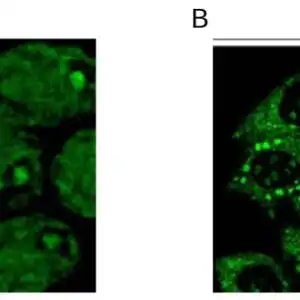
| applications | ICC/IF, WB |
| reactivity | NFkB-p65 (Phospho-Thr435) |
| available sizes | 100 µL |

rabbit anti-NFkB-p65 (Phospho-Thr435) polyclonal antibody 4782
$366.00
Antibody summary
- Rabbit polyclonal to NFkB-p65 (Phospho-Thr435)
- Suitable for: WB,IHC,IF
- Isotype: Whole IgG
- 100 µl
rabbit anti-NFkB-p65 (Phospho-Thr435) polyclonal antibody 4782
| antibody |
|---|
| Tested applications WB,IHC,IHC,ICC/IF |
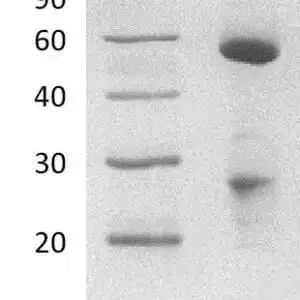
| Recommended dilutions Western blotting: use at dilution of 1:500-1:1,000. A band of ~65kDa is detected. Immunohistochemistry: use at dilution of 1:50-1:100. Immunofluorescence: use at dilution of 1:100-1:200. These are recommended working dilutions. End user should determine optimal diluti |
| Immunogen Peptide sequence that includes phosphorylation site of threonine 435 (E-G-T(p)-L-S) derived from human NFkappaB-p65 and conjugated to KLH. |
| Size and concentration 100µL and 1 mg/mL |
| Form liquid |
| Storage Instructions This antibody is stable for at least one (1) year at -20°C. |
| Storage buffer PBS (without Mg2 and Ca2 ), pH 7.4, 150mM NaCl, |
| Purity affinity purified |
| Clonality polyclonal |
| Isotype IgG |
| Compatible secondaries goat anti-rabbit IgG, H&L chain specific, peroxidase conjugated, conjugated polyclonal antibody 9512 goat anti-rabbit IgG, H&L chain specific, biotin conjugated polyclonal antibody 2079 goat anti-rabbit IgG, H&L chain specific, FITC conjugated polyclonal antibody 7863 goat anti-rabbit IgG, H&L chain specific, Cross Absorbed polyclonal antibody 2371 goat anti-rabbit IgG, H&L chain specific, biotin conjugated polyclonal antibody, crossabsorbed 1715 goat anti-rabbit IgG, H&L chain specific, FITC conjugated polyclonal antibody, crossabsorbed 1720 |
| Isotype control Rabbit polyclonal - Isotype Control |
| target relevance |
|---|
| Homo sapiens RELA Transcription factor p65 |
| Protein names Transcription factor p65 |
| Alternative names Nuclear factor NF-kappa-B p65 subunit, Nuclear factor of kappa light polypeptide gene enhancer in B-cells 3 |
| Gene names RELA |
| Function NF-kappa-B is a pleiotropic transcription factor present in almost all cell types and is the endpoint of a series of signal transduction events that are initiated by a vast array of stimuli related to many biological processes such as inflammation, immunity, differentiation, cell growth, tumorigenesis and apoptosis. NF-kappa-B is a homo- or heterodimeric complex formed by the Rel-like domain-containing proteins RELA/p65, RELB, NFKB1/p105, NFKB1/p50, REL and NFKB2/p52. The heterodimeric RELA-NFKB1 complex appears to be most abundant one. The dimers bind at kappa-B sites in the DNA of their target genes and the individual dimers have distinct preferences for different kappa-B sites that they can bind with distinguishable affinity and specificity. Different dimer combinations act as transcriptional activators or repressors, respectively. The NF-kappa-B heterodimeric RELA-NFKB1 and RELA-REL complexes, for instance, function as transcriptional activators. NF-kappa-B is controlled by various mechanisms of post-translational modification and subcellular compartmentalization as well as by interactions with other cofactors or corepressors. NF-kappa-B complexes are held in the cytoplasm in an inactive state complexed with members of the NF-kappa-B inhibitor (I-kappa-B) family. In a conventional activation pathway, I-kappa-B is phosphorylated by I-kappa-B kinases (IKKs) in response to different activators, subsequently degraded thus liberating the active NF-kappa-B complex which translocates to the nucleus. The inhibitory effect of I-kappa-B on NF-kappa-B through retention in the cytoplasm is exerted primarily through the interaction with RELA. RELA shows a weak DNA-binding site which could contribute directly to DNA binding in the NF-kappa-B complex. Besides its activity as a direct transcriptional activator, it is also able to modulate promoters accessibility to transcription factors and thereby indirectly regulate gene expression. Associates with chromatin at the NF-kappa-B promoter region via association with DDX1. Essential for cytokine gene expression in T-cells (PubMed:15790681). The NF-kappa-B homodimeric RELA-RELA complex appears to be involved in invasin-mediated activation of IL-8 expression. Key transcription factor regulating the IFN response during SARS-CoV-2 infection (PubMed:33440148) |
| Subcellular location Nucleus, Cytoplasm |
| Structure (Microbial infection) Interacts with human cytomegalovirus protein UL44; this interaction prevents NF-kappa-B binding to its promoters |
| Post-translational modification Ubiquitinated by RNF182, leading to its proteasomal degradation (PubMed:31432514). Degradation is required for termination of NF-kappa-B response. Polyubiquitinated via 'Lys-29'-linked ubiquitin; leading to lysosomal degradation (PubMed:21518757) Monomethylated at Lys-310 by SETD6 (PubMed:21515635). Monomethylation at Lys-310 is recognized by the ANK repeats of EHMT1 and promotes the formation of repressed chromatin at target genes, leading to down-regulation of NF-kappa-B transcription factor activity. Phosphorylation at Ser-311 disrupts the interaction with EHMT1 without preventing monomethylation at Lys-310 and relieves the repression of target genes (By similarity) Phosphorylation at Ser-311 disrupts the interaction with EHMT1 and promotes transcription factor activity (By similarity). Phosphorylation on Ser-536 stimulates acetylation on Lys-310 and interaction with CBP; the phosphorylated and acetylated forms show enhanced transcriptional activity. Phosphorylation at Ser-276 by RPS6KA4 and RPS6KA5 promotes its transactivation and transcriptional activities Phosphorylation at Ser-75 by herpes simplex virus 1/HHV-1 inhibits NF-kappa-B activation Reversibly acetylated; the acetylation seems to be mediated by CBP, the deacetylation by HDAC3 and SIRT2. Acetylation at Lys-122 enhances DNA binding and impairs association with NFKBIA. Acetylation at Lys-310 is required for full transcriptional activity in the absence of effects on DNA binding and NFKBIA association. Acetylation at Lys-310 promotes interaction with BRD4. Acetylation can also lower DNA-binding and results in nuclear export. Interaction with BRMS1 promotes deacetylation of Lys-310. Lys-310 is deacetylated by SIRT2 S-nitrosylation of Cys-38 inactivates the enzyme activity Sulfhydration at Cys-38 mediates the anti-apoptotic activity by promoting the interaction with RPS3 and activating the transcription factor activity Sumoylation by PIAS3 negatively regulates DNA-bound activated NF-kappa-B Proteolytically cleaved within a conserved N-terminus region required for base-specific contact with DNA in a CPEN1-mediated manner, and hence inhibits NF-kappa-B transcriptional activity (PubMed:18212740) Ubiquitinated by the SCF-FBXO16 E3 ubiquitin ligase, leading to proteasomal degradation |
| Involvement in disease Autoinflammatory disease, familial, Behcet-like 3 An autosomal dominant, mucocutaneous disease characterized by chronic mucosal lesions, in absence of recurrent infections. |
| Keywords 3D-structure, Acetylation, Activator, Alternative splicing, Chromosomal rearrangement, Cytoplasm, Disease variant, DNA-binding, Host-virus interaction, Isopeptide bond, Methylation, Nucleus, Phosphoprotein, Proteomics identification, Reference proteome, S-nitrosylation, Transcription, Transcription regulation, Ubl conjugation |
| Sequence MDELFPLIFPAEPAQASGPYVEIIEQPKQRGMRFRYKCEGRSAGSIPGERSTDTTKTHPT IKINGYTGPGTVRISLVTKDPPHRPHPHELVGKDCRDGFYEAELCPDRCIHSFQNLGIQC VKKRDLEQAISQRIQTNNNPFQVPIEEQRGDYDLNAVRLCFQVTVRDPSGRPLRLPPVLS HPIFDNRAPNTAELKICRVNRNSGSCLGGDEIFLLCDKVQKEDIEVYFTGPGWEARGSFS QADVHRQVAIVFRTPPYADPSLQAPVRVSMQLRRPSDRELSEPMEFQYLPDTDDRHRIEE KRKRTYETFKSIMKKSPFSGPTDPRPPPRRIAVPSRSSASVPKPAPQPYPFTSSLSTINY DEFPTMVFPSGQISQASALAPAPPQVLPQAPAPAPAPAMVSALAQAPAPVPVLAPGPPQA VAPPAPKPTQAGEGTLSEALLQLQFDDEDLGALLGNSTDPAVFTDLASVDNSEFQQLLNQ GIPVAPHTTEPMLMEYPEAITRLVTGAQRPPDPAPAPLGAPGLPNGLLSGDEDFSSIADM DFSALLSQISS |
| UniProt accession: Q04206 |
Data
| No results found |
FAQ & Publications
Frequently Asked Questions
What are the recommended dilutions for using the rabbit anti-NFkB-p65 (Phospho-Thr435) antibody in different applications?
For Western blotting, a dilution of 1:500 to 1:1,000 is recommended, detecting a band of approximately 65 kDa. For immunohistochemistry, use a dilution of 1:50 to 1:100. For immunofluorescence, the suggested dilution is 1:100 to 1:200. These are starting points, and optimal dilutions should be determined by the end user.
How should the rabbit anti-NFkB-p65 (Phospho-Thr435) polyclonal antibody be stored to maintain stability?
This antibody should be stored at -20°C, where it remains stable for at least one year. It is provided in a liquid form with a storage buffer of PBS (without Mg2+ and Ca2+), pH 7.4, containing 150 mM NaCl.
Publications
| pmid | title | authors | citation |
|---|---|---|---|
| We haven't added any publications to our database yet. | |||
Published literature highly relevant to the biological target of this product and referencing this antibody or clone are retrieved from the PubMed database provided by the United States National Library of Medicine at the National Institutes of Health.
Protocols
| relevant to this product |
|---|
| Western blot IHC ICC |
Documents
| Batch Number | QC File | SDS |
|---|---|---|
| To view batch-specific Safety Datasheets and Quality Certificates associated with your account, please Log In. | ||
Only logged in customers who have purchased this product may leave a review.


Reviews
There are no reviews yet.