| Weight | 1 lbs |
|---|---|
| Dimensions | 9 × 5 × 2 in |
| host | mouse |
| isotype | Rabbit IgG |
| clonality | monoclonal |
| concentration | concentrate, predilute |
| applications | IHC |
| reactivity | human |
| available size | 0.1 mL, 0.5 mL, 1 mL concentrated, 7 mL prediluted |

rabbit anti-Myelin Basic Protein (MBP) monoclonal antibody (ZR109) 6275
Price range: $160.00 through $528.00
Antibody summary
- Rabbit monoclonal to Myelin Basic Protein (MBP)
- Suitable for: Immunohistochemistry (formalin-fixed, paraffin-embedded tissues)
- Reacts with: Human
- Isotype:Rabbit IgG
- Control: Brain
- Visualization: Cytoplasmic
- 0.1, 0.5, 1.0 mL concentrated, 7 mL prediluted
rabbit anti-Myelin Basic Protein (MBP) monoclonal antibody (ZR109) 6275
| target relevance |
|---|
| Homo sapiens MBP Myelin basic protein |
| Protein names Myelin basic protein |
| Alternative names Myelin A1 protein, Myelin membrane encephalitogenic protein |
| Gene names MBP |
| Protein family Belongs to the myelin basic protein family |
| Function The classic group of MBP isoforms (isoform 4-isoform 14) are with PLP the most abundant protein components of the myelin membrane in the CNS. They have a role in both its formation and stabilization. The smaller isoforms might have an important role in remyelination of denuded axons in multiple sclerosis. The non-classic group of MBP isoforms (isoform 1-isoform 3/Golli-MBPs) may preferentially have a role in the early developing brain long before myelination, maybe as components of transcriptional complexes, and may also be involved in signaling pathways in T-cells and neural cells. Differential splicing events combined with optional post-translational modifications give a wide spectrum of isomers, with each of them potentially having a specialized function. Induces T-cell proliferation |
| Subcellular location Nucleus |
| Structure Homodimer. Isoform 3 exists as a homodimer |
| Post-translational modification Several charge isomers of MBP; C1 (the most cationic, least modified, and most abundant form), C2, C3, C4, C5, C6, C7, C8-A and C8-B (the least cationic form); are produced as a result of optional PTM, such as phosphorylation, deamidation of glutamine or asparagine, arginine citrullination and methylation. C8-A and C8-B contain each two mass isoforms termed C8-A(H), C8-A(L), C8-B(H) and C8-B(L), (H) standing for higher and (L) for lower molecular weight. C3, C4 and C5 are phosphorylated. The ratio of methylated arginine residues decreases during aging, making the protein more cationic The N-terminal alanine is acetylated (isoform 3, isoform 4, isoform 5 and isoform 6) Arg-241 was found to be 6% monomethylated and 60% symmetrically dimethylated Proteolytically cleaved in B cell lysosomes by cathepsin CTSG which degrades the major immunogenic MBP epitope and prevents the activation of MBP-specific autoreactive T cells Phosphorylated by TAOK2, VRK2, MAPK11, MAPK12, MAPK14 and MINK1 |
| Keywords 3D-structure, Acetylation, Alternative splicing, Autoimmune encephalomyelitis, Cell membrane, Citrullination, Direct protein sequencing, Membrane, Methylation, Nucleus, Phosphoprotein, Proteomics identification, Reference proteome |
| Sequence MGNHAGKRELNAEKASTNSETNRGESEKKRNLGELSRTTSEDNEVFGEADANQNNGTSSQ DTAVTDSKRTADPKNAWQDAHPADPGSRPHLIRLFSRDAPGREDNTFKDRPSESDELQTI QEDSAATSESLDVMASQKRPSQRHGSKYLATASTMDHARHGFLPRHRDTGILDSIGRFFG GDRGAPKRGSGKDSHHPARTAHYGSLPQKSHGRTQDENPVVHFFKNIVTPRTPPPSQGKG RGLSLSRFSWGAEGQRPGFGYGGRASDYKSAHKGFKGVDAQGTLSKIFKLGGRDSRSGSP MARR |
| UniProt accession: P02686 |
Data
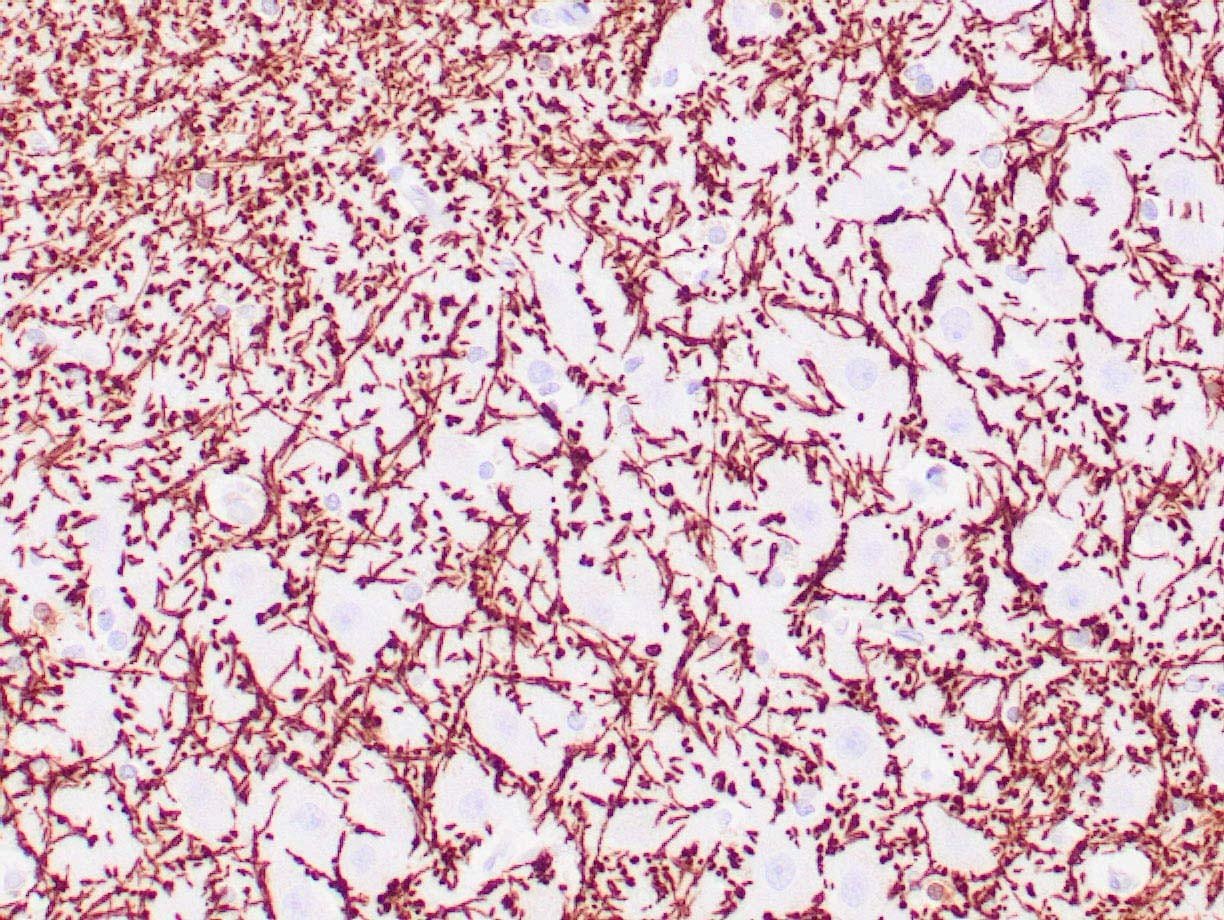 |
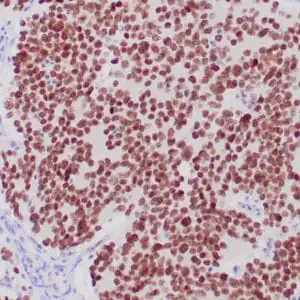
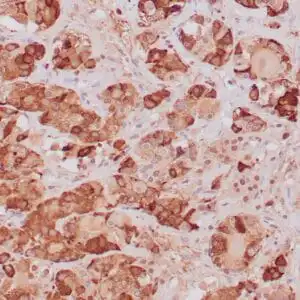
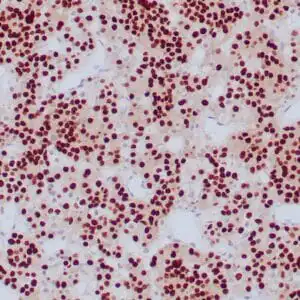
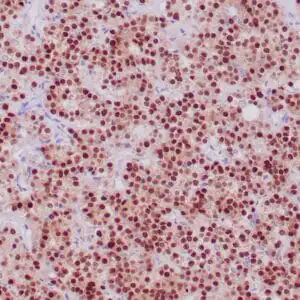
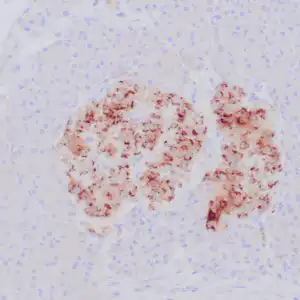
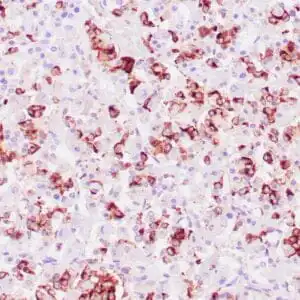
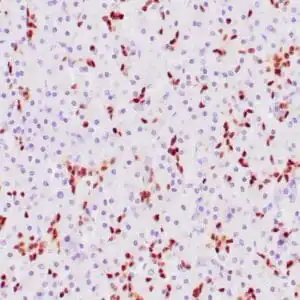
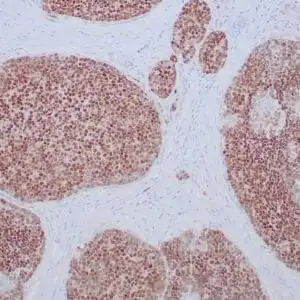
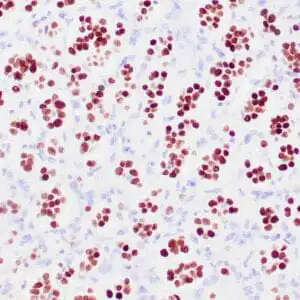
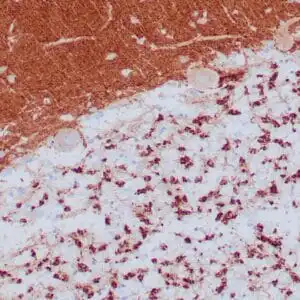
| Human brain white mater stained with anti-MBP antibody using peroxidase-conjugate and DAB chromogen. Note the cytoplasmic staining of glial cells. |
FAQ & Publications
Frequently Asked Questions
What species does the rabbit anti-Myelin Basic Protein (MBP) monoclonal antibody (ZR109) specifically react with?
This antibody is reactive with human Myelin Basic Protein (MBP).
For which application is the rabbit anti-MBP monoclonal antibody validated, and what tissue type is recommended as a positive control?
The antibody is validated for immunohistochemistry (IHC) on formalin-fixed, paraffin-embedded tissues, with human brain tissue recommended as the positive control.
How should the rabbit anti-Myelin Basic Protein (MBP) monoclonal antibody be stored to maintain stability?
For short-term storage, keep the antibody at 2-8°C. For longer-term preservation, store at -20°C and avoid repeated freeze/thaw cycles.
What are the available sizes and concentrations for this rabbit anti-MBP monoclonal antibody product?
The antibody is available as concentrated solutions in 0.1 mL, 0.5 mL, and 1.0 mL volumes, as well as a 7 mL prediluted format.
What is the host species and clonality of the anti-Myelin Basic Protein antibody, and what is its isotype?
The antibody is a rabbit monoclonal antibody with an IgG isotype.
Publications
| pmid | title | authors | citation |
|---|---|---|---|
| We haven't added any publications to our database yet. | |||
Published literature highly relevant to the biological target of this product and referencing this antibody or clone are retrieved from the PubMed database provided by the United States National Library of Medicine at the National Institutes of Health.
Protocols
| relevant to this product |
|---|
| IHC |
Documents
| Batch Number | QC File | SDS |
|---|---|---|
| To view batch-specific Safety Datasheets and Quality Certificates associated with your account, please Log In. | ||
Only logged in customers who have purchased this product may leave a review.

Reviews
There are no reviews yet.