| Weight | 1 lbs |
|---|---|
| Dimensions | 9 × 5 × 2 in |
| host | rabbit |
| isotype | IgG |
| clonality | polyclonal |
| concentration | 1 mg/mL |
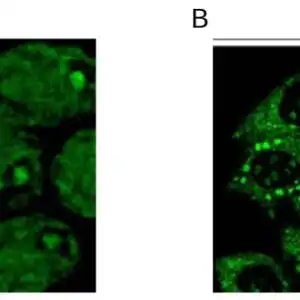
| applications | ICC/IF, WB |
| reactivity | MCT-1 |
| available sizes | 100 µg |

rabbit anti-MCT-1 polyclonal antibody 6529
$376.00
Antibody summary
- Rabbit polyclonal to MCT-1
- Suitable for: WB
- Isotype: Whole IgG
- 100 µg
rabbit anti-MCT-1 polyclonal antibody 6529
| target relevance |
|---|
| Protein names Monocarboxylate transporter 1 (MCT 1) (Solute carrier family 16 member 1) |
| Gene names SLC16A1,SLC16A1 MCT1 |
| Protein family Major facilitator superfamily, Monocarboxylate porter (TC 2.A.1.13) family |
| Mass 53944Da |
| Function FUNCTION: Bidirectional proton-coupled monocarboxylate transporter (PubMed:12946269, PubMed:32946811, PubMed:33333023). Catalyzes the rapid transport across the plasma membrane of many monocarboxylates such as lactate, pyruvate, acetate and the ketone bodies acetoacetate and beta-hydroxybutyrate, and thus contributes to the maintenance of intracellular pH (PubMed:12946269, PubMed:33333023). The transport direction is determined by the proton motive force and the concentration gradient of the substrate monocarboxylate. MCT1 is a major lactate exporter (By similarity). Plays a role in cellular responses to a high-fat diet by modulating the cellular levels of lactate and pyruvate that contribute to the regulation of central metabolic pathways and insulin secretion, with concomitant effects on plasma insulin levels and blood glucose homeostasis (By similarity). Facilitates the protonated monocarboxylate form of succinate export, that its transient protonation upon muscle cell acidification in exercising muscle and ischemic heart (PubMed:32946811). Functions via alternate outward- and inward-open conformation states. Protonation and deprotonation of 309-Asp is essential for the conformational transition (PubMed:33333023). {ECO:0000250|UniProtKB:P53986, ECO:0000250|UniProtKB:P53987, ECO:0000269|PubMed:12946269, ECO:0000269|PubMed:32946811, ECO:0000269|PubMed:33333023}. |
| Catalytic activity CATALYTIC ACTIVITY: Reaction=(S)-lactate(in) + H(+)(in) = (S)-lactate(out) + H(+)(out); Xref=Rhea:RHEA:29415, ChEBI:CHEBI:15378, ChEBI:CHEBI:16651; Evidence={ECO:0000269|PubMed:12946269, ECO:0000269|PubMed:33333023}; PhysiologicalDirection=left-to-right; Xref=Rhea:RHEA:29416; Evidence={ECO:0000305|PubMed:12946269}; PhysiologicalDirection=right-to-left; Xref=Rhea:RHEA:29417; Evidence={ECO:0000305|PubMed:12946269}; CATALYTIC ACTIVITY: Reaction=acetate(out) + H(+)(out) = acetate(in) + H(+)(in); Xref=Rhea:RHEA:71803, ChEBI:CHEBI:15378, ChEBI:CHEBI:30089; Evidence={ECO:0000269|PubMed:12946269}; PhysiologicalDirection=left-to-right; Xref=Rhea:RHEA:71804; Evidence={ECO:0000250|UniProtKB:P53987}; PhysiologicalDirection=right-to-left; Xref=Rhea:RHEA:71805; Evidence={ECO:0000250|UniProtKB:P53987}; CATALYTIC ACTIVITY: Reaction=acetoacetate(out) + H(+)(out) = acetoacetate(in) + H(+)(in); Xref=Rhea:RHEA:71775, ChEBI:CHEBI:13705, ChEBI:CHEBI:15378; Evidence={ECO:0000250|UniProtKB:P53987}; PhysiologicalDirection=left-to-right; Xref=Rhea:RHEA:71776; Evidence={ECO:0000250|UniProtKB:P53987}; PhysiologicalDirection=right-to-left; Xref=Rhea:RHEA:71777; Evidence={ECO:0000250|UniProtKB:P53987}; CATALYTIC ACTIVITY: Reaction=pyruvate(out) + H(+)(out) = pyruvate(in) + H(+)(in); Xref=Rhea:RHEA:64720, ChEBI:CHEBI:15361, ChEBI:CHEBI:15378; Evidence={ECO:0000250|UniProtKB:P53987}; CATALYTIC ACTIVITY: Reaction=(R)-3-hydroxybutanoate(out) + H(+)(out) = (R)-3-hydroxybutanoate(in) + H(+)(in); Xref=Rhea:RHEA:71795, ChEBI:CHEBI:10983, ChEBI:CHEBI:15378; Evidence={ECO:0000250|UniProtKB:P53987}; PhysiologicalDirection=left-to-right; Xref=Rhea:RHEA:71796; Evidence={ECO:0000250|UniProtKB:P53987}; PhysiologicalDirection=right-to-left; Xref=Rhea:RHEA:71797; Evidence={ECO:0000250|UniProtKB:P53987}; CATALYTIC ACTIVITY: Reaction=3-methyl-2-oxobutanoate(out) + H(+)(out) = 3-methyl-2-oxobutanoate(in) + H(+)(in); Xref=Rhea:RHEA:71783, ChEBI:CHEBI:11851, ChEBI:CHEBI:15378; Evidence={ECO:0000250|UniProtKB:P53987}; CATALYTIC ACTIVITY: Reaction=4-methyl-2-oxopentanoate(out) + H(+)(out) = 4-methyl-2-oxopentanoate(in) + H(+)(in); Xref=Rhea:RHEA:71779, ChEBI:CHEBI:15378, ChEBI:CHEBI:17865; Evidence={ECO:0000250|UniProtKB:P53987}; CATALYTIC ACTIVITY: Reaction=succinate(in) + 2 H(+)(in) = succinate(out) + 2 H(+)(out); Xref=Rhea:RHEA:29303, ChEBI:CHEBI:15378, ChEBI:CHEBI:30031; Evidence={ECO:0000269|PubMed:32946811}; PhysiologicalDirection=left-to-right; Xref=Rhea:RHEA:29304; Evidence={ECO:0000305|PubMed:32946811}; |
| Subellular location SUBCELLULAR LOCATION: Cell membrane {ECO:0000269|PubMed:10921872, ECO:0000269|PubMed:12946269, ECO:0000269|PubMed:15505343, ECO:0000269|PubMed:17127621, ECO:0000269|PubMed:24390345, ECO:0000269|PubMed:25957687}; Multi-pass membrane protein {ECO:0000269|PubMed:33333023}. Basolateral cell membrane {ECO:0000250|UniProtKB:P53987}; Multi-pass membrane protein {ECO:0000269|PubMed:33333023}. Apical cell membrane {ECO:0000269|PubMed:15901598}; Multi-pass membrane protein {ECO:0000250|UniProtKB:P53987}. Note=Expression at the cell surface requires the ancillary proteins BSG and EMB. Binds preferentially to BSG. {ECO:0000269|PubMed:10921872}. |
| Tissues TISSUE SPECIFICITY: Widely expressed (PubMed:12115955, PubMed:15505343, PubMed:15901598). Detected in heart and in blood lymphocytes and monocytes (at protein level) (PubMed:15505343). {ECO:0000269|PubMed:12115955, ECO:0000269|PubMed:15505343, ECO:0000269|PubMed:15901598}. |
| Structure SUBUNIT: Interacts with EMB; interaction mediates SLC16A1 targeting to the plasma membrane (By similarity). Interacts with isoform 2 of BSG; interaction mediates SLC16A1 targeting to the plasma membrane (PubMed:17127621, PubMed:25957687, PubMed:33333023). {ECO:0000250|UniProtKB:P53987, ECO:0000269|PubMed:17127621, ECO:0000269|PubMed:25957687, ECO:0000269|PubMed:33333023}. |
| Involvement in disease DISEASE: Symptomatic deficiency in lactate transport (SDLT) [MIM:245340]: Deficiency of lactate transporter may result in an acidic intracellular environment created by muscle activity with consequent degeneration of muscle and release of myoglobin and creatine kinase. This defect might compromise extreme performance in otherwise healthy individuals. {ECO:0000269|PubMed:10590411}. Note=The disease is caused by variants affecting the gene represented in this entry.; DISEASE: Hyperinsulinemic hypoglycemia, familial, 7 (HHF7) [MIM:610021]: A form of hyperinsulinemic hypoglycemia, a clinically and genetically heterogeneous disorder characterized by inappropriate insulin secretion from the pancreatic beta-cells in the presence of low blood glucose levels. HHF7 features include exercise-induced hyperinsulinism, loss of consciousness due to hypoglycemia, and hypoglycemic seizures. HHF7 inheritance is autosomal dominant. {ECO:0000269|PubMed:17701893}. Note=The disease is caused by variants affecting the gene represented in this entry.; DISEASE: Monocarboxylate transporter 1 deficiency (MCT1D) [MIM:616095]: A metabolic disorder characterized by recurrent ketoacidosis, a pathologic state due to ketone formation exceeding ketone utilization. The clinical consequences of ketoacidosis are vomiting, osmotic diuresis, dehydration, and Kussmaul breathing. The condition may progress to decreased consciousness and, ultimately, death. {ECO:0000269|PubMed:25390740, ECO:0000269|PubMed:33333023}. Note=The disease is caused by variants affecting the gene represented in this entry. |
| Target Relevance information above includes information from UniProt accession: P53985 |
| The UniProt Consortium |
Data
| No results found |
FAQ & Publications
Frequently Asked Questions
What is the recommended dilution range for using the rabbit anti-MCT-1 polyclonal antibody in Western blot applications?
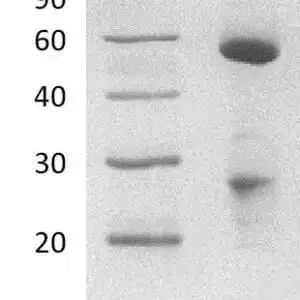
For immunoblotting (Western blot), the recommended dilution of the rabbit anti-MCT-1 polyclonal antibody is between 1:500 and 1:1,000. This typically detects a band at approximately 20 kD.
How should the rabbit anti-MCT-1 polyclonal antibody be stored to maintain stability?
The antibody should be stored at -20°C, where it remains stable for at least one year. It is important to avoid multiple freeze-thaw cycles to preserve antibody integrity.
Publications
| pmid | title | authors | citation |
|---|---|---|---|
| We haven't added any publications to our database yet. | |||
Published literature highly relevant to the biological target of this product and referencing this antibody or clone are retrieved from the PubMed database provided by the United States National Library of Medicine at the National Institutes of Health.
Protocols
| relevant to this product |
|---|
| Western blot IHC ICC |
Documents
| Batch Number | QC File | SDS |
|---|---|---|
| To view batch-specific Safety Datasheets and Quality Certificates associated with your account, please Log In. | ||
Only logged in customers who have purchased this product may leave a review.


Reviews
There are no reviews yet.