| Weight | 1 lbs |
|---|---|
| Dimensions | 9 × 5 × 2 in |
| host | rabbit |
| isotype | IgG |
| clonality | polyclonal |
| concentration | 1 mg/mL |
| applications | ICC/IF, WB |
| reactivity | KLK4 |
| available sizes | 100 µg |

rabbit anti-KLK4 polyclonal antibody 9359
$376.00
Antibody summary
- Rabbit polyclonal to KLK4
- Suitable for: WB
- Isotype: Whole IgG
- 100 µg
rabbit anti-KLK4 polyclonal antibody 9359
| antibody |
|---|
| Tested applications WB |
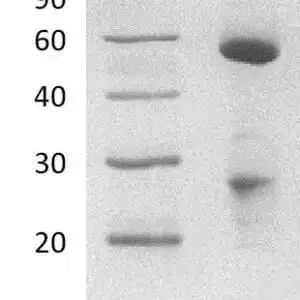
| Recommended dilutions Immunoblotting: use at 1:500-1:1,000 dilution. A band of approximately 39 kD is detected. |
| Immunogen Peptide corresponding to aa 242-254 of human KLK4 protein. |
| Size and concentration 100µg and lot specific |
| Form liquid |
| Storage Instructions This antibody is stable for at least one (1) year at -70°C. Avoid multiple freeze- thaw cycles. |
| Storage buffer PBS, pH 7.4. |
| Purity immunogen affinity purification |
| Clonality polyclonal |
| Isotype IgG |
| Compatible secondaries goat anti-rabbit IgG, H&L chain specific, peroxidase conjugated, conjugated polyclonal antibody 9512 goat anti-rabbit IgG, H&L chain specific, biotin conjugated polyclonal antibody 2079 goat anti-rabbit IgG, H&L chain specific, FITC conjugated polyclonal antibody 7863 goat anti-rabbit IgG, H&L chain specific, Cross Absorbed polyclonal antibody 2371 goat anti-rabbit IgG, H&L chain specific, biotin conjugated polyclonal antibody, crossabsorbed 1715 goat anti-rabbit IgG, H&L chain specific, FITC conjugated polyclonal antibody, crossabsorbed 1720 |
| Isotype control Rabbit polyclonal - Isotype Control |
| target relevance |
|---|
| Homo sapiens KLK4 Kallikrein-4 |
| Protein names Kallikrein-4 |
| Alternative names Enamel matrix serine proteinase 1, Kallikrein-like protein 1, Prostase, Serine protease 17 |
| Gene names KLK4 |
| Protein family Belongs to the peptidase S1 family. Kallikrein subfamily |
| Function Has a major role in enamel formation (PubMed:15235027). Required during the maturation stage of tooth development for clearance of enamel proteins and normal structural patterning of the crystalline matrix (By similarity) |
| Subcellular location Secreted |
| Post-translational modification N-glycosylated. The N-glycan structures are of complex diantennary or triantennary type, which may be further modified with up to 2 sialic acid residues |
| Involvement in disease Amelogenesis imperfecta, hypomaturation type, 2A1 A defect of enamel formation. The disorder involves both primary and secondary dentitions. The teeth have a shiny agar jelly appearance and the enamel is softer than normal. Brown pigment is present in middle layers of enamel. |
| Keywords 3D-structure, Alternative splicing, Amelogenesis imperfecta, Biomineralization, Direct protein sequencing, Disulfide bond, Glycoprotein, Hydrolase, Metal-binding, Protease, Proteomics identification, Reference proteome, Secreted, Serine protease, Signal, Zinc, Zymogen |
| Sequence MATAGNPWGWFLGYLILGVAGSLVSGSCSQIINGEDCSPHSQPWQAALVMENELFCSGVL VHPQWVLSAAHCFQNSYTIGLGLHSLEADQEPGSQMVEASLSVRHPEYNRPLLANDLMLI KLDESVSESDTIRSISIASQCPTAGNSCLVSGWGLLANGRMPTVLQCVNVSVVSEEVCSK LYDPLYHPSMFCAGGGHDQKDSCNGDSGGPLICNGYLQGLVSFGKAPCGQVGVPGVYTNL CKFTEWIEKTVQAS |
| UniProt accession: Q9Y5K2 |
Data
| No results found |
FAQ & Publications
Frequently Asked Questions
What applications has the rabbit anti-KLK4 polyclonal antibody 9359 been validated for?
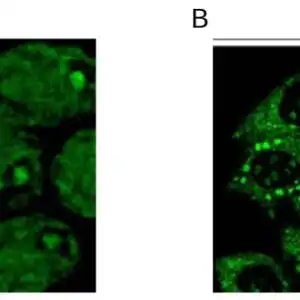
This antibody is validated for use in Western blotting (WB) and immunocytochemistry/immunofluorescence (ICC/IF) applications.
How should the rabbit anti-KLK4 polyclonal antibody 9359 be stored to maintain its stability?
The antibody should be stored at -70°C and is stable for at least one year under these conditions. It is recommended to avoid multiple freeze-thaw cycles to preserve antibody integrity.
What is the immunogen used to generate the rabbit anti-KLK4 polyclonal antibody 9359?
The immunogen is a peptide corresponding to amino acids 242-254 of the human KLK4 protein.
Which secondary antibodies are compatible with the rabbit anti-KLK4 polyclonal antibody 9359?
Compatible secondary antibodies include goat anti-rabbit IgG, H&L chain specific, with various conjugations such as peroxidase, biotin, and FITC, including cross-absorbed versions.
Publications
| pmid | title | authors | citation |
|---|---|---|---|
| We haven't added any publications to our database yet. | |||
Published literature highly relevant to the biological target of this product and referencing this antibody or clone are retrieved from the PubMed database provided by the United States National Library of Medicine at the National Institutes of Health.
Protocols
| relevant to this product |
|---|
| Western blot IHC ICC |
Documents
| Batch Number | QC File | SDS |
|---|---|---|
| To view batch-specific Safety Datasheets and Quality Certificates associated with your account, please Log In. | ||
Only logged in customers who have purchased this product may leave a review.


Reviews
There are no reviews yet.