| Weight | 1 lbs |
|---|---|
| Dimensions | 9 × 5 × 2 in |
| host | rabbit |
| isotype | IgG |
| clonality | polyclonal |
| concentration | 1 mg/mL |
| applications | ICC/IF, WB |
| reactivity | IKKγ (NT) |
| available sizes | 100 µg |

rabbit anti-IKK γ (NT) polyclonal antibody 5405
$445.00
Antibody summary
- Rabbit polyclonal to IKK γ (NT)
- Suitable for: ELISA,WB,ICC,IF
- Isotype: IgG
- 100 µg
rabbit anti-IKK γ (NT) polyclonal antibody 5405
| antibody |
|---|
| Tested applications WB,ICC/IF,ELISA |
| Recommended dilutions Immunoblotting: use at 1:500-1:1,000 dilution. Positive control: Whole cell lysate from HeLa cells. |
| Immunogen Peptide corresponding to aa 400-416 of human IKKg. This sequence is identical to that of mouse. |
| Size and concentration 100µg and lot specific |
| Form liquid |
| Storage Instructions This antibody is stable for at least one (1) year at -20°C. Avoid multiple freeze- thaw cycles. |
| Storage buffer PBS, pH 7.4. |
| Purity peptide affinity purification |
| Clonality polyclonal |
| Isotype IgG |
| Compatible secondaries goat anti-rabbit IgG, H&L chain specific, peroxidase conjugated, conjugated polyclonal antibody 9512 goat anti-rabbit IgG, H&L chain specific, biotin conjugated polyclonal antibody 2079 goat anti-rabbit IgG, H&L chain specific, FITC conjugated polyclonal antibody 7863 goat anti-rabbit IgG, H&L chain specific, Cross Absorbed polyclonal antibody 2371 goat anti-rabbit IgG, H&L chain specific, biotin conjugated polyclonal antibody, crossabsorbed 1715 goat anti-rabbit IgG, H&L chain specific, FITC conjugated polyclonal antibody, crossabsorbed 1720 |
| Isotype control Rabbit polyclonal - Isotype Control |
| target relevance |
|---|
| Homo sapiens IKBKG NF-kappa-B essential modulator |
| Protein names NF-kappa-B essential modulator |
| Alternative names FIP-3, IkB kinase-associated protein 1, Inhibitor of nuclear factor kappa-B kinase subunit gamma, NF-kappa-B essential modifier |
| Gene names IKBKG |
| Function Regulatory subunit of the IKK core complex which phosphorylates inhibitors of NF-kappa-B thus leading to the dissociation of the inhibitor/NF-kappa-B complex and ultimately the degradation of the inhibitor (PubMed:14695475, PubMed:20724660, PubMed:21518757, PubMed:9751060). Its binding to scaffolding polyubiquitin plays a key role in IKK activation by multiple signaling receptor pathways (PubMed:16547522, PubMed:18287044, PubMed:19033441, PubMed:19185524, PubMed:21606507, PubMed:27777308, PubMed:33567255). Can recognize and bind both 'Lys-63'-linked and linear polyubiquitin upon cell stimulation, with a much higher affinity for linear polyubiquitin (PubMed:16547522, PubMed:18287044, PubMed:19033441, PubMed:19185524, PubMed:21606507, PubMed:27777308). Could be implicated in NF-kappa-B-mediated protection from cytokine toxicity. Essential for viral activation of IRF3 (PubMed:19854139). Involved in TLR3- and IFIH1-mediated antiviral innate response; this function requires 'Lys-27'-linked polyubiquitination (PubMed:20724660) |
| Subcellular location Cytoplasm, Nucleus |
| Structure (Microbial infection) Interacts with SARS coronavirus-2/SARS-CoV-2 virus protein ORF9B (via N-terminus); the interaction inhibits polyubiquitination through 'Lys-63' and NF-kappa-B activation |
| Post-translational modification Phosphorylation at Ser-68 attenuates aminoterminal homodimerization Polyubiquitinated on Lys-285 via 'Lys-63'-linked ubiquitin; the ubiquitination is mediated downstream of NOD2 and RIPK2 and probably plays a role in signaling by facilitating interactions with ubiquitin domain-containing proteins and activates the NF-kappa-B pathway (PubMed:15620648, PubMed:17562858, PubMed:19136968). Polyubiquitinated on Lys-285 and Lys-399 through 'Lys-63'-linked ubiquitin; the ubiquitination is mediated by BCL10, MALT1 and TRAF6 and probably plays a role in signaling by facilitating interactions with ubiquitin domain-containing proteins and activates the NF-kappa-B pathway (PubMed:14695475, PubMed:17562858, PubMed:19136968). Monoubiquitinated on Lys-277 and Lys-309; promotes nuclear export (PubMed:14651848). Polyubiquitinated through 'Lys-27' by TRIM23; involved in antiviral innate and inflammatory responses (PubMed:20724660). Linear polyubiquitinated on Lys-111, Lys-143, Lys-226, Lys-246, Lys-264, Lys-277, Lys-285, Lys-292, Lys-302, Lys-309 and Lys-326; the head-to-tail polyubiquitination is mediated by the LUBAC complex and plays a key role in NF-kappa-B activation (PubMed:21455181). Deubiquitinated by USP10 in a TANK-dependent and -independent manner, leading to the negative regulation of NF-kappa-B signaling upon DNA damage (PubMed:25861989). Ubiquitinated at Lys-326 by MARCHF2 following bacterial and viral infection which leads to its degradation (PubMed:32935379). Polyubiquitinated via 'Lys-29'-linked ubiquitin; leading to lysosomal degradation (PubMed:21518757) Sumoylated on Lys-277 and Lys-309 with SUMO1; the modification results in phosphorylation of Ser-85 by ATM leading to a replacement of the sumoylation by mono-ubiquitination on these residues Neddylated by TRIM40, resulting in stabilization of NFKBIA and down-regulation of NF-kappa-B activity (Microbial infection) Cleaved by hepatitis A virus (HAV) protease 3C allowing the virus to disrupt the host innate immune signaling (Microbial infection) Deubiquitinated by Epstein-Barr virus BPLF1 on both 'Lys-48' and 'Lys-63'-linked ubiquitin chains; leading to NF-kappa-B signaling inhibition (Microbial infection) Polyubiquitinated on Lys-309 and Lys-321 via 'Lys-27'-linked ubiquitin by Shigella flexneri E3 ubiquitin-protein ligase ipah9.8, leading to its degradation by the proteasome (Microbial infection) Polyubiquitination through 'Lys-63' is interrupted by interaction with SARS coronavirus-2/SARS-CoV-2 virus protein ORF9B which inhibits the NF-kappa-B pathway |
| Involvement in disease Ectodermal dysplasia and immunodeficiency 1 A form of ectoderma dysplasia, a heterogeneous group of disorders due to abnormal development of two or more ectodermal structures. EDAID1 is an X-linked recessive disorder characterized by absence of sweat glands, sparse scalp hair, rare conical teeth and immunological abnormalities resulting in severe infectious diseases. Severely affected individuals may also show lymphedema, osteopetrosis, and, rarely, hematologic abnormalities. The phenotype is highly variable, and may be fatal in childhood. Immunodeficiency 33 An X-linked recessive disorder characterized by variably impaired immunologic function and early-onset recurrent infections, usually due to pneumococcus, H.influenzae, and atypical mycobacteria. Features of hypohidrotic ectodermal dysplasia are generally not present, although some patients may have conical teeth or hypodontia. Incontinentia pigmenti A genodermatosis usually prenatally lethal in males. In affected females, it causes abnormalities of the skin, hair, eyes, nails, teeth, skeleton, heart, and central nervous system. The prominent skin signs occur in four classic cutaneous stages: perinatal inflammatory vesicles, verrucous patches, a distinctive pattern of hyperpigmentation and dermal scarring. Autoinflammatory disease, systemic, X-linked An X-linked disorder characterized by systemic autoinflammation appearing in the first months of life. Clinical manifestations are variable, including lymphadenopathy, hepatosplenomegaly, fever, panniculitis, and nodular skin rash. Additional features may include inflammation of the optic nerve, intracranial hemorrhage, and lipodystrophy. |
| Keywords 3D-structure, Alternative splicing, Coiled coil, Cytoplasm, Direct protein sequencing, Disease variant, Disulfide bond, DNA damage, Ectodermal dysplasia, Host-virus interaction, Isopeptide bond, Metal-binding, Nucleus, Osteopetrosis, Phosphoprotein, Proteomics identification, Reference proteome, Transcription, Transcription regulation, Ubl conjugation, Zinc, Zinc-finger |
| Sequence MNRHLWKSQLCEMVQPSGGPAADQDVLGEESPLGKPAMLHLPSEQGAPETLQRCLEENQE LRDAIRQSNQILRERCEELLHFQASQREEKEFLMCKFQEARKLVERLGLEKLDLKRQKEQ ALREVEHLKRCQQQMAEDKASVKAQVTSLLGELQESQSRLEAATKECQALEGRARAASEQ ARQLESEREALQQQHSVQVDQLRMQGQSVEAALRMERQAASEEKRKLAQLQVAYHQLFQE YDNHIKSSVVGSERKRGMQLEDLKQQLQQAEEALVAKQEVIDKLKEEAEQHKIVMETVPV LKAQADIYKADFQAERQAREKLAEKKELLQEQLEQLQREYSKLKASCQESARIEDMRKRH VEVSQAPLPPAPAYLSSPLALPSQRRSPPEEPPDFCCPKCQYQAPDMDTLQIHVMECIE |
| UniProt accession: Q9Y6K9 |
Data
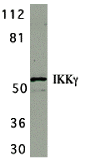 |
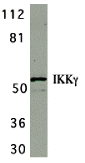
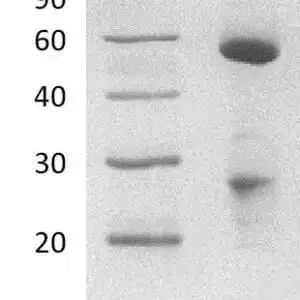
| Western blot analysis of IKK gamma in HeLa whole cell lysate with IKK gamma antibody at 1 µg/mL. |
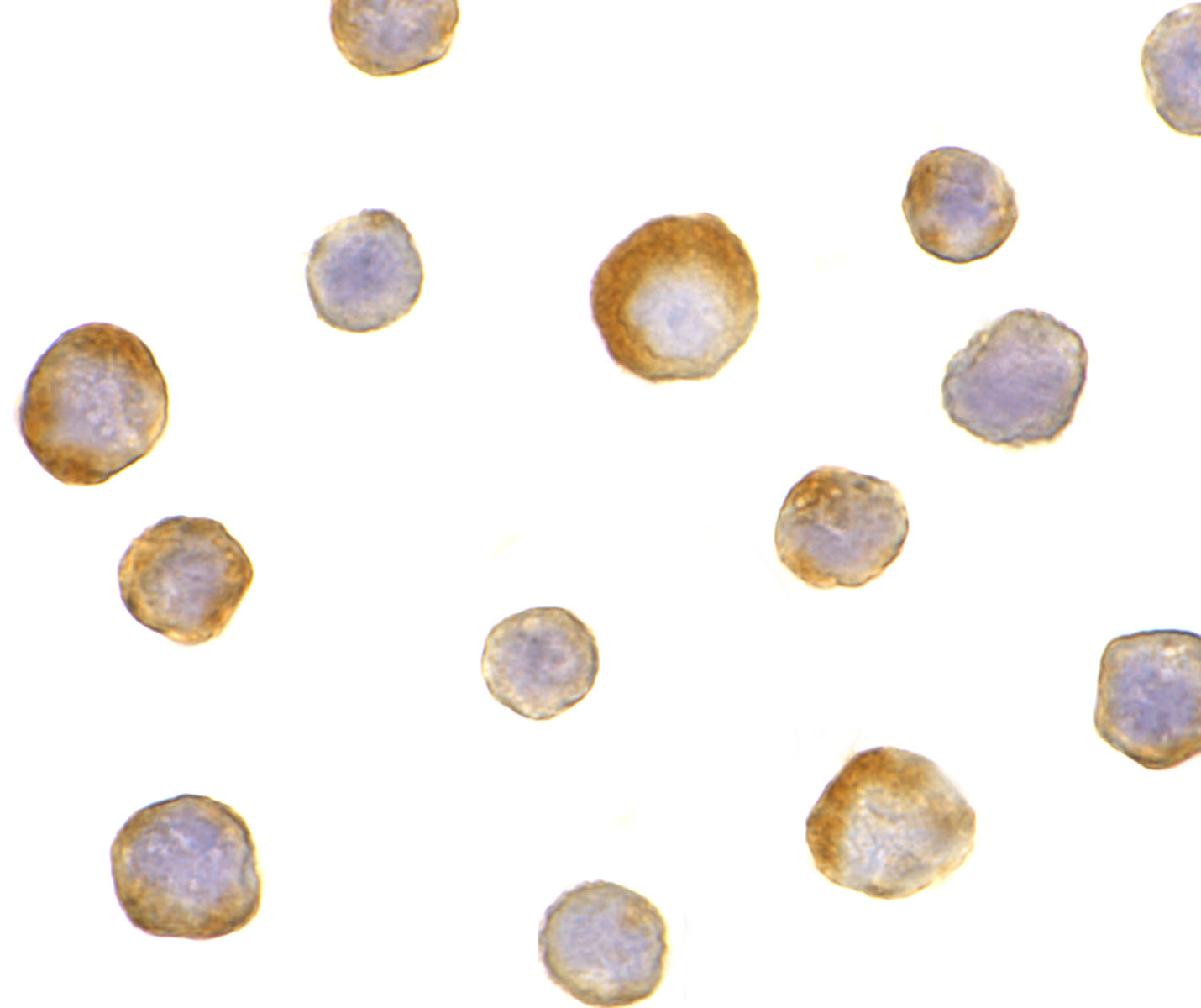 |
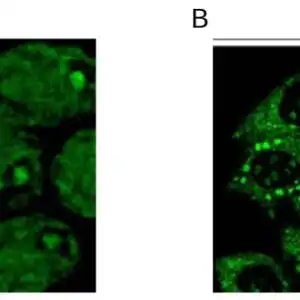
| Immunocytochemistry of IKK gamma in HeLa cells with IKK gamma antibody at 5 µg/mL. |
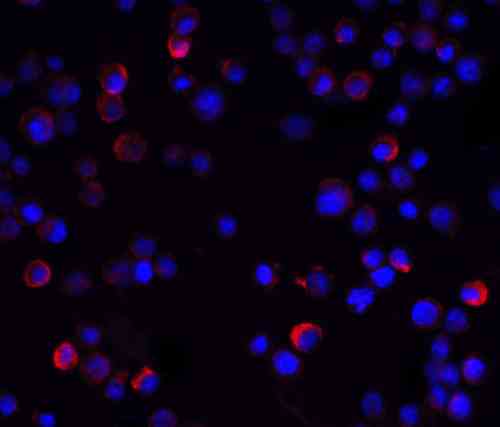 |
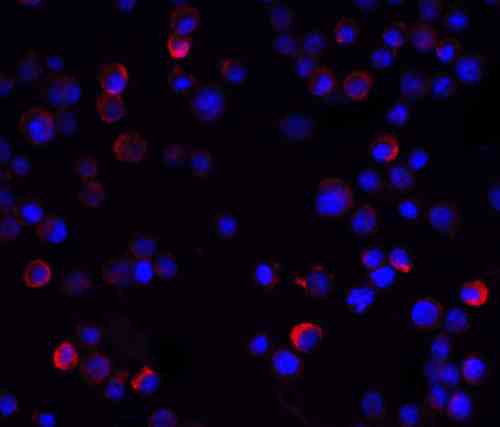
| Immunofluorescence of IKK gamma in Hela cells with IKK gamma antibody at 20 µg/mL.
Red: IKK gamma Antibody (5405) Blue: DAPI staining |
FAQ & Publications
Frequently Asked Questions
What applications has the rabbit anti-IKK γ (NT) polyclonal antibody 5405 been validated for?
This antibody has been tested and is suitable for ELISA, Western blotting (WB), immunocytochemistry (ICC), and immunofluorescence (IF) applications.
How should the rabbit anti-IKK γ (NT) polyclonal antibody 5405 be stored to maintain stability?
The antibody should be stored at -20°C and is stable for at least one year under these conditions. It is important to avoid multiple freeze-thaw cycles to preserve antibody integrity.
What is the immunogen used to generate the rabbit anti-IKK γ (NT) polyclonal antibody 5405 and is it reactive with mouse samples?
The immunogen is a peptide corresponding to amino acids 400-416 of human IKKγ, which is identical in the mouse sequence, ensuring cross-reactivity with mouse IKKγ.
Publications
| pmid | title | authors | citation |
|---|---|---|---|
| We haven't added any publications to our database yet. | |||
Published literature highly relevant to the biological target of this product and referencing this antibody or clone are retrieved from the PubMed database provided by the United States National Library of Medicine at the National Institutes of Health.
Protocols
| relevant to this product |
|---|
| Western blot IHC ICC |
Documents
| Batch Number | QC File | SDS |
|---|---|---|
| To view batch-specific Safety Datasheets and Quality Certificates associated with your account, please Log In. | ||
Only logged in customers who have purchased this product may leave a review.


Reviews
There are no reviews yet.