| Weight | 1 lbs |
|---|---|
| Dimensions | 9 × 5 × 2 in |
| host | rabbit |
| isotype | IgG |
| clonality | polyclonal |
| concentration | 1 mg/mL |
| applications | ICC/IF, WB |
| reactivity | IKKε (CT) |
| available sizes | 100 µg |



rabbit anti-IKK epsilon (CT) polyclonal antibody 4818
$445.00
Antibody summary
- Rabbit polyclonal to IKK epsilon (CT)
- Suitable for: ELISA,WB,IHC-P,IF
- Isotype: IgG
- 100 µg
rabbit anti-IKK epsilon (CT) polyclonal antibody 4818
| antibody |
|---|
| Tested applications WB,IHC,IHC,ICC/IF,ELISA |
| Recommended dilutions Immunoblotting: use at 1:500-1:1,000 dilution. Positive control: Whole cell lysate from Jurkat cells. |
| Immunogen Peptide corresponding to aa 705-716 of human IKKepsilon. |
| Size and concentration 100µg and lot specific |
| Form liquid |
| Storage Instructions This antibody is stable for at least one (1) year at -20°C. Avoid multiple freeze-thaw cycles. |
| Storage buffer PBS, pH 7.4. |
| Purity peptide affinity purification |
| Clonality polyclonal |
| Isotype IgG |
| Compatible secondaries goat anti-rabbit IgG, H&L chain specific, peroxidase conjugated, conjugated polyclonal antibody 9512 goat anti-rabbit IgG, H&L chain specific, biotin conjugated polyclonal antibody 2079 goat anti-rabbit IgG, H&L chain specific, FITC conjugated polyclonal antibody 7863 goat anti-rabbit IgG, H&L chain specific, Cross Absorbed polyclonal antibody 2371 goat anti-rabbit IgG, H&L chain specific, biotin conjugated polyclonal antibody, crossabsorbed 1715 goat anti-rabbit IgG, H&L chain specific, FITC conjugated polyclonal antibody, crossabsorbed 1720 |
| Isotype control Rabbit polyclonal - Isotype Control |
| target relevance |
|---|
| Homo sapiens IKBKE Inhibitor of nuclear factor kappa-B kinase subunit epsilon |
| Protein names Inhibitor of nuclear factor kappa-B kinase subunit epsilon |
| Alternative names Inducible I kappa-B kinase |
| Gene names IKBKE |
| Protein family Belongs to the protein kinase superfamily. Ser/Thr protein kinase family. I-kappa-B kinase subfamily |
| Function Serine/threonine kinase that plays an essential role in regulating inflammatory responses to viral infection, through the activation of the type I IFN, NF-kappa-B and STAT signaling. Also involved in TNFA and inflammatory cytokines, like Interleukin-1, signaling. Following activation of viral RNA sensors, such as RIG-I-like receptors, associates with DDX3X and phosphorylates interferon regulatory factors (IRFs), IRF3 and IRF7, as well as DDX3X. This activity allows subsequent homodimerization and nuclear translocation of the IRF3 leading to transcriptional activation of pro-inflammatory and antiviral genes including IFNB. In order to establish such an antiviral state, IKBKE forms several different complexes whose composition depends on the type of cell and cellular stimuli. Thus, several scaffolding molecules including IPS1/MAVS, TANK, AZI2/NAP1 or TBKBP1/SINTBAD can be recruited to the IKBKE-containing-complexes. Activated by polyubiquitination in response to TNFA and interleukin-1, regulates the NF-kappa-B signaling pathway through, at least, the phosphorylation of CYLD. Phosphorylates inhibitors of NF-kappa-B thus leading to the dissociation of the inhibitor/NF-kappa-B complex and ultimately the degradation of the inhibitor. In addition, is also required for the induction of a subset of ISGs which displays antiviral activity, may be through the phosphorylation of STAT1 at 'Ser-708'. Phosphorylation of STAT1 at 'Ser-708' also seems to promote the assembly and DNA binding of ISGF3 (STAT1:STAT2:IRF9) complexes compared to GAF (STAT1:STAT1) complexes, in this way regulating the balance between type I and type II IFN responses. Protects cells against DNA damage-induced cell death. Also plays an important role in energy balance regulation by sustaining a state of chronic, low-grade inflammation in obesity, wich leads to a negative impact on insulin sensitivity. Phosphorylates AKT1 |
| Catalytic activity L-seryl-[I-kappa-B protein] + ATP = O-phospho-L-seryl-[I-kappa-B protein] + ADP + H(+) |
| Subcellular location Cytoplasm, Nucleus, Nucleus, PML body |
| Structure (Microbial infection) Interacts with Epstein-Barr virus (EBV) protein NEC2/BFRF1; this interaction inhibits IKBKE kinase activity and IRF3 nuclear translocation |
| Post-translational modification Autophosphorylated and phosphorylated by IKBKB/IKKB. Phosphorylation at Ser-172 is enhanced by the interaction with DDX3X. Phosphorylated at Thr-501 upon IFN activation Sumoylation by TOPORS upon DNA damage is required for protection of cells against DNA damage-induced cell death. Desumoylated by SENP1 'Lys-63'-linked polyubiquitinated at Lys-30 and Lys-401 by TRAF2:BIRC2 and TRAF2:BIRC3 complexes. Ubiquitination is induced by LPS, TNFA and interleukin-1 and required for full kinase activity and KF-kappa-B pathway activation |
| Keywords Alternative splicing, ATP-binding, Cytoplasm, DNA damage, Host-virus interaction, Isopeptide bond, Kinase, Nucleotide-binding, Nucleus, Phosphoprotein, Proteomics identification, Reference proteome, Serine/threonine-protein kinase, Transferase, Ubl conjugation |
| Sequence MQSTANYLWHTDDLLGQGATASVYKARNKKSGELVAVKVFNTTSYLRPREVQVREFEVLR KLNHQNIVKLFAVEETGGSRQKVLVMEYCSSGSLLSVLESPENAFGLPEDEFLVVLRCVV AGMNHLRENGIVHRDIKPGNIMRLVGEEGQSIYKLTDFGAARELDDDEKFVSVYGTEEYL HPDMYERAVLRKPQQKAFGVTVDLWSIGVTLYHAATGSLPFIPFGGPRRNKEIMYRITTE KPAGAIAGAQRRENGPLEWSYTLPITCQLSLGLQSQLVPILANILEVEQAKCWGFDQFFA ETSDILQRVVVHVFSLSQAVLHHIYIHAHNTIAIFQEAVHKQTSVAPRHQEYLFEGHLCV LEPSVSAQHIAHTTASSPLTLFSTAIPKGLAFRDPALDVPKFVPKVDLQADYNTAKGVLG AGYQALRLARALLDGQELMFRGLHWVMEVLQATCRRTLEVARTSLLYLSSSLGTERFSSV AGTPEIQELKAAAELRSRLRTLAEVLSRCSQNITETQESLSSLNRELVKSRDQVHEDRSI QQIQCCLDKMNFIYKQFKKSRMRPGLGYNEEQIHKLDKVNFSHLAKRLLQVFQEECVQKY QASLVTHGKRMRVVHETRNHLRLVGCSVAACNTEAQGVQESLSKLLEELSHQLLQDRAKG AQASPPPIAPYPSPTRKDLLLHMQELCEGMKLLASDLLDNNRIIERLNRVPAPPDV |
| UniProt accession: Q14164 |
Data
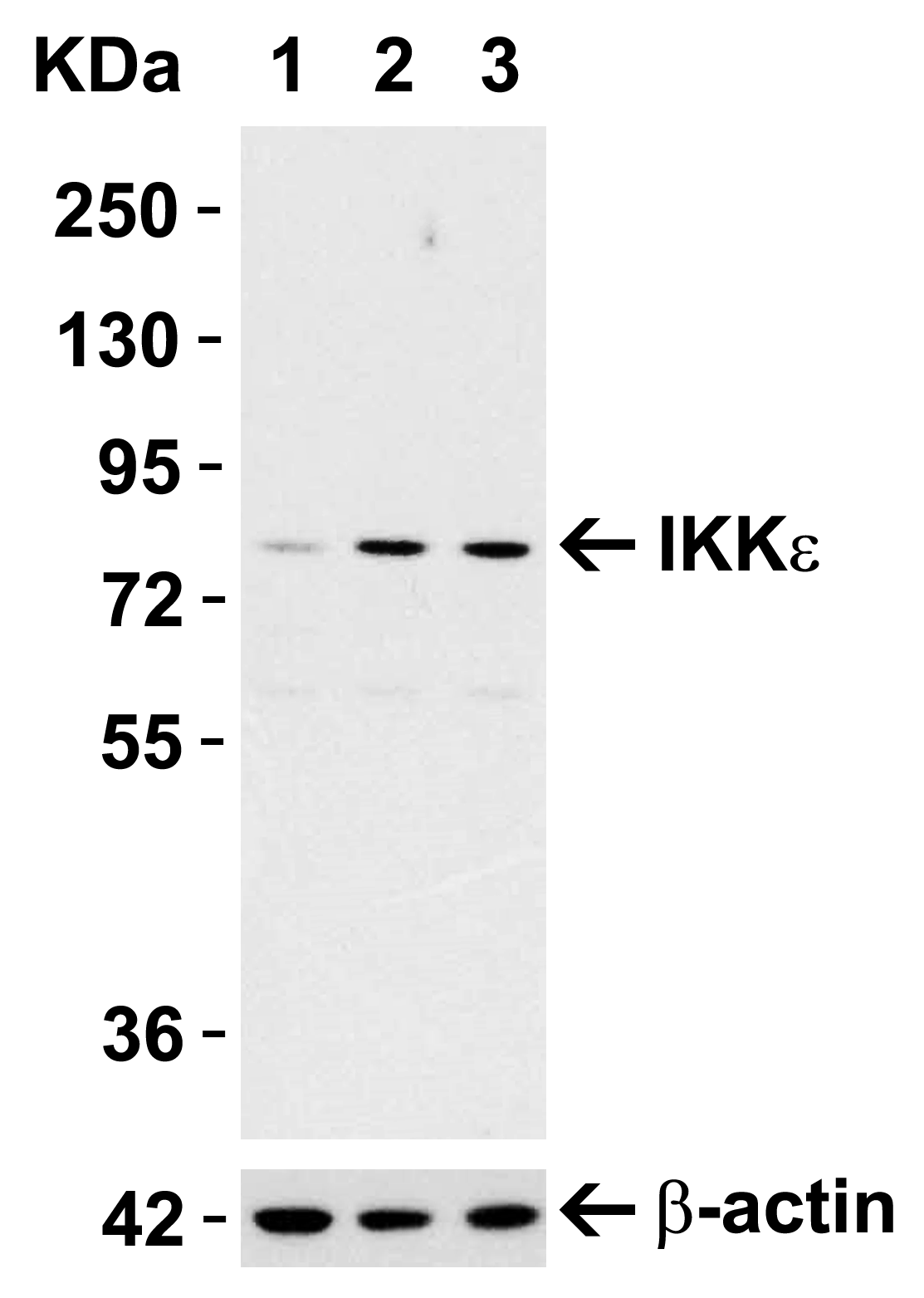 |
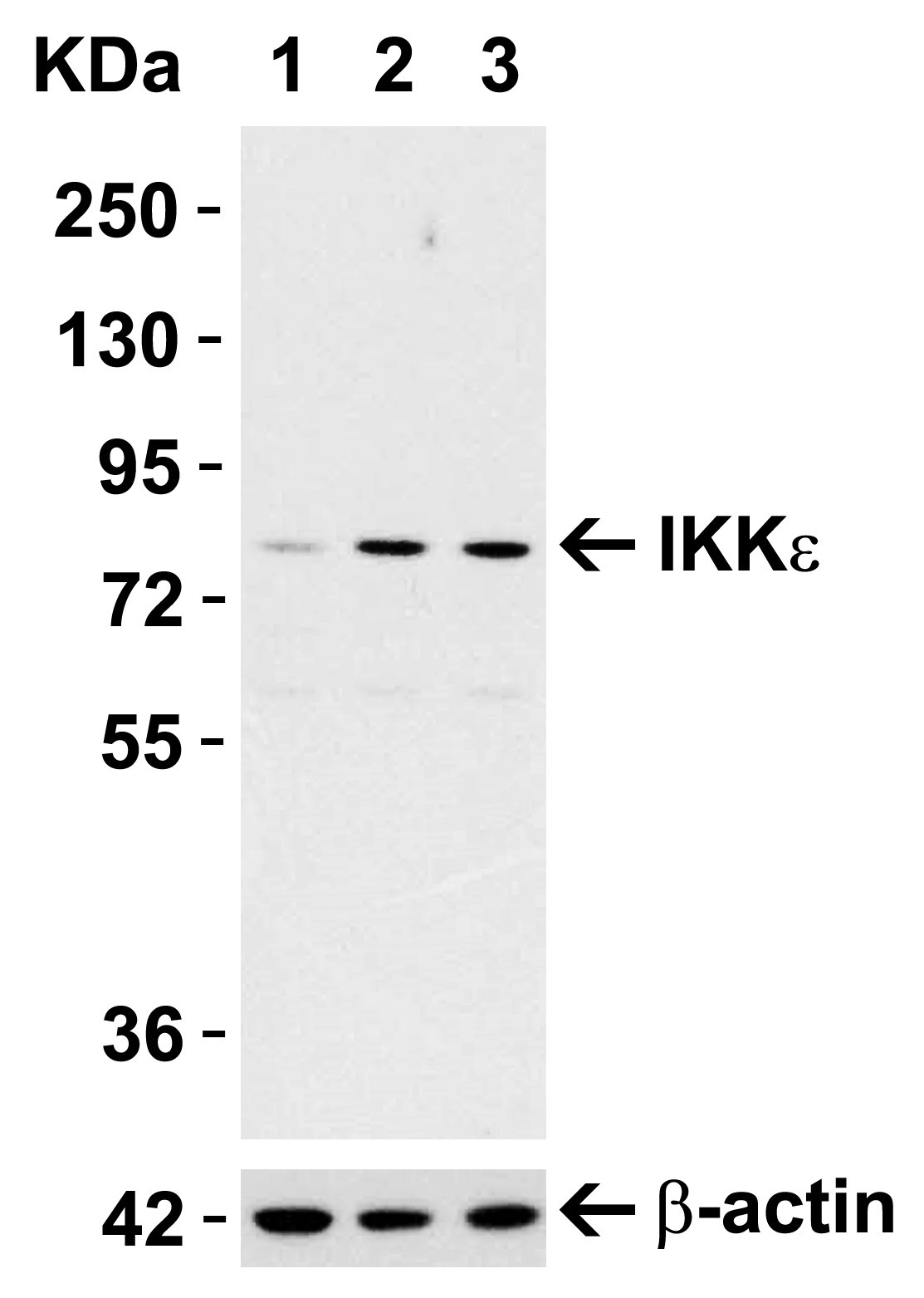
| Induction Validation in Mouse Cell Line Loading: 15 µg of Raw264.7 cell lysates per lane. Antibodies: IKK epsilon 4818 (1 µg/mL), 1h incubation at RT in 5% NFDM/TBST.Secondary: Goat anti-rabbit IgG HRP conjugate at 1:10000 dilution.Cells were treated with LPS (0.3 µg/mL) for 3 hrs (lane 2) and 6 hrs (lane 3) or with control (lane 1). |
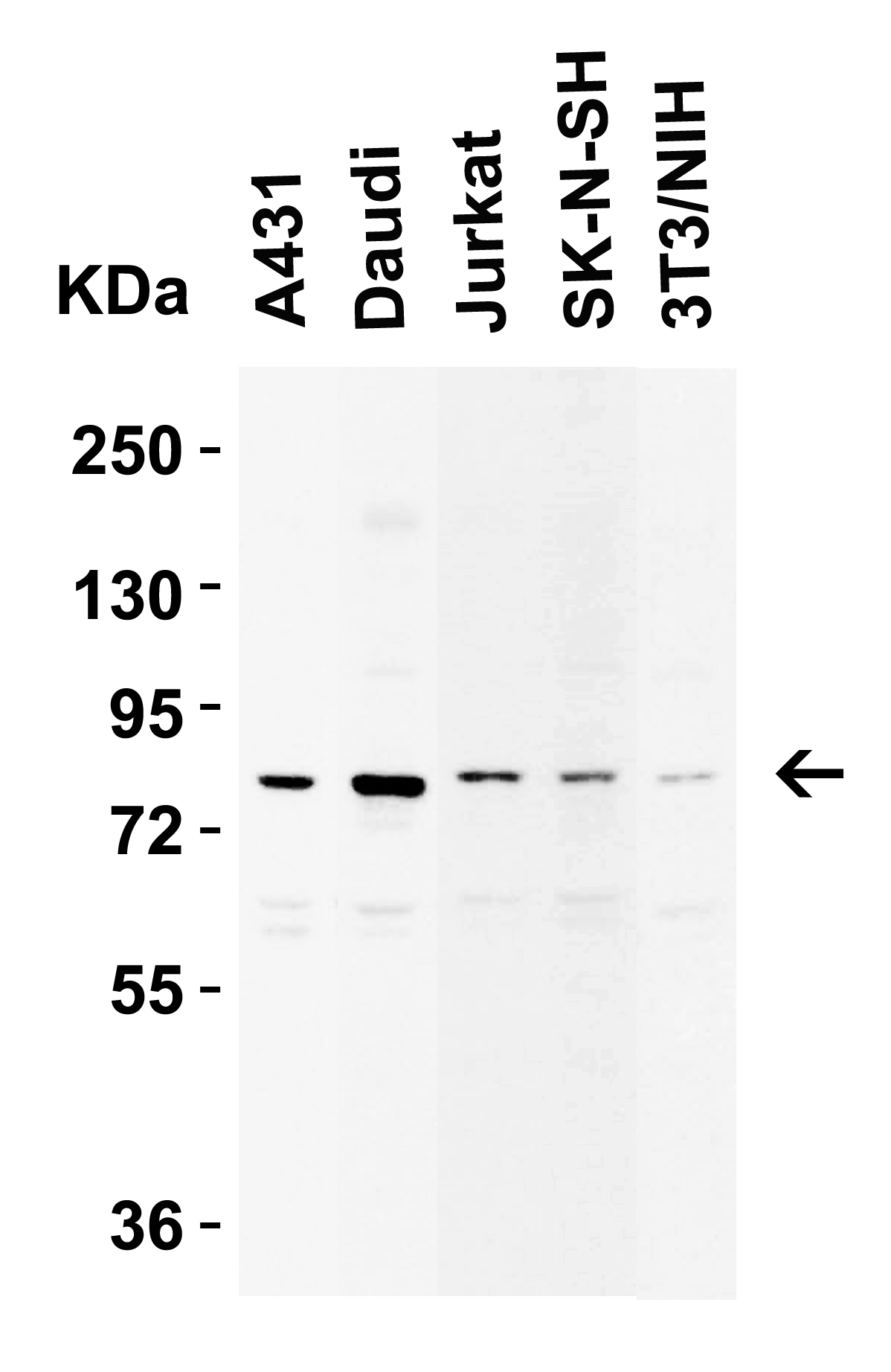 |
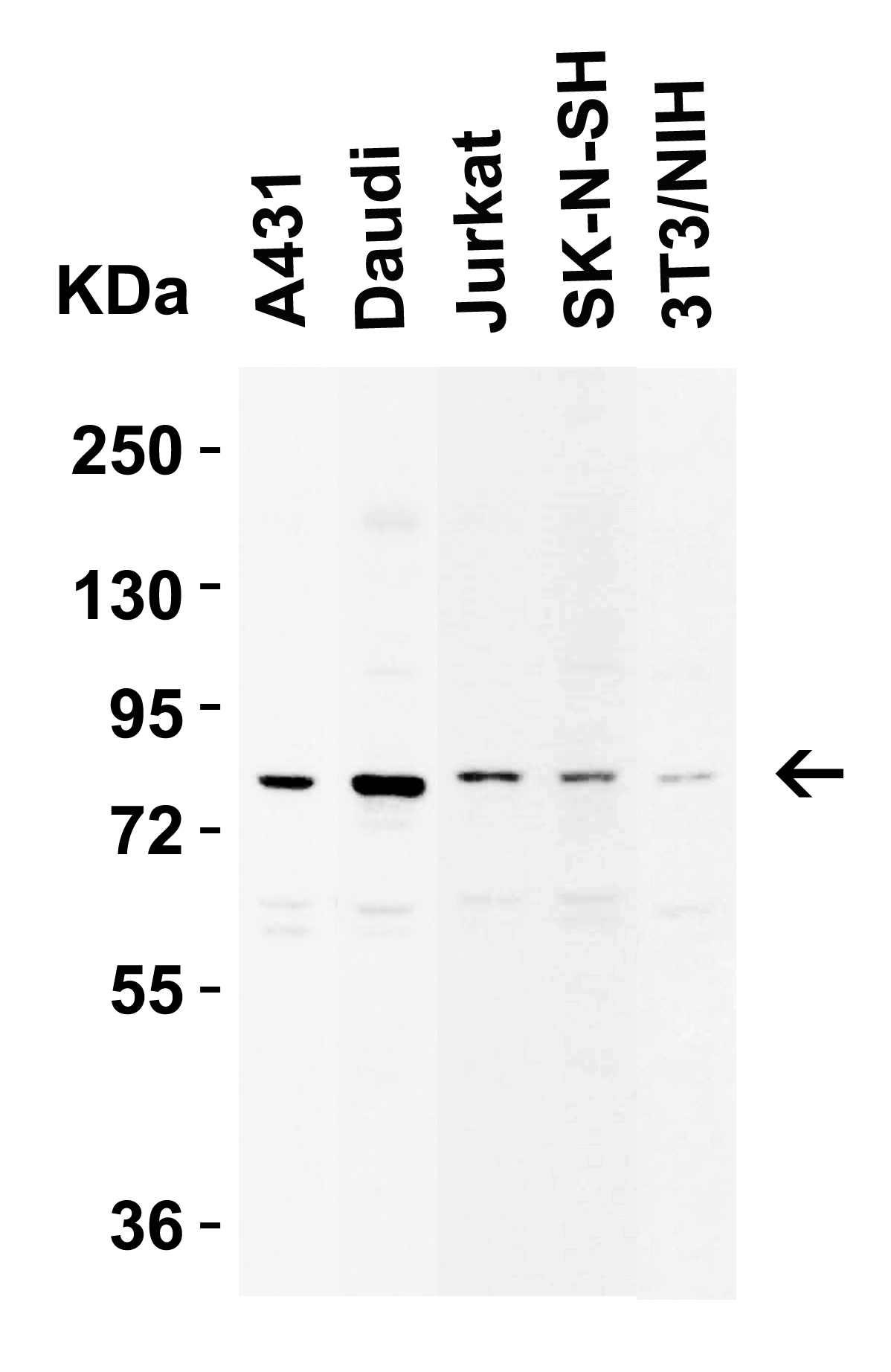
| Western Blot Validation in Human and Mouse Cell Lines Loading: 15 µg of lysates per lane. Antibodies: IKK epsilon 4818 (1 µg/mL), 1h incubation at RT in 5% NFDM/TBST.Secondary: Goat anti-rabbit IgG HRP conjugate at 1:10000 dilution. |
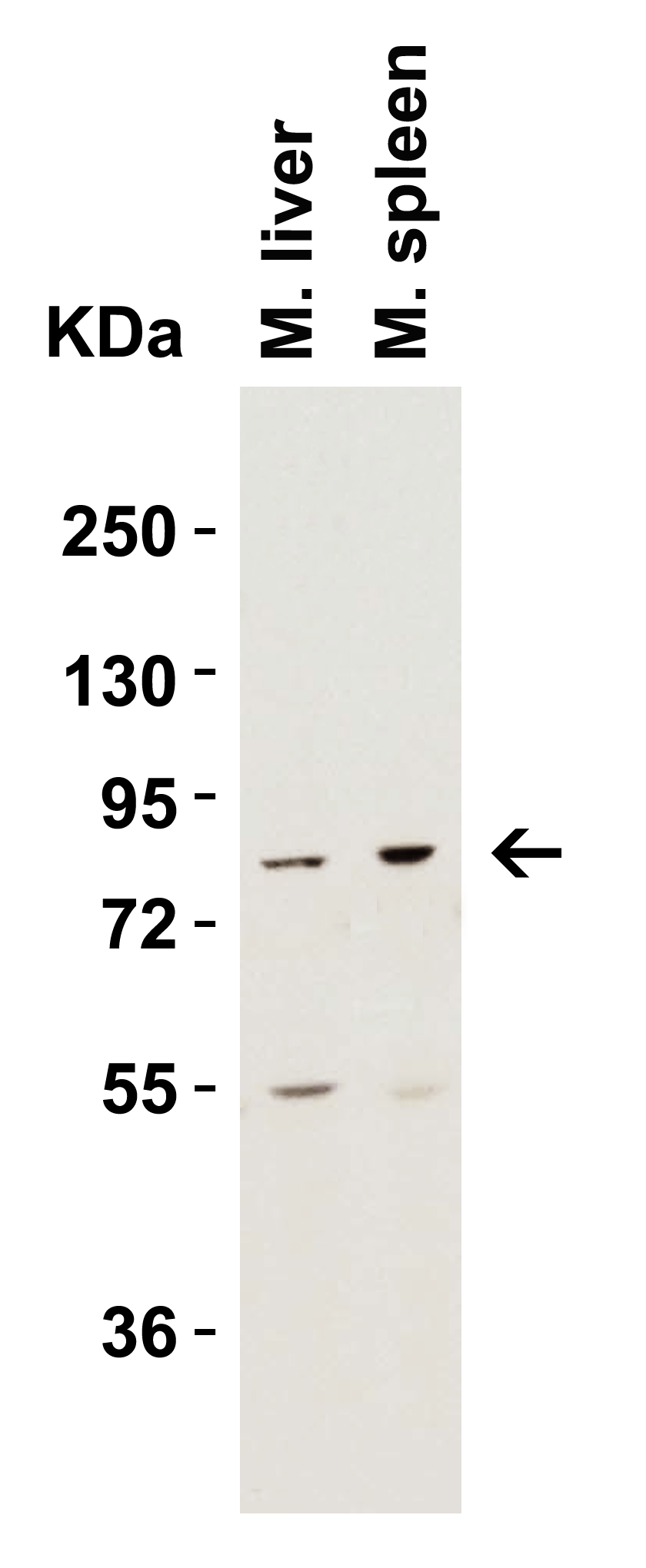 |
| Western Blot Validation in Mouse Tissue Lysates Loading: 15 µg of lysates per lane. Antibodies: IKK epsilon 4818 (2 µg/mL), 1h incubation at RT in 5% NFDM/TBST.Secondary: Goat anti-rabbit IgG HRP conjugate at 1:10000 dilution. |
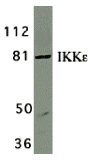 |
| Western Blot Validation in Jurkat Cell Lysate Loading: 15 µg of lysates per lane. Antibodies: IKK epsilon 4818 (2 µg/mL), 1h incubation at RT in 5% NFDM/TBST.Secondary: Goat anti-rabbit IgG HRP conjugate at 1:10000 dilution. |
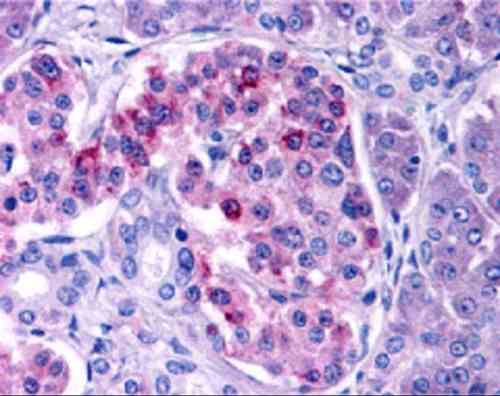 |
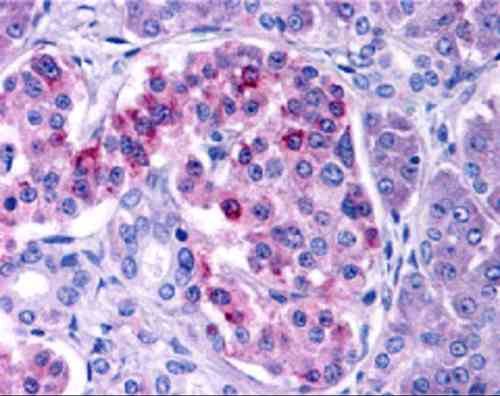
| Immunohistochemistry Validation of IKK epsilon in Human Pancreas Tissue Immunohistochemical analysis of paraffin-embedded human pancreas tissue using anti-IKK epsilon antibody (4818) at 10 µg/mL. Tissue was fixed with formaldehyde and blocked with 10% serum for 1 h at RT; antigen retrieval was by heat mediation with a citrate buffer (pH6). Samples were incubated with primary antibody overnight at 4C. A goat anti-rabbit IgG H&L (HRP) at 1/250 was used as secondary. Counter stained with Hematoxylin. |
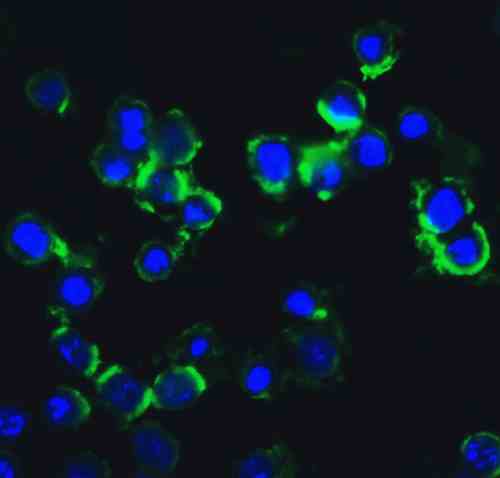 |
| Immunofluorescence Validation of IKK epsilon in HeLa Cells Immunofluorescent analysis of 4% paraformaldehyde-fixed HeLa cells labeling IKK epsilon with 4818 at 20 µg/mL, followed by goat anti-rabbit IgG secondary antibody at 1/500 dilution (green) and DAPI staining (blue). |
FAQ & Publications
Frequently Asked Questions
What applications is the rabbit anti-IKK epsilon (CT) polyclonal antibody 4818 validated for?
This antibody has been tested and validated for use in Western blot (WB), immunohistochemistry (IHC-P), immunofluorescence (IF), immunocytochemistry (ICC), and ELISA applications.
How should the rabbit anti-IKK epsilon (CT) polyclonal antibody 4818 be stored to maintain stability?
The antibody should be stored at -20°C and is stable for at least one year under these conditions. It is important to avoid multiple freeze-thaw cycles to preserve antibody integrity.
What is the host species and clonality of the anti-IKK epsilon (CT) antibody 4818?
The antibody is a rabbit polyclonal antibody with an IgG isotype.
What is the immunogen used to generate the rabbit anti-IKK epsilon (CT) polyclonal antibody 4818?
The immunogen is a peptide corresponding to amino acids 705-716 of human IKK epsilon.
Publications
| pmid | title | authors | citation |
|---|---|---|---|
| We haven't added any publications to our database yet. | |||
Published literature highly relevant to the biological target of this product and referencing this antibody or clone are retrieved from the PubMed database provided by the United States National Library of Medicine at the National Institutes of Health.
Protocols
| relevant to this product |
|---|
| Western blot IHC ICC |
Documents
| Batch Number | QC File | SDS |
|---|---|---|
| To view batch-specific Safety Datasheets and Quality Certificates associated with your account, please Log In. | ||
Only logged in customers who have purchased this product may leave a review.


Reviews
There are no reviews yet.