| Weight | 1 lbs |
|---|---|
| Dimensions | 9 × 5 × 2 in |
| host | rabbit |
| isotype | IgG |
| clonality | polyclonal |
| concentration | 1 mg/mL |
| applications | ICC/IF, WB |
| reactivity | IKKα |
| available sizes | 100 µg |
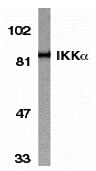


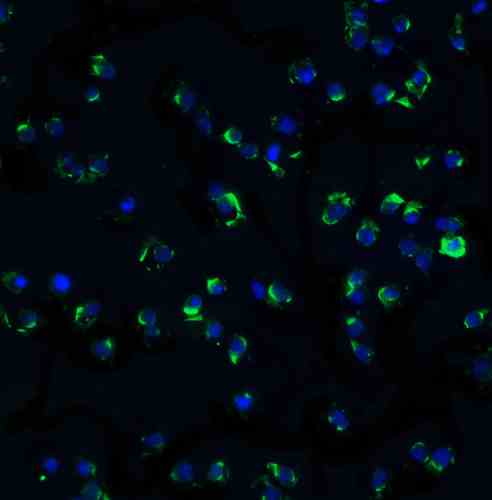

rabbit anti-IKK α (C1) polyclonal antibody 1537
$445.00
Antibody summary
- Rabbit polyclonal to IKK α (C1)
- Suitable for: ELISA,WB,ICC,IF
- Isotype: IgG
- 100 µg
rabbit anti-IKK α (C1) polyclonal antibody 1537
| antibody |
|---|
| Tested applications WB,ICC/IF,ELISA |
| Recommended dilutions Immunoblotting: use at 1:1,000-1:2,000 dilution. Positive control: Whole cell lysate from HeLa or Jurkat cells. |
| Immunogen Peptide corresponding to aa 716-734 of human IKKa which differs from the corresponding murine sequence by four amino acids. |
| Size and concentration 100µg and lot specific |
| Form liquid |
| Storage Instructions This antibody is stable for at least one (1) year at -20°C. Avoid multiple freeze- thaw cycles. |
| Storage buffer PBS, pH 7.4. |
| Purity peptide affinity purification |
| Clonality polyclonal |
| Isotype IgG |
| Compatible secondaries goat anti-rabbit IgG, H&L chain specific, peroxidase conjugated, conjugated polyclonal antibody 9512 goat anti-rabbit IgG, H&L chain specific, biotin conjugated polyclonal antibody 2079 goat anti-rabbit IgG, H&L chain specific, FITC conjugated polyclonal antibody 7863 goat anti-rabbit IgG, H&L chain specific, Cross Absorbed polyclonal antibody 2371 goat anti-rabbit IgG, H&L chain specific, biotin conjugated polyclonal antibody, crossabsorbed 1715 goat anti-rabbit IgG, H&L chain specific, FITC conjugated polyclonal antibody, crossabsorbed 1720 |
| Isotype control Rabbit polyclonal - Isotype Control |
| target relevance |
|---|
| Homo sapiens CHUK Inhibitor of nuclear factor kappa-B kinase subunit alpha |
| Protein names Inhibitor of nuclear factor kappa-B kinase subunit alpha |
| Alternative names Conserved helix-loop-helix ubiquitous kinase, I-kappa-B kinase 1, Nuclear factor NF-kappa-B inhibitor kinase alpha, Transcription factor 16 |
| Gene names CHUK |
| Protein family Belongs to the protein kinase superfamily. Ser/Thr protein kinase family. I-kappa-B kinase subfamily |
| Function Serine kinase that plays an essential role in the NF-kappa-B signaling pathway which is activated by multiple stimuli such as inflammatory cytokines, bacterial or viral products, DNA damages or other cellular stresses (PubMed:18626576, PubMed:9244310, PubMed:9252186, PubMed:9346484). Acts as a part of the canonical IKK complex in the conventional pathway of NF-kappa-B activation and phosphorylates inhibitors of NF-kappa-B on serine residues (PubMed:18626576, PubMed:35952808, PubMed:9244310, PubMed:9252186, PubMed:9346484). These modifications allow polyubiquitination of the inhibitors and subsequent degradation by the proteasome (PubMed:18626576, PubMed:9244310, PubMed:9252186, PubMed:9346484). In turn, free NF-kappa-B is translocated into the nucleus and activates the transcription of hundreds of genes involved in immune response, growth control, or protection against apoptosis (PubMed:18626576, PubMed:9244310, PubMed:9252186, PubMed:9346484). Negatively regulates the pathway by phosphorylating the scaffold protein TAXBP1 and thus promoting the assembly of the A20/TNFAIP3 ubiquitin-editing complex (composed of A20/TNFAIP3, TAX1BP1, and the E3 ligases ITCH and RNF11) (PubMed:21765415). Therefore, CHUK plays a key role in the negative feedback of NF-kappa-B canonical signaling to limit inflammatory gene activation. As part of the non-canonical pathway of NF-kappa-B activation, the MAP3K14-activated CHUK/IKKA homodimer phosphorylates NFKB2/p100 associated with RelB, inducing its proteolytic processing to NFKB2/p52 and the formation of NF-kappa-B RelB-p52 complexes (PubMed:20501937). In turn, these complexes regulate genes encoding molecules involved in B-cell survival and lymphoid organogenesis. Also participates in the negative feedback of the non-canonical NF-kappa-B signaling pathway by phosphorylating and destabilizing MAP3K14/NIK. Within the nucleus, phosphorylates CREBBP and consequently increases both its transcriptional and histone acetyltransferase activities (PubMed:17434128). Modulates chromatin accessibility at NF-kappa-B-responsive promoters by phosphorylating histones H3 at 'Ser-10' that are subsequently acetylated at 'Lys-14' by CREBBP (PubMed:12789342). Additionally, phosphorylates the CREBBP-interacting protein NCOA3. Also phosphorylates FOXO3 and may regulate this pro-apoptotic transcription factor (PubMed:15084260). Phosphorylates RIPK1 at 'Ser-25' which represses its kinase activity and consequently prevents TNF-mediated RIPK1-dependent cell death (By similarity). Phosphorylates AMBRA1 following mitophagy induction, promoting AMBRA1 interaction with ATG8 family proteins and its mitophagic activity (PubMed:30217973) |
| Catalytic activity L-seryl-[I-kappa-B protein] + ATP = O-phospho-L-seryl-[I-kappa-B protein] + ADP + H(+) |
| Subcellular location Cytoplasm, Nucleus |
| Structure (Microbial infection) Interacts with InlC of Listeria monocytogenes |
| Post-translational modification Phosphorylated by MAP3K14/NIK, AKT and to a lesser extent by MEKK1, and dephosphorylated by PP2A. Autophosphorylated Ubiquitinated by TRIM56 via 'Lys-63'-linked ubiquitination, promoting activation of CHUK/IKKA (Microbial infection) Acetylation of Thr-179 by Yersinia YopJ prevents phosphorylation and activation, thus blocking the I-kappa-B signaling pathway |
| Involvement in disease Cocoon syndrome A lethal syndrome characterized by multiple fetal malformations including defective face and seemingly absent limbs, which are bound to the trunk and encased under the skin. Bartsocas-Papas syndrome 2 An autosomal recessive, severe form of popliteal pterygium syndrome. Popliteal pterygia syndromes have considerable variability in severity and in the associated phenotypic features but they are all characterized by cutaneous webbing across one or more major joints, cleft lip and/or palate, syndactyly, and genital malformations. |
| Keywords 3D-structure, Acetylation, ATP-binding, Cytoplasm, Direct protein sequencing, Kinase, Nucleotide-binding, Nucleus, Phosphoprotein, Proteomics identification, Reference proteome, Serine/threonine-protein kinase, Transferase, Ubl conjugation |
| Sequence MERPPGLRPGAGGPWEMRERLGTGGFGNVCLYQHRELDLKIAIKSCRLELSTKNRERWCH EIQIMKKLNHANVVKACDVPEELNILIHDVPLLAMEYCSGGDLRKLLNKPENCCGLKESQ ILSLLSDIGSGIRYLHENKIIHRDLKPENIVLQDVGGKIIHKIIDLGYAKDVDQGSLCTS FVGTLQYLAPELFENKPYTATVDYWSFGTMVFECIAGYRPFLHHLQPFTWHEKIKKKDPK CIFACEEMSGEVRFSSHLPQPNSLCSLVVEPMENWLQLMLNWDPQQRGGPVDLTLKQPRC FVLMDHILNLKIVHILNMTSAKIISFLLPPDESLHSLQSRIERETGINTGSQELLSETGI SLDPRKPASQCVLDGVRGCDSYMVYLFDKSKTVYEGPFASRSLSDCVNYIVQDSKIQLPI IQLRKVWAEAVHYVSGLKEDYSRLFQGQRAAMLSLLRYNANLTKMKNTLISASQQLKAKL EFFHKSIQLDLERYSEQMTYGISSEKMLKAWKEMEEKAIHYAEVGVIGYLEDQIMSLHAE IMELQKSPYGRRQGDLMESLEQRAIDLYKQLKHRPSDHSYSDSTEMVKIIVHTVQSQDRV LKELFGHLSKLLGCKQKIIDLLPKVEVALSNIKEADNTVMFMQGKRQKEIWHLLKIACTQ SSARSLVGSSLEGAVTPQTSAWLPPTSAEHDHSLSCVVTPQDGETSAQMIEENLNCLGHL STIIHEANEEQGNSMMNLDWSWLTE |
| UniProt accession: O15111 |
Data
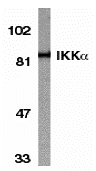 |
| Western blot analysis of IKK alpha in HeLa whole cell lysate with IKK alpha antibody at 1:1000 dilution. |
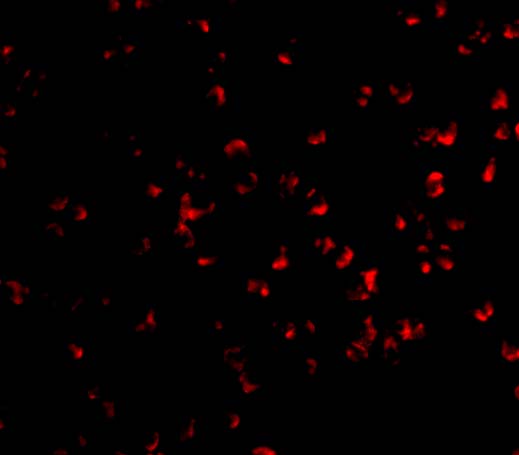
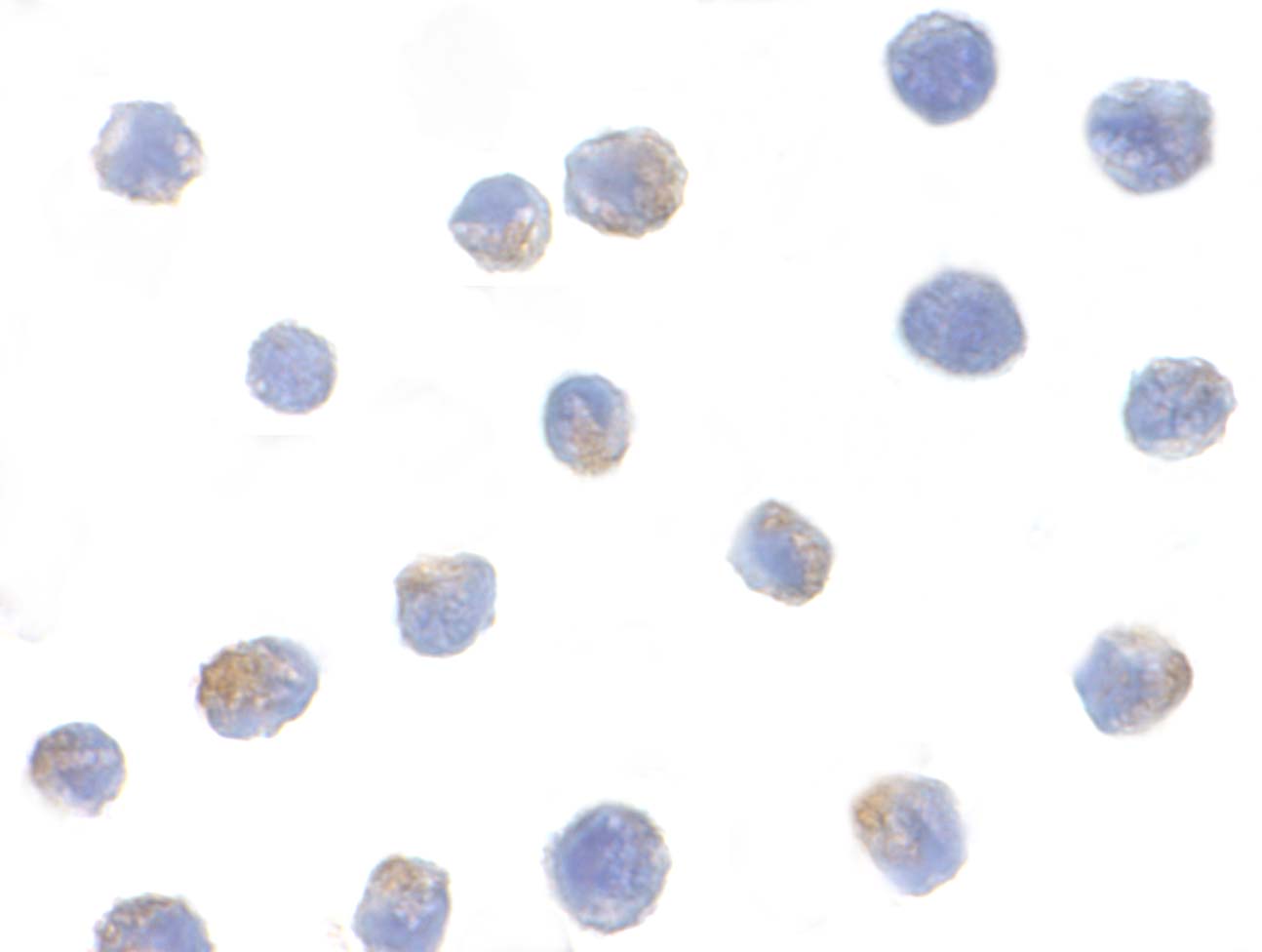 |
| Immunocytochemistry of IKK alpha in Jurkat cells with IKK alpha antibody at 1ug/mL. |
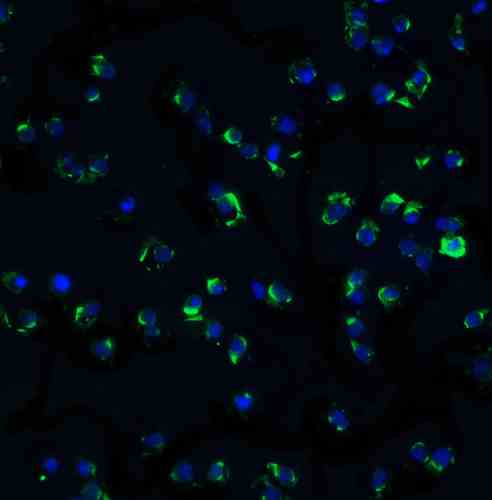
 |
| Immunofluorescence of IKK alpha in Jurkat cells with IKK alpha antibody at 10 µg/mL. |
 |
| Immunofluorescence of IKKa in Jurkat cells with IKK alpha antibody at 20 µg/mL.
Green: IKK alpha Antibody (1537) Blue: DAPI staining |
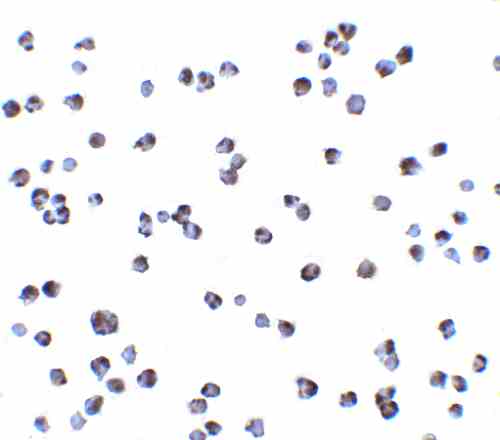 |
| Immunocytochemistry of IKKa in Jurkat cells with IKK alpha antibody at 2 µg/mL. |
FAQ & Publications
Frequently Asked Questions
What are the recommended applications and dilutions for the rabbit anti-IKK α (C1) polyclonal antibody 1537?
This antibody is suitable for ELISA, Western blotting (WB), immunocytochemistry (ICC), and immunofluorescence (IF). For immunoblotting, use at a dilution of 1:1,000 to 1:2,000. Positive controls include whole cell lysates from HeLa or Jurkat cells.
How should the rabbit anti-IKK α (C1) polyclonal antibody 1537 be stored to maintain stability?
The antibody should be stored at -20°C and is stable for at least one year under these conditions. It is important to avoid multiple freeze-thaw cycles to preserve antibody integrity.
What is the immunogen used to generate the rabbit anti-IKK α (C1) polyclonal antibody 1537?
The immunogen is a peptide corresponding to amino acids 716-734 of human IKKα, which differs from the corresponding murine sequence by four amino acids.
Which secondary antibodies are compatible with the rabbit anti-IKK α (C1) polyclonal antibody 1537 for detection?
Compatible secondary antibodies include goat anti-rabbit IgG antibodies that are H&L chain specific and conjugated to peroxidase, biotin, or FITC. Variants include cross-absorbed versions for reduced cross-reactivity.
Publications
| pmid | title | authors | citation |
|---|---|---|---|
| We haven't added any publications to our database yet. | |||
Published literature highly relevant to the biological target of this product and referencing this antibody or clone are retrieved from the PubMed database provided by the United States National Library of Medicine at the National Institutes of Health.
Protocols
| relevant to this product |
|---|
| Western blot IHC ICC |
Documents
| Batch Number | QC File | SDS |
|---|---|---|
| To view batch-specific Safety Datasheets and Quality Certificates associated with your account, please Log In. | ||
Only logged in customers who have purchased this product may leave a review.


Reviews
There are no reviews yet.