| Weight | 1 lbs |
|---|---|
| Dimensions | 9 × 5 × 2 in |
| host | rabbit |
| isotype | IgG |
| clonality | polyclonal |
| concentration | 1 mg/mL |
| applications | ICC/IF, WB |
| reactivity | N-cadherin |
| available sizes | 400 µg |

anti-Human N-cadherin rabbit polyclonal antibody 4241
$504.00
Antibody summary
- Rabbit polyclonal to Human N-cadherin
- Suitable for: WB
- Isotype: IgG
- 400 µg
anti-Human N-cadherin polyclonal antibody 4241
| antibody |
|---|
| Tested applications WB |
| Size and concentration 400µg and lot specific |
| Storage Instructions Store at 2 - 8µC. Do not Freeze. |
| Storage buffer PBS, 1mg/ml BSA, 0.02% NaN3. |
| Purity affinity purified |
| Clonality polyclonal |
| Isotype IgG |
| Compatible secondaries goat anti-rabbit IgG, H&L chain specific, peroxidase conjugated, conjugated polyclonal antibody 9512 goat anti-rabbit IgG, H&L chain specific, biotin conjugated polyclonal antibody 2079 goat anti-rabbit IgG, H&L chain specific, FITC conjugated polyclonal antibody 7863 goat anti-rabbit IgG, H&L chain specific, Cross Absorbed polyclonal antibody 2371 goat anti-rabbit IgG, H&L chain specific, biotin conjugated polyclonal antibody, crossabsorbed 1715 goat anti-rabbit IgG, H&L chain specific, FITC conjugated polyclonal antibody, crossabsorbed 1720 |
| Isotype control Rabbit polyclonal - Isotype Control |
| target relevance |
|---|
| Homo sapiens CDH2 Cadherin-2 |
| Protein names Cadherin-2 |
| Alternative names CDw325, Neural cadherin |
| Gene names CDH2 |
| Function Calcium-dependent cell adhesion protein; preferentially mediates homotypic cell-cell adhesion by dimerization with a CDH2 chain from another cell. Cadherins may thus contribute to the sorting of heterogeneous cell types. Acts as a regulator of neural stem cells quiescence by mediating anchorage of neural stem cells to ependymocytes in the adult subependymal zone: upon cleavage by MMP24, CDH2-mediated anchorage is affected, leading to modulate neural stem cell quiescence. Plays a role in cell-to-cell junction formation between pancreatic beta cells and neural crest stem (NCS) cells, promoting the formation of processes by NCS cells (By similarity). Required for proper neurite branching. Required for pre- and postsynaptic organization (By similarity). CDH2 may be involved in neuronal recognition mechanism. In hippocampal neurons, may regulate dendritic spine density. May promote axon outgrowth and motor fiber repair via DSP-mediated recruitment to outgrowth tips (By similarity) |
| Subcellular location Cell membrane, Cell membrane, sarcolemma, Cell junction, Cell surface, Cell junction, desmosome, Cell junction, adherens junction, Cell projection, axon |
| Structure Homodimer (via extracellular region). Can also form heterodimers with other cadherins (via extracellular region). Dimerization occurs in trans, i.e. with a cadherin chain from another cell (By similarity). Identified in a complex containing at least DSP, JUP, VIM and CDH2; the complex is more abundant following crush injury in regenerating motor neurons and may promote axon outgrowth and motor fiber repair (By similarity). Interacts with CDCP1 (PubMed:16007225). Interacts with PCDH8; this complex may also include TAOK2 (By similarity). The interaction with PCDH8 may lead to internalization through TAOK2/p38 MAPK pathway (By similarity). Identified in a complex containing FGFR4, NCAM1, CDH2, PLCG1, FRS2, SRC, SHC1, GAP43 and CTTN. May interact with OBSCN (via protein kinase domain 2) (By similarity). Interacts with FBXO45 (PubMed:32341084) |
| Post-translational modification Cleaved by MMP24. Ectodomain cleavage leads to the generation of a soluble 90 kDa N-terminal soluble fragment and a 45 kDa membrane-bound C-terminal fragment 1 (CTF1), which is further cleaved by gamma-secretase into a 35 kDa (By similarity). Cleavage in neural stem cells by MMP24 affects CDH2-mediated anchorage of neural stem cells to ependymocytes in the adult subependymal zone, leading to modulate neural stem cell quiescence (By similarity) May be phosphorylated by OBSCN |
| Involvement in disease Arrhythmogenic right ventricular dysplasia, familial, 14 A congenital heart disease characterized by infiltration of adipose and fibrous tissue into the right ventricle and loss of myocardial cells, resulting in ventricular and supraventricular arrhythmias. Agenesis of corpus callosum, cardiac, ocular, and genital syndrome An autosomal dominant, syndromic neurodevelopmental disorder characterized by global developmental delay and/or intellectual disability, corpus callosum agenesis or hypoplasia, mirror movements, dysmorphic features, and ocular, cardiac, and genital anomalies. Attention deficit-hyperactivity disorder 8 A form of attention deficit-hyperactivity disorder, a neurobehavioral developmental condition primarily characterized by the coexistence of attentional problems and hyperactivity, with each feature occurring infrequently alone. ADHD8 is an autosomal recessive form with onset in early childhood, usually by age 3 years. ADHD8 patients may manifest mild developmental delay with autism. |
| Keywords Alternative splicing, Calcium, Cardiomyopathy, Cell adhesion, Cell junction, Cell membrane, Cell projection, Cleavage on pair of basic residues, Disease variant, Glycoprotein, Intellectual disability, Membrane, Metal-binding, Phosphoprotein, Proteomics identification, Reference proteome, Repeat, Signal, Transmembrane, Transmembrane helix |
| Sequence MCRIAGALRTLLPLLAALLQASVEASGEIALCKTGFPEDVYSAVLSKDVHEGQPLLNVKF SNCNGKRKVQYESSEPADFKVDEDGMVYAVRSFPLSSEHAKFLIYAQDKETQEKWQVAVK LSLKPTLTEESVKESAEVEEIVFPRQFSKHSGHLQRQKRDWVIPPINLPENSRGPFPQEL VRIRSDRDKNLSLRYSVTGPGADQPPTGIFIINPISGQLSVTKPLDREQIARFHLRAHAV DINGNQVENPIDIVINVIDMNDNRPEFLHQVWNGTVPEGSKPGTYVMTVTAIDADDPNAL NGMLRYRIVSQAPSTPSPNMFTINNETGDIITVAAGLDREKVQQYTLIIQATDMEGNPTY GLSNTATAVITVTDVNDNPPEFTAMTFYGEVPENRVDIIVANLTVTDKDQPHTPAWNAVY RISGGDPTGRFAIQTDPNSNDGLVTVVKPIDFETNRMFVLTVAAENQVPLAKGIQHPPQS TATVSVTVIDVNENPYFAPNPKIIRQEEGLHAGTMLTTFTAQDPDRYMQQNIRYTKLSDP ANWLKIDPVNGQITTIAVLDRESPNVKNNIYNATFLASDNGIPPMSGTGTLQIYLLDIND NAPQVLPQEAETCETPDPNSINITALDYDIDPNAGPFAFDLPLSPVTIKRNWTITRLNGD FAQLNLKIKFLEAGIYEVPIIITDSGNPPKSNISILRVKVCQCDSNGDCTDVDRIVGAGL GTGAIIAILLCIIILLILVLMFVVWMKRRDKERQAKQLLIDPEDDVRDNILKYDEEGGGE EDQDYDLSQLQQPDTVEPDAIKPVGIRRMDERPIHAEPQYPVRSAAPHPGDIGDFINEGL KAADNDPTAPPYDSLLVFDYEGSGSTAGSLSSLNSSSSGGEQDYDYLNDWGPRFKKLADM YGGGDD |
| UniProt accession: P19022 |
Data
| No results found |
FAQ & Publications
Frequently Asked Questions
What applications has the Rabbit anti-Human N-cadherin polyclonal antibody 4241 been validated for?
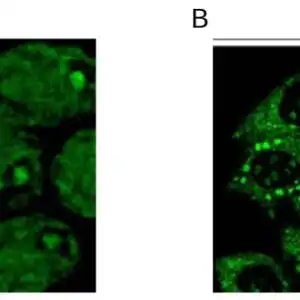
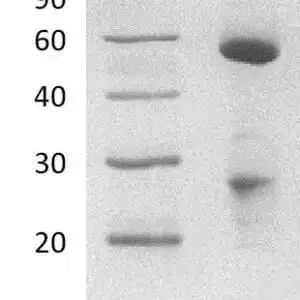
This antibody has been validated for use in Western blot (WB) and immunocytochemistry/immunofluorescence (ICC/IF) applications.
How should the Rabbit anti-Human N-cadherin antibody 4241 be stored to maintain stability?
The antibody should be stored refrigerated at 2 to 8°C and should not be frozen to preserve its activity.
What is the host species and clonality of the anti-Human N-cadherin antibody with SKU 4241?
The antibody is a rabbit polyclonal antibody of the IgG isotype.
What is the concentration and formulation of the Rabbit anti-Human N-cadherin polyclonal antibody 4241?
The antibody is supplied at a concentration of 1 mg/mL in a storage buffer containing PBS, 1 mg/mL BSA, and 0.02% sodium azide.
Publications
| pmid | title | authors | citation |
|---|---|---|---|
| We haven't added any publications to our database yet. | |||
Published literature highly relevant to the biological target of this product and referencing this antibody or clone are retrieved from the PubMed database provided by the United States National Library of Medicine at the National Institutes of Health.
Protocols
| relevant to this product |
|---|
| Western blot IHC ICC |
Documents
| Batch Number | QC File | SDS |
|---|---|---|
| To view batch-specific Safety Datasheets and Quality Certificates associated with your account, please Log In. | ||
Only logged in customers who have purchased this product may leave a review.


Reviews
There are no reviews yet.