| Weight | 1 lbs |
|---|---|
| Dimensions | 9 × 5 × 2 in |
| host | mouse |
| isotype | IgG |
| clonality | monoclonal |
| concentration | concentrate, predilute |
| applications | IHC |
| reactivity | human |
| available size | 0.1 mL, 0.5 mL, 1 mL concentrated, 7 mL prediluted |

rabbit anti-GFAP monoclonal antibody ZR356 6193
Price range: $160.00 through $528.00
Antibody summary
- Rabbit monoclonal to GFAP
- Suitable for: Immunohistochemistry (formalin-fixed, paraffin-embedded tissues)
- Reacts with: Human
- Isotype:IgG
- Control: Brain or astrocytoma
- Visualization: Cytoplasmic
- 0.1, 0.5, 1.0 mL concentrated, 7 mL prediluted
rabbit anti-GFAP monoclonal antibody ZR356 6193
| target relevance |
|---|
| Homo sapiens GFAP Glial fibrillary acidic protein |
| Protein names Glial fibrillary acidic protein |
| Gene names GFAP |
| Protein family Belongs to the intermediate filament family |
| Function GFAP, a class-III intermediate filament, is a cell-specific marker that, during the development of the central nervous system, distinguishes astrocytes from other glial cells |
| Subcellular location Cytoplasm |
| Structure Interacts with PSEN1 (via N-terminus) |
| Post-translational modification Phosphorylated by PKN1 |
| Involvement in disease Alexander disease A rare disorder of the central nervous system. The most common form affects infants and young children, and is characterized by progressive failure of central myelination, usually leading to death within the first decade. Infants with Alexander disease develop a leukodystrophy with macrocephaly, seizures, and psychomotor retardation. Patients with juvenile or adult forms typically experience ataxia, bulbar signs and spasticity, and a more slowly progressive course. Histologically, Alexander disease is characterized by Rosenthal fibers, homogeneous eosinophilic inclusions in astrocytes. |
| Keywords 3D-structure, Alternative splicing, Citrullination, Coiled coil, Cytoplasm, Direct protein sequencing, Disease variant, Intermediate filament, Leukodystrophy, Methylation, Phosphoprotein, Proteomics identification, Reference proteome |
| Sequence MERRRITSAARRSYVSSGEMMVGGLAPGRRLGPGTRLSLARMPPPLPTRVDFSLAGALNA GFKETRASERAEMMELNDRFASYIEKVRFLEQQNKALAAELNQLRAKEPTKLADVYQAEL RELRLRLDQLTANSARLEVERDNLAQDLATVRQKLQDETNLRLEAENNLAAYRQEADEAT LARLDLERKIESLEEEIRFLRKIHEEEVRELQEQLARQQVHVELDVAKPDLTAALKEIRT QYEAMASSNMHEAEEWYRSKFADLTDAAARNAELLRQAKHEANDYRRQLQSLTCDLESLR GTNESLERQMREQEERHVREAASYQEALARLEEEGQSLKDEMARHLQEYQDLLNVKLALD IEIATYRKLLEGEENRITIPVQTFSNLQIRETSLDTKSVSEGHLKRNIVVKTVEMRDGEV IKESKQEHKDVM |
| UniProt accession: P14136 |
Data
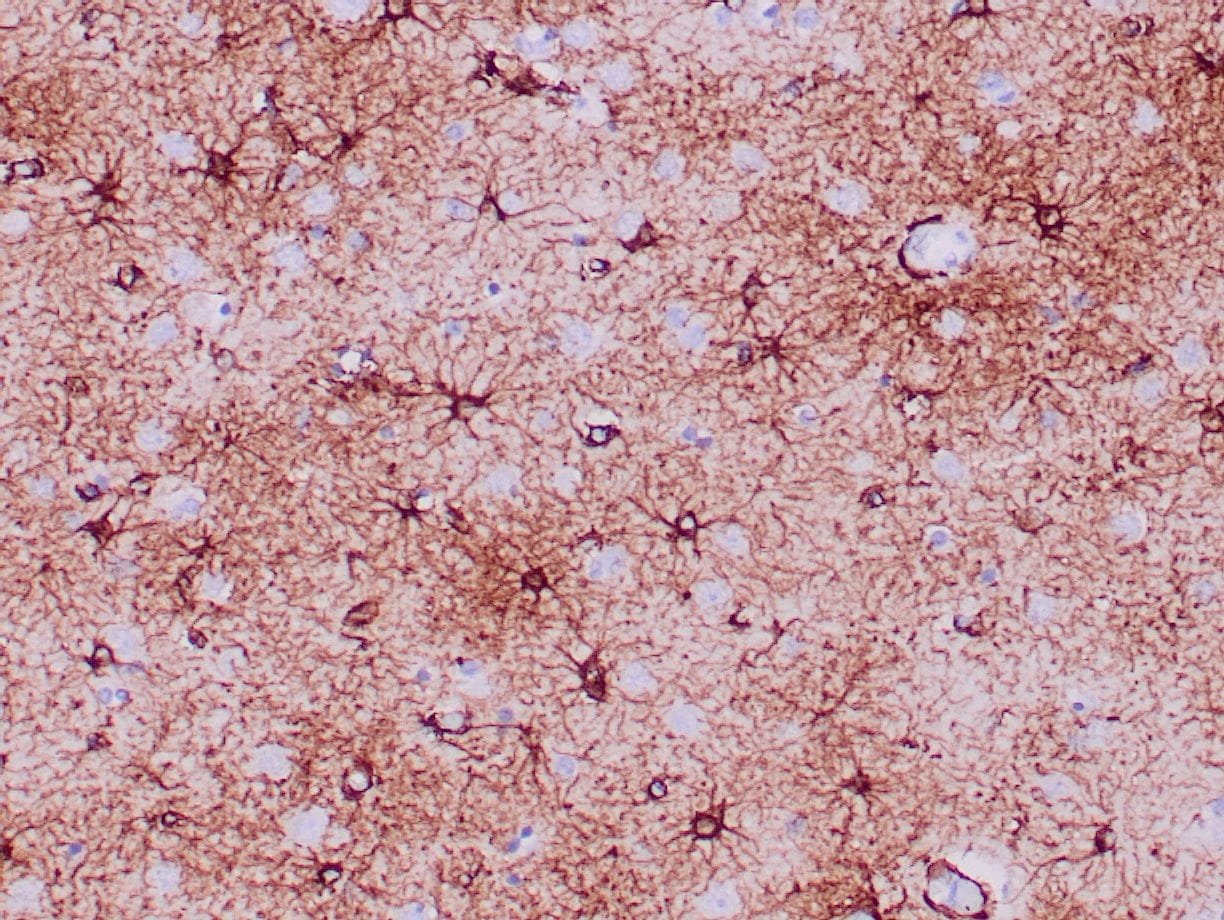 |
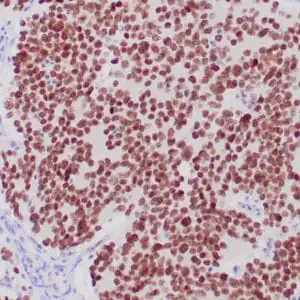
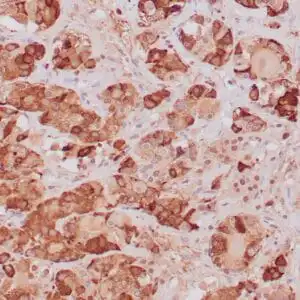
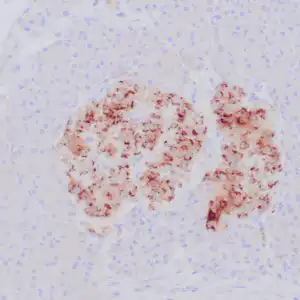
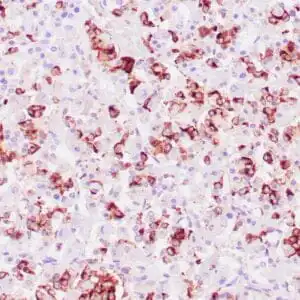
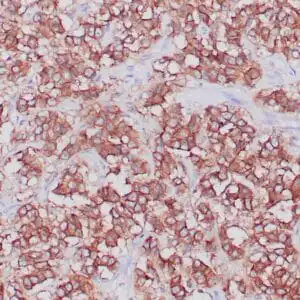
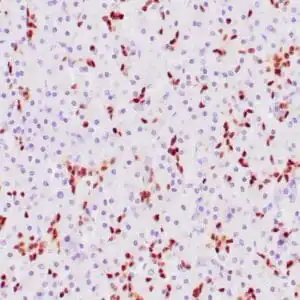
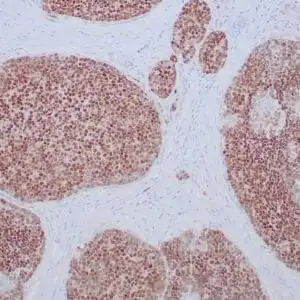
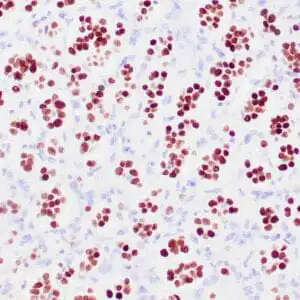
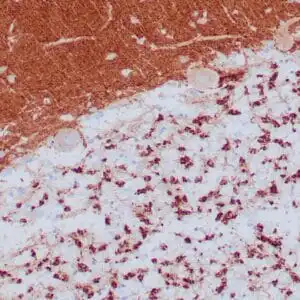
| Formalin-fixed, paraffin-embedded human brain stained with anti-GFAP antibody using peroxidase-conjugate and DAB chromogen. Note positive staining of astrocytic processes |
FAQ & Publications
Frequently Asked Questions
What species does the rabbit anti-GFAP monoclonal antibody ZR356 6193 react with?
This antibody reacts specifically with human GFAP protein.
For which application is the rabbit anti-GFAP monoclonal antibody ZR356 6193 primarily recommended?
The antibody is suitable and recommended for immunohistochemistry (IHC) on formalin-fixed, paraffin-embedded tissues.
What are the storage conditions for maintaining the stability of this GFAP antibody?
For short-term storage, keep the antibody at 2-8°C. For long-term preservation, store it at -20°C and avoid repeated freeze/thaw cycles.
What is the host and clonality of the anti-GFAP antibody ZR356 6193?
The antibody is a rabbit monoclonal antibody with an IgG isotype.
Publications
| pmid | title | authors | citation |
|---|---|---|---|
| We haven't added any publications to our database yet. | |||
Published literature highly relevant to the biological target of this product and referencing this antibody or clone are retrieved from the PubMed database provided by the United States National Library of Medicine at the National Institutes of Health.
Protocols
| relevant to this product |
|---|
| IHC |
Documents
| Batch Number | QC File | SDS |
|---|---|---|
| To view batch-specific Safety Datasheets and Quality Certificates associated with your account, please Log In. | ||
Only logged in customers who have purchased this product may leave a review.

Reviews
There are no reviews yet.